
Looking at Japan as a whole, the country is globally recognized for its commitment to wellness and healthy lifestyles. From its food culture to its hot spring culture, these habits are deeply ingrained in Japanese society and are often cited as factors contributing to longevity. Currently, with the increase in foreign tourists visiting Japan, the country is gaining even more attention as an attractive destination for wellness tourism. In your view, what aspects of Japan’s wellness approach make it a must-visit destination for travelers seeking such experiences?
Japan has a long-standing cultural foundation rooted in wellness, including shrines, rich natural environments, hot springs, and unique traditions. These have persisted for over two thousand years. What has changed is not Japan itself, but rather the world’s recognition and appreciation of wellness in recent years. This global shift in awareness is driving the rediscovery of Japan’s appeal.
In my book Wellness Strategy, I refer to this strength of “Japanese-style wellness” and its reappraisal as the “Re-Edit of Wellness.” It signifies an effort to reconnect Japan’s ancient wisdom with modern science and tourism contexts.
Over thirty years ago, I studied in Canada, and the lifestyle I witnessed then was completely different from today. Back then, status and enjoyment were demonstrated by driving big American cars, eating mountains of chicken wings, drinking beer by the bucketful, smoking cigarettes, and partying until dawn. Heavy drinking and smoking were even seen as symbols of adulthood and masculinity.
Today, however, a significant shift is evident. Travelers from the US, Europe, and even the Middle East increasingly prefer quiet, health-conscious trips. As a host myself, I observe guests checking in early in the afternoon, retiring early, rising with the sun, practicing yoga, and then heading out for activities. This disciplined behavior, once unexpected from Western travelers, is now becoming commonplace.
When I ask foreign visitors why they choose Aomori over the “Golden Route” of Kyoto and Osaka, many say they’ve grown tired of the crowds and high costs. As a result, they’re turning their attention to regions like Tohoku, where they discover the concept of “wellness” and our brand, “ReLabo.”
According to online travel agency Booking.com, about 41% of its 40 million users book without deciding on specific accommodations. For these travelers, “wellness” is a powerful keyword. Even at our hotel, which just opened last year, despite charging about 1.5 times more than other Aomori hotels, we maintain an occupancy rate exceeding 85%. We’ve also earned a 9.7/10 rating on Trip.com, making us one of the highest-rated hotels in Aomori. Aomori Prefecture’s population is projected to decline by 40% over the next 20 years. Population decline is a challenge facing all of Japan. Inbound tourism is essential not only for our hotel but for the regional economy. Crucially, over half of our foreign guests stay for two nights or more, engaging with the local community, consuming regional products, and significantly contributing to the local economy. Therefore, I am collaborating with JR East Japan to promote wellness tourism as a means for Aomori’s revitalization.
We also distinguish ourselves by operating in harmony with the local community. For instance, we deliberately avoid serving traditional Japanese breakfast items like sashimi or miso soup, as nearby hotels already excel in this area. Similarly, we do not host banquets, leaving that to hotels specializing in them. Instead, we position ourselves as a “wellness-focused facility” supported by the local government and surrounding businesses. Wellness also works to our advantage in recruitment, not just pricing. All 90 employees are directly hired; we do not outsource. Population decline means labor shortages, and many hotels struggle with staffing issues, but ReLabo has never faced a shortage. We achieved all 90 hires without relying on recruitment agencies. Twenty-five percent are aged 22 or younger. They cite wellness as their reason for joining. In fact, three 18-year-old female employees initially couldn’t cook at all. After thoroughly teaching them how to make omelets, guests became delighted when 18-year-old girls served them perfect omelets. They said it felt like watching their own granddaughters or daughters, making them want to cheer them on. When we tried a sign featuring a photo of a dessert made by a 21-year-old female pastry chef, sales quadrupled. It’s also advantageous for hiring seniors. Local seniors are exceptionally meticulous with cleaning. They also prefer shorter work hours. About 20% of our employees are over 60. We’ve achieved diverse working styles. Therefore, wellness is powerful for both hiring and reducing turnover. Especially in hospitality and healthcare/nursing, where human resources are crucial, the value of wellness is extremely high. Surprisingly, the most common customer reaction is surprise that ” ” are working. People who frequent high-end resort hotels say that nowadays, resorts everywhere are understaffed.
I discovered this series of activities while participating in Harvard Business School’s OPM program. When I wrote the book “Wellness Strategy,” detailing both theory and practice, Professor Ramon of HBS highly praised it because it presented a strategy for regional revitalization amidst population decline.
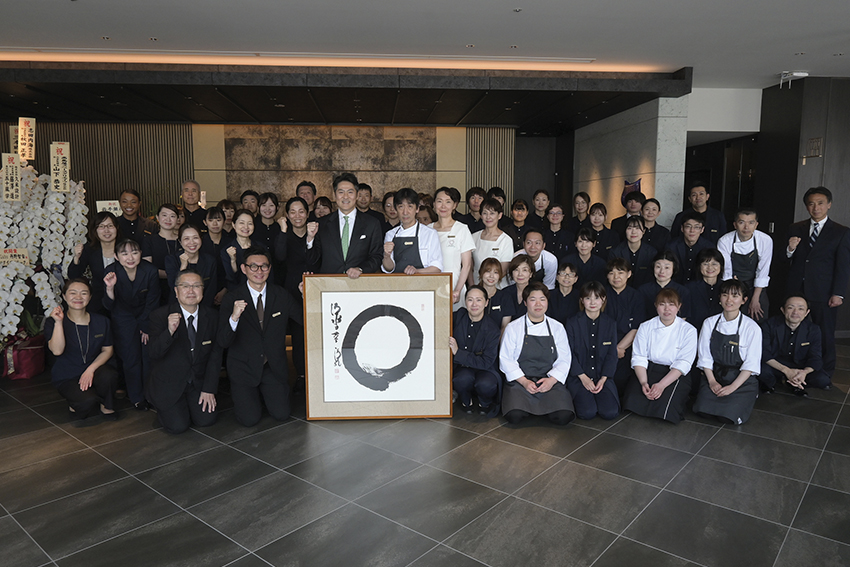
Your hotel is the first in Japan and the world to receive the “Wellness Platinum Award.” What strengths enabled you to meet this award’s stringent criteria? How will you leverage this recognition for international standing?
The Wellness Platinum Award has been a major boost in raising awareness. However, I believe the true differentiator lies in responding to the shift in travelers’ sensibilities post-COVID.
Post-pandemic, people have become sensitive to air and water quality. No one wants to stay in a room lingering with cigarette smoke or perfume. That’s why we introduced an ozone purification system to reset and thoroughly cleanse the air. The global surge in “wellness real estate” reflects this demand—beyond nutrition and exercise, people seek clean air, pure water, and quality acoustic environments.
Next, let’s discuss food. You partnered with top chefs to develop menus that blend nutrition and artistry. I hear healthy cocktails are also served in the evening. What role does dining play in the hotel’s wellness experience?
Food is at the heart of wellness. In fact, one could even say “wellness tourism begins with food.” Travelers don’t want to feel restricted or dissatisfied with their meals. Food must not only be good for the body, but also enjoyable and delicious.
We source organic vegetables and seafood from Aomori, using cutting-edge scientific cooking equipment to create gourmet French cuisine that appeals to international guests. Traditional Japanese cuisine can sometimes feel like a high hurdle for foreigners . Therefore, while rooted in local ingredients, we aim for cuisine that is globally accessible.
For example, we collaborate with local farmers to use completely pesticide-free vegetables. We employ a Spanish vacuum infusion machine to infuse lettuce with extracts like kombu and shiitake mushrooms, enhancing natural flavors. We serve dishes that are visually stunning, highly nutritious, and delicious. We also partner with fishermen to prepare king crab in a French style, sometimes creating a dish that combines crab broth, caviar cream, and organic vegetables.
Increasingly, guests come primarily for the meals rather than the program itself. This proves that food is an essential element of the wellness experience. We aim to provide cuisine that remains enjoyable even when eaten daily for ten days, improves health, and naturally leads to weight loss. Wellness should always balance “health” and “pleasure.”
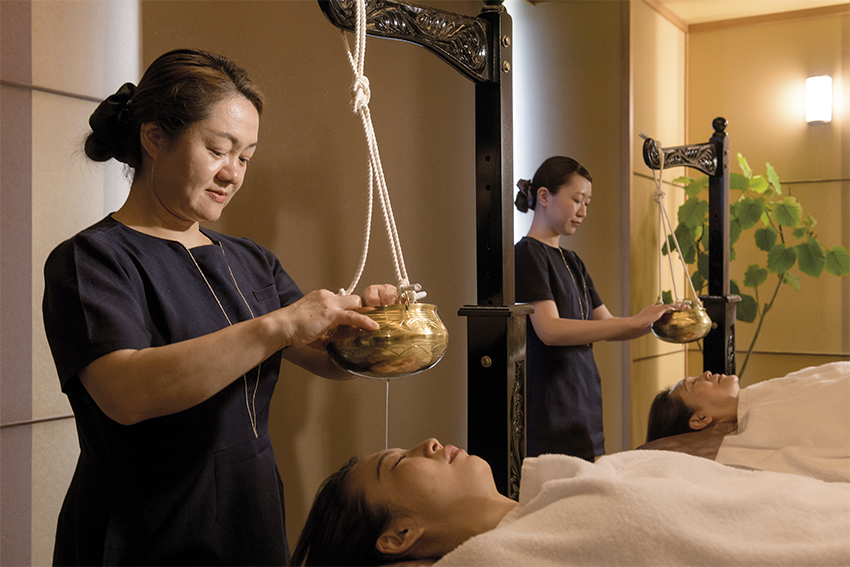
You mentioned an example of a guest from Tokyo staying for a month-long rehabilitation program. Do you think longer stays, like one- or two-week retreats, will become an important model going forward?
Yes, exactly. One of our goals is to expand our structured one-week programs. The Tokyo guest you mentioned was a perfect example. He had knee pain and was undergoing rehabilitation in Tokyo, but wished to continue beyond his insurance coverage. He also loved mountain climbing and hoped to challenge himself again.
His Tokyo doctor and our facility’s physician collaborated to design a rehabilitation program in Aomori. He underwent several hours of training daily using a robotic exoskeleton while also enjoying yoga, hot springs, spa treatments, and meals. Within three weeks, his walking speed improved fivefold.
This case demonstrates the significant potential of combining medical rehabilitation with wellness tourism. Continuing rehabilitation over weekends in Tokyo is difficult, but here, comprehensive care can be sustained amidst nature. For the patient, it means physical and mental improvement; Tokyo sees reduced medical costs; and Aomori benefits economically.
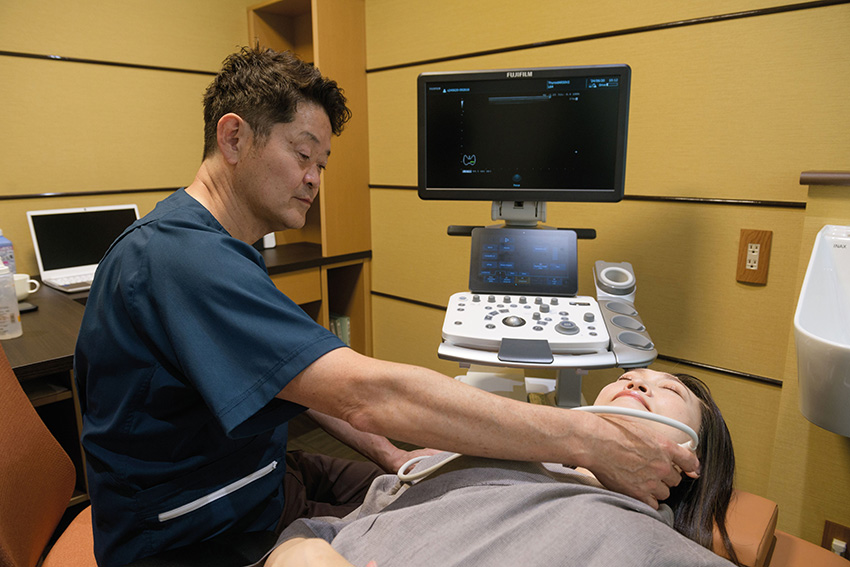
Do you address mental health and psychological wellness alongside physical rehabilitation?
Yes, mental wellness is equally important. Japanese people are particularly serious and prone to stress, so we collaborate with YogaFit, led by Beth Shaw from the US, to offer mindfulness and yoga programs. Research also shows these refresh the mind.
We are also collaborating with researchers in Tokyo to investigate the relationship between depression and vitamin deficiencies. As part of this, we offer vitamin drips and IV drips, which are popular with guests from China and the US. It’s similar to the “Hangover Drip” found in Las Vegas hotels.
Beauty is also a growing sector. More men are showing interest in skincare and wellness treatments. We aim to integrate medical research with wellness tourism, strengthening both. In fact, a study found that practicing YogaFit breathing techniques among 176 orthopedic surgery patients reduced pneumonia incidence rates to one-fifth. This is likely due to improved respiratory function.
Therefore, I believe the key going forward is connecting “medical wellness” with “tourism.” For Tokyo residents, this could mean taking the bullet train to Aomori for a weekend of yoga, hot springs, IV drips, and delicious meals. For international guests, it could be a week-long stay where they lose 5kg, return home healthier, and experience lasting positive impacts on their lifestyle habits.
Regarding scale, traditional hotels heavily rely on online travel agencies (OTAs), but commission fees are high. How will your company pursue international expansion? Will you collaborate with OTAs, or focus on direct bookings?
Wellness fundamentally differs from traditional hospitality. Wellness-focused guests prefer direct engagement, and most repeat customers book directly.
That said, increasing global recognition is essential. Our partnership with JR East is crucial for this. JR East President Kise views railways not just as transportation but as a ” platform.” For example, he envisions an integrated system where guests receive health checkups at Tokyo’s Takanawa Gateway Station, then travel to Aomori for treatments or wellness programs, and return to Tokyo for follow-up examinations. Such collaborations are precisely what will expand our influence.
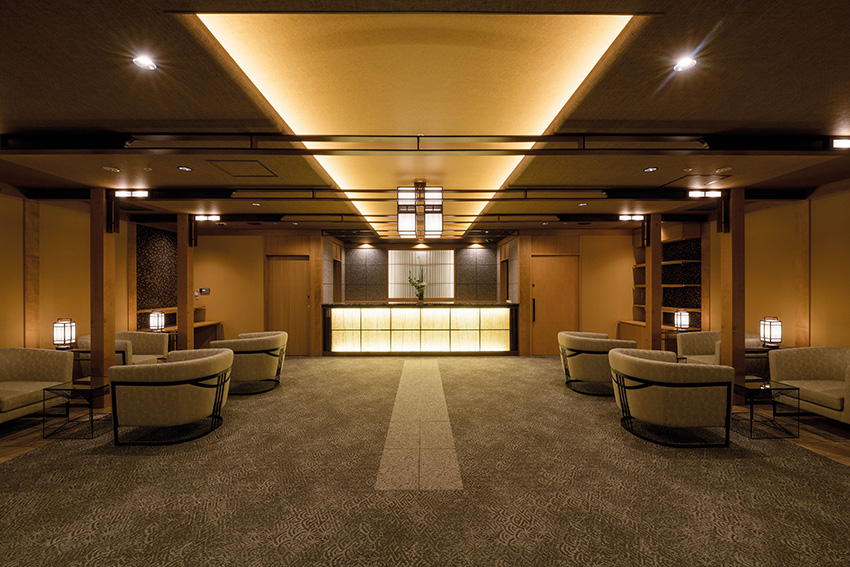
Finally, looking ahead to 2030, how do you envision developing ReLabo over the next five years?
My focus isn’t on expanding to Tokyo or overseas, but on strengthening Aomori as our base and creating a model that contributes to revitalizing areas facing population decline. A professor at Harvard once asked me, “Why not move to a larger market?” But I have 2,000 employees and deep ties to my hometown. I cannot simply abandon it.
Of course, the knowledge and experience cultivated here can be applied to other regions through consulting or partnerships. But my top priority is my people and my region. If we do expand, it will be in a way that brings strategic benefits to Aomori and other regions facing similar challenges.
AloJapan.com