
このページを
日本語
で読む
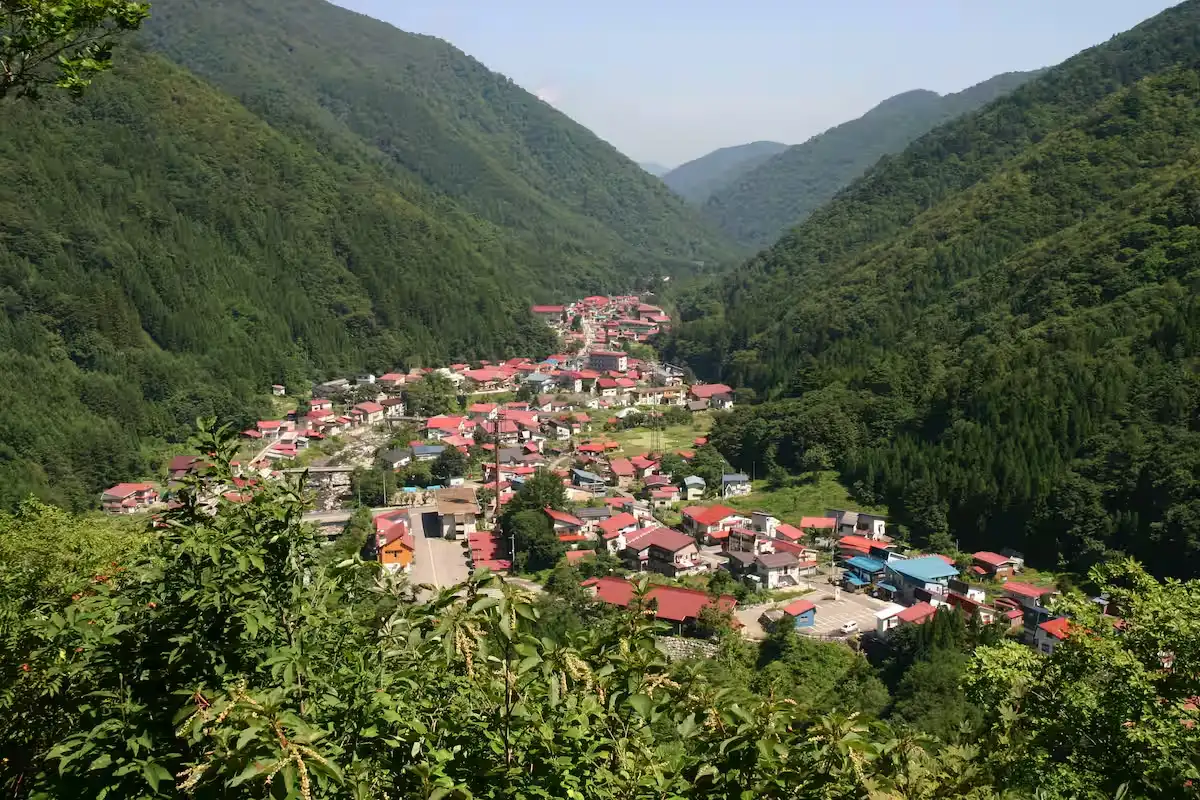
Located at the southwestern tip of Fukushima Prefecture and bordering Niigata, Gunma, and Tochigi, Hinoemata Village is known as Japan’s least densely populated village. It also serves as Fukushima’s gateway to the pristine Ozegahara marshlands. With a population of fewer than 500 and around 40% of residents aged 65 or older, the village faces the challenges of a shrinking and aging community.
Hinoemata Village covers about 390 sq km (150 sq mi) and had a population of 479 as of the end of March 2025. This translates to a population density of just 1.23 people per sq km (3.2 per sq mi), with an aging rate of 39.87%.
By comparison, Tokyo’s 23 wards span about 628 sq km (243 sq mi), roughly 1.6 times the size of Hinoemata. Yet they are home to around 9.87 million people as of March 1, 2025, with a population density exceeding 15,700 per sq km (40,700 per sq mi).
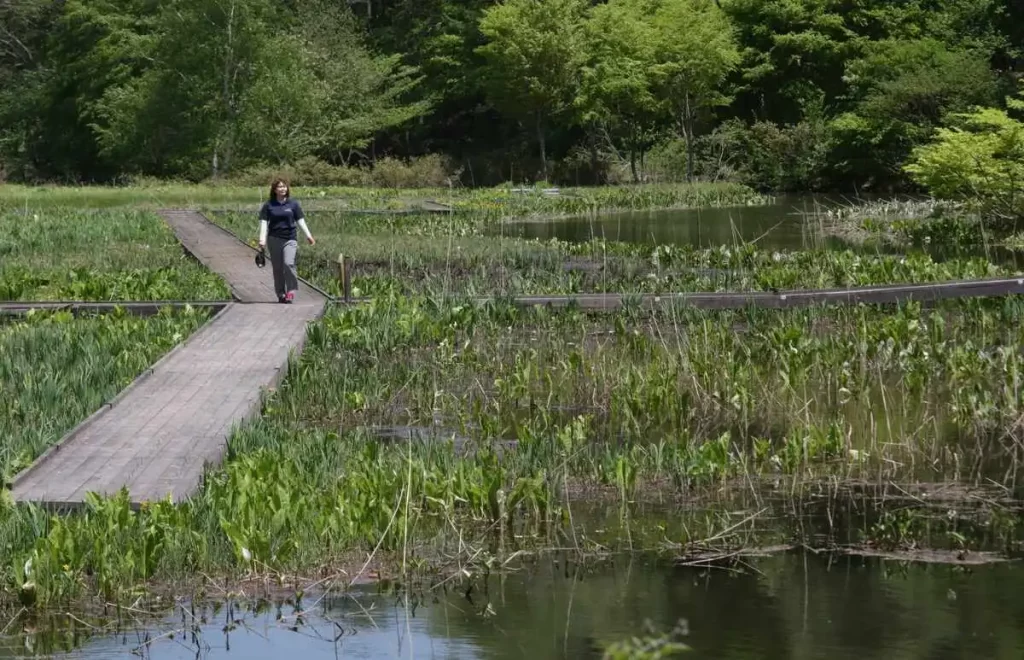 Mini Oze Park, popular with visitors who don’t have time or stamina to hike in Oze. June 2023, Hinoemata Village, Fukushima Prefecture. (©Sankei by Nobuo Serizawa)
A Village of Familiar Names
The main settlement, where the village office is located, sits at an elevation of around 1,000 m (3,280 ft), and winter snowfall can reach as much as 3 m (10 ft).
While the village has a few agricultural cooperative shops, the nearest convenience stores and large supermarkets are in neighboring Minamiaizu Town, about one hour away by car. The village’s only clinic provides internal medicine and pediatric services, so residents must travel to Minamiaizu Town for hospital-level care.
Hinoemata has one combined elementary and junior high school, with 46 students from first grade through the third year of junior high in the 2025 school year. Most high school students attend schools in Minamiaizu Town or Aizuwakamatsu City, more than two hours away by car. To support students who must live away from home, the village operates a dormitory in Aizu-Wakamatsu called Oze Dormitory.
Surnames in the village are also distinctive. Three names, Hoshi, Hirano, and Tachibana, account for about 70% of the population. Of these, roughly 60% are Hoshi, 30% Hirano, and 10% Tachibana. Mayor Nobuyuki Hirano says, “People usually call each other by their first names, and if two residents share the same full name, we add the name of their district to tell them apart.”
A Compact Way of Life
To outsiders, life in the village may seem full of inconveniences, but many residents see it differently. Mitsuru Hoshi of the village office’s General Affairs Division recalls with a smile, “It was fun living at Oze Dormitory when I left home for high school, because I was always with my friends and away from my parents.” He adds that spending those years outside the village with friends only strengthened their bonds.
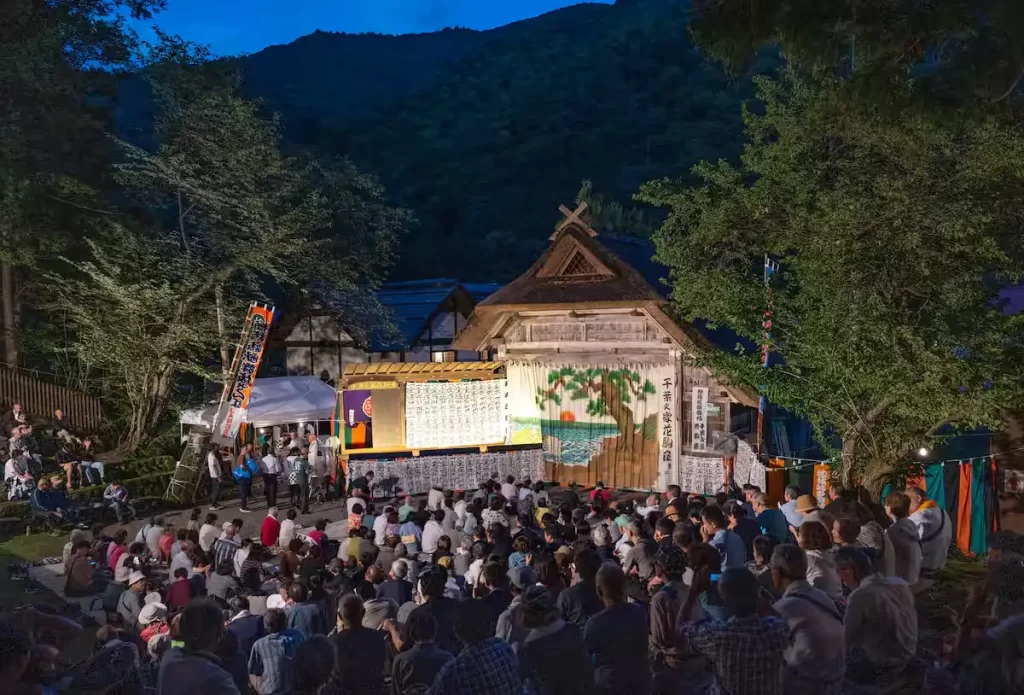 Hinoemata Kabuki being performed in the village on August 18, 2024. (©Sankei by Koji Tsuchiya)
When Typhoon Hagibis struck eastern Japan in October 2019, river embankments collapsed, causing a village-wide power outage and damaging roads. More than 50 people, including Mitsuru’s family, took shelter in public halls. Mitsuru himself was unable to leave work. “I was worried about my family, but people helped set up partition tents at the shelter,” he recalls. “In an emergency, it is reassuring when everyone knows each other.”
Toshihide Hoshi, head of the village Chamber of Commerce and owner of a local inn, says, “The village itself is like one big company. When I came back after working elsewhere, I truly felt how strong our social ties are.” He adds with a smile, “Out of the 15 or 16 classmates I had, 10 are still here, and we have a great time.”

Aging, but Not Alone
About 98% of the village is forest, and the inhabited area covers only around 2 sq km (0.8 sq mi). Daily life is compact and easy to manage on foot, and there is no school bus service. Mayor Hirano says the village is like a “compact city,” emphasizing its convenience.
Still, population decline and rapid aging remain serious challenges. Mayor Hirano admits, “Honestly, it is difficult to increase the population,” but notes that Japan has entered an era in which many older people continue to work. “We want to create a system where they can contribute as part of the workforce.” He believes that being needed can give people a sense of purpose.
The village’s close-knit culture can be an advantage. Everyone interviewed in Hinoemata said that kodokushi, the phenomenon of dying alone and remaining undiscovered for a long time, does not occur there.
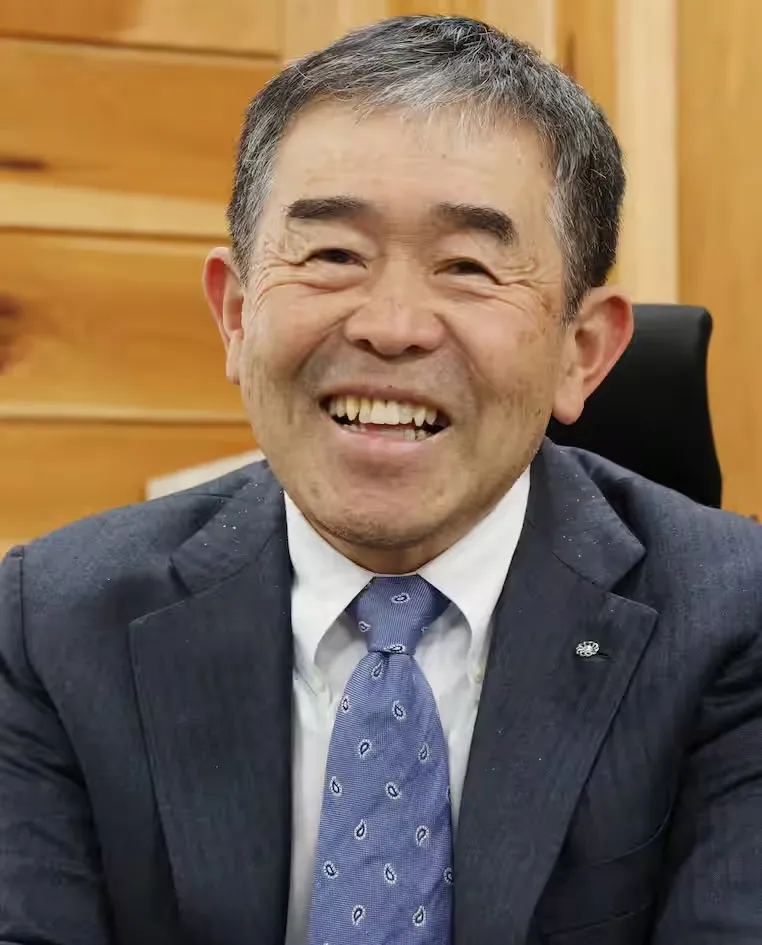 Mayor Nobuyuki Hirano of Hinoemata Village, Fukushima Prefecture, speaking in an interview at the village office. (©Sankei by Nobuo Serizawa)
Getting There
Hinoemata Village is about 47 km (29 mi) from Aizukogen-Ozeguchi Station on the Aizu Railway and Yagan Railway lines, a drive of roughly 70 minutes. It is also about 90 km (56 mi), just over 2 hours by car, from Nishinasuno-Shiobara Interchange on the Tohoku Expressway in Tochigi Prefecture. From Aizu-Wakamatsu Interchange on the Ban-Etsu Expressway in Fukushima Prefecture, it is about 100 km (62 mi), or around 2.5 hours by car.
Although it takes time to reach the village from the nearest station or interchange, the straight-line distance from the Tokyo Metropolitan Government Building to Hinoemata Village Office is surprisingly short, at about 150 km (93 mi).
RELATED:
Author: Nobuo Serizawa, The Sankei Shimbun
このページを
日本語
で読む
Continue Reading
AloJapan.com