
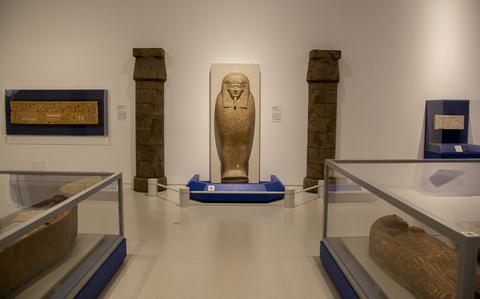
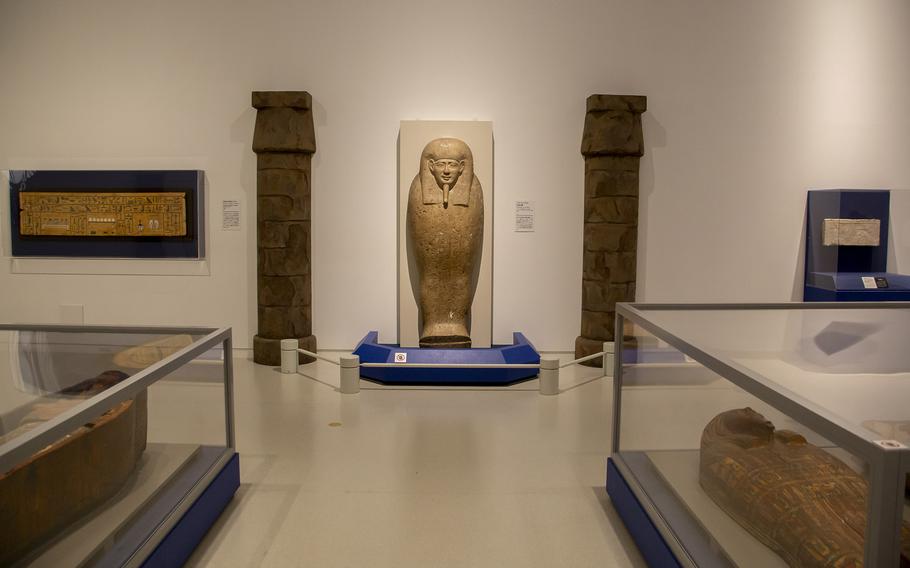
Afterlife Room (Photo by David R. Krigbaum/www.wayfarerdaves.com)
A new exhibition has brought a culture even more ancient than Japan’s to Fukuoka. The Brooklyn Museum’s “Unraveling the Secrets of Ancient Egypt” is going on now at the Fukuoka Art Museum until March 8.
The exhibit explores the land of pharaohs through a collection of 150 artifacts split into three sections on daily life, the pharaohs and the afterlife and across 3,000 years of history.
“Egypt was one of the first civilizations to produce monumental architecture, develop a writing system, and establish a highly organized government and social hierarchy. It also had a sophisticated system of beliefs that explained life, society, and the afterlife,” according to the Brooklyn Museum’s Anne Pasternak,
The exhibition casts a broad but shallow net in covering these vast topics so that those who aren’t Egyptologists can learn without being bogged down with too much information or need specialized knowledge to appreciate what they’re seeing. The everyday artifacts themselves are all equally art and artifact, attention grabbing and possibly more attractive to the eye now than when they were more mundane.
These are complimented by reliefs depicting people and work, not to mention the ever-present danger of hippopotamus attacks. There’s even a 3,000-year-old broken piece of pottery someone used to practice sketching. It reminded me of a line from Indiana Jones and the Raiders of the Lost Ark about how you can take a worthless trinket and bury it in the sand; thousands of years later it’s become a treasure.
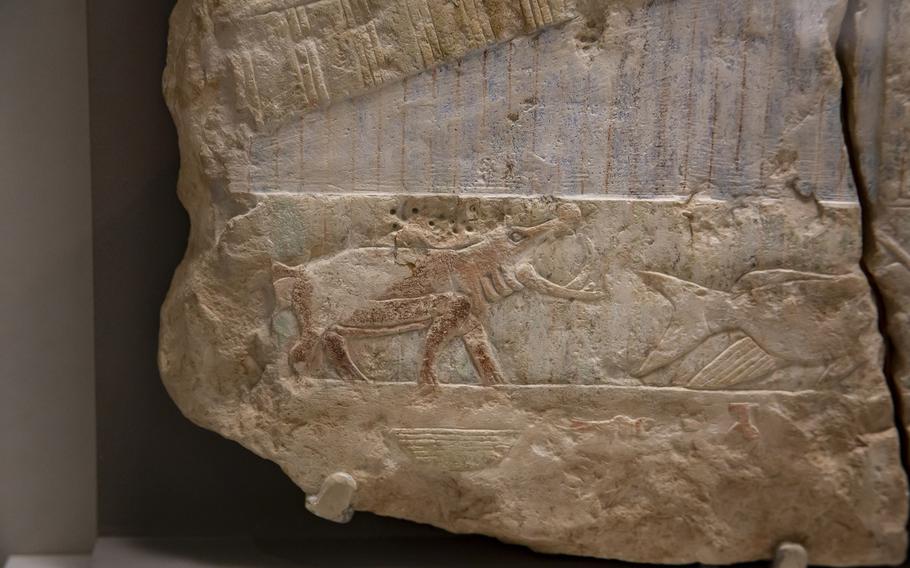
(Photo by David R. Krigbaum/www.wayfarerdaves.com)
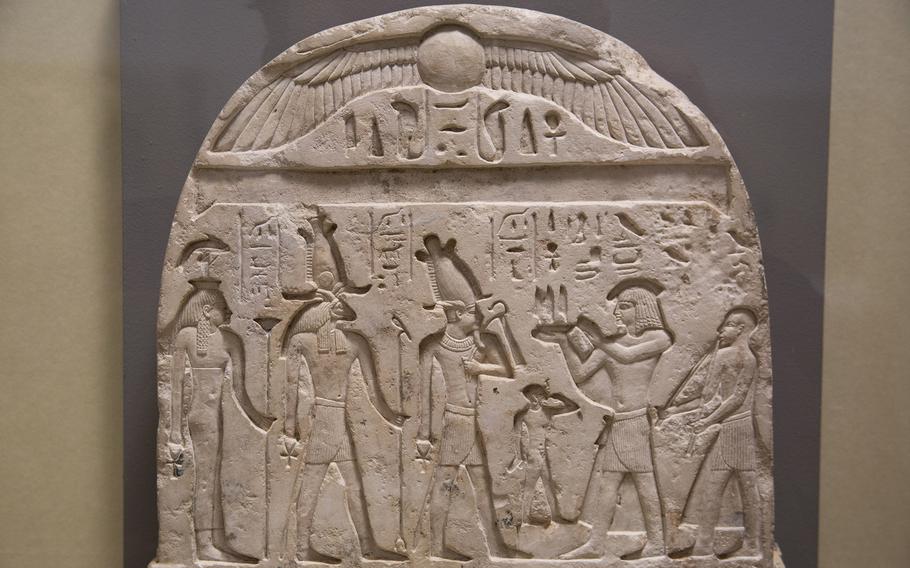
(Photo by David R. Krigbaum/www.wayfarerdaves.com)
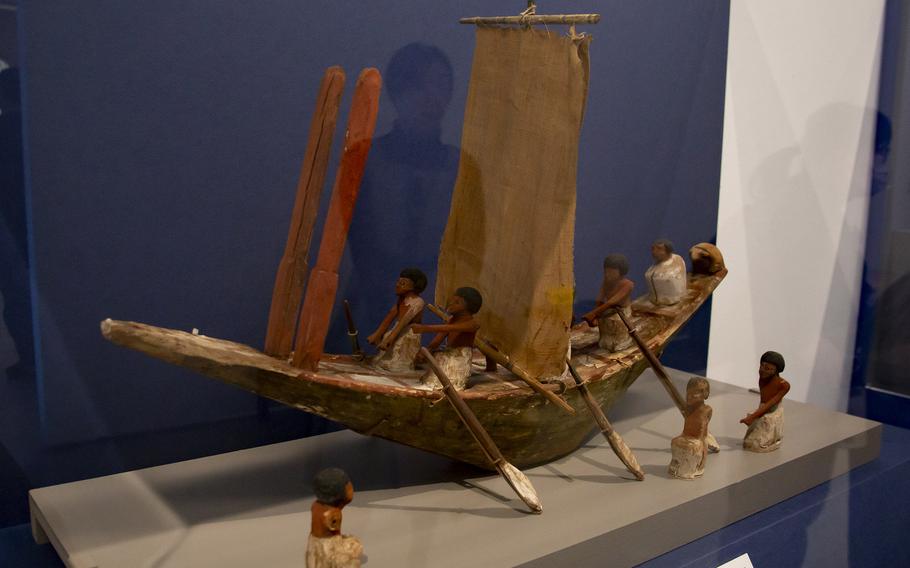
(Photo by David R. Krigbaum/www.wayfarerdaves.com)
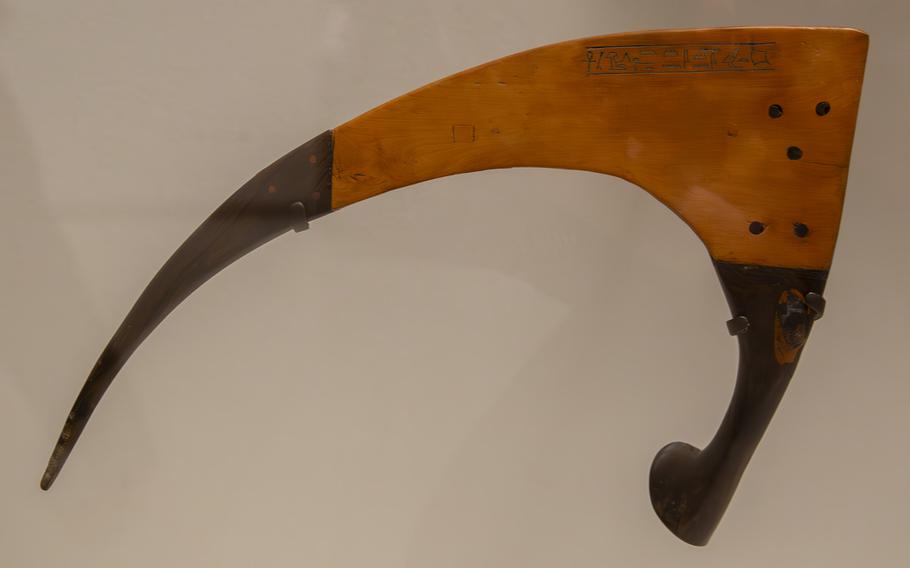
(Photo by David R. Krigbaum/www.wayfarerdaves.com)
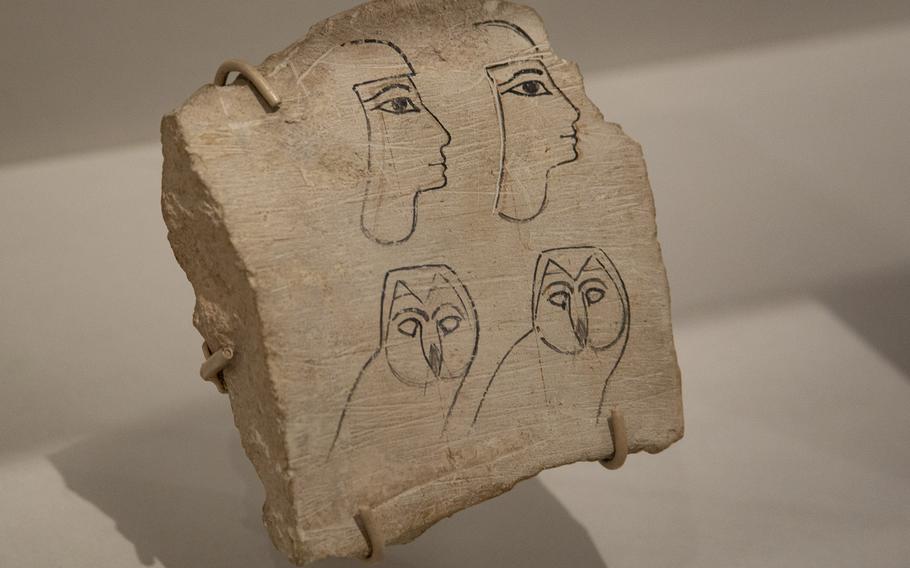
(Photo by David R. Krigbaum/www.wayfarerdaves.com)
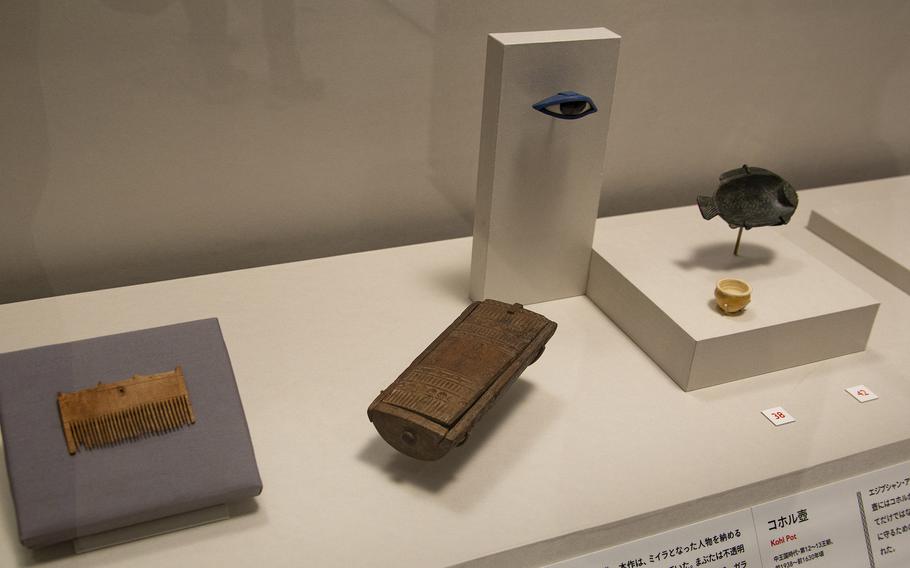
(Photo by David R. Krigbaum/www.wayfarerdaves.com)
Though I found these attractive, it’s not an Egyptian collection without a mummy or sarcophagus and it did not disappoint. The finale is a room with seven sarcophagi and mummies, including two cat mummies. Mummification as a practice continued a long time after Egypt was ruled by foreigners, with the youngest mummy on display being a mere 2,000 years old.
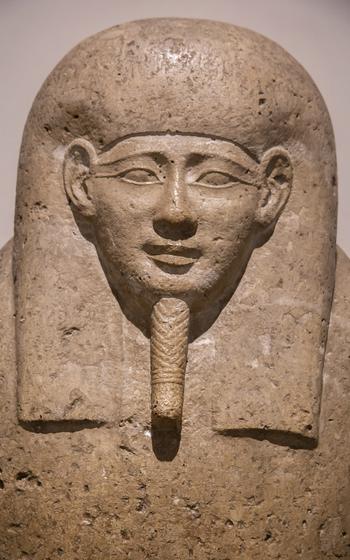
Ancient Egyptian stone sculpture of a face (Photo by David R. Krigbaum/Stripes Japan)
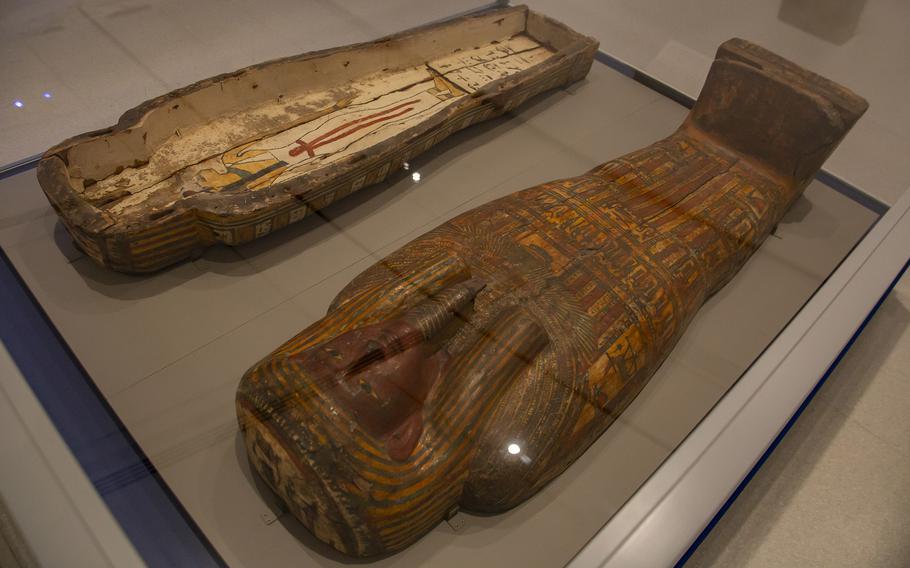
Sarcophagus (Photo by David R. Krigbaum/www.wayfarerdaves.com)
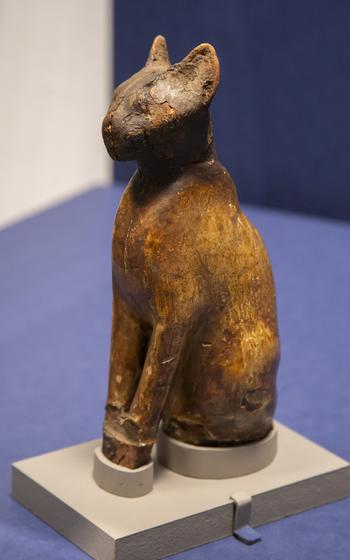
Cat Mummy (Photo by David R. Krigbaum/www.wayfarerdaves.com)
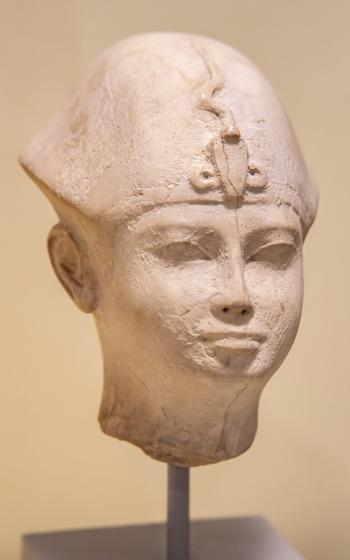
Pharoah Bust (Photo by David R. Krigbaum/www.wayfarerdaves.com)
All artifacts have an English description with supporting information in Japanese, though it was easy to translate with my cell phone. For those with children, the artifacts and pyramid exploring video are likely enough to capture the imagination. I spent an hour in the exhibition, though could have easily spent longer.
For those wanting to take their education a step further, I recommend pairing this museum with a day trip to Yoshinogari Historical Park in Saga Prefecture to compare with Japanese Yayoi culture. The Yayoi period is a 700-year span where the Japanese shifted from a nomadic lifestyle to building permanent settlements; though this took place millennia after the native Egyptian dynasties rose and fell. Yoshinogari reconstructs the original settlement atop its excavated ruins.
Although the exhibition in Fukuoka ends March 8, it will stay in Japan. It will move to Osaka’s ABENO HARUKAS Art Museum and be held from March 20 – June 14. Its final stop will be at the Nagano Prefectural Art Museum from June 27 – Sept. 27.
ADDRESS:
https://egypt-brooklyn.exhibit.jp/en/
Fukuoka Art Museum
Yoshinogari Historic Park
AloJapan.com