
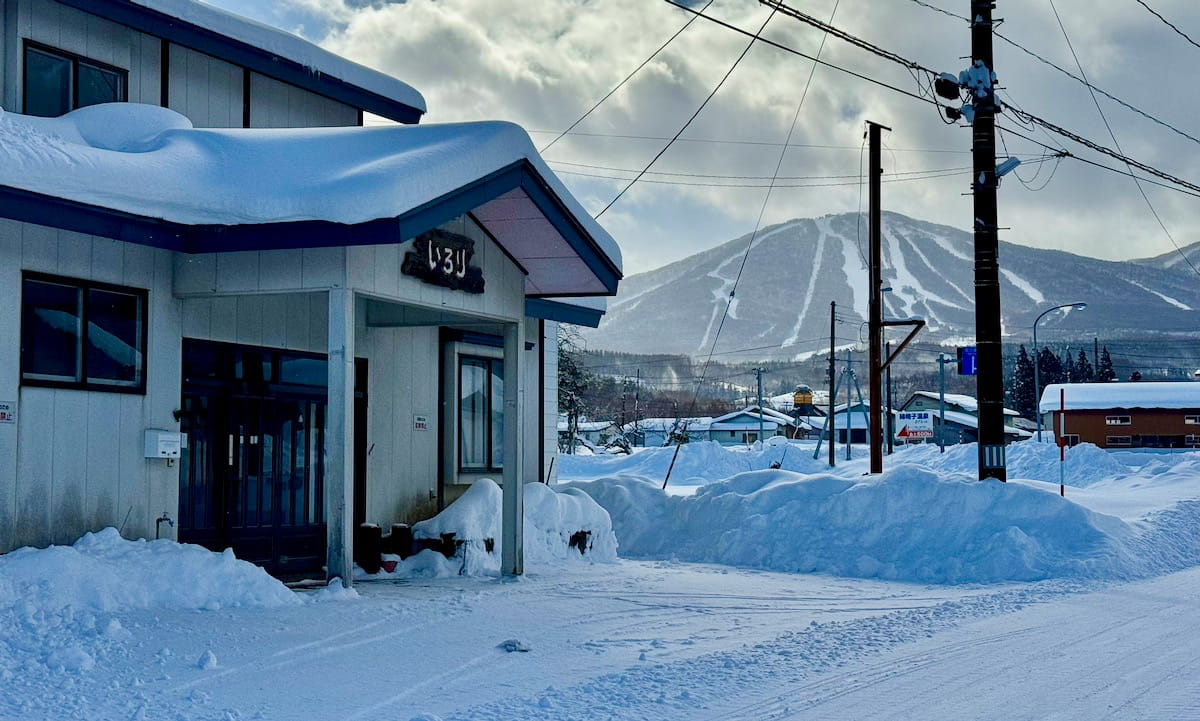
Travellers planning a powder-filled trip to Japan often look to grand, modern resort hotels or the world-renowned hospitality of the traditional ryokan. But for many Japanese resort-goers, the true heart of the mountain experience lies elsewhere, in the unassuming, minshuku (民宿) inn.
Walk through many Japanese ski villages today and you will notice quiet signs of change. Long before destination resorts and international brandings, they formed the backbone of ski towns across Japan. Giving the affordable chance to ski for school trips, company outings, and family holidays. Today, that foundation is disappearing, and with it, a uniquely Japanese approach to skiing that valued familiarity, affordability, and human connection over luxury.
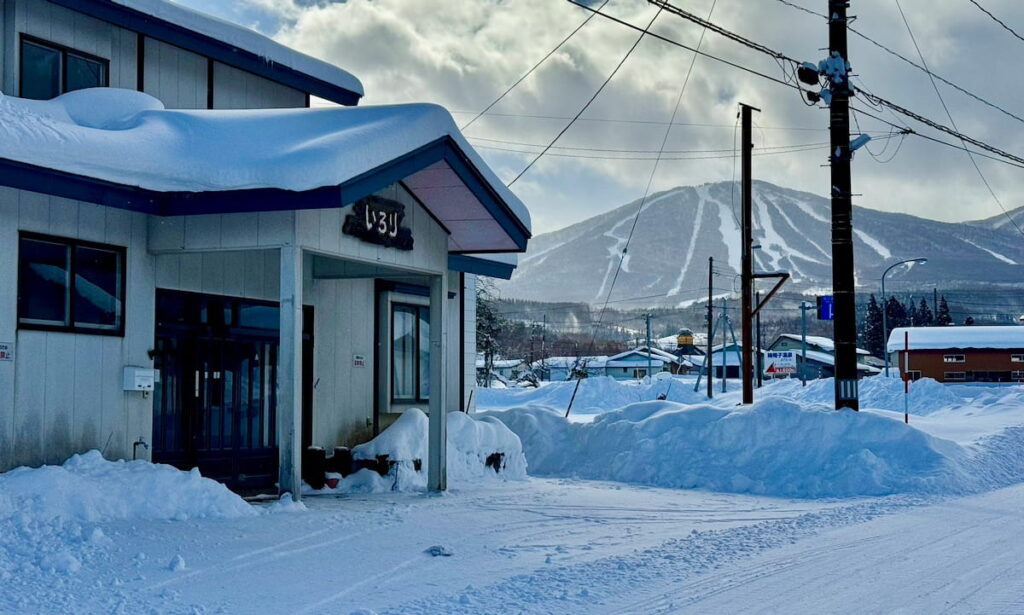
Minshuku Irori near the base of Appi Kogen Ski Resort. Image: Eliot Cochrane
These simple lodgings provide a futon on tatami, a clean shared bath, and a home-cooked meal. Yet they are more than just cheap accommodation. They were, and for many still are, a cherished winter tradition, a familiar base camp where customers return year after year. This transforms a ski trip from a holiday into a seasonal pilgrimage to visit family friends.
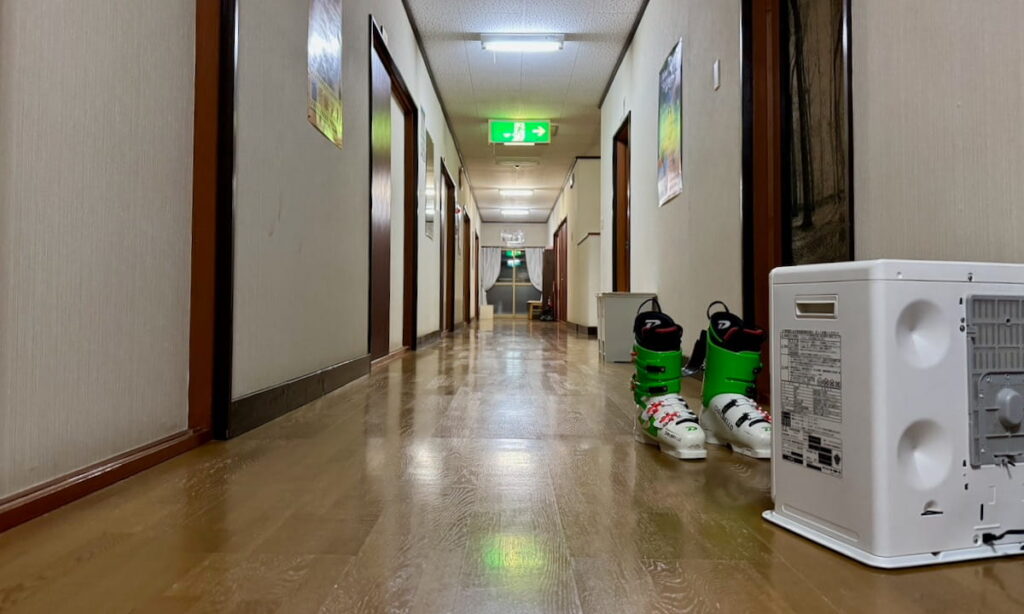
Looking down the hallway at night. Image: Eliot Cochrane
Just Like Home
Minshukus are definitely not going to win any prizes for design. Built much like a regular house, their exterior appearance is about as simple as it gets. Oftentimes, the only indication that it is a minshuku is the sign out front. Do not expect sheltered parking either. These lodgings are about as bare-bones as you can get.
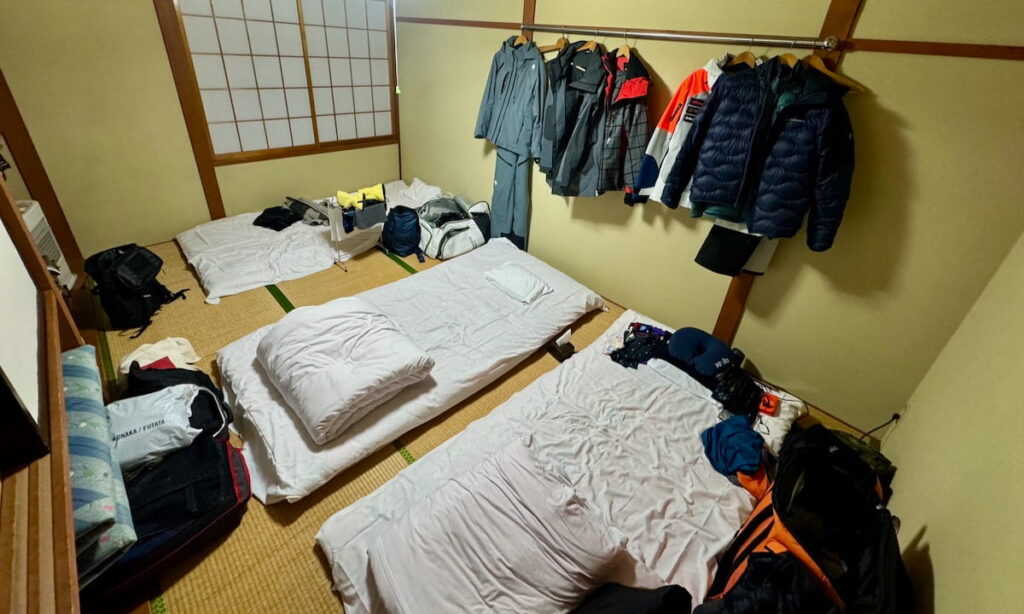
Three people in a small room means little space for anything else. Image: Eliot Cochrane
The rooms are simply furnished with a TV, hangers for jackets, a safe, and maybe a drying rack. In the closets lie all of the bedding, requiring guests to lay out their own futon at night. Bathrooms and communal baths are separated by gender and are usually shared by guests. Meals are served in a communal dining room. There are often no private kaiseki meals but that is part of the charm. Instead, minshukus offer plentiful, hearty, home-cooked dinners which often feature local ingredients.
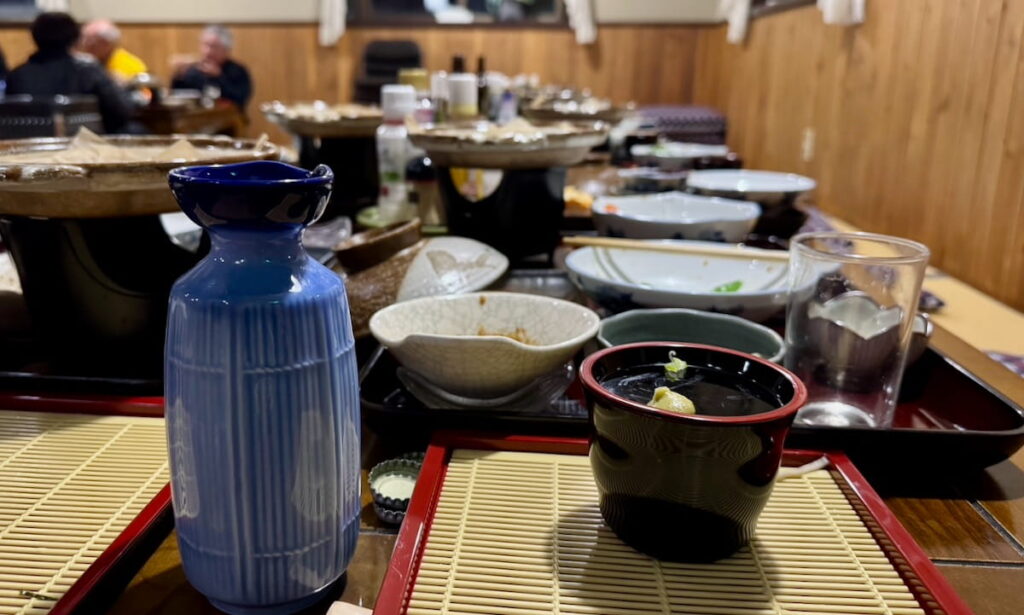
Not a single piece of food or drop of sake left. Image: Eliot Cochrane
The most important part of the experience is that you are made to feel at home. When groups converge for dinner, alcohol is served in abundance. What starts as separate parties soon turns into mingling across tables. Guests are often encouraged to help themselves, within reason, with bottles of beer taken directly from the refrigerator and shared freely. From there, the celebration does not stop, as guests are free to take ice, cups, and leftover alcohol back to their rooms to continue the night.
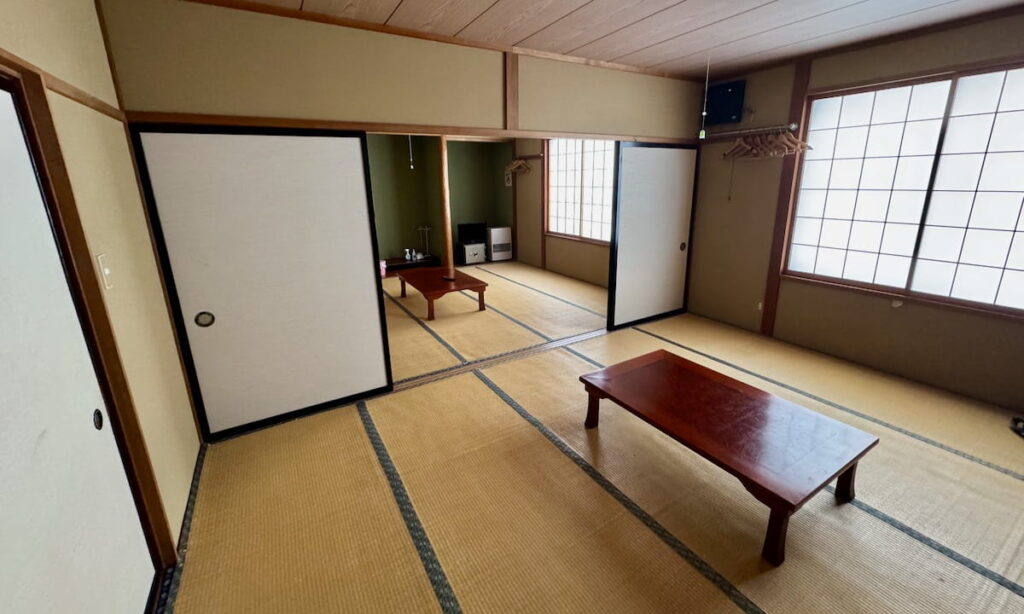
Connected double rooms are often preferred by large groups for group parties. Image: Eliot Cochrane
Minshukus are often preferred by small groups, making it common for ski teams or groups of friends to rent a large room together. This team and family atmosphere solidifies the minshuku’s role as a practical, affordable, and deeply social ski trip hub. But do not let the groups of 60 or 70 year old men fool you, they can still get rowdy before turning in by 9 p.m.
The Quiet Decline
The minshuku began in the late 19th century near mountains such as Hakuba, as local guides offered simple lodging in their homes to visiting adventurers following the Meiji Restoration. This practice was officially recognized in 1937. Critically, this informal yet affordable model coincided with Japan’s post-war ski boom. Within just over a decade, from 1937 to 1948, hundreds of minshuku were operating, cementing their role in Japan’s growing ski culture.
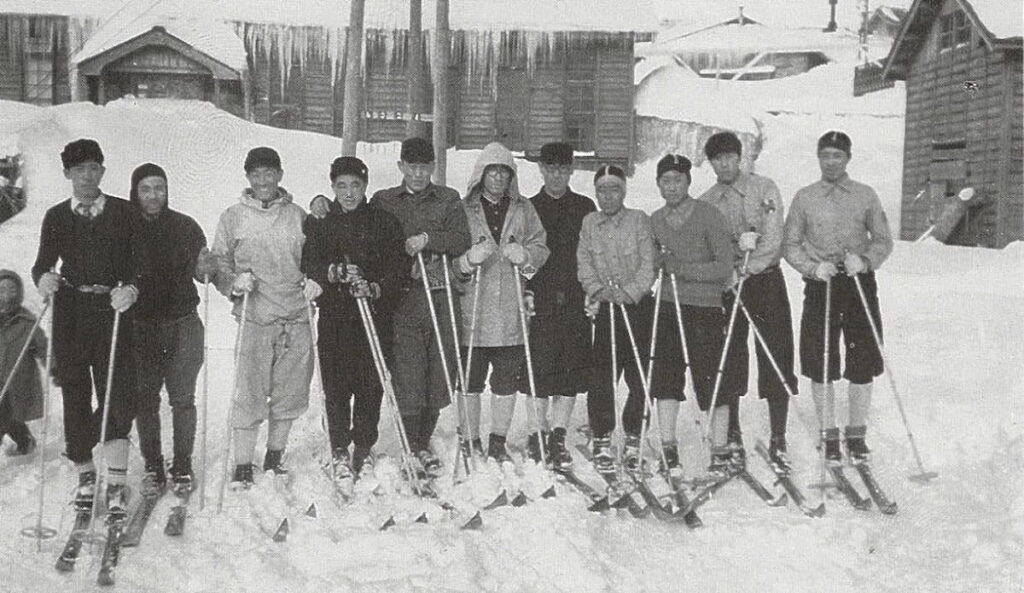
Vintage photo of members from the Matsuo Mine Ski Team in Hachimantai, Iwate. Image: Matsuo Kozan Museum
Fuelled by post-war economic growth, skiing became an accessible winter sport for much of Japan. Demand for inexpensive, convenient, slope-side lodging was met by the minshuku. These inns offered essential services while creating a sense of belonging on annual trips. The minshuku became the economic backbone for the ski industry and secured its place as the practical, traditional base camp for the everyday Japanese skier.
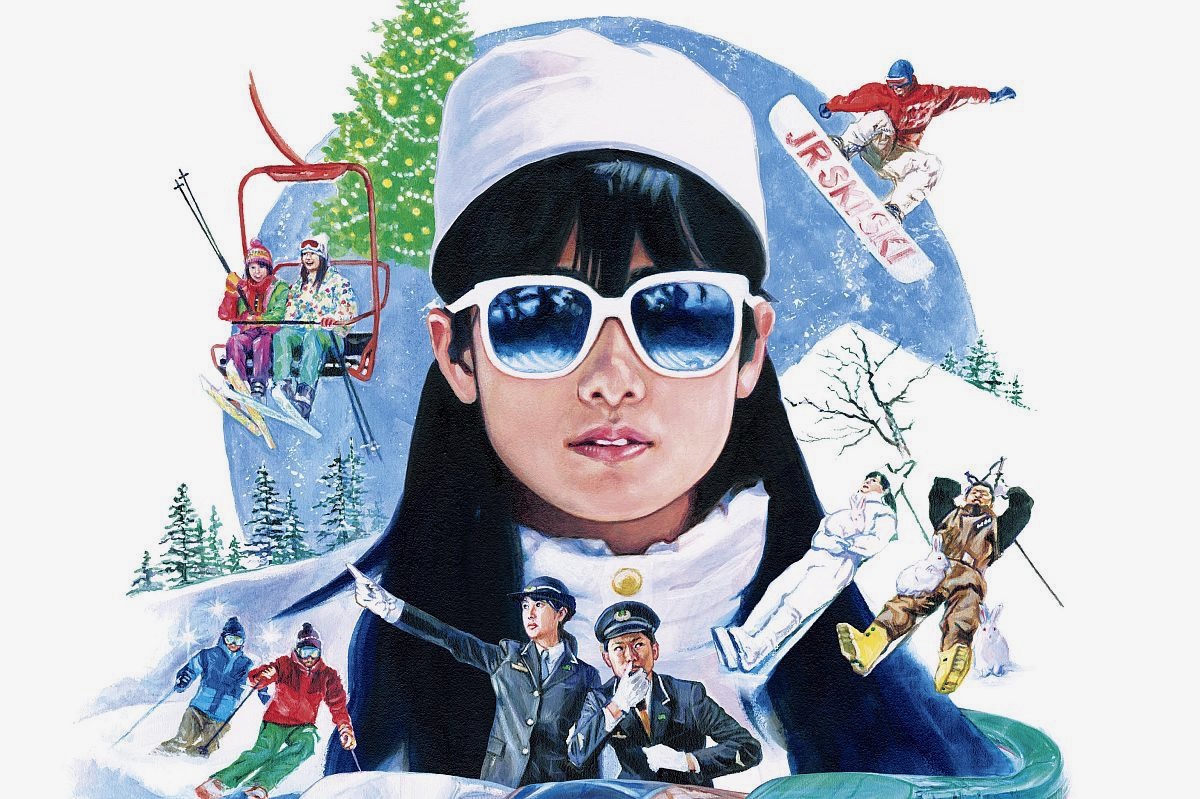
JR SKISKI poster to promote JR for traveling by train to ski. Image: JR EAST
The shift toward international tourism in the late 1990s accelerated the minshuku’s decline. Foreign investors favoured the standardized luxury of hotels and ryokans. Faced with aging owners, rising costs, and fewer domestic customers, many minshukus closed. This transition has replaced affordable lodging with luxury accommodations that increasingly price out local Japanese skiers.
More Than Just a Place to Crash
Minshukus are unlikely to survive much longer as ski area development plans continue to emphasize luxury lodging. But where minshukus lack in views and social media appeal, the loyalty of returning guests year after year will be deeply missed by those who valued those places. Those who stayed were not fleeting tourists but returning family. Each visit was marked by open arms and warm smiles. The yearly recurrent guests handed the key to their usual room.
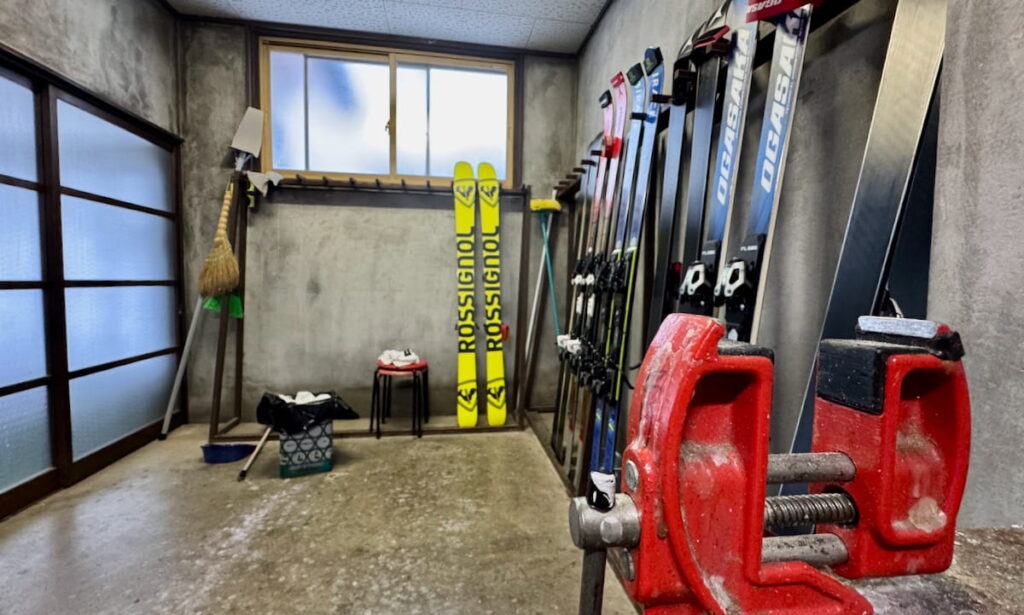
Communal ski drying and waxing room. Image: Eliot Cochrane
These bonds transformed the communal dining room from a simple place to eat into a vibrant social hub each evening. After a day on the slopes, guests gathered around large tables to talk stories over dinner. This closeness shared between guests and owners alike, fosters a collective mountain spirit that cannot be replicated in private dining rooms or banquet halls of luxury hotels and ryokans. The minshuku was truly a home away from home.
“The minshuku was the economic and social foundation that allowed generations of Japanese people to make skiing a part of their life.”
As international money and attention continue to steer development toward high-end accommodations, the unique value of the minshuku is increasingly overlooked. This shift is more than a matter of taste as it represents a deeper change of ski culture in Japan. In the pursuit of luxury, we risk forgetting the practical, affordable, and communal inns that nurtured Japan’s growth of winter sports. The minshuku was the economic and social foundation that allowed generations of Japanese people to make skiing a part of their life.
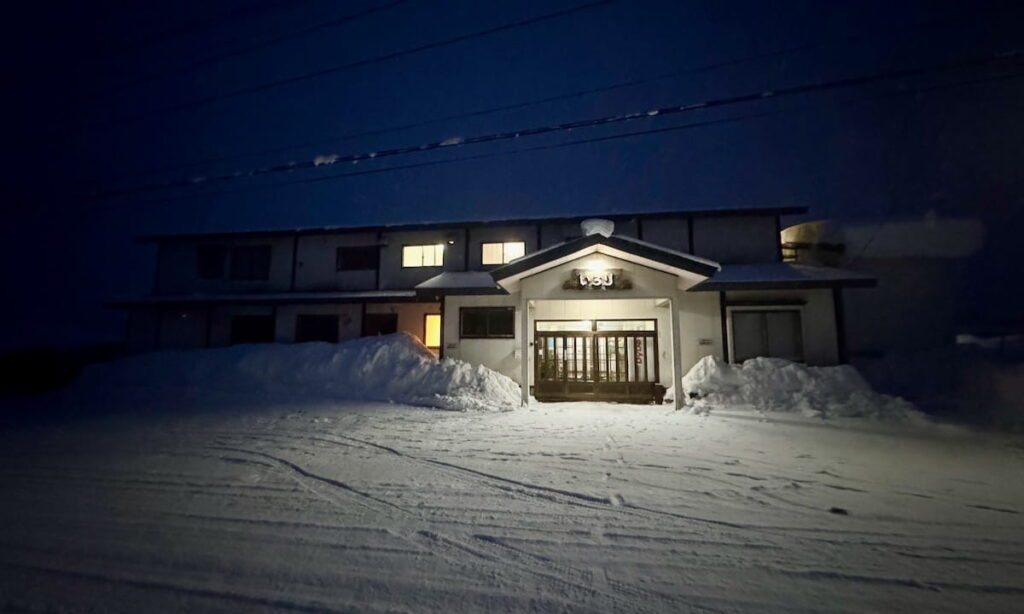
Entrance to Irori in the evening. Image: Eliot Cochrane
Even in their quiet decline, the remaining minshuku continue to operate for as long as they can, but their way of life may soon exist only in memory. For the conscious traveller, seeking out one of these family-run inns is a meaningful pilgrimage, a chance to experience the authentic heart of Japanese skiing before it disappears. As the trend toward high-end development and foreign investment continues, the end of the minshuku feels inevitable. But before that day comes, I am grateful to have experienced a side of Japan that money and modern resorts simply won’t replicate.
SPONSORED
 Browse thousands of ski resort properties for sale in Japan
Uchi is Japan’s independent, one-stop real estate site – start your search today.
VIEW PROPERTIES
AloJapan.com