
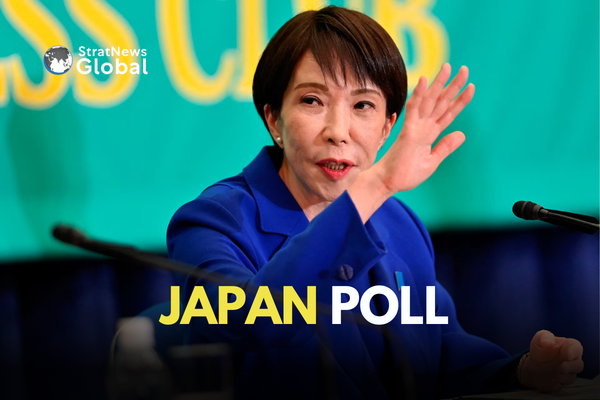
Japanese Prime Minister Sanae Takaichi’s party is on course for a landslide victory in next week’s lower house election, according to a survey by the Asahi newspaper, increasing the likelihood that Japan will continue with large scale spending and tax cuts.
A decisive result in Sunday’s vote would strengthen Takaichi’s authority within her party and give her a clear mandate to pursue expansionary fiscal policies. However, such an outcome could also reignite market concerns about the state of Japan’s public finances and put upward pressure on government bond yields.
The Asahi poll, released on Sunday, showed Takaichi’s Liberal Democratic Party is likely to secure well above the 233 seats needed for a majority in the 465 seat lower house. The party currently holds 198 seats.
When combined with its coalition partner, the Japan Innovation Party, also known as Ishin, the ruling bloc is projected to win around 300 seats. Such a result would represent a significant expansion of the coalition’s parliamentary strength.
By contrast, the largest opposition force, the Centrist Reform Alliance, is expected to suffer heavy losses. The Asahi survey indicated the party could lose about half of its current 167 seats, further weakening the opposition’s ability to challenge government policy.
Fiscal Policy In Focus
A strong electoral showing would reinforce Takaichi’s grip on power and embolden her push for proactive fiscal measures. Analysts say markets are already reacting to the possibility that she will press ahead with higher spending and tax cuts.
“A huge LDP win would further strengthen Takaichi’s grip on power,” said Keisuke Tsuruta, senior bond strategist at Mitsubishi UFJ Morgan Stanley Securities. He added that investors would likely see a greater chance of the government pursuing its flagship fiscal policies, including a potential cut to the consumption tax.
Japanese government bond yields rose on Monday as investors priced in the likelihood that Takaichi would secure a mandate to advance her economic agenda. Her approach focuses on reflating the economy through stimulus, even as concerns persist about fiscal discipline.
Market Jitters And Debt Concerns
Japan’s markets have already shown sensitivity to Takaichi’s policy pledges. Last month, the country experienced a broad market sell off after she said she would suspend an 8 percent levy on food sales for two years. The proposal revived worries about the sustainability of public finances in a country where government debt exceeds twice the size of the economy.
Although most other political parties have also called for a cut or suspension of the consumption tax to ease pressure on households facing rising living costs, investors remain cautious about the long term impact on debt levels.
Snap Election Gamble
Takaichi dissolved parliament last month and called a snap election for February 8. She is seeking a clear mandate to push ahead with her expansionary fiscal strategy, as her ruling coalition currently holds only a slim majority in the lower house and lacks control of the upper house.
A landslide victory would significantly strengthen her position and reshape the balance of power in parliament, while also setting the tone for Japan’s economic policy in the years ahead.
With inputs from Reuters

AloJapan.com