
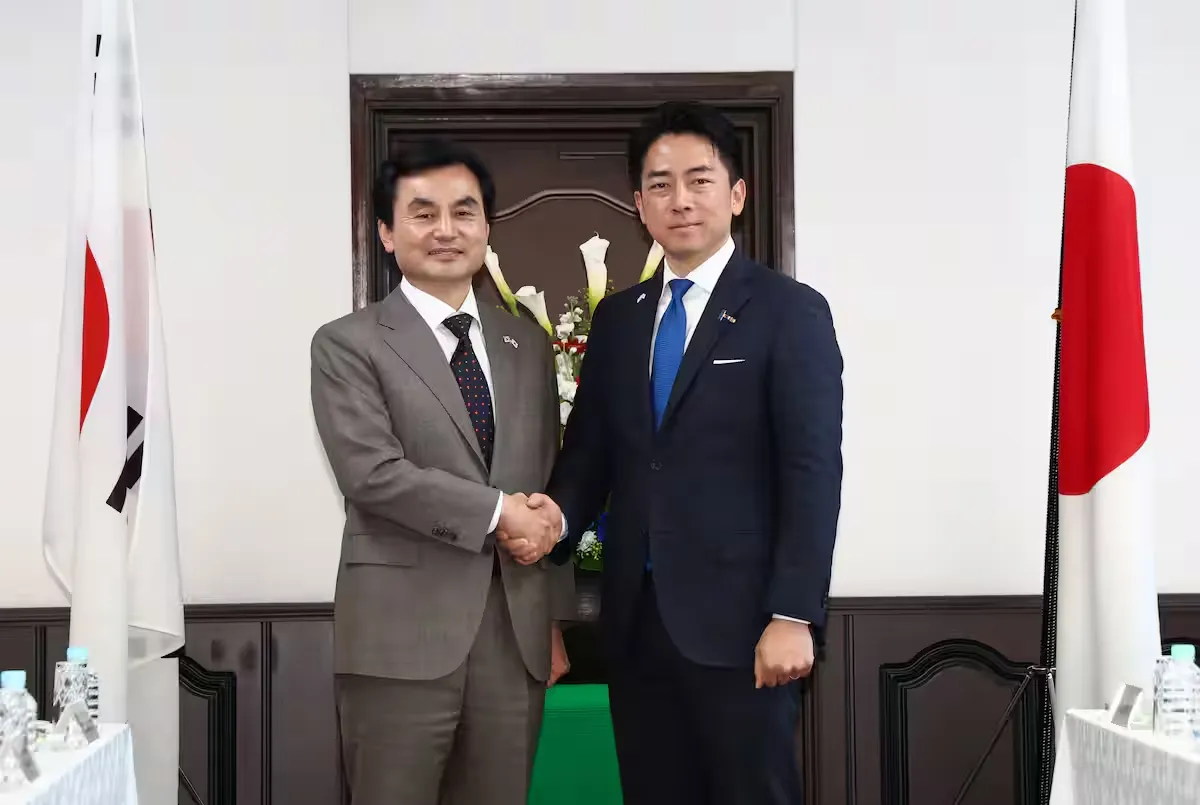
Japanese Defense Minister Shinjiro Koizumi and his South Korean counterpart Ahn Gyu-back met on Friday, January 30, at the Japan Maritime Self-Defense Force Yokosuka Base in Kanagawa Prefecture.
The stage was set for their meeting during the Japan-South Korea summit in Nara on January 13. In Nara, the leaders of the two countries mutually confirmed the importance of security cooperation. Yokosuka City, home to the MSDF base, is also Koizumi’s hometown.
Following the meeting, the Japanese and South Korean ministers issued a joint press statement. With North Korea’s nuclear and missile capabilities in mind, they confirmed the need for bilateral cooperation and their commitment to the complete denuclearization of the Korean Peninsula.
The two sides also agreed to continue Japan-South Korea and Japan-United States-South Korea cooperation to maintain peace and stability in the region. Moreover, they will both promote defense cooperation and exchanges, including annual mutual visits by their Cabinet ministers.
A Hopeful Trend
It is appropriate that Japan and South Korea have expressed their intention to promote security cooperation through meetings and statements. Hopefully, this trend will continue and show concrete progress. One such step would be the conclusion of an Acquisition and Cross-Servicing Agreement.
Earlier, on January 28, Japan’s Air Self-Defense Force (ASDF) provided refueling support for nine South Korean Air Force aircraft. SKAF’s aerobatic squadron, the Black Eagles, stopped over at Naha Air Base en route to Saudi Arabia for an international defense equipment exhibition.
Planes from the ASDF’s own Blue Impulse acrobatic group also flew in, and Japanese and Korean pilots enjoyed an opportunity to interact.
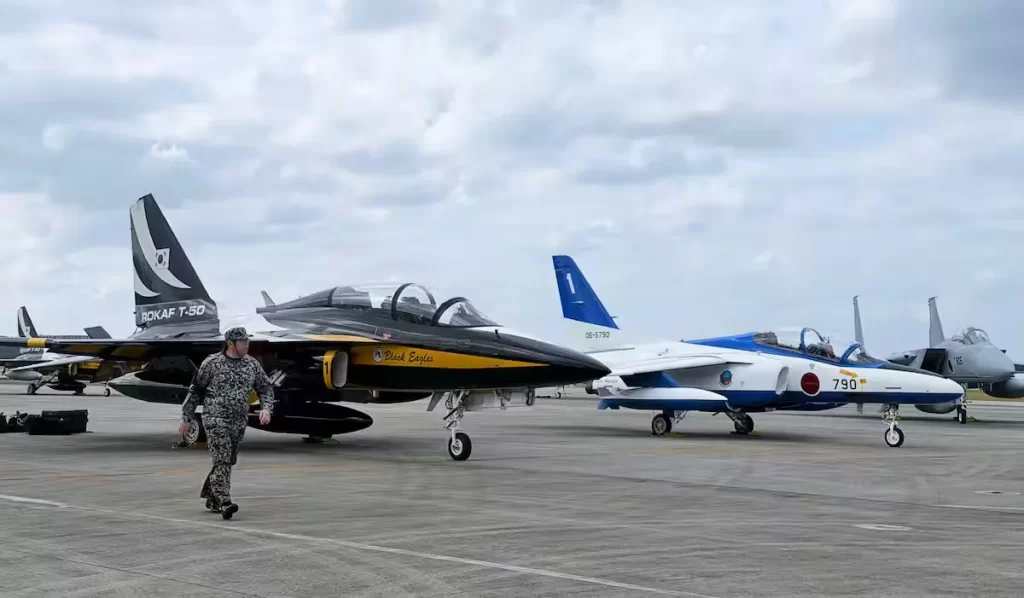 Naha hosted a friendly encounter between the South Korean Air Force’s “Black Eagles” and the Air Self-Defense Force’s “Blue Impulse” on January 28. (©Sankei by Otake Naoki)
Refueling of the South Korean military aircraft was originally planned for November 2025. However, the activity was postponed after Japan discovered that the South Korean aircraft would be flying over Takeshima in Shimane Prefecture. Nevertheless, despite the dispute, defense authorities in both nations were keenly aware of the need for cooperation. Therefore, the refueling exercise finally went ahead.
Challenging Security Environment
Nuclear-armed autocratic nations of China, Russia, and North Korea surround Japan and South Korea. In a Taiwan emergency, the North Korean and Russian militaries might well engage in diversionary actions. Seoul’s help in containing such a threat would make a major contribution to the Japan-US-South Korea trilateral effort to ensure peace and stability in the region.
There is also the possibility that the Trump administration may consider reducing the number of US troops in South Korea.
All parties should remember that North Korea invaded South Korea and thereby started the Korean War because the communists concluded that the US considered South Korea to be outside its defense perimeter. Their analysis was triggered by America’s 1950 announcement of the establishment of the Acheson Line. This time, Seoul may also be aiming to keep the US in its corner by cooperating with Japan.
Meanwhile, Japan and South Korea are already cooperating in multiple areas. Those include the sharing of missile defense data.
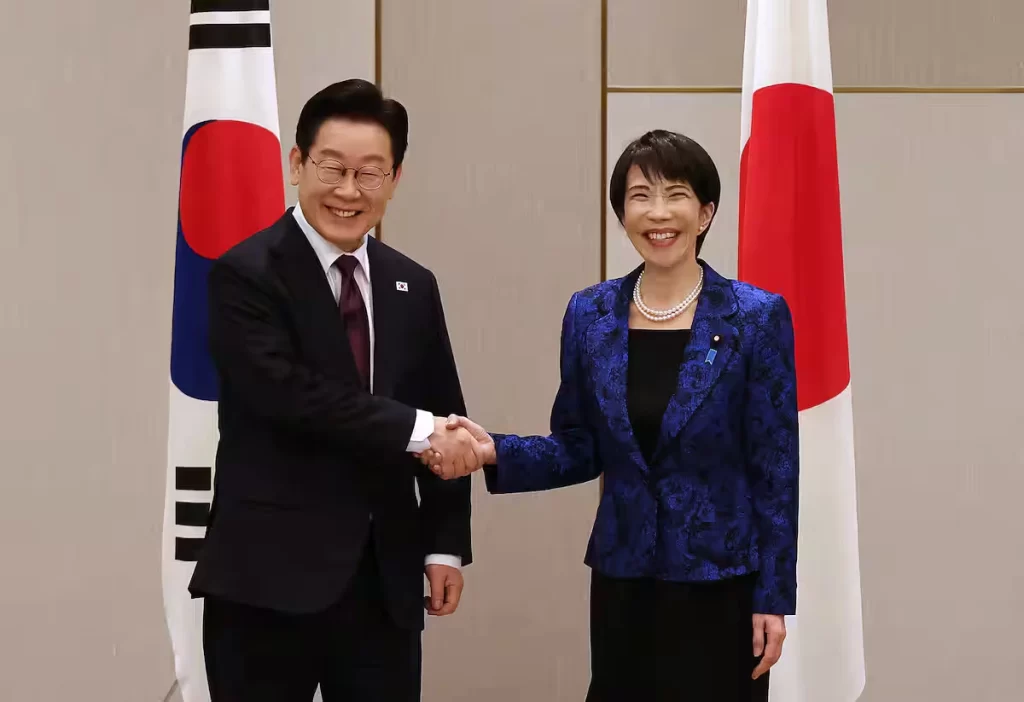 Japanese Prime Minister Sanae Takaichi and South Korean President Lee Jae-myung shake hands ahead of their summit, Jan. 13, Nara City. (Pool photo)

Managing Tensions
There is great importance in promoting cooperation in the maritime and air domains, including in coordination with the US military. That includes the ASDF’s refueling of South Korean military aircraft in Naha, Okinawa. And the visit of South Korea’s defense minister to Yokosuka, a major base for the MSDF and the US Navy, is clearly meaningful.
Both examples send signals of significant cooperation to audiences at home and abroad.
The December 2018 radar lock-on incident of a South Korean naval vessel that illuminated a MSDF aircraft remains outstanding, however. There was also South Korea’s unjustified rejection of MSDF vessels flying its official naval ensign, the Rising Sun Flag.
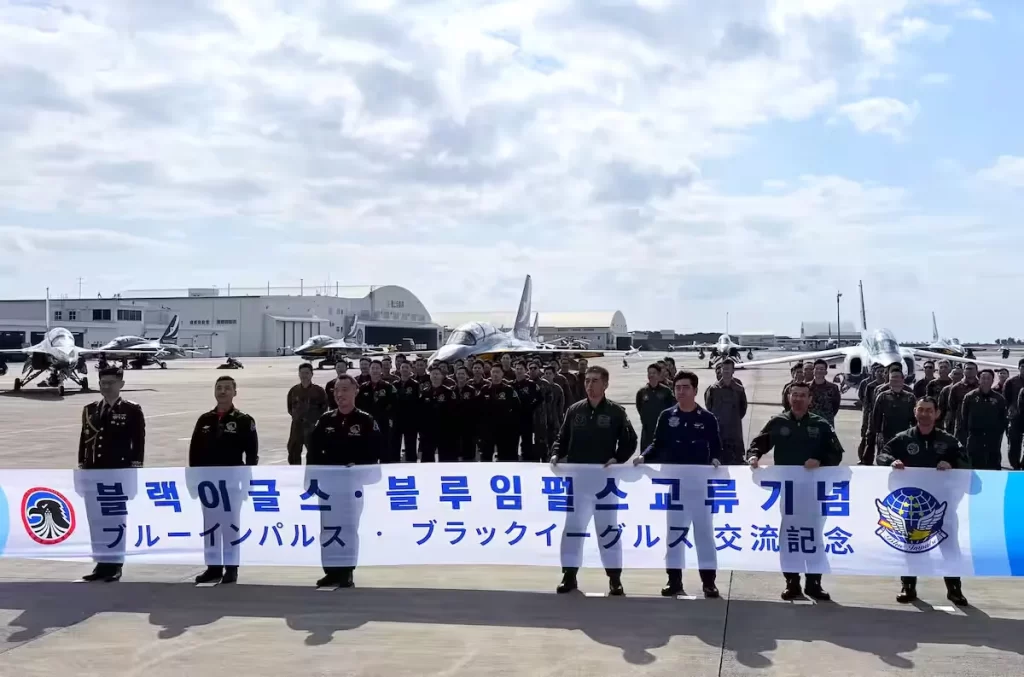 Naha City hosted an exchange between the Air Self-Defense Force’s “Blue Impulse” and the South Korean Air Force’s “Black Eagles.” January 28 (©Sankei by Naoki Otake).
In other words, South Korea may be a problematic neighbor. But the two countries share common threats and need to work together to deter them. The security environment has become that severe.
RELATED:
(Read the editorial in Japanese.)
Author: Editorial Board, The Sankei Shimbun
Continue Reading
AloJapan.com