
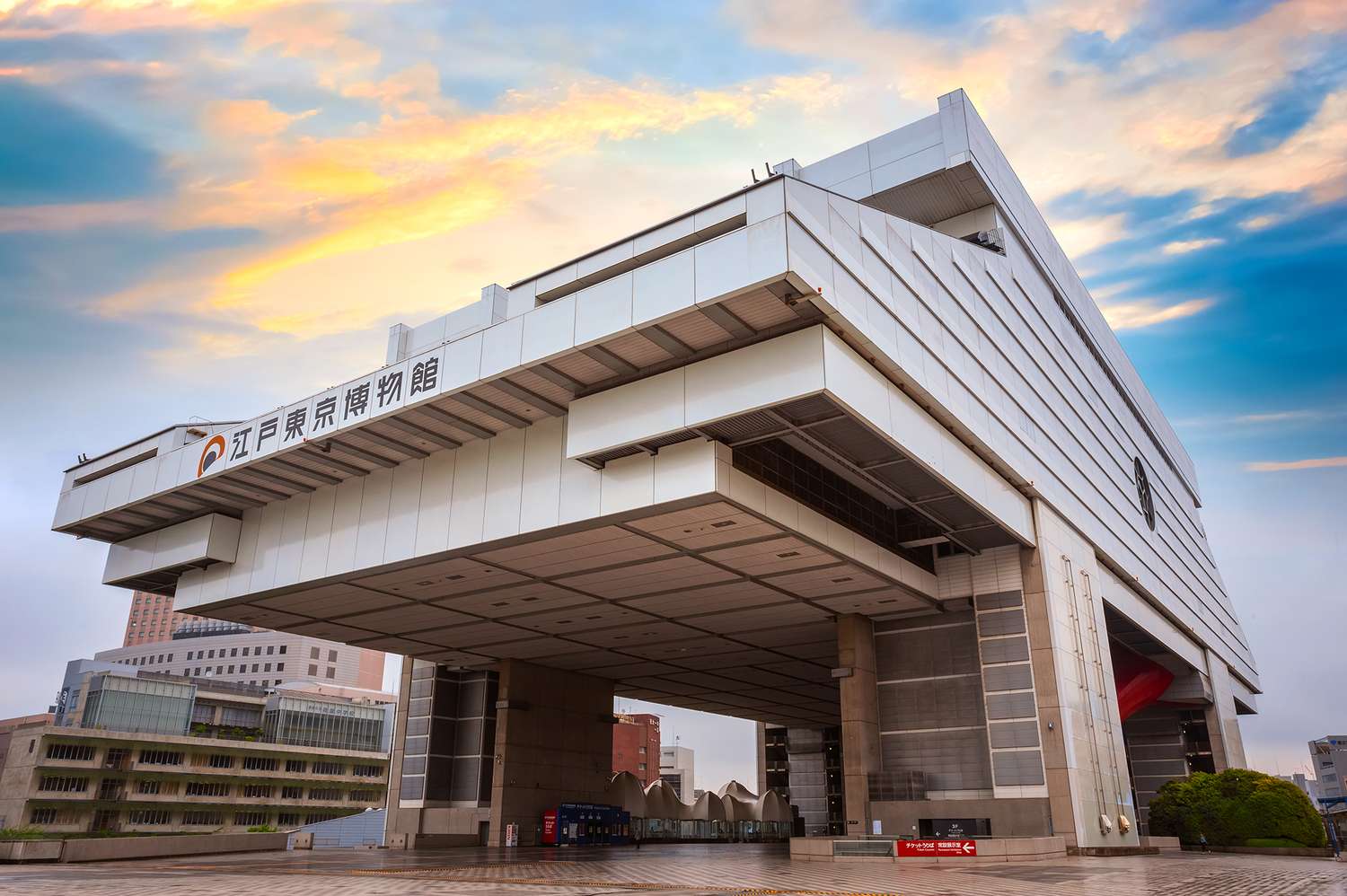
After nearly four years of wide-scale renovations, one of Tokyo’s premier museums is finally reopening this spring. The Edo-Tokyo Museum, which focuses on the history of Edo (what Tokyo was called between 1603-1868) through the present day, is making its ballyhooed comeback on March 31, 2026.
This was the first time in its nearly 33-year history that the museum underwent any significant restoration; the work started in April 2022, when COVID-19 still kept Japan’s doors shut to international travelers.
Although the concept of an Edo-Tokyo Museum had been formally planned since 1981, Ryogoku was always a front-runner to host the facility, on account of its connection to Edo culture. Not only was Katsushika Hokusai arguably the world’s most recognizable ukiyo-e (Edo-style woodblock print) artist from the vicinity, but Ryogoku was also one of the most nigiwai (bustling) entertainment districts of that era. To wit, sumo had been performed in Ryogoku since the 1700s; it’s no coincidence the museum sits next to the Kokugikan, Japan’s largest sumo arena.
Edo Tokyo museum building imposing its architecture on the Sumida skyline.
Germán Vogel/Getty Images
Ironically, even before opening its doors in March 1993, the Edo-Tokyo Museum was making headlines. The avant-garde architect Kiyonori Kikutake designed the structure as a modern homage to the Edo period takayuka-shiki souko (storehouses built on stilts). Together with the sumo stadium, it stood in sharp contrast to the otherwise low-key neighborhood.
The underlying goal of the museum is to let visitors experience how daily life has changed over the 420-plus years since Tokugawa Ieyasu was appointed shogun by emperor Go-Yōzei, establishing Edo as the new seat of government. Overseen by New York-based architect Shohei Shigematsu, the revamped building will have seen updates made throughout its eight—one underground, seven aboveground— total floors. Additionally, come opening day, two all-new features will be making their debut.
The first is modeled after an erstwhile monument to the iki (refined) shopping district of Ginza of the Meiji period (1868-1912). After a fire devastated its wooden storefronts in 1872, Ginza transformed into a paragon of the industrialized West, with paved streets, gaslights, cafes, and high-end stores. In 1894, Kintarō Hattori, founder of Seiko watches, commissioned a clocktower to be built in the heart of Ginza; it quickly became a symbol of the area. As a paean to the original, a full-scale 85-foot replica of the clocktower will be a star attraction.
Images of some of the museum’s artifacts will also be displayed. This includes everything from woodblock prints and paintings to housewares, sculptures, and photographs. The projections will appear on both ceilings and columns.
There have been periodic events to get people excited about the reopening, to. Last month saw a pop-up at the nearby JR Ryogoku train station. Expressly used for events, the station’s Platform 3 morphed into the Edo-Tokyo Museum, complete with exhibitions, illuminations, food tastings, and the sense that both the Japanese capital’s past and future have always been at home in Ryogoku.
AloJapan.com