
The Yomiuri Shimbun
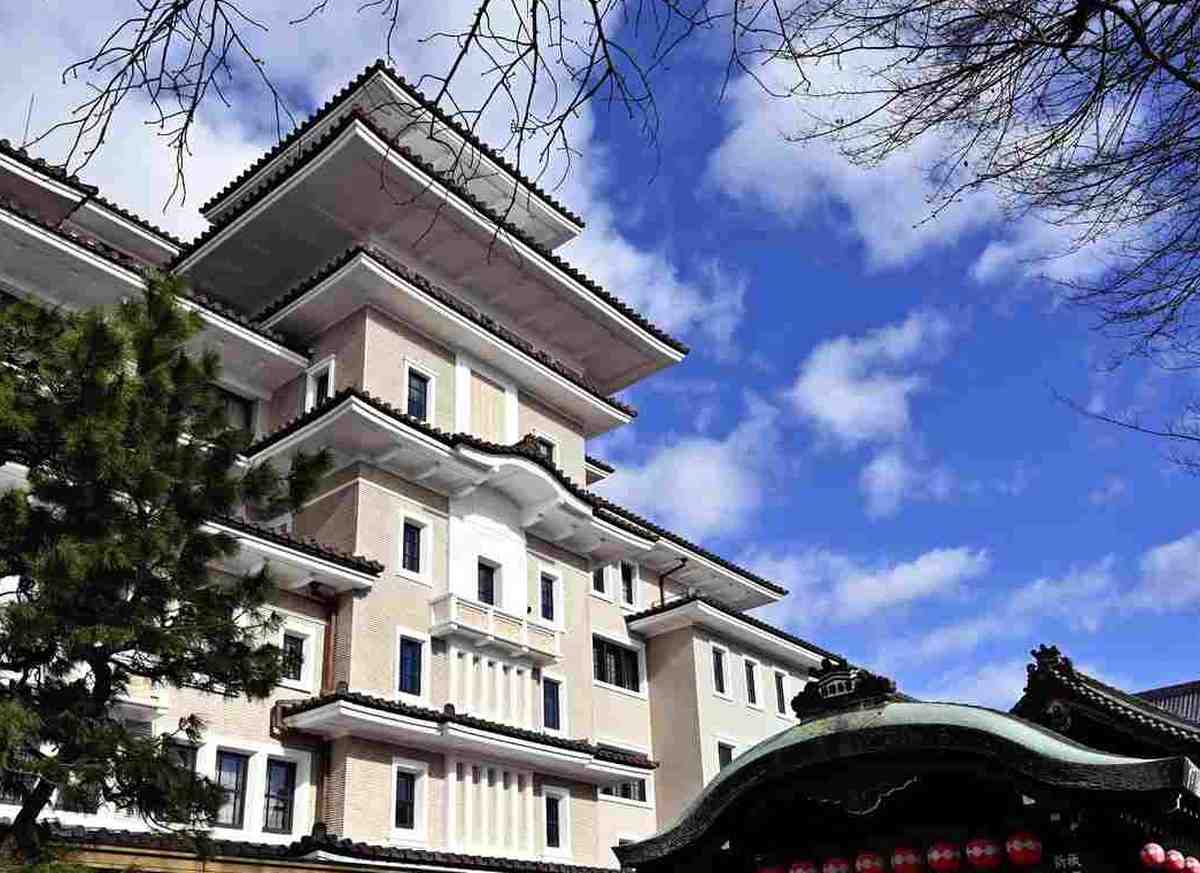
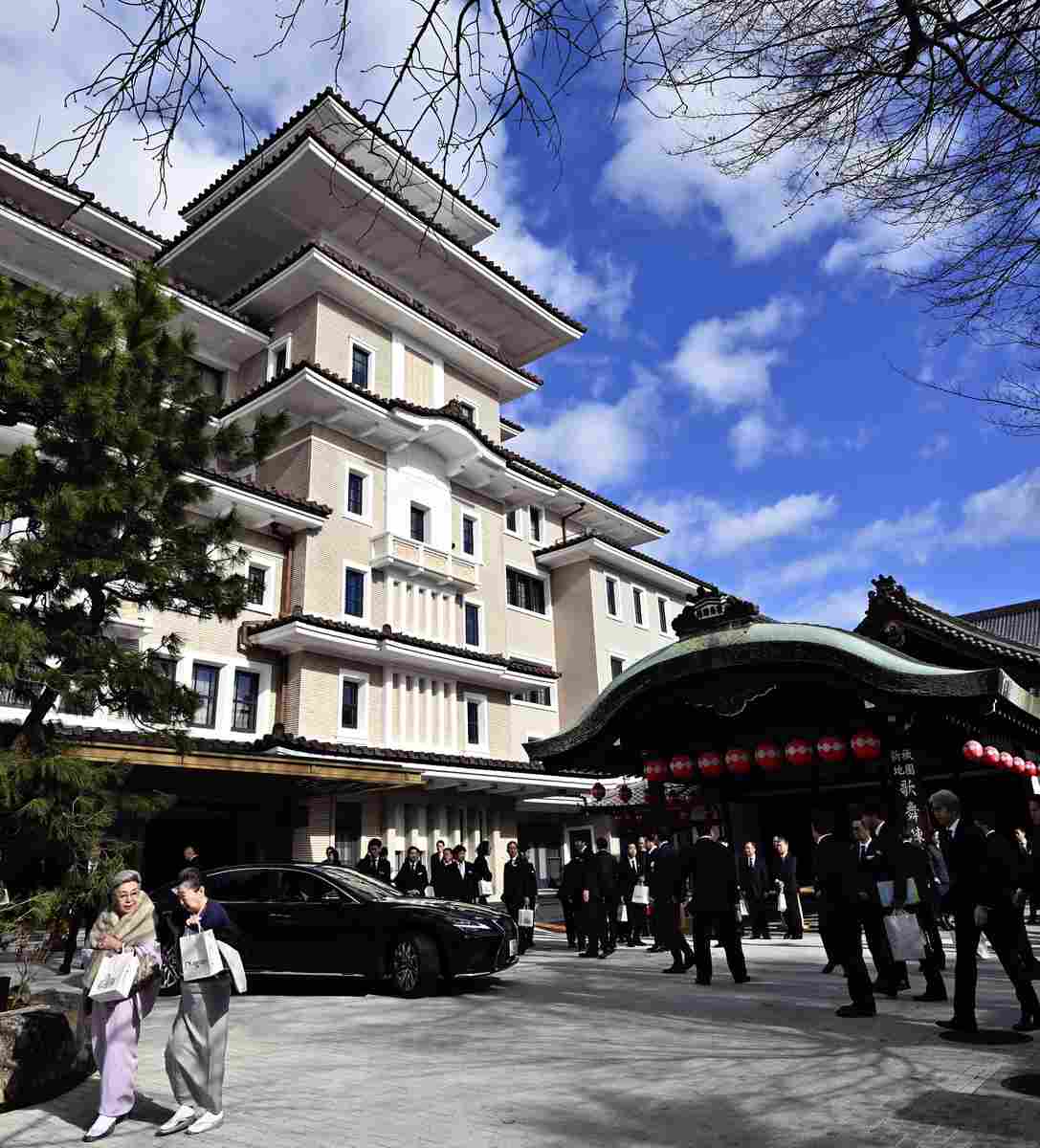
The Imperial Hotel, Kyoto, left, is seen beside the Gion Kobu Kaburenjo theater in Higashiyama Ward, Kyoto, on Dec. 18.
7:00 JST, January 31, 2026
KYOTO — The Imperial Hotel, Kyoto, will open in the Gion Kobu entertainment district of Higashiyama Ward, Kyoto, on March 5.
The hotel is housed in Yasaka Kaikan hall, built in 1936 and known as a piece of architecture representative of the early Showa era (1926-89). Those involved in the construction have expressed joy and anticipation upon the completion of the hotel, which has inherited the design and architecture of the local landmark.
Yasaka Kaikan, built as a facility to introduce traditional performing arts, was first used for plays and ningyo joruri puppet plays. It served as a movie theater and dance hall after World War II, and was registered as a national tangible cultural property in 2001.
In April 2022, expansion and renovation works started at the hall, adjacent to the Gion Kobu Kaburenjo theater, a venue for dance performances of geiko and maiko such as Miyako Odori shows. Efforts were made to preserve the exterior of Yasaka Kaikan, retaining the south and west facades visible from Hanamikoji-dori street and reusing about 16,000 tiles.
The luxurious Kyoto hotel has 55 guest rooms with seven floors above ground and two floors below.
The Yomiuri Shimbun
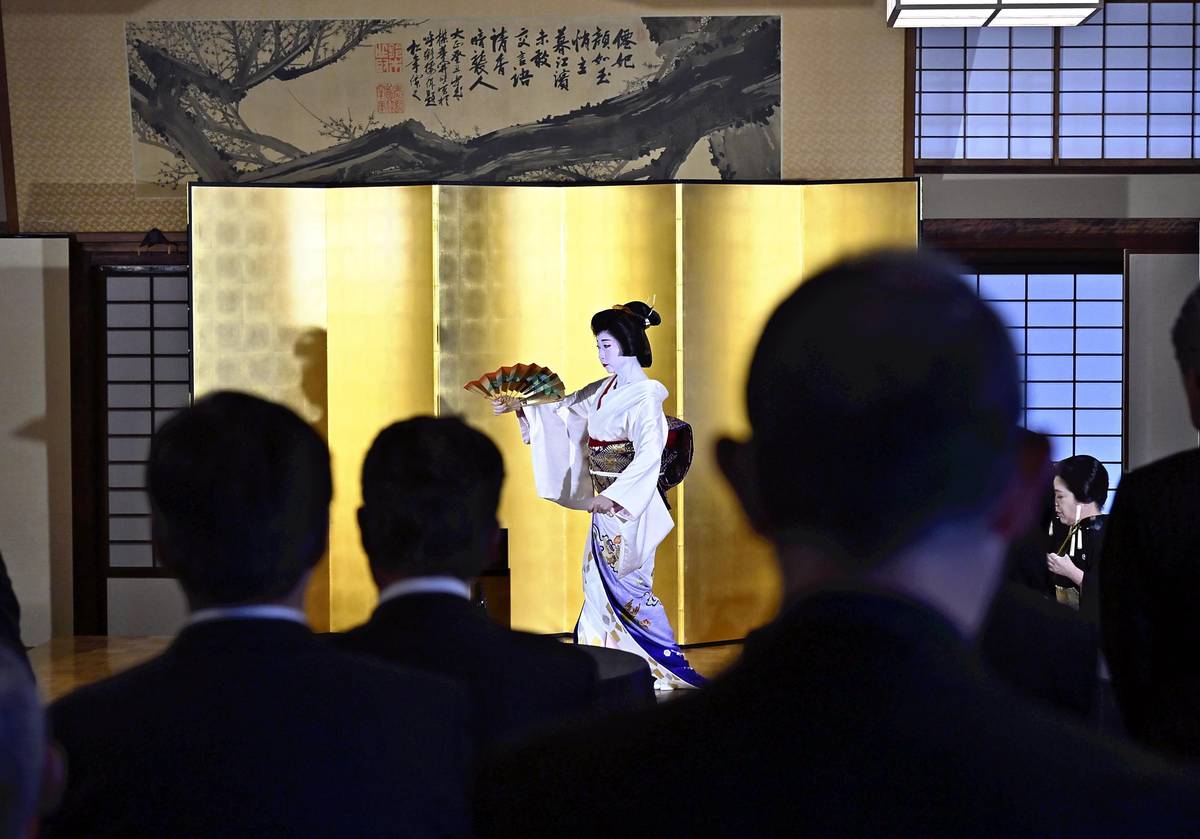
Kyomai dance is performed after the ceremony to mark the completion of the Imperial Hotel, Kyoto.
Among guests at the ceremony held on Dec. 18 to celebrate the completion of the hotel was Imperial Hotel, Ltd. President Jun Kazama, Kyoko Sugiura, chairperson of the Yasaka Nyokoba Gakuen school that owns the site, and Takeo Obayashi, chairperson of Obayashi Corp., which was responsible for the design and construction of the hotel. A priest from Yasaka Shrine performed a ritual as part of the ceremony.
“This hotel marks a challenge to pass on the townscape of the Gion district to the future in a new form. The hotel will play a role in communicating Japanese culture to the world,” Kazama said after the ceremony. Obayashi said building the hotel is a meaningful effort to pass on the historical value of the renowned architecture. “It has become a memorable project among works I have been involved in to preserve and restore historical buildings,” Kazama said.
“The hall, built with the efforts and donations of geiko, was a source of pride as well as a symbol and spiritual anchor of the local community. I am deeply moved to see the building renewed to keep the original state. Those of us living in the Gion district wish to continue striving to preserve and pass on our traditional culture,” Sugiura said.
Japan’s VIP guesthouse
The Imperial Hotel, Tokyo, in Chiyoda Ward, Tokyo, was built as Japan’s VIP guest house and kicked off operations in 1890 amid the Meiji government’s promotion of modernization. Business tycoon Eiichi Shibusawa (1840-1931) was involved in the opening of the hotel.
The Kyoto hotel is the fourth Imperial Hotel, following those in Tokyo, Osaka and the Kamikochi area in Matsumoto, Nagano Prefecture.
A room for two people at the Imperial Hotel, Kyoto, starts at ¥164,500 per night. The top-tier suite costs ¥3 million per night.
The hotel has two restaurants and two bars under the direct management of the hotel. Three of the four establishments, excluding the rooftop bar, will be available even to those not staying at the hotel.
Courtesy of Imperial Hotel, Ltd.
Kyomai dance is performed after the ceremony to mark the completion of the Imperial Hotel, Kyoto.
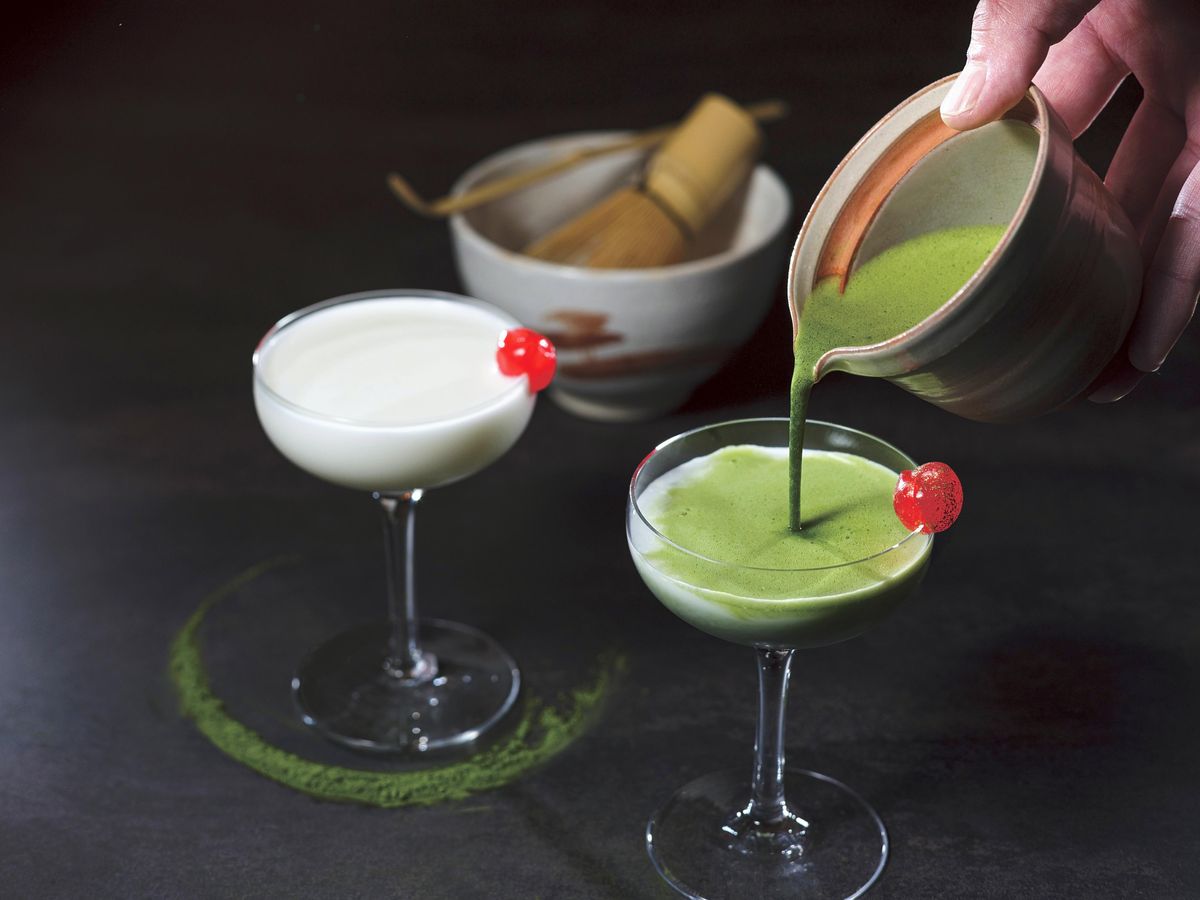
The Old Imperial Bar on the seventh floor will serve the Kyoto-exclusive “Mount Hiei” cocktail, a matcha-based variation of “Mount Fuji,” the cocktail created at the Imperial Hotel, Tokyo, nearly 100 years ago to represent the moment when the sun rises over Mt. Fuji, to welcome visitors from foreign countries.
AloJapan.com