
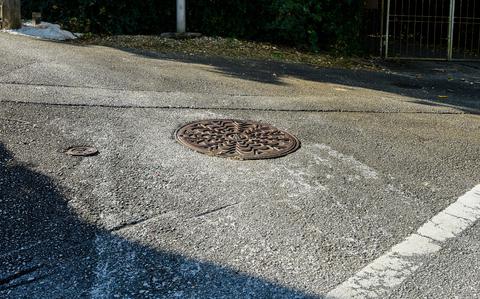
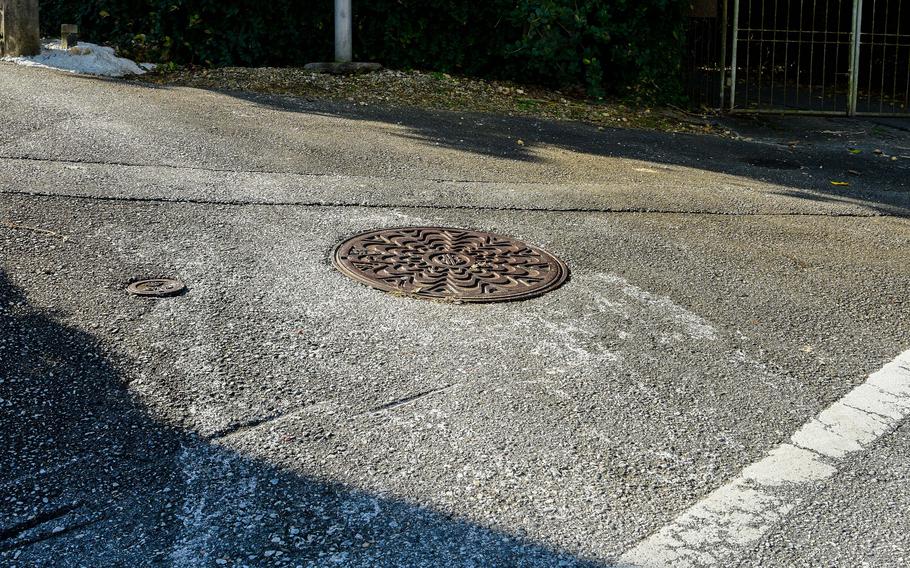
A manhole near Marine Corps Air Station Futenma, Okinawa, is pictured on Jan. 30, 2026. Reports say white foam was seen emerging from the manhole the previous day. (Ryan M. Breeden/Stars and Stripes)
GINOWAN CITY, Okinawa — A city in central Okinawa will test its water for “forever chemicals” after residents discovered a white foam oozing from a manhole near a Marine Corps airfield on Thursday.
Ginowan’s Sewage System and Facilities Division at 11:50 a.m. received a report of foam rising out of the manhole in the Isa district north of Marine Corps Air Station Futenma, a division spokesman said by phone Friday.
The manhole is connected to the city’s sewage system, which collects water from the base and homes in the area, the spokesman said.
Marine Corps environmental personnel determined that “there have been no releases or scheduled training” on the base after checking with all units with firefighting equipment, Marine Corps Installations Pacific spokeswoman 1st Lt. Kelsey Enlow wrote in an email to Stars and Stripes on Friday.
“We remain committed to protecting the health of our personnel, their families, and the surrounding communities in which we live and serve and will continue to investigate potential causes for foam,” she said.
PFAS and its components PFOS and PFOA, called “forever chemicals” by the Environmental Protection Agency because they persist in the environment and the human body, were used in aqueous film-forming foam, a fire suppressant used by U.S. and Japanese forces.
U.S. Forces Japan last year said it had incinerated its last stockpiles of the foam.
Around noon Thursday, workers with the city’s sewer division collected water samples at the manhole, where they found the foam at about knee height, the Sewage System and Facilities Division spokesman said. The foam dissolved about an hour later.
The city will test the samples for PFOS and may test for other substances, he said. Results are expected in about a month.
The U.S. military also collected samples from the manhole at 3 p.m., he said.
Some Japanese government officials must speak to the press on condition of anonymity.
In October and November 2022, foam rose from manholes connected to the same sewage system. Tests found PFOS and PFOA levels at 21 parts per trillion in the October incident and 11 parts per trillion in the November incident – below Japan’s legal limit of 50 parts per trillion, according to Ginowan’s website.
In April 2020, about 22,000 gallons of firefighting foam leaked from MCAS Futenma through a storm drain and into a nearby stream and neighborhood.
A Marine Corps investigation found that the leak occurred after an outdoor barbecue near the flight line triggered a fire-suppression system inside a hangar, causing the release of 60,000 gallons of foam. No threat to human health was found and drinking water sources were not affected, according to the Marine Corps.
AloJapan.com