
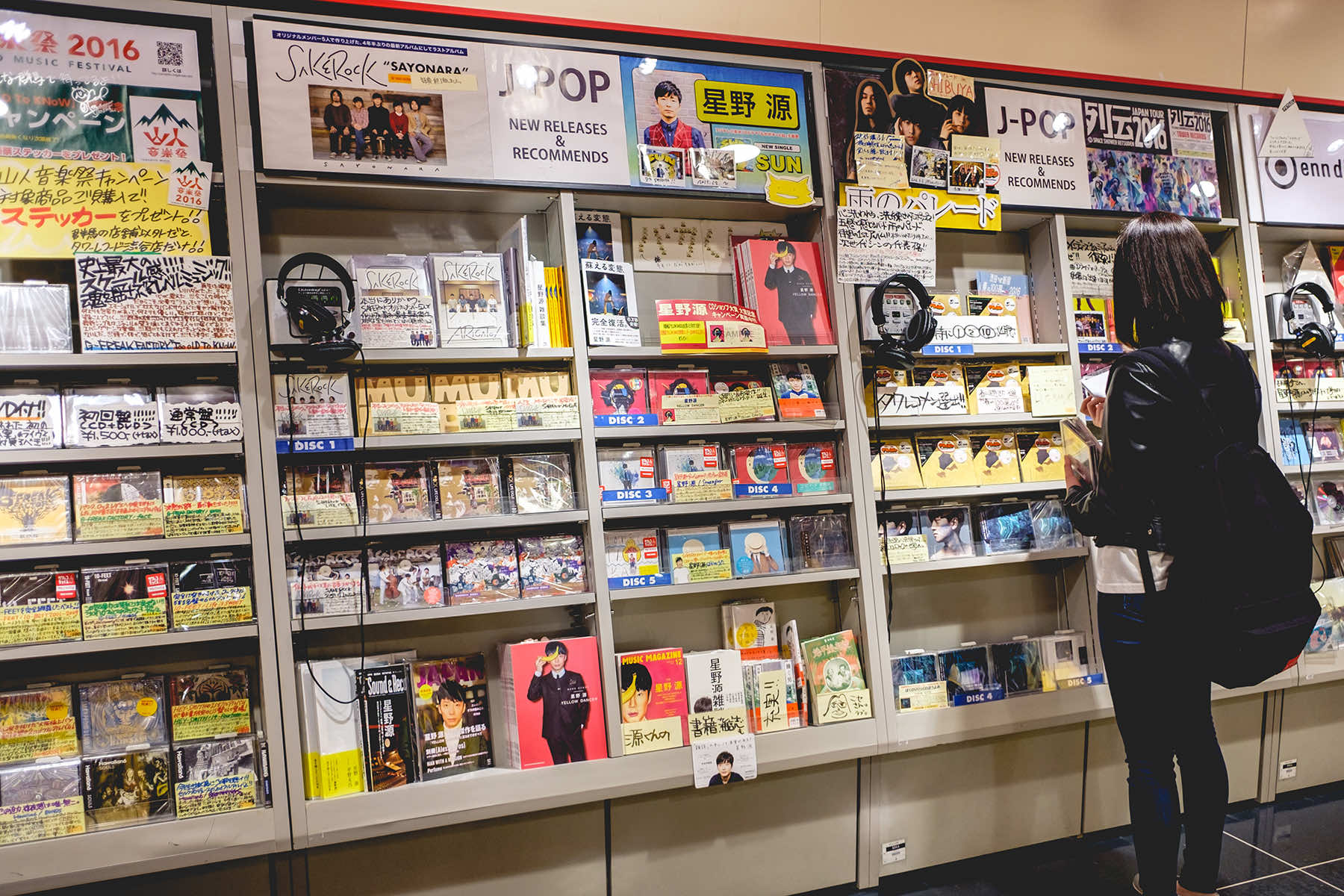
In the late 1990s, before algorithms defined taste, before platforms flattened culture into recommended rows of thumbnails, music discovery still relied on randomness. Napster was messy, mislabeled, and held together by half-broken MP3s uploaded from who-knows-where.
Nobody trusted it for accuracy, but we trusted it for possibility. I wasn’t looking for Japanese music. I wasn’t looking for anything foreign. I was just looking for tunes — something new, something that didn’t feel like the same American radio cycle I had heard for years. And then, by accident, a song slipped into my downloads.
It didn’t even have a readable filename. Just garbage characters you saw when someone ripped a CD using the wrong Unicode encoding.
I had no idea it was a popular girl group called S.E.S., no idea it was Korean, no idea that later I would trace that result as the start of a process that led me overseas. All I knew was that I liked the melody. And even though I did not understand the lyrics, I did not have the aptitude to understand lyrics even in English.
At the time, I was studying Japanese and thought that listening to “J-pop” songs would help familiarize me with the sound of the language. But for the S.E.S. song, I never listened to its upbeat lyrics closely, so I did not distinguish it as Korean right away. It was just bundled into my J-pop playlists. It became part of my earliest memories of what I thought Japanese music was.
Once Napster opened the door and gave me access to songs from Japan, more followed. Shiina Ringo with her sharp edges, Hamasaki Ayumi with her polished ambition, Aiko with her emotional straightforwardness, Hitomi with her introspective tone, and Do As Infinity with a grounded seriousness I didn’t hear in American pop.
Dreams Come True offered optimism. Otsuka Ai provided a brightness that wasn’t shallow. Even the misfiled S.E.S. track fit into this constellation, a reminder that discovery back then wasn’t curated. It was improvised.
These voices became a parallel world I stepped into without realizing I was leaving something else behind.
What struck me most was how honest the emotional landscape felt when I did not have to discern what the lyrics meant. American pop at the time was saturated with irony, posturing, and a kind of emotional detachment that always felt performative to me.
Japanese pop, especially the women who dominated it, was concerned with expressing something real, like vulnerability, longing, hope, melancholy, and self-reinvention. The melodies carried emotional weight without becoming sentimental. Understanding the language came later, but the emotional fluency happened first.
When I started piecing together artists like Ayu, Utada, Namie, Hitomi, Aiko, Kuraki, Shela, and Ringo, I realized I wasn’t collecting one genre. I was unknowingly collecting a cross-section of an entire country’s musical imagination.
I didn’t know that these artists represented different labels, different production philosophies, different audiences. I didn’t know that some were national icons while others were niche favorites.
My playlist of J-pop was personal, not authoritative, but it was surprisingly accurate. Only much later did I understand that my library spanned the full ecosystem of idol groups, singer-songwriters, techno hybrids, rock bands, alternative acts, anime-adjacent performers, and legacy icons from earlier generations.
By accident, I had assembled a portrait of Japanese pop that even many domestic listeners wouldn’t describe so broadly.
The more I listened, the more something shifted in me. Music wasn’t just entertainment. It was a geography, like a set of emotional coordinates. When I eventually lived in Japan, it felt less like visiting a foreign country and more like walking into a soundscape that had been waiting for me.
The jingles in train station ads, the background music in convenience stores, the live television performances, even the rhythm of the language — everything connected back to the music that had quietly shaped my inner world.
I didn’t move overseas because of J-pop. But J-pop was the first thing that made the idea of living abroad feel familiar and natural.
What I found in Japan was not a fantasy constructed from music videos or glossy album covers. It was a country filled with contradictions, beauty, exhaustion, creativity, and restraint. But the emotional vocabulary that had drawn me there was present in the environment that surrounded me. It was a cultural alignment.
Over time, that alignment became a direction. The more time I spent in Japan, the more that original soundtrack felt less like a collection of songs and more like a patchwork of the emotional choices I was making.
These weren’t artists I heard on the radio by chance. They were voices I sought out during a period when I was figuring out how to live, how to work, how to create, and how to see the world without carrying the limitations of where I grew up.
J-pop was the first time I realized that culture could be a doorway rather than a wall. It gave me access to a version of myself that looked outward and forward.
What made that period meaningful wasn’t that I discovered new music. It was that I discovered a new way to sense the world. Music shaped how I experienced cities, relationships, travel, and identity.
I began to see where I lived in Nagoya not as a distant emblem of modernity, but as a place where the emotional architecture of the songs I loved made sense. Even mundane moments, like getting a drink from a vending machine, or a quiet subway ride, or a walk through a crowded district, had atmosphere because the soundtrack had already prepared me for them.
J-pop helped me experience things I couldn’t articulate at the time. It pushed me beyond the narrow emotional expectations of the environment I had known in Milwaukee.
As years passed and my life moved across borders, that J-pop influence remained. Even when I lived outside Japan, Japanese music stayed a constant reference point.
When I later accepted the fact that, for me, the J-pop industry had stagnated, and I stopped resisting K-pop to gain access to a refreshing back catalog, I had a different foundation than most people approaching it as a global trend.
I saw BoA debut in Japan and followed the careers of several Korean singers and groups, usually through the Japanese versions of their songs. I have also written about my reluctance to embrace the Korean Wave for many years, because I was unwilling to make the emotional commitment after learning Nihongo, then Mandarin.
But as I look at my interest in K-pop now, and how I listened to those songs in 2023 when Kyiv was under a missile attack, I see the music as part of a lineage that included everything I had listened to in those early Napster days. There remains the same kind of comfort.
That long arc from a broken-encoded MP3 file to living overseas for a third of my life doesn’t follow a clean narrative. It wasn’t planned. It wasn’t strategic. It happened for both complex and also simple reasons, at a time when I learned to accept that something outside my immediate world could reflect me better than what surrounded me.
Music did not move me across continents. But it helped me understand that belonging wasn’t confined to the place where I was born.
To this day, when I hear those early tracks from the late 1990s, I recognize how much they shaped my sense of possibility. They offered a way out at a time when I didn’t know I needed one. They offered language before I learned the language. They offered direction before I acknowledged I was searching for one.
This isn’t nostalgia. This is acknowledgment. A recognition that cultural discovery at the right moment becomes more than taste. It becomes identity.
And for me, those first Napster downloads became the emotional blueprint for a life lived across borders. They were my introduction to a world I later chose to inhabit, not because it was foreign, but because it felt like home long before I arrived.
AloJapan.com