
There are ‘limited edition of Hokkaido’
One tree storytelling
K content is monopolized by the Seoul metropolitan area
Local area controversy still
Local government heads to be newly elected in June
Let’s hope that local government heads will discover their own vibes
What is the purpose of going on a trip. It’s an escape from everyday life.
To this end, the virtue that a travel destination should have is basically differentiation. Hokkaido, which recently visited for a winter vacation, demonstrated this virtue properly. There were phrases embedded in everything placed on souvenir shops and snack stands. It was “Only Hokkaido 限.”
The quality of the food was overwhelming. We waited in line for more than 20 minutes to eat expensive ice cream cones, which cost 500 yen and 4,700 won. The ice cream, which boasts a rich taste of milk fat that is not found in Korea, is eaten by any Hokkaido tourist. The same goes for even the Japanese.
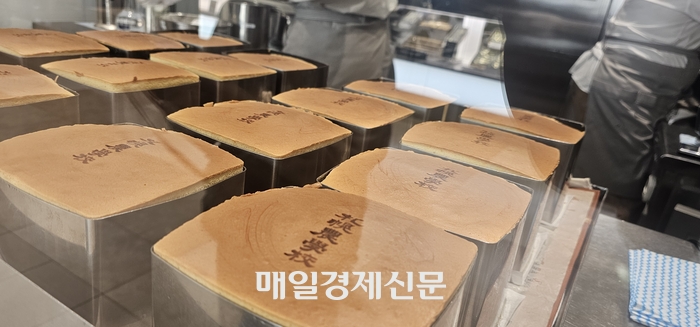 사진 확대 Freshly baked cheese cake at Hokkaido’s Shinchitose Airport.
Beyond “only in Hokkaido,” even food with “only in Shin Chitose Airport” has entrenched tourists. Due to the nature of the island, all visitors to Hokkaido must pass through the “gwanmun” Shin Chitose Airport. It attracts tourists from the beginning to the end of the trip. There are even standing pubs that fry potatoes on the spot in the middle of the airport, bake cookies and cheesecakes, and sell limited-edition draft beer, which is rare in Sapporo. The price is an evil level. A beer costs 1,600 yen (about 15,000 won). What would it have been like after drinking it. I promised to visit this place again to eat this.
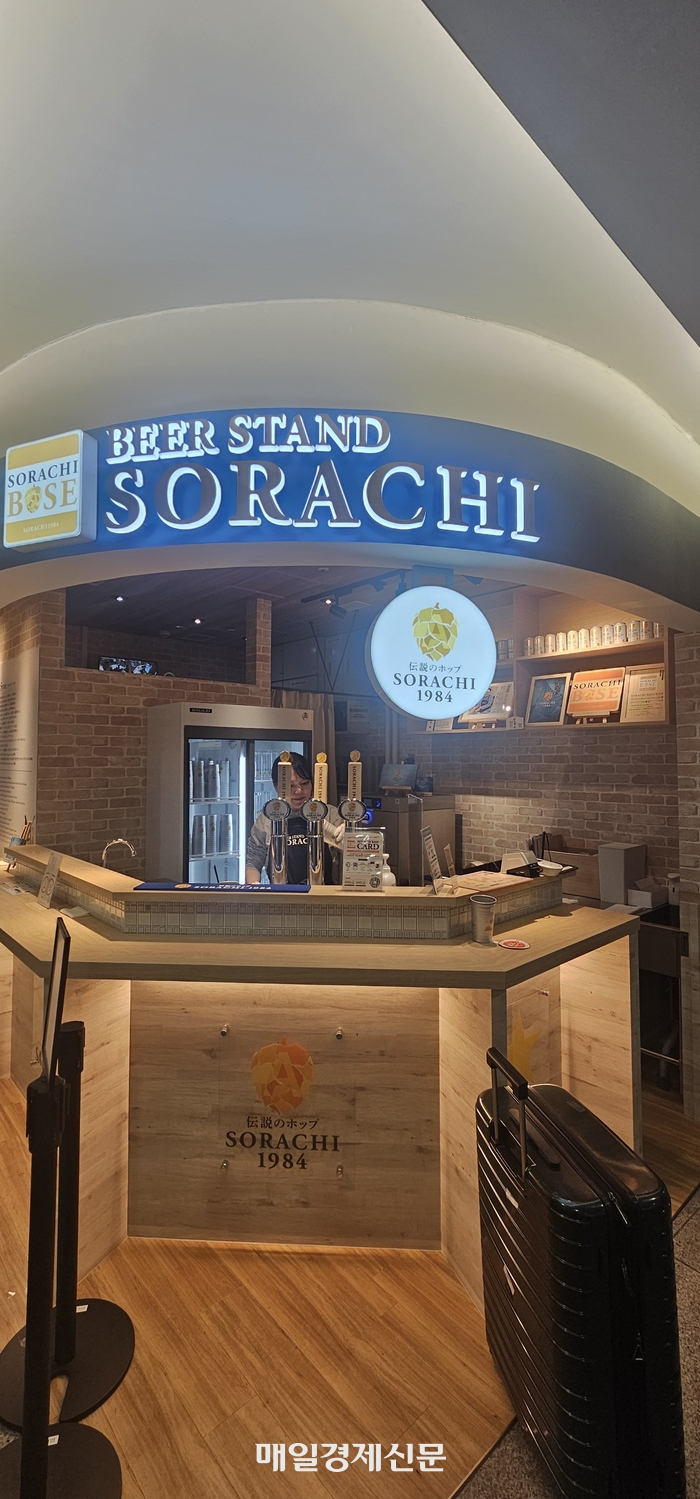 사진 확대 Sapporo Sorachi Beer Stand at Shinchitose Airport.
Hokkaido was strong in storytelling as well as “limited edition food.” The trees towering in the snow-covered fields were named and given a narrative. I witnessed two Korean couples taking wedding pictures against the backdrop of trees in the cold weather, which is close to minus 20 degrees Celsius.
Hokkaido has a huge area of 80% of South Korea’s area, but due to its harsh natural environment, its population is just under 5 million people, one-tenth of that of Korea. However, as of 2024, the number of lodging tourists reached 8.32 million. This is the result of a combination of excellent natural wind, narratives added to it, and premium food.
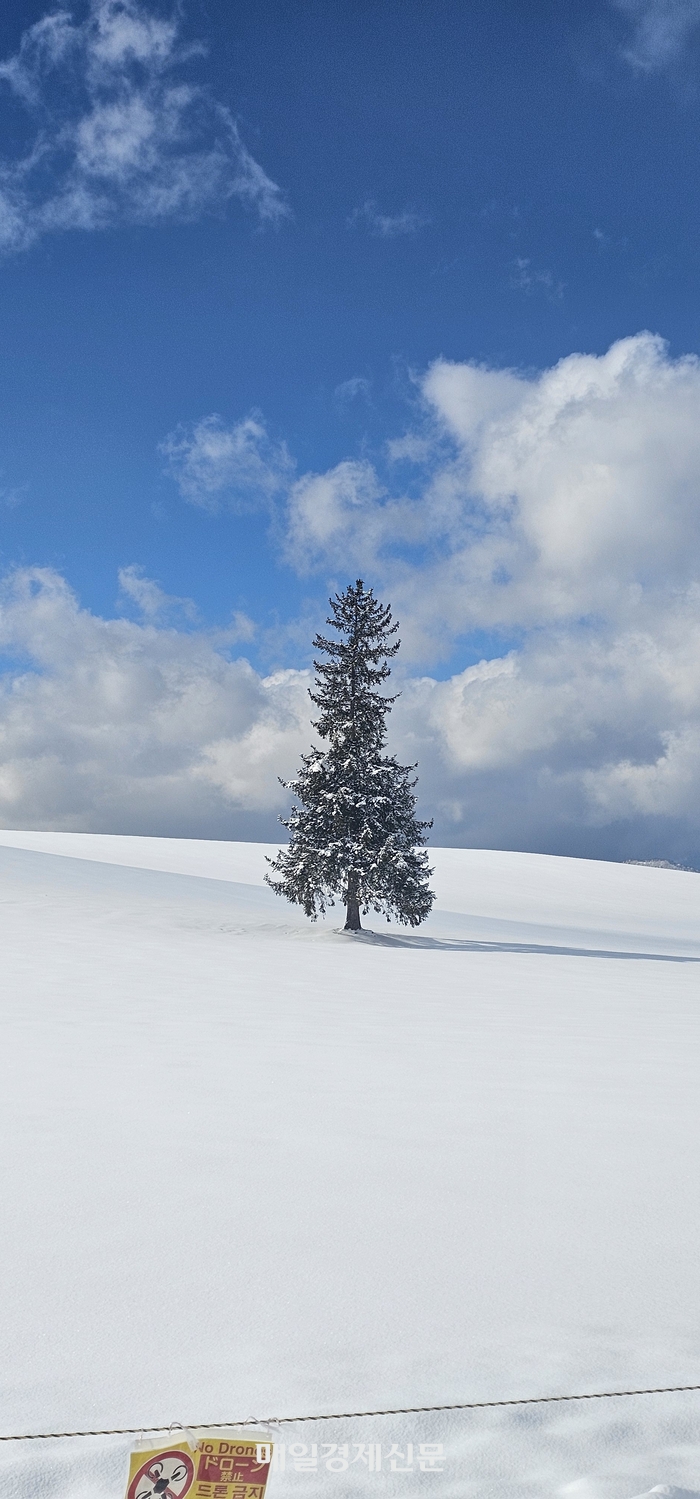 사진 확대 A Christmas tree in B.A., Hokkaido. It is famous for its best shot attractions.
Let’s turn our heads and look at our country. Korea is also a tourism powerhouse with 18.7 million visitors last year. Outstanding natural windfalls are also scattered everywhere. With the activities of K contents, narratives about tourist attractions were also added. K-foods such as ramen and chicken are also popular. It has everything, but the chronic disease remains. Even this is centered on the metropolitan area. “Only in Jeju Island” and “Only in Gangwon Province”… The reality is that these brands do not come to mind except Jeju citrus and Hoengseong Korean beef.
Local governments across the country are trying to attract population to prevent local extinction, but even so, it is a top stone by removing the bottom stone. At a time when the total population of Korea is plummeting, it is only taking away the population of other local governments.
Hokkaido has not been able to avoid a population decline. After peaking at 5.69 million in 1995, it turned to a decline, and it is estimated that the 5 million mark collapsed last year. However, as long as Hokkaido’s tourism narrative is alive, no local extinction will occur. Tourists will continue to come, and someone will settle down in the “money-making place.”
Local extinction measures learned in Hokkaido are very simple. It is a K-vibe that can encompass K-content, beauty, and food. The “premium K-vive,” which makes satisfied tourists spend their own money, not “rip-off tricks,” should spread to the provinces, not just the metropolitan area.
There is an educational institution that served as the foundation for making today’s Hokkaido. The name of the school itself is Sapporo Agricultural School, which remains the name of a famous food brand. William Clark, the American who created the school, left a famous saying that everyone knows. “Boys, be ambitious”
I hope the heads of local governments, who will be newly elected in June this year, will have this ambition.
AloJapan.com