
Show summary Hide summary
Summary:
Iceland leads Europe’s surge, with arrivals up 29% in the barometer figures.
Japan keeps climbing, with +17% arrivals up to November 2025 compared with 2024.
Brazil stands out at +37% across the year, boosted by major cultural attention.
Egypt rises +20%, with Grand Egyptian Museum milestones likely lifting demand.
Other fast movers cited include Morocco (+14%) and Seychelles (+13%).
Strong increases up to November are also noted for Bhutan (+30%), Guyana (+24%), and South Africa (+19%).
Travel trends can be useful, but only if you read them like a traveler, not like a headline. When a destination jumps fast in arrival numbers, it often brings more flights and more choice, yet it can also turn the most famous areas into a queue if you arrive at the obvious time of year.
UN Tourism’s latest barometer is basically a snapshot of where demand moved in 2025. In this guide, we focus on Iceland, Japan, Brazil, and Egypt, then turn those numbers into simple planning moves you can use to travel in 2026 with less friction and more room to breathe.
Snow in New York? Here’s the cozy, no-stress planEaster Island isn’t “timeless” anymore: here’s what changes for visitorsThe travel boom decoded: what “fast growth” changes on the ground
A destination “surging” does not automatically mean it has become unbearable. It means demand is rising quickly, and that affects availability, pricing, and flow.
Here is what usually shifts first:
Availability: the best located stays sell out earlier, especially weekends and school breaks.
Pricing: flights and hotels often spike on the most obvious weeks.
Flow: timed tickets, packed transport corridors, and standardized day tours become more common.
If you want the same destination with a different feel, the trick is rarely secret. It is timing, pacing, and geography, so you avoid doing the “default route” at the “default hour.”
Iceland’s rise: big landscapes, plus a growing obsession with the night sky
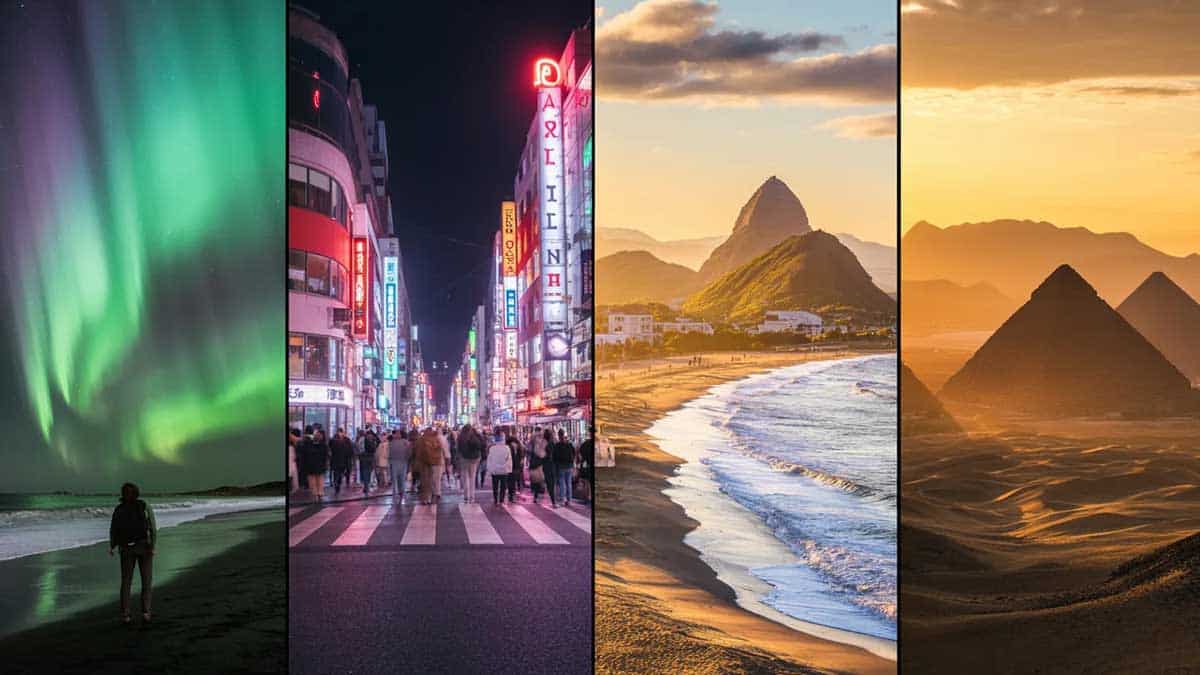
Iceland shows the strongest growth in Europe in the barometer, up 29% in international arrivals. The landscapes do the heavy lifting, but the report also points to increased interest in aurora travel, linked to heightened solar activity after a solar maximum toward late 2024.
The source also mentions a total solar eclipse expected in August across parts of Iceland, which can attract a wave of “once in a lifetime” planners. If you plan around this, keep your itinerary flexible, because weather still decides whether you get the moment you came for.
To keep Iceland from feeling like a checklist:
Sleep outside Reykjavík for at least a couple of nights, so you gain quiet mornings.
Visit the busiest stops early or late, so you get space and light.
Build one “floating” half day for detours, road conditions, and last minute weather calls.
Japan’s momentum: how to make a popular trip feel personal
Japan’s increase is clear in the barometer, with +17% arrivals up to November 2025 compared with 2024. Japan can handle visitors better than many places, but crowd pressure still hits hard where everyone concentrates on the same triangle, often Tokyo, Kyoto, and Osaka.
If you want a smoother trip, do not fight the popularity. Reframe it. Choose one classic base, then add a quieter counterpoint that gives you contrast and recovery.
Practical ways to keep Japan calm:
Stay close to your first priority of the day, so you start with less commuting.
Limit your “must do” list to one main highlight daily, so the trip keeps a human pace.
Add one less obvious region, even briefly, so you experience more than the most photographed blocks.
Brazil and Egypt: two fast risers, two completely different trips
Brazil posts one of the biggest jumps in the barometer, up 37% across the year. The report links the surge to cultural draw and major attention moments, including Rio de Janeiro being named UNESCO World Book Capital in 2025, plus a high profile free concert on Copacabana Beach.
Egypt rises 20%, and the source connects part of that demand to museum momentum. It cites the partial opening of the Grand Egyptian Museum in October 2024 and an official inauguration in November 2025, which likely pushed Egypt higher on many travelers’ lists.
If you are deciding between the two, choose based on your travel rhythm:
Brazil often delivers city energy and outdoor life.
Egypt often delivers icons and structured touring days.
Here is the quick comparison:
Destination2025 growth citedWhat the report highlightsBrazil+37%Cultural moments, major attention around RioEgypt+20%Grand Egyptian Museum milestones and heritage travel
How to use these trends to plan a better 2026 trip
Growth rankings are not instructions. They are a signal. If you use the signal well, you can still have a great trip, even in a busy year, because you will book the few things that matter and leave room for the rest.
The new mega-airport hubs that could quietly change how you flyAngola in 7–10 days: the first-timer route that actually works
Use this simple approach:
Book the “hard parts” early: key hotels and any timed entry tickets.
Aim for shoulder season when possible: you usually get better value and less pressure.
Build a crowd proof day: early start, long lunch, late museum slot, then one flexible block.
Mix icons with local texture: one landmark, one neighborhood walk, one slow meal.
If you want alternatives that are also rising in the same barometer, the report cites Morocco (+14%) and Seychelles (+13%), plus strong increases up to November for Bhutan (+30%), Guyana (+24%), and South Africa (+19%). These can be useful if you want a similar “trend energy” with a different atmosphere.
AloJapan.com