
January 26, 2026
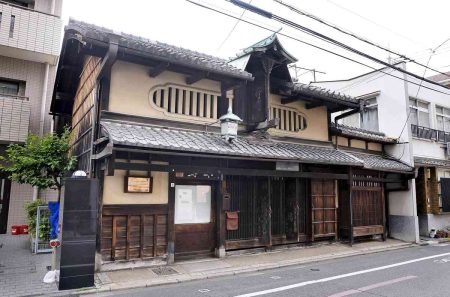
KYOTO – Filming is underway at a traditional machiya townhouse in Kyoto for a documentary depicting the life of residents at the designated municipal tangible cultural property.
Filming began in 2024 to record the annual events that residents hold throughout the four seasons at Hata-ke Jutaku, or the home of the Hata family, to pass them on to future generations. The film, which shows a lifestyle unique to the city, is scheduled to be completed in 2027.
According to the city government, Kyo-machiya — machiya townhouses in Kyoto — refer to traditional wooden houses built before 1950, the year the Building Standards Law was enacted. The houses have distinctive features including lattice window types such as degoshi and mushikomado as well as plaster walls.
Hata-ke Jutaku is located in Taishiyama-cho — part of Kyoto’s Shimogyo Ward — one of the districts responsible for preserving and operating yamahoko floats used in the annual Gion Festival. Previously, it had been used for manufacturing and selling medicine for children for about 300 years.
On a mid-September day, amid a monk’s chanting of sutras, film director Koichi Sato, 48, filmed in a room at the back of the house. Megumi Hata, 68, and her mother Toki sat while joining their hands in prayer during a Shogokku ritual.
The monk from time to time approached them to rub their bodies and strike a flint meant to ward off evil spirits. Sato carefully filmed their movements.
The Shogokku ritual is held three times a year in January, May and September. It honors Kishibojin, the goddess of childbirth, and prays for the repose of ancestors and the healthy growth of children.
The Hata family business closed in 1987 after the death of Yoshihiko Hata, Megumi’s father and the 12th head of the family. Megumi once considered selling the house but decided to live there and keep alive the traditions because of her attachment to the place where her ancestors had lived.
Since 1996, she has been showing the public their life at the house. She also hosts a cooking class every month to introduce home-cooked meals.
Sato has made documentaries on traditional culture across the nation. Having learned of Hata’s efforts, Sato proposed filming life and events at the machiya throughout the year, since the footage would become invaluable.
With the approval of Hata, Sato began visiting the house to film in April 2024. Sato has visited the house almost every month since to capture their life during seasonal events, the Gion Festival and the Bon holiday period.
He also filmed the Tategu-gae ritual in which fittings and furnishings are changed according to the season. Sato sometimes visited for events over two consecutive years to capture various scenes.
How annual functions are conducted vary from household to household. Detailed administrative surveys have not been done on how each family of machiya passes down their traditions. Some are forgotten as generations change and through other factors.
Sato stressed that it is important to preserve the careful lifestyle at Kyo-machiya precisely because it is difficult to live in tune with the seasons in modern times. “I want to convey authentic Kyoto culture through the film,” Sato said.
The film is expected to be about 90 minutes long. The production cost is about ¥10 million, and donations are being sought.
“I hope many people will come to know the scenes of our daily life, which are becoming increasingly rare,” Hata said.
Cost challenges
The number of Kyo-machiya has been steadily declining. According to a Kyoto City fiscal 2024 survey, there were 34,580 such townhouses, a decrease of about 30% from 47,735 in a fiscal 2008-fiscal 2009 survey. Many of them were demolished due to the high costs to renovate or inherit them.
In 2017, the city enacted an ordinance on machiya, obliging owners of the houses to submit an application to the city at least one year before demolition in case they are located in designated areas. This is meant to encourage the owners to connect to businesses interested in using the properties for facilities such as shops.
The city also subsidizes renovation costs — up to ¥2.5 million — for about 1,400 properties deemed highly necessary for preservation.
Despite these measures, the decline continues. The city is considering introducing further measures, such as reducing property taxes.
“Kyo-machiya and the lifestyles of people there symbolize Kyoto’s landscape and culture,” said Kazuyo Kitagawa, head of the city’s division for the preservation of machiya. “We urgently want to advance such measures.
AloJapan.com