
Thank you very much for your time today. To begin, I’d like to ask about Japan’s travel industry. After the difficulties caused by COVID-19, Japan’s tourism sector has seen remarkable recovery and growth. Last year, about 37 million inbound travelers visited Japan, and this year the number is expected to reach nearly 40 million. Japan has now firmly established itself as one of the world’s leading travel destinations. As the head of a hospitality company, why do you think Japan is able to attract so many travelers from around the globe?
Japan, despite its relatively compact size, offers an exceptional diversity of culture and geography. Globally, Tokyo is perhaps the most recognized city. It embodies modernity and innovation, as well as cultural exports such as anime and fashion, often referred to as “Cool Japan.” On the other hand, cities like Kyoto and Nara have a completely different atmosphere, rich with tradition and historic temples and shrines as ancient capitals. Nara, for instance, has archaeological sites dating back to the Asuka period, allowing visitors to experience Japan’s origins as an early state.
In this way, within a single trip, visitors can experience the dramatic contrast between ultra-modern urban centers and the quiet charm of historic towns—almost like “time travel.” This proximity of contrasting cultural experiences is, I believe, one of Japan’s greatest attractions.
Additionally, Japan’s four seasons are an essential aspect. The same location looks entirely different in spring, summer, autumn, and winter. For example, our hotel ANA Holiday Inn Resort Shinano-Omachi Kuroyon in Omachi, Nagano, is a lush green resort in summer, but transforms into a magical snow-covered landscape in winter. Such seasonal variation ensures that no matter how many times you visit, it always feels fresh and never monotonous.
Japan’s transport infrastructure, especially its railways, is also a huge advantage—accurate, efficient, and easy to navigate across the compact archipelago. This reliability makes itinerary planning easier for travelers. Moreover, exchange rates have made Japan appear very affordable from overseas, adding to its appeal.
The so-called “Golden Route” linking Tokyo, Kyoto, and Osaka is the classic path for many foreign tourists. However, your company has been actively expanding beyond these areas. How are you contributing to regional tourism and encouraging visitors to explore outside the major hubs?
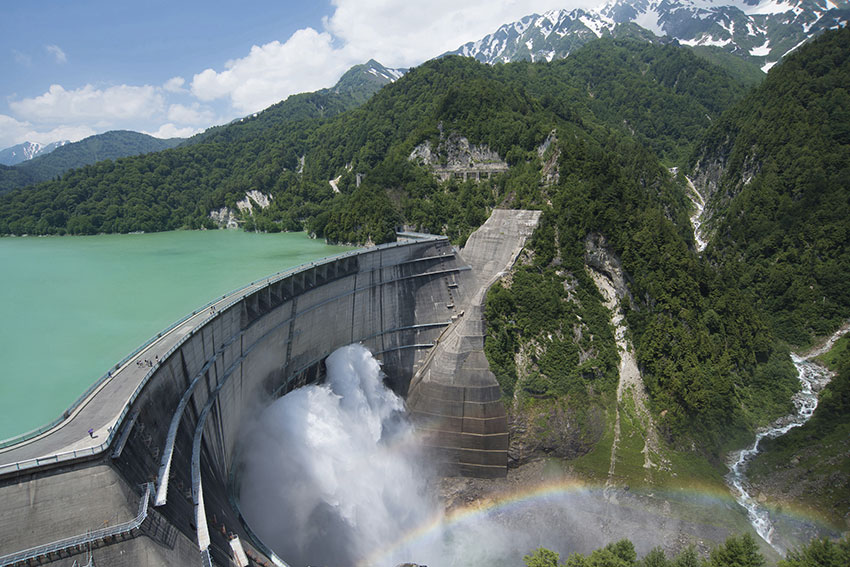
Our presence in regional areas originates from Kansai Electric Power’s construction of the Kurobe Dam. Since taking this position, I have visited the area many times within just a few months, and each time I find something new in the magnificent Northern Alps.
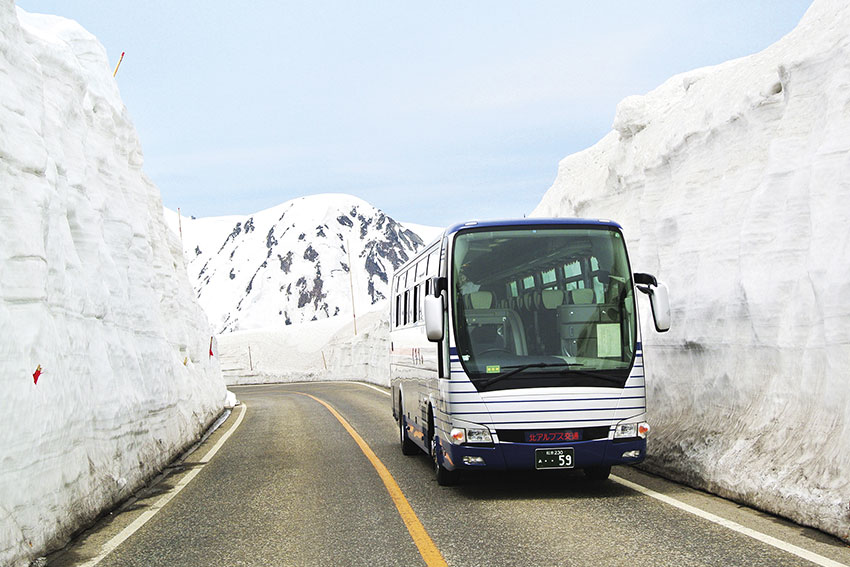
Looking ahead, one unavoidable challenge for Japan is “overtourism.” When too many people concentrate on the Golden Route, it is not beneficial for either tourists or local residents. We want inbound travelers to extend their journeys to regional destinations, experiencing the grandeur of nature, the slower pace of life, and the seasonal changes.
As hospitality providers, it’s vital that Japan’s tourism resources are not overly concentrated but enjoyed in diverse ways. This allows for a more sustainable and comfortable relationship between visitors and local communities. Our hotel ANA Holiday Inn Resort Shinano-Omachi Kuroyon in Omachi is not just a lodging facility but positioned as a gateway to discover the wider region. We hope visitors feel as though they are on a treasure hunt, uncovering Japan’s hidden charms.
You mentioned the need to avoid overtourism and to spread visitors more evenly. Could you share more about your specific initiatives in the Nagano area?
To give an example, Hakuba is bustling during the winter ski season with many international visitors, but most remain within the Hakuba area. Meanwhile, Omachi—just a 40-minute drive away—sees far fewer winter visitors. For Japanese people, 40 minutes may feel long, but for overseas tourists it is still part of the same area.
In contrast, during the summer green season, Omachi is crowded with visitors to the Kurobe Dam, while Hakuba becomes quieter. Our aim is to connect these two areas not as separate points but as part of a broader network, encouraging natural movement between them.
Tourism initiatives must also ensure that local communities are not burdened. It’s about providing travelers with a comfortable and memorable stay, while ensuring tourism coexists harmoniously with residents. This balance is essential for the sustainable growth of Japan’s tourism industry.
In 2020 your company entered into a partnership with IHG. How has this collaboration helped you reach global markets, and what has it meant for your hospitality culture?
The partnership with IHG has been tremendously significant. Through IHG’s direct channels, travelers around the world can now easily discover our hotels—something that would have been difficult for us to achieve alone.
Moreover, exposure to international standards and practices in hospitality has provided great learning opportunities for our staff. Through customer service interactions and IHG’s training programs, they gain insights into what overseas guests expect and what kinds of service they value. This has been invaluable not only for staff development but also in positioning our company as a cultural bridge.
Your company also offers unique experiential services, such as tours of the Kurobe Dam. Could you tell us more about how these are planned?
The Kurobe Dam, owned by Kansai Electric Power, has exceptional potential as a tourism resource. For example, our night tours allow guests to view a star-filled sky, creating unforgettable experiences. We also offer special tours where visitors can pass through passages normally reserved for workers, adding an exclusive touch.
In addition, there is a plan to open the so-called “Canyon Route,” which connects the dam from the Toyama side. It was originally scheduled to open in 2024 but has been delayed due to the Noto Peninsula earthquake. Nevertheless, we expect it to be realized within a few years. Since this route is normally accessible only by work trains, its opening would provide a truly unique travel experience. Our hope is for both locals and international travelers to enjoy this blend of nature, history, and infrastructure.
Your company began in 1964 as a home appliance trading firm and has since evolved into a hospitality enterprise. Looking back at this journey, what do you see as your core strengths?
Since our founding, as part of the Kansai Electric Power Group, we have engaged in diverse businesses, including golf, tourism, bridal, and fitness. Over time, we streamlined our operations, now focusing primarily on hotels and tourism.
In Shinano Omachi, where our hotel business originated, the ANA Holiday Inn Resort Shinano-Omachi Kuroyon, along with the adjacent Hinatayama Kogen Golf Course, has been developed into a resort destination.
Despite these transitions, one thing has remained constant—our “hospitality.” From serving Kansai Electric employees in the past to serving travelers from around the world today, we have always sought to answer the question: “What can we do for the other person?” That spirit is our greatest strength and the foundation for our future.
You have also been working on promoting year-round use of your facilities, such as with the Hinatayama Kogen Golf Course. Could you elaborate on initiatives for families and non-ski guests?
Yes, we are creating opportunities for guests to enjoy our facilities year-round. Hinatayama Kogen Golf Course has only nine holes, making it accessible and enjoyable even for beginners and families. We provide rental clubs for both adults and children so families can share the experience together.
We also host activities such as yoga during the pleasant seasons. With a wide, car-free environment, guests can immerse themselves in nature, making it ideal for wellness experiences. In winter, when the area is covered in snow, we are planning activities such as snowman and igloo building to take advantage of the environment.
How do you plan to communicate these unique experiences to international travelers?
This is actually one of our challenges. At present, most of our promotion is done through OTAs (online travel agencies), but they do not always capture the uniqueness of our offerings.
For example, each of our rooms features a private hot spring bath with a view of the golf course—a rare and valuable feature. However, such qualities are difficult to convey within standard OTA descriptions. Going forward, we aim to expand our membership program and increase direct bookings, allowing us to communicate our unique appeal more effectively.
Recently, it was announced that your company would also participate in the management of Hyatt Centric Namba Osaka. Could you share more about this partnership and your future strategy?
Yes, in August we announced our involvement in the operation of “Hyatt Centric Namba Osaka.” This is part of our strategy to balance the management of international brand hotels with the expansion of our own brand “Hotel Elcient.” Currently, Hotel Elcient operates only in Hotel Elcient Osaka Umeda and Hotel Elcient Kyoto Hachijoguchi, but we plan to expand into other major cities across Japan, including Tokyo and Fukuoka.
By collaborating with global brands while growing our own, we aim to build dual strengths—rooted in Japanese omotenashi while meeting international expectations.
Finally, if we were to speak again in five years, what achievements would you hope to have accomplished by then?
Our goal is to establish “Hotel Elcient” not just in Kansai but across Japan’s major cities, building it into a trusted and recognized brand. At the same time, we want to operate multiple properties, providing hospitality that is both refined and accessible.
We also aim to further deepen collaborations with international hotel operators, continuing to learn and provide mutual value. Ultimately, we aspire for Kanden Amenix to be recognized as a bridge connecting Japan’s cultural strengths with the needs of travelers worldwide.
For more information, please visit their website at: https://www.k-amenix.co.jp/en/
To read more about Kanden Amenix, check out this article about them.
AloJapan.com