

Japanese political and economic commentator Shigeaki Koga on Wednesday criticized Prime Minister Sanae Takaichi’s decision to dissolve the House of Representatives as legally questionable and an abnormal political move.
Takaichi announced her decision on Monday to dissolve the 465-seat lower house for a snap election, aiming to capitalize on her cabinet’s current high approval ratings. On Friday, the lower house was formally dissolved, with a general election set for Feb. 8.
Koga argued that the dissolution lacked proper constitutional grounding given the early stage of the current parliamentary session.
“A legitimate dissolution of the House should occur only after thorough deliberation in the Diet on crucial bills or policies, when no agreement can be reached and a decision must be made by seeking public judgment. That is the true purpose of dissolution. This time, however, the Diet had just begun and achieved almost nothing. Dissolving under such conditions is not what the Constitution envisions. It is rather abnormal and problematic,” he said.
Koga also warned that the Takaichi administration’s push to expand Japan’s military capabilities is a dangerous shift in policy.
“Japan has long been maintaining its military at the minimum level necessary for self-defense, prioritizing the economy and people’s livelihoods over military expansion. In Takaichi’s view, this should change by enlarging the military and enabling the country to wage war. In her thinking, that makes Japan a ‘normal country.’ I believe Japan is heading in a dangerous direction. Of course, she will deny it and claim till the end that she ‘does not want war,’ but what she is actually doing is trying to turn Japan into a nation capable of starting a war,” he said.

Japanese scholar calls lower house dissolution ‘legally problematic’
Japan’s core consumer prices rose 3.1 percent on average in 2025, marking the fourth straight annual increase, government data showed Friday.
For the whole of 2025, rice prices soared 67.5 percent, the biggest rise since 1971 when comparable data became available, according to the Ministry of Internal Affairs and Communications.
In December 2025 alone, the nationwide consumer price index, which strips out prices of fresh food, rose 2.4 percent from a year earlier, slowing for the first time in four months from three percent in November, helped by government subsidies for gasoline, the data showed.
Energy prices fell 3.1 percent in the reported month from the prior year, reversing from a rise of 2.5 percent in November, while prices for food, excluding fresh items, increased 6.7 percent, decelerating from a 7 percent gain in November.
The core-core consumer price index (Core-core CPI), which strips away both energy and fresh food to reflect underlying price trends, eased to 2.9 percent in December from 3 percent a month earlier.
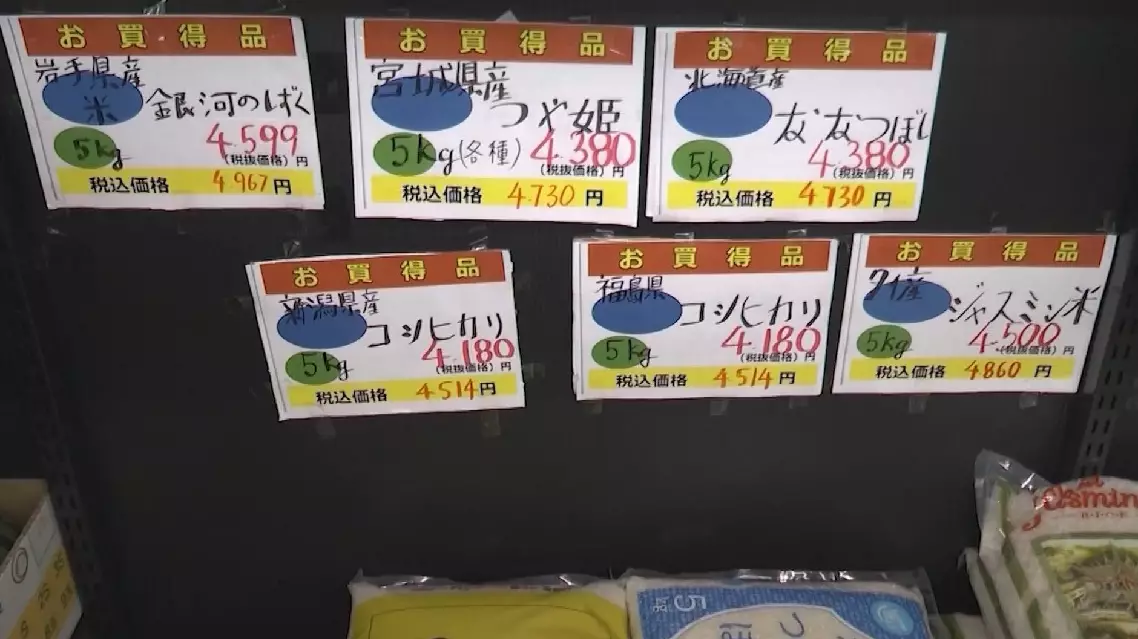
Japan’s core consumer prices rise by 3.1 pct in 2025
AloJapan.com