
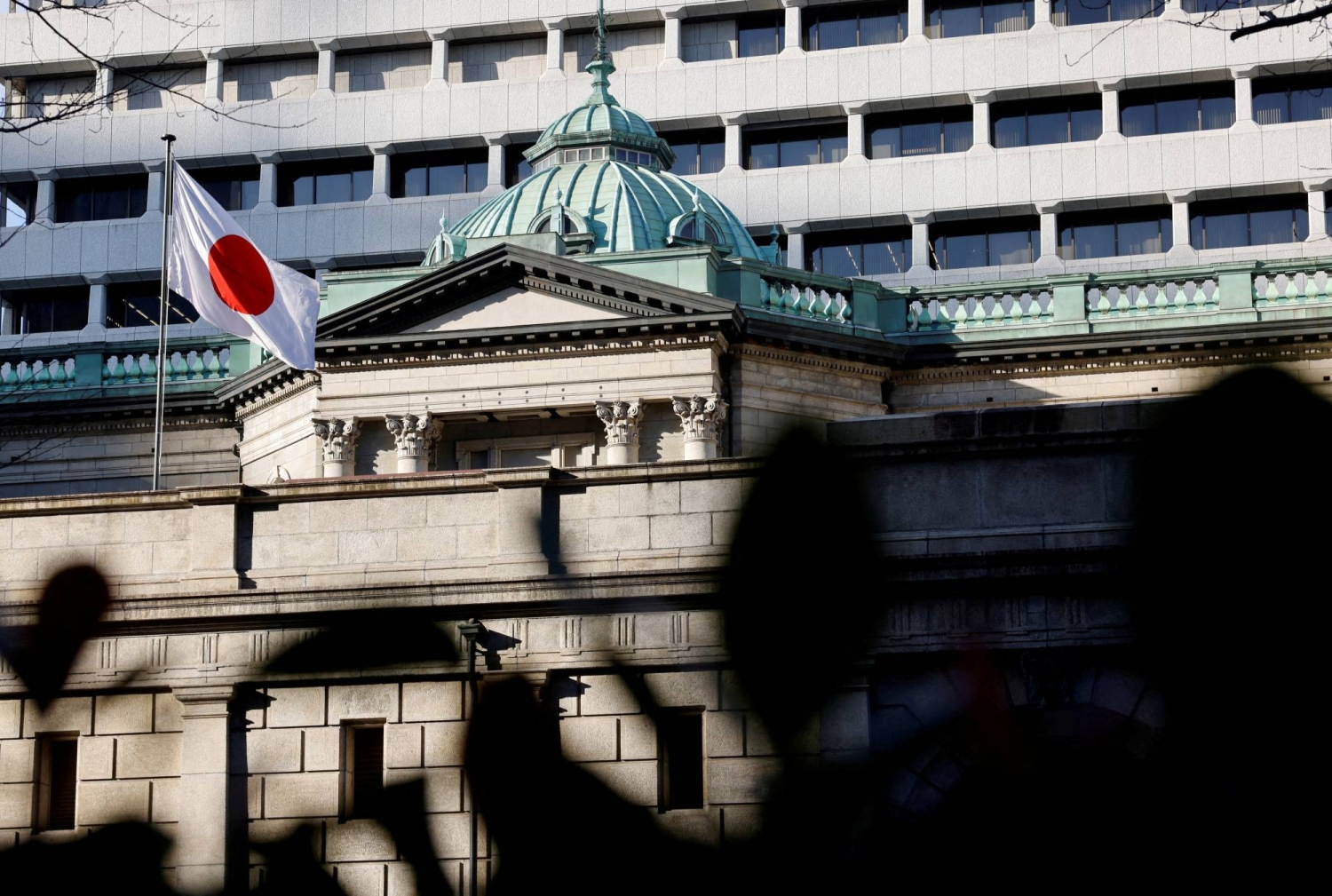
The Bank of Japan opted to leave rates unchanged ahead of next month’s election and as markets remain volatile over concerns about fiscal policy, inflation and geopolitical tensions.
The outcome of the bank’s two-day policy meeting, which ended Friday, was in line with market expectations. Only a month has passed since the central bank raised its policy rate to 0.75% from 0.5%.
BOJ Gov. Kazuo Ueda is scheduled to hold a news conference later Friday.
Japanese government bonds have weakened dramatically in recent months, with the yield on the benchmark 10-year bond briefly touching 2.38%, a 27-year high, on Tuesday.
Bond prices move inversely to yields.
Upward pressure on yields is driven not only by the BOJ’s rate stance, but also by concerns about fiscal policy in Japan, which is expected to become more aggressively expansionary.
The 10-year yield was in the 1.6% range before Prime Minister Sanae Takaichi took office in October, but has since climbed steadily. Takaichi is widely seen as a fiscal and monetary dove.
The BOJ also released Friday a quarterly update on the outlook for the economy and inflation.
The report says consumer prices, excluding volatile fresh food, in the fiscal year through March 2026 will rise 2.7%. In the following fiscal year, the figure is expected to be 1.9%, while it is 2% for fiscal 2027, which ends March 2028.
AloJapan.com