
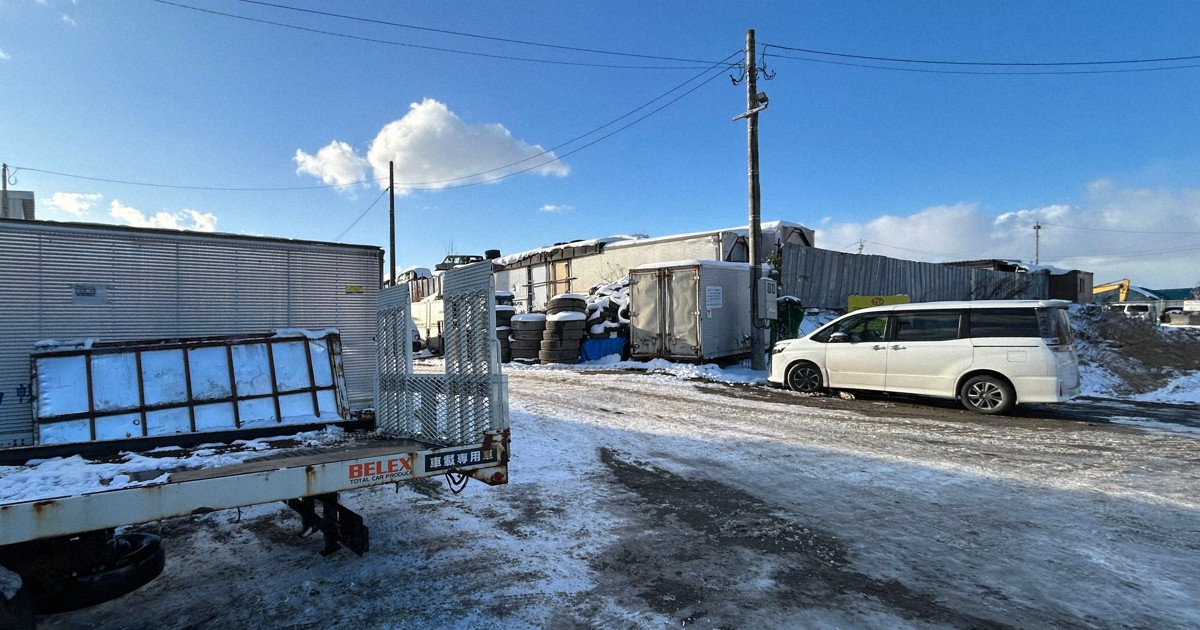
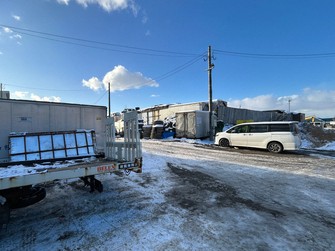
The auto salvage yard that was targeted with bottle rockets is seen in Ebetsu, Hokkaido, Dec. 5, 2025. (Mainichi/Junji Takayama)
EBETSU, Hokkaido — Pakistani residents in the city of Ebetsu, Hokkaido, have been left anxious and confused by the spread of baseless slander on social media which led to an incident where bottle rockets were launched into an auto salvage yard run by a Pakistani individual in October 2025.
What exactly is happening in this commuter city serving Sapporo? This Mainichi Shimbun reporter visited the area to find out.
So-called ‘Pakistan village’ in Ebetsu
Around noon on a Friday in December 2025, the premises of a mosque called the Ebetsu Masjid in Ebetsu, about a 30-minute drive east of central Sapporo, were filled with parked cars, and foreign men were seen entering the facility. Friday prayers are considered obligatory for Muslim men, and around 200 people participated that day. According to those involved, attendees were not just locals but also came from distant cities including Asahikawa and Tomakomai in Hokkaido, with a variety of nationalities represented.
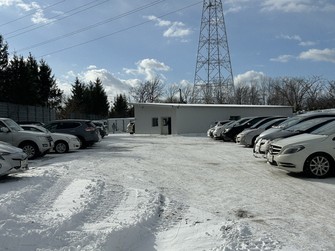
The Ebetsu Masjid mosque, background, with cars of Muslims gathered for Friday prayers, is seen in Ebetsu, Hokkaido, Dec. 5, 2025. (Mainichi/Junji Takayama)
As I waited outside the mosque to speak with a representative after the prayers, a young man approached and invited me inside. The mosque stands in an area that has been labeled on social media as a “Pakistan village,” and the salvage yard that was attacked with fireworks is nearby.
A post on YouTube claimed, “I was dragged into the mosque and surrounded by multiple people.” Despite such claims suggesting it was a dangerous place, my visit revealed nothing but friendliness and cooperation. There is also a waste disposal facility in the area believed to be run by a Japanese individual, making the “Pakistan village” label seem exaggerated.
A rising Pakistani population
Ebetsu has a population of about 118,000 people. The number of Pakistanis in the city increased from just 32 in 2016 to 224 in 2025. The city has a large used car auction site, which has led to a rise in Pakistanis involved in the used car dismantling business.

Hokkaido University associate professor Miki Hirata is pictured in Sapporo, Dec. 10, 2025. (Mainichi/Junji Takayama)
According to Miki Hirata, an associate professor of Japanese language education at Hokkaido University who organizes social events between Japanese and Pakistanis in Ebetsu, derogatory remarks on social media surged around September 2025. This is believed to have been triggered by the spread of false information that all 76 illegally built structures in the urbanization control zone in the city were put up by Pakistanis. However, the city’s development guidance division clarified that most of these were constructed by Japanese individuals, with only a few by foreigners. The number of illegally constructed structures has remained about the same over the past decade.
Nevertheless, it was found that the facility attacked with fireworks and the mosque were indeed illegally constructed in the restricted zone. This accelerated the slander, with comments on social media such as, “They should be deported” and “It’ll become a terrorist base.” The city’s public relations division also received nearly 500 inquiries, including xenophobic opinions like, “Get the foreigners out.”
The development guidance division explained, “We are seeking correction of illegal constructions and are responding equally, regardless of nationality.”
‘Not equal for foreigners’
Regarding the backlash and harassment targeting Pakistanis, the owner of the salvage yard that was attacked with fireworks responded to a phone interview. The Pakistani owner explained that he had been unaware of the need for a permit to build the factory in the urbanization control area. He said, “What used to be good about Japanese was that they treated foreigners equally, but now it’s not equal (for foreigners).” He expressed confusion, stating, “I have obtained a residency status and pay taxes properly. I haven’t done anything wrong (apart from the unlawful construction).”
An individual involved in the mosque also expressed concern, saying, “I didn’t know about the urbanization zone system. I don’t want to have issues with Japanese people, so if there is a way to improve the situation, I would like to know.”
The reason behind video posting
A YouTuber in his 40s posted a video at the end of September 2025 with a title roughly translating to “Illegal foreigners’ village! The city and police can’t intervene!” The video showed his visit to the mosque and the yard, and its description claimed, “I was surrounded by Pakistanis and suddenly told ‘Go home, Japanese.’ I felt my life was in danger.” The video has been viewed more than 300,000 times.
To understand the YouTuber’s reason for posting the video, I requested an interview with him, and he agreed to talk in Sapporo. He explained, “I wanted to address the issue of illegal development and construction, not foreigner issues. In Hokkaido, the administrative response regarding the mega solar project in Kushiro has been slow, and I thought it was wrong. The illegal construction in Ebetsu is not well known, and I wanted more people to be aware of it.”
The man, who studied in Britain and France for two years, said, “I like foreign countries and have many foreign friends. It’s frustrating to be labeled as a xenophobe.” When asked if the video’s title could incite xenophobia, he said, “It was created based on the city government’s explanation, and the title and content highlight the problems with Ebetsu’s response.” He continued, “I admit that some aspects of how I conveyed the message lacked maturity, but I believe the core issue is that the administration is not adequately addressing illegal construction.”
He clarified that he had no intention of ostracizing Pakistanis, saying, “Society significantly lacks interest in local administration. I’m sending out information to raise awareness, and profit is secondary.”
2025 upper house election catalyzed ‘private justice’
On the other hand, associate professor Hirata pointed out that the videos related to Ebetsu, including the man’s video, “contain both facts and false information, making it very difficult to distinguish” what is true and what isn’t. Regarding illegally constructed structures, she noted, “Publishing videos amounts to private justice, which is unacceptable. Discriminatory terms like ‘Pakistan village’ and ‘illegal foreigners’ have spread, likely inciting physical actions such as setting off fireworks.”
What brought the foreigner issue into the spotlight in the first place? Hirata surmised, “With the House of Councillors election in the summer (2025) as a turning point, those in positions of authority began discussing foreigner issues, strengthening an atmosphere where negative words were acceptable.”
She explained, “For example, the phrase ‘Japanese First’ has a violent connotation, but elementary school students use it for fun. The phrase has gained power through social media, being amplified by these platforms’ users.”
According to multiple sources, the slander and harassment targeting Pakistanis has been receding since November 2025.
What can be done to prevent similar incidents in the future? Hirata suggests, “Both those who actively aim to achieve coexistence and those who are complete xenophobes are very few. Most people are neither. In this case, the extreme voices on the one end of the spectrum were very strong and drew attention. To counteract this, regular interaction is essential.”
Hirata places hope in the many people in the middle, saying, “It’s entirely possible for communities of different races and nationalities to engage in dialogue.”
(Japanese original by Junji Takayama, Hokkaido News Department)
AloJapan.com