
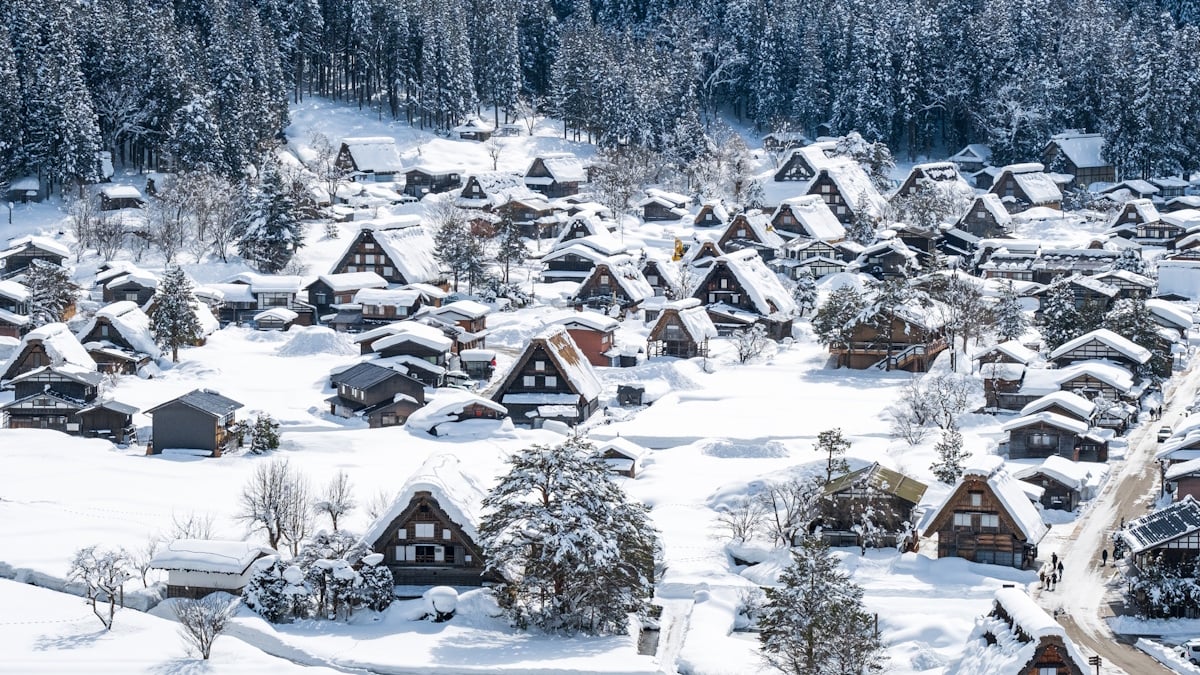
Shirakawago, a UNESCO World Heritage Site in Gifu Prefecture, is facing mounting pressure as foreign tourism continues to surge. About 500 people live in the village, yet more than 2 million visitors arrived in 2024. Roughly 1.11 million of them were foreign tourists, marking the first time overseas visitors accounted for more than half of all arrivals. The number represents a more than fivefold increase compared with 2014.
Narrow roads, winter conditions add strain
 Picture: まちゃー / PIXTA(ピクスタ)
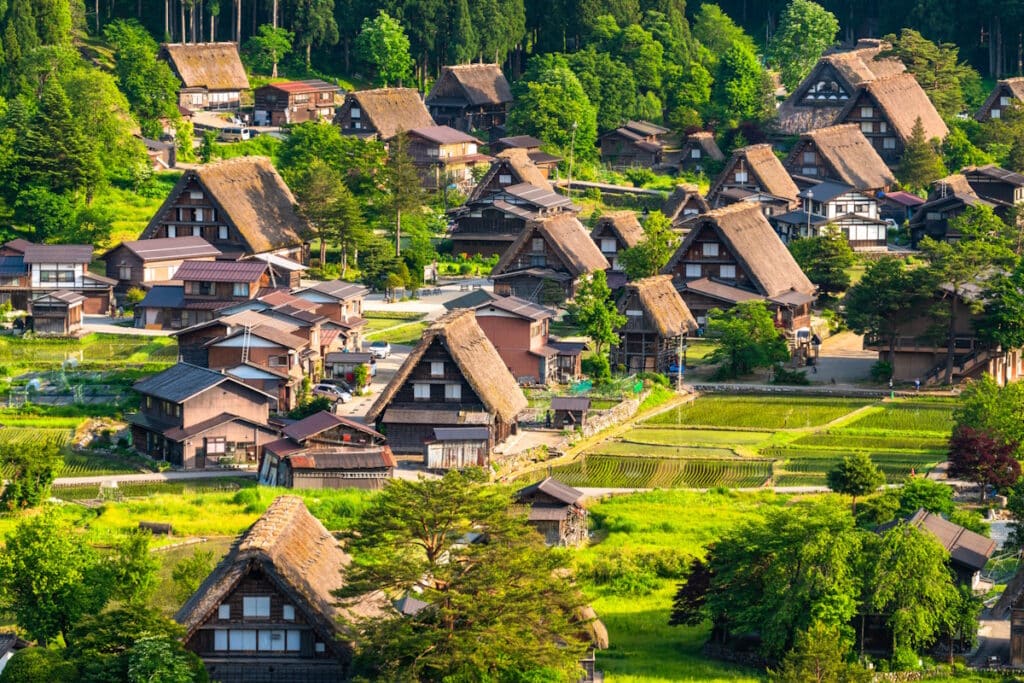
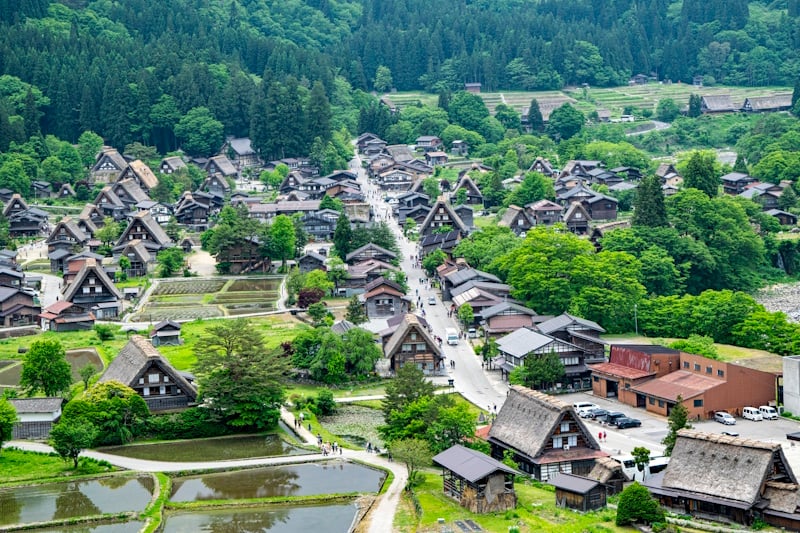
The village’s narrow roads and limited infrastructure are struggling to absorb the growing crowds. Shirakawago has no railway access, forcing visitors to rely on buses and private vehicles. Traffic congestion now occurs on about 30 days each year, often stretching from nearby highway exits. The main road through the village has only one lane in each direction, and residents say the congestion makes commuting and accessing daily services increasingly difficult.
Winter conditions add another layer of strain. Some visitors have held snowball fights in front of private homes, while others have built snowmen without permission. When the snow melts, residents sometimes find discarded socks and gloves scattered across rice fields. These seemingly minor acts have accumulated into disruptions that directly affect daily life.
Frustration among residents has grown more visible. A village survey conducted in 2024 found that 59.4 percent of respondents held a negative impression of foreign tourists, far exceeding negative views toward Japanese visitors. Officials warn that the long-standing balance between tourism and daily life is beginning to break down.
The Shirakawago Tourism Association has echoed those concerns. Chairman Nishimura Hiroaki said the village is approaching its limit. While tourism continues to support local shops and employment, many residents are now questioning whether the current pace of growth remains sustainable.
From quiet mountain village to global tourist destination
Before gaining international recognition, Shirakawago was a quiet mountain village shaped by heavy snowfall and isolation. Residents lived near the base of Mount Hakusan, where winters lasted four to five months each year. Daily life depended on cooperation, as survival in such conditions required strong mutual support.
The village is best known for its gassho-zukuri houses, which were designed to withstand the region’s severe climate. Their steeply sloped thatched roofs allow heavy snow to slide off naturally, preventing structural damage. The shape of the roof, resembling hands pressed together in prayer, gave rise to the name gassho. Builders adapted the design to both the harsh weather and the limited flat land available in the valley.
Many homes also served as centers of production. Families used the spacious attics to raise silkworms, making silk an essential source of income when agriculture alone could not sustain the community. Roof windows allowed sunlight and airflow to circulate, creating ideal conditions for sericulture. Over generations, residents carefully passed down construction methods and maintenance skills.
In 1995, UNESCO designated Shirakawago and the neighboring Gokayama villages as World Cultural Heritage sites. The listing recognized not only the architectural ingenuity of the houses but also the village’s long-standing system of mutual aid known as yui. Under this system, residents worked together on major tasks such as rethatching roofs, with a single project sometimes requiring up to 200 people.
Before the World Heritage designation, tourism remained limited. Souvenir shops were quiet, and crowds were rare. International recognition changed that dynamic quickly, drawing visitors from Asia, Europe, and Australia and transforming Shirakawago into one of Japan’s most visited rural destinations.
Tourism growth alters daily life and public space
 Picture: Masa / PIXTA(ピクスタ)
The rapid growth of tourism has begun to reshape daily life in Shirakawago. In 2024, foreign visitors made up 53.5 percent of all tourists, and local officials expect that share to rise further. Tourism leaders estimate that foreign visitors could account for 80 to 90 percent of arrivals in 2025, a dramatic shift for a village of about 500 residents.
Seasonal peaks place the heaviest strain on the community. Snow-covered winters and autumn foliage attract especially large crowds. While January and February have traditionally been quiet months for domestic travelers, foreign tourists now arrive in their greatest numbers during this period, drawn by snowy landscapes rarely seen in their home countries.
Planning a trip to Japan? Get an authentic, interpreted experience from Unseen Japan Tours and see a side of the country others miss!

“Noah [at Unseen Japan] put together an itinerary that didn’t lock us in and we could travel at our own pace. In Tokyo, he guided us personally on a walking tour. Overall, he made our Japan trip an experience not to forget.” – Kate and Simon S., Australia

See a side of Tokyo that other tourists can’t. Book a tour with Unseen Japan Tours – we’ll tailor your trip to your interests and guide you through experiences usually closed off to non-Japanese speakers.


Want more news and views from Japan? Donate $5/month ($60 one-time donation) to the Unseen Japan Journalism Fund to join Unseen Japan Insider. You’ll get our Insider newsletter with more news and deep dives, a chance to get your burning Japan questions answered, and a voice in our future editorial direction.
Managing crowds has become unavoidable. Security guards now shout warnings at pedestrians who stray onto vehicle-only roads, and ropes block access to rice fields and private land. These measures help prevent accidents and protect property, but they also detract from the village’s traditional scenery and calm atmosphere.
Most visitors spend only a short time in the village. Day trippers account for more than 90 percent of arrivals, with many focused on taking photos or videos before moving on to another destination. After capturing images, few stay long enough to contribute significantly to the local economy. In 2022, the average spending per day visitor was 3,660 yen, or about 24.40 US dollars. The village hopes to raise that figure to 4,400 yen, or roughly 29.30 US dollars, by 2029.
Traffic has emerged as the most persistent source of resident frustration. During busy periods, vehicles back up from nearby highway exits into the village. Accidents sometimes occur when drivers unfamiliar with winter conditions travel without snow tires, worsening congestion and deepening local resentment.
Policy responses and the push from quantity to quality
Facing mounting pressure, Shirakawago has begun rolling out a series of countermeasures. In 2023, the village adopted a policy of “responsible tourism,” urging visitors to follow five basic rules, including using designated parking areas and exercising strict caution when handling fire.
Stricter controls are now on the way. Beginning in fiscal 2026, tour buses will be required to make advance reservations. Nearly half of all visitors arrive by large bus, and officials believe reservation caps will help ease congestion by directly limiting visitor volume during peak periods.
The village has also turned to pricing as a management tool. In October 2025, the village increased rates, though officials say the increase has not yet led to a noticeable decline in visitor numbers. Even so, they view higher fees as a way to gradually influence travel behavior and spread demand more evenly over time.
Beyond regulation, local leaders are shifting their focus toward improving the quality of tourism. Officials want to encourage longer stays and higher-value experiences rather than brief, photo-driven visits. Plans include expanding hands-on programs linked to agriculture and traditional culture, as well as developing branded products rooted in Shirakawago’s heritage.
At the heart of these efforts is the search for balance. Residents continue to welcome visitors, but they also want to protect daily life and cultural identity. Officials openly acknowledge that the village is approaching its capacity. Without additional controls, they warn, overtourism could erode community trust and threaten the very heritage that draws visitors in the first place.
Social media, global trends, and an uncertain future
 Picture: CHAI / PIXTA(ピクスタ)
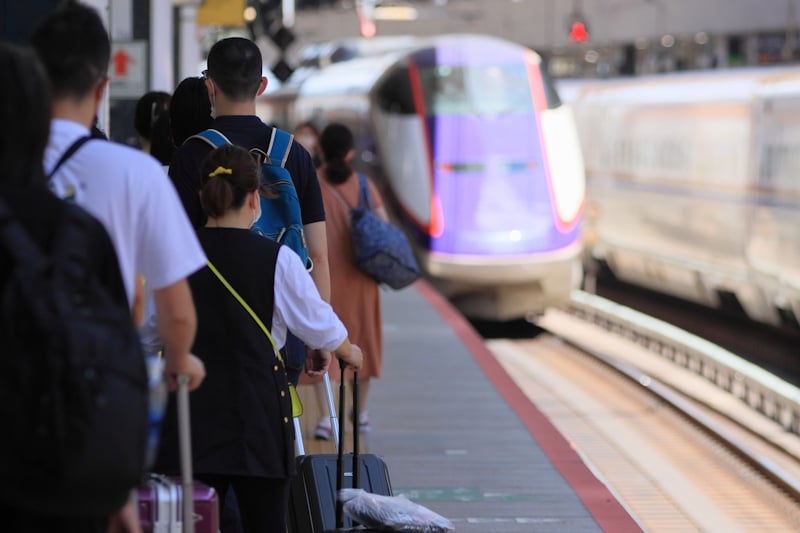
Shirakawago’s situation reflects a broader national trend. Following the pandemic, inbound tourism to Japan surged sharply. From January to November 2025, the country welcomed about 39.06 million foreign visitors, a figure roughly 7.5 times higher than when Japan launched its tourism-driven growth strategy in 2003.
Several factors have fueled this growth. A weaker yen and relaxed visa requirements have made travel more accessible, while social media has amplified exposure. Photos and videos now spread instantly, drawing visitors to places once considered remote.
Experts warn that this visibility makes overtourism harder to predict and control. Indeed, other traditional sites report that the increase in visitors has led to littering and property damage.
Shirakawago has joined a growing list of destinations grappling with these pressures. Local officials increasingly recognize that visitor numbers alone can no longer define success. Instead, the village has begun to prioritize sustainability and the well-being of its residents.
Planning a trip to Japan? Get an authentic, interpreted experience from Unseen Japan Tours and see a side of the country others miss!
“Noah [at Unseen Japan] put together an itinerary that didn’t lock us in and we could travel at our own pace. In Tokyo, he guided us personally on a walking tour. Overall, he made our Japan trip an experience not to forget.” – Kate and Simon S., Australia
See a side of Tokyo that other tourists can’t. Book a tour with Unseen Japan Tours – we’ll tailor your trip to your interests and guide you through experiences usually closed off to non-Japanese speakers.
Want more news and views from Japan? Donate $5/month ($60 one-time donation) to the Unseen Japan Journalism Fund to join Unseen Japan Insider. You’ll get our Insider newsletter with more news and deep dives, a chance to get your burning Japan questions answered, and a voice in our future editorial direction.
At the same time, residents continue to uphold yui, the cooperative spirit that has shaped the village for centuries. They invest in preserving thatched roofs and securing local materials, maintaining traditions that remain essential to daily life. Each roof replacement still takes place every 20 to 30 years, and villagers now teach these skills to younger generations to ensure continuity.
Local leaders emphasize a central point: that Shirakawago is a living community, not an open-air museum. People still live in the historic houses, raising families and maintaining traditions. Preserving that reality will require responsible behavior from visitors and careful policy choices, as the village navigates the delicate balance between global popularity and local survival.
Sources
人口500人の世界遺産「白川郷」に外国客111万人…受け入れ負担大きく観光協会「そろそろ限界」 読売新聞
観光バス運転手「12月末頃から中国本土のツアー客ほとんど乗せていない」 “渡航自粛”の影響は…岐阜の人気観光地 世界遺産・白川郷 CBC News X
白川郷観光公害に直面 海外客急増 対応しきれず 読売新聞
【世界遺産登録30周年】岐阜・白川郷の観光ガイド 合掌造りの里に受け継がれる日本の原風景 &アラカルト
世界遺産「白川郷」をもっと深く知る 岐阜の旅ガイド
AloJapan.com