
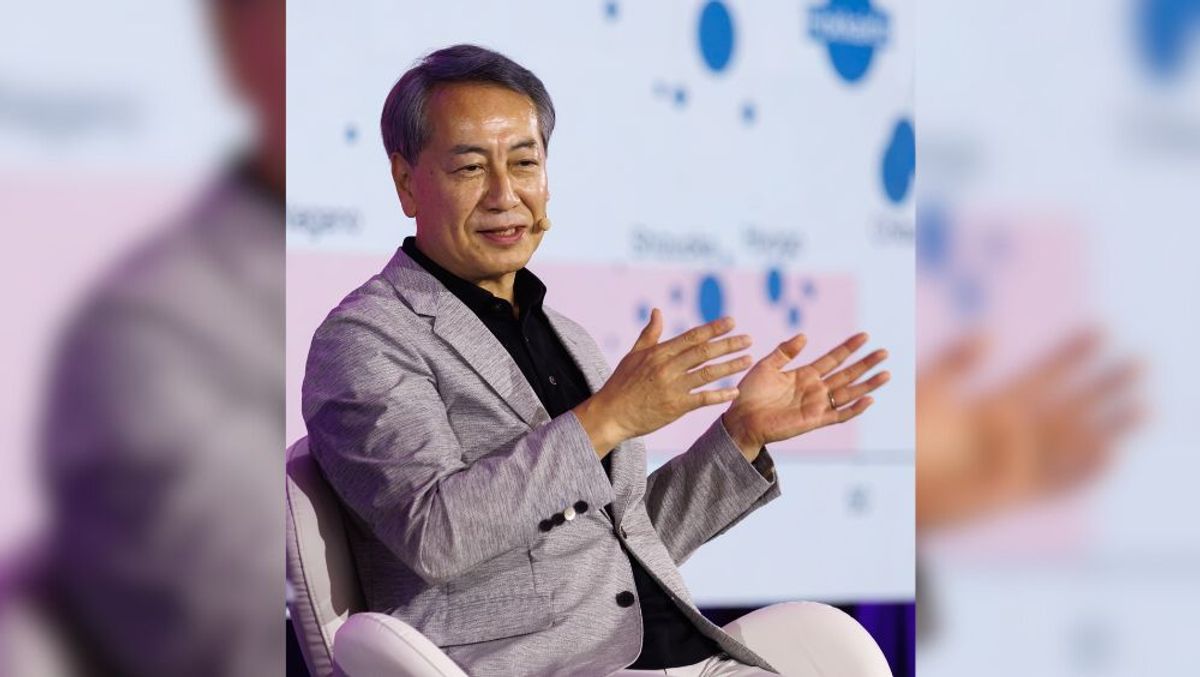
Enriching travel comes in many forms – and there are many ways for the travel sector, travellers and players to engage, benefit and inspired by it. For Eijiro Yamakita, president and CEO of JTB Corp, it’s about creating value that touches travellers, communities and the wider industry.
A seasoned leader in Japan’s tourism sector, Yamakita sees opportunities for enrichment across generations and sectors, but he also believes that legacy institutions like JTB must evolve to keep pace.
“The hardest thing to change is mindset,” Yamakita remarked, speaking at WiT 2025 in Singapore during a key panel session moderated by WiT founder Yeoh Siew Hoon.
I wanted to make the tourism industry more value added and better.– Eijiro Yamakita, president and CEO, JTB Corp
“People stick to past success stories. That gives them identity, which is good, but we must keep inputting new information, new technology, new intelligence. That changes mindset and culture.”
Founded in 1912, JTB has long been a cornerstone of Japan’s travel industry. Its recent acquisition of Northstar Travel Group, parent company of Travel Weekly Asia, reflects Yamakita’s vision of a more globally connected, data-driven, and tech-enabled travel ecosystem and positions the company at the industry’s forefront to shape the future of travel.
In today’s world, travel is all about changing mindsets and finding meaning.
Barely two decades ago, the number of inbound tourists to Japan was modest. Today, it’s on a trajectory to grow from 36.8 million in 2024 to 60 million by 2030, with potential to reach 100 million by 2045.
By comparison, France received 100 million and Spain 80 million international tourists in 2023. Japan still has room to grow, Yamakita noted, but the country needs better distribution of visitors to avoid the pitfalls of overtourism. Many tourists still flock to Tokyo and Osaka, when many lesser-known destinations lie in wait.
“Japan is a long, narrow island stretching 3,000 km from north to south. The seasons are completely different – Okinawa is tropical all year, while Hokkaido has powder snow and beautiful lakes. The food and culture also vary widely,” he said. “Japan has much potential, but we must develop reasons for people to visit.”

Yamakita sees promise in Japan’s senior market, citing the example of BonPon511, a Japanese senior couple who gained a massive following for their coordinated fashion.
While inbound tourism is thriving, outbound travel from Japan has stalled post-pandemic. “Forty-one million Japanese are travelling overseas – it sounds like a very small number, but significant compared to the population,” said Yamakita. The most active segments? Young women aged 20–29 and affluent travellers, even as tour prices to Europe have doubled due to a weak yen.
One key factor behind Japan’s muted outbound numbers is low passport ownership, just 17%, compared to 50% in the US, 60% in Taiwan and 42% in South Korea. “Japan itself is attractive, so people feel no need to go abroad,” Yamakita said. “And schools no longer require overseas programmes, which limits exposure.”
To spark curiosity and global understanding, JTB continues its Global Link Project, launched a decade ago, sending Japanese junior and senior high students to countries such as Vietnam, Malaysia, and Thailand for cultural exchanges. “Once they have a passport and they have some experience outside of Japan, they are likely to travel again.”
At the other end of the age spectrum, Yamakita sees promise in Japan’s senior market. “The baby boomer generation is retiring, but they remain energetic. Now, even people aged 80 or 85 are travelling – and social media allows them to express themselves,” he said, citing BonPon511, a Japanese senior couple who gained a massive following for their coordinated fashion.
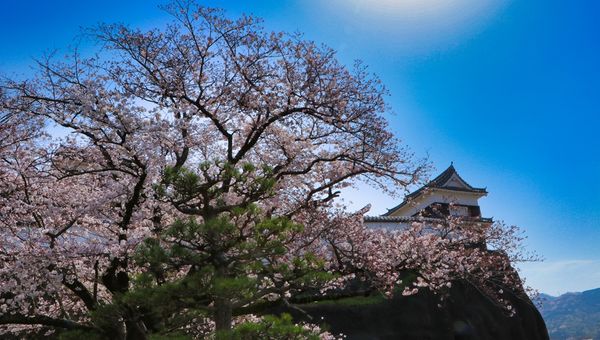
Yamakita champions travel to small towns such as Usuki, a former castle town located on the east coast of Oita Prefecture in Kyushu.
Yamakita himself has visited all 47 prefectures of Japan, often giving talks in small towns to inspire local leaders. “In Usuki, a small town in Oita Prefecture, they have beautiful streets and incredible food – like fugu (blowfish sashimi),” he shared. “It’s well-known to Japanese, but few foreign visitors go there. I suggested to the mayor to collaborate with nearby towns to create routes and promote them together.”
Quoting Japanese sayings – “Jinsei wa tabi” (Life is a journey) and “Kawaii ko ni wa tabisaseyo” (Let your children travel the world) – Yamakita hopes people everywhere will continue to travel with purpose and curiosity.
And one thing he never wants to see change?
“The joy – those perfect moments in travel.”
AloJapan.com