
“It’s a great choice for a trip to Japan, so that you don’t have to worry about bringing two or three boards.”
As a snowboarding brand, Head is at an interesting point in its evolution. It’s known as a rental brand for both skis and snowboards, and as a maker of entry- to mid-level snowboards, bindings, boots, helmets, goggles, and more. However, over the last few years, Head has made a deliberate push to serve the upper end of the market and produce snowboards featuring progressive technology for advanced and pro-level riders.
If you need proof of the Head E.B.I LYT’s big-mountain capabilities, pro rider Cody Bramwell won the Freeride World Tour season final in Verbier, Switzerland, on his.
When I read about some of Head’s new boards and their technology – and saw photos of their great-looking designs – I wanted to try them out and see if the boards live up to their marketing. I got in touch with Head Japan and they agreed to let me try out the Head E.B.I LYT, their flagship all-mountain freeride board built for carving and powder.
Rider Profile
Height: 181cm/5’11”
Weight: 75kg/165lbs
Boot size: 9.5 (K2 Darko)
Bindings: SP Peak (M)
Stance: +24 / +3, 59cm
Years riding: 30
Typical terrain/style: sidecountry, trees and piste. Apart from small ollies I tend to keep my board on the ground and stay away from the park.
Other boards I have recently owned: Burton Custom X 162, Burton Fish 164, Burton Family Tree Forrager 154
Other boards I’ve demoed recently and enjoyed: Island Snowboards Volume One, Field Earth XA Custom
Board Specs
Directional
Camber profile: New School Camber (rocker-camber-flat-camber-rocker)
Flex rating: 6 (medium-stiff)
Length: 156cm
Weight: 3kg/6.6lbs
Waist width: 26.8 cm
Effective Edge: 112.5 cm
Radius: 8.4/7.2 m
Med. Stance: 56 cm
Setback: 1.5 cm
Rider Weight range: 70-90 kg
Pricing: Retails at US$639, or 550 euros.
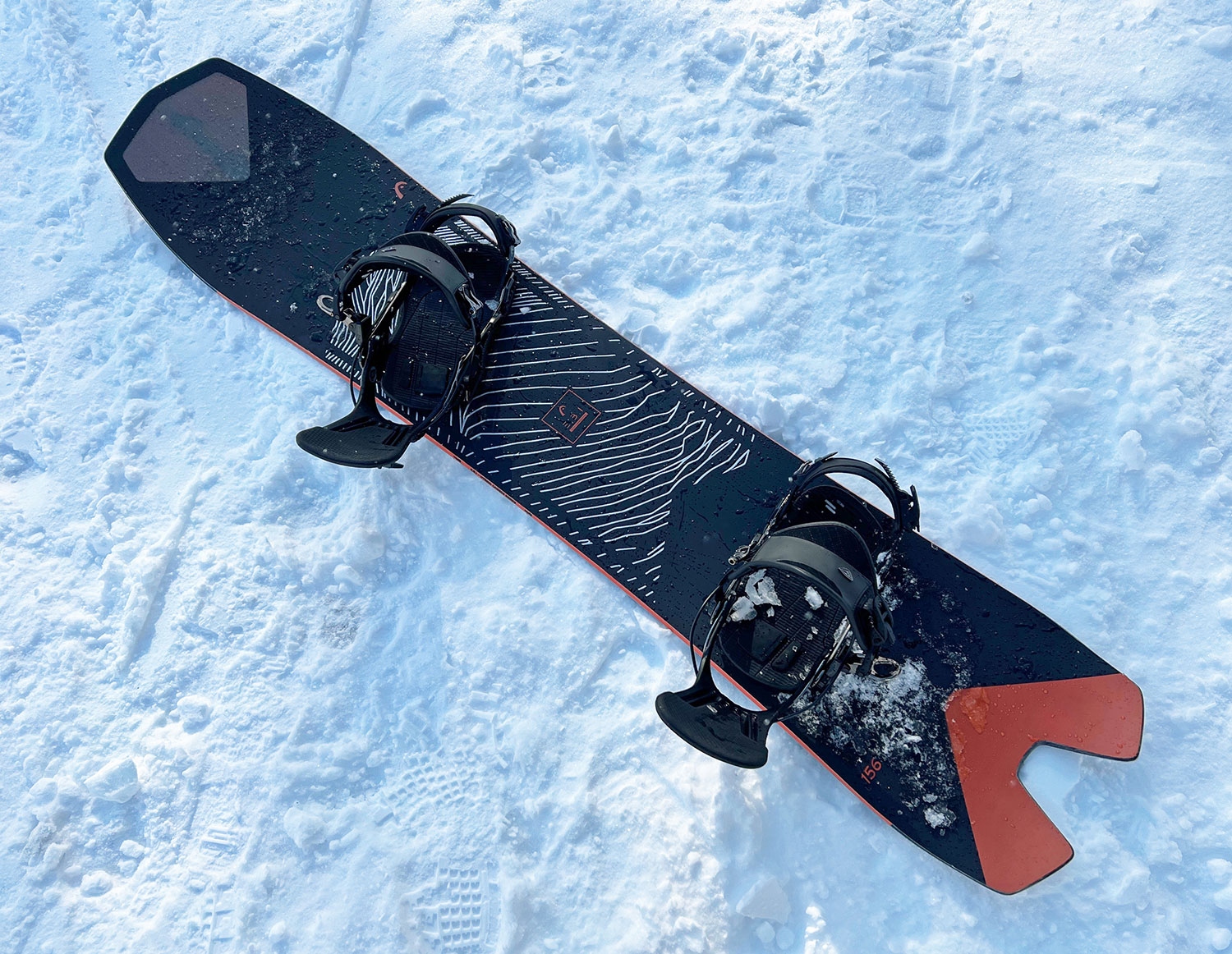
The Head E.B.I LYT with SP Peak rear entry bindings. Image: Jamie O’Brien
First look
In my opinion, it’s a good-looking snowboard. It has a kind of understated military dominance that reminds me of a stealth bomber. The wide, blunt nose is very striking. No gimmicky designs, trendy art that will date quickly or AI slop here. What’s also notable is that the graphic designers and the product designers have worked together, making the swallow tail and the semi-transparent nose cut-out integral to the topsheet design. I can’t think of another snowboard that has been designed this way.
“When I read about some of Head’s new boards and their technology – and saw photos of their great-looking designs – I wanted to try them out and see if the boards live up to their marketing.”
The graphics have evolved from the previous year’s model, adding the orange section to the tail and a topographic map-inspired silver design to the middle of the board. Branding is also minimal, which I like. The black sintered base is also reassuringly classic. The topsheet has a matte, slightly rough texture and the unique honeycomb nose changes colour in different lighting. This board looks and feels premium.
It’s not an especially light board by weight. 3kg/6,6lbs is in the middle for a high-end all-mountain board, but the LYT technology (said “light”, not “lit”) reduces the weight in the tip and tail, making it feel significantly lighter than it is when riding, but retaining the stiffness and stability between the contact points that you want from this type of board.
Think of it as a mid-stiff advanced-level board that would otherwise be heavy, made much lighter by the LYT technology. It isn’t a light board compared to all snowboards, but it is light for its category and performance.
On The Snow
My first impression of the board on the snow was that it felt immediately comfortable. Some other boards I’ve demoed recently definitely have nuances, which means there is a learning curve, especially the more powder-focused boards that are volume-shifted or feature 3D technology. They feel different from what I would call a standard cambered ride that something like a Custom X would give you.
Whether the tech makes turns easier or not, the feel and the turning sensations are often a little different. The E.B.I LYT just felt solid and familiar, and I could trust it from the first turn. It’s rated a 6 for stiffness, but the more modern boards I try, the more I realise this metric means very little if a board has varying flex along its length. I like a stiff board (The Field Earth XA is a 10/10 for stiffness, and I couldn’t get enough of it). The E.B.I LYT is absolutely stiff enough. Personally, I dislike it when a board flexes and twists with undulations in the piste, and this board never did that.
The board is quick edge-to-edge and has great edge hold. I didn’t wash out or lose an edge once in three days under fairly challenging conditions.
The E.B.I LYT is marketed as a unisex board and is available in a range of sizes from 143 to 161. I also had an experienced female rider try the board (172cm, 60kg, 10.5F boots). She’s 10kg underweight for the 156, but handled it with no problems and enjoyed the board’s ability to just cut through the crud. She called it a tank (in a good way).
This is the first board I’ve tried with a dual-sidecut radius, and you can definitely feel how it’s happy both in quick, tight turns and in long, drawn-out carves. With a board designed for tight turns, you can often feel oversteer when you’re trying to carve. Conversely, on a board designed to carve, it can be a struggle in the trees.
The E.B.I LYT gives you the best of both worlds, and means you can happily switch between trees and piste without having to switch boards. I didn’t struggle with oversteer or understeer at all. With larger nosed powder boards, oversteer can be a problem when carving.
I rode this board for three days at Nozawa Onsen during New Year. Across those three days, we had very variable conditions, including hard groomers, rock-hard icy pistes and moguls, followed by a nice 5-10cm of powder on the final day, which then got a bit slushy towards the end. The board got a good workout and handled everything perfectly. In more than a decade across more than 50 ski areas in Japan, I have never experienced icy conditions like this. It wasn’t glassy ice, but the base was rock-solid. (Considering the base areas were all closed two days before we arrived, it was better than mud and rocks.)

On Skyline course at Nozawa Onsen in Nagano, Japan. Image: Jamie O’Brien
The hybrid camber profile of the E.B.I marks it as an advanced piece of equipment. Many brands incorporate complex camber profiles in their top-end boards, designed to give riders the best of both worlds. Head calls it “Hybrid Camber POP” or “New School Camber”. It’s an interesting design with very short cambered sections at the contact points, with a flat section between the feet. When the rider puts weight on the board, the nose and tail lift, giving a similar performance to a rockered nose and tail. Head calls it “slight rocker”. This allows the board to perform very close to a traditional camber, while offering float in powder and easy turn initiation on piste. You’ve effectively got a rocker-camber-flat-camber-rocker profile, where the rocker is engaged with pressure.
When I did get the board in enough powder to clear the icy base, it came alive, transforming into a floaty, surfy, nimble ride.
After having to return my Burton Family Tree Forager for the second time after the swallowtail split (a board that I love), I was in the market for a new short board for the tight trees in Japan. I will now put that on hold and ride the E.B.I LYT as my main board for the rest of this season. Of course, there are compromises when you use one board for everything, but this board is a close as you can get to the performance of a dedicated powder board and a carving board. I can see myself choosing it on most days because it performs so well on the piste. In fact, I’m seriously considering just taking this board to Japan for my next trip.
What might also seem like a minor point is the weight of the board on your foot while riding a chairlift. I’m always disappointed when chairs don’t have a footrest. Sadly, this is true for what seems like 80% of all chairs in Japan. I don’t really feel any leg fatigue with the E.B.I LYT. I usually have to grab the back of my board around the back of the chair to give myself some relief, but I didn’t need to.
It’s also worth mentioning the comments I got from other riders. The design is striking, and there’s nothing else out there that looks like it. If you ride this board, people will tell you how much they like it. It’s usually riders who have been around the block, seen everything and know what a mean-looking board looks like. They don’t realise it’s a Head, but the shape and the graphics definitely combine to make something they want to try.
It’s surprising that a company that makes ubiquitous rental boards (they are everywhere at Nozawa Onsen) can make something that gives people such strong board envy. Some people might be hesitant to choose Head over the big-name brands that their friends all ride. We all want to feel good about our equipment choices, so it’s important to point out that you won’t regret buying this board for these reasons. It’s a real head turner.
Who is the Head E.B.I LYT for?
If you’re like me and your focus is on hunting for powder, often in the trees, but you enjoy carving fresh groomers, this is the board for you. If you’ve been thinking about upgrading your board to something more versatile but you’re not sure how other boards will feel or whether they’ll suit your riding style, the E.B.I LYT is a safe choice. There’s nothing gimmicky or odd-feeling about the ride. This is a reliable board with a traditional camber feel, packed with high-end tech that actually works in subtle yet noticeable ways. It has all the power, plenty of float, and it’s easy to turn in tough conditions. It’s a great choice for a trip to Japan, so that you don’t have to worry about bringing two or three boards.
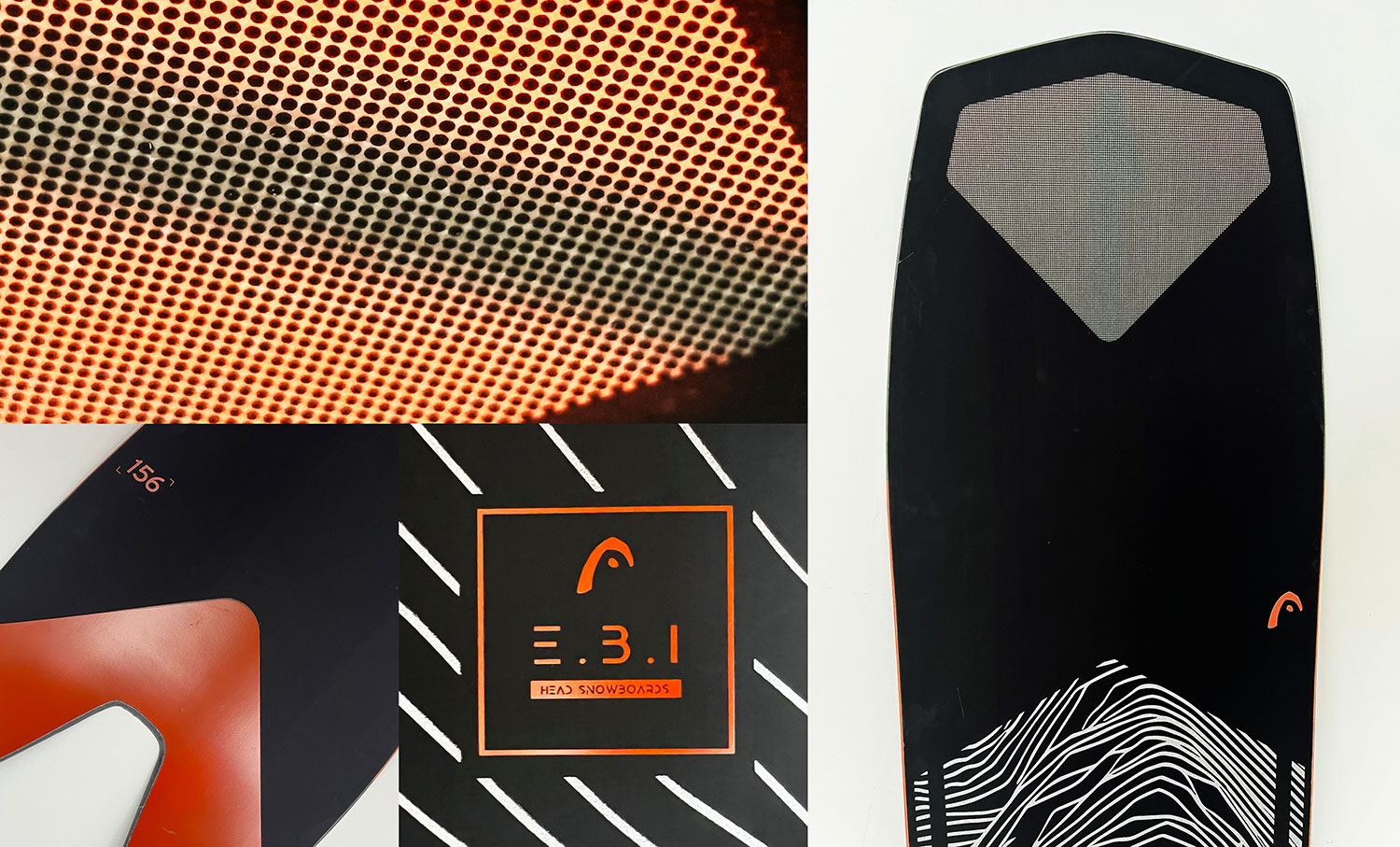
The Head E.B.I LYT
The E.B.I LYT is also an option for progressive female riders who are underwhelmed by the options for female-specific boards. At US$639 for a flagship board, the price is right too. Similar flagship boards from other manufacturers are usually US$800-1,000 or more.
ENQUIRE NOW
 Organise your guided backcountry skiing tour in Japan
There are lots of options in Hokkaido and Honshu that can be tailored to the kind of skiing you like and when you plan to come. Answer a few questions and we’ll get back to you with some recommendations.
Enquire Now
AloJapan.com