


Navigating Change: How Japan’s Travel Market is Adapting to New Economic and Environmental Realities – Image Credit Unsplash
Japan’s travel industry is experiencing a significant transformation, shifting from mere recovery to a strategic revival, with a focus on sustainable tourism and enhanced regional distribution, according to Phocuswright’s Japan Travel Market Essentials 2025 report.
Overview of Japan’s Economic and Travel Market Trends
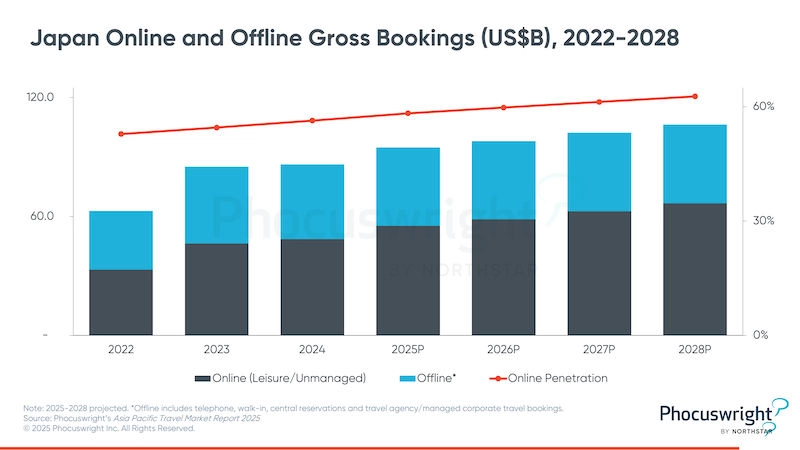
Japan’s economy has shown signs of recovery with its first interest-rate hike in 17 years, record equity markets, and the strongest wage growth in over three decades. Despite these positive indicators, the weak yen has been pivotal in boosting the travel sector, particularly inbound tourism, which has grown substantially. The travel market’s gross bookings surpassed 2019 levels in 2023 and grew by 9% in 2024, reaching ¥13.1 trillion. However, when adjusted for exchange rates, growth appears more subdued, indicating a shift in the economic dynamics of Japan’s travel market.
Shift from Growth to Sustainable Management
As Japan’s travel market matures, the focus is shifting from attracting more tourists to managing them effectively. Overcrowding in popular cultural districts and natural sites has led to sustainability becoming a central policy rather than just a guiding principle. The government and local authorities are implementing measures, including visitor caps, new access rules, and taxes, to protect local communities and preserve cultural heritage. These policies aim to ensure that tourism growth does not compromise residents’ quality of life or the visitor experience.
Regional Development and Aviation Expansion
To alleviate pressure on major urban centers, Japan is promoting regional tourism destinations. This includes expanding rail services, offering incentives to airlines, and enhancing regional promotions to more evenly distribute tourism benefits across the country. Additionally, Japan’s role as a global aviation hub is being reinforced by increased visitor volumes, which support higher flight frequencies and expanded long-haul connections, particularly through Tokyo.
Implications for the Future
The evolution of Japan’s travel market reflects broader economic and policy shifts. The focus on sustainable tourism and balanced regional growth suggests a shift toward a more structured, data-driven approach to tourism management. This strategic pivot is likely to influence future investment and operational decisions within the travel industry, both domestically and internationally.
Conclusion
Japan’s travel industry is not just growing; it is becoming more sophisticated and interconnected with global travel dynamics. The Phocuswright report highlights the importance of understanding these changes for businesses and investors looking to engage with Japan’s burgeoning travel sector. The ongoing developments in economic policies, sustainability measures, and regional promotion are reshaping Japan’s tourism landscape, making it crucial for stakeholders to adapt to these new realities.
Download Phocuswright’s Japan Travel Market Essentials 2025 report.
AloJapan.com