
Your support helps us to tell the story
From reproductive rights to climate change to Big Tech, The Independent is on the ground when the story is developing. Whether it’s investigating the financials of Elon Musk’s pro-Trump PAC or producing our latest documentary, ‘The A Word’, which shines a light on the American women fighting for reproductive rights, we know how important it is to parse out the facts from the messaging.
At such a critical moment in US history, we need reporters on the ground. Your donation allows us to keep sending journalists to speak to both sides of the story.
The Independent is trusted by Americans across the entire political spectrum. And unlike many other quality news outlets, we choose not to lock Americans out of our reporting and analysis with paywalls. We believe quality journalism should be available to everyone, paid for by those who can afford it.
Your support makes all the difference.Read more
A popular ski resort town in Japan is set to introduce fines for people engaging in disruptive behaviour, as growing numbers of tourists clash with the local population.
Hakuba village, in north-western Nagano prefecture, says the new restrictions will come into effect from 1 July 2026 and include rules around graffiti and making loud noises at night.
While Hakuba issued an order regarding “Village Manners” in 2015, it only prohibited disruptive behaviour without making it a punishable offence.
The revised rules identify eight specific categories of violations that will be subject to fines of up to ¥50,000 (£237) if an offender refuses an official order to stop.
The restrictions ban graffiti or placing stickers on public or private property, shouting, loud music or the use of sound equipment after 10pm, launching fireworks at night, smoking while walking, among other activities.
The rules were revised to “protect the village’s beautiful landscape and comfortable living environment”, the village’s general affairs division said.
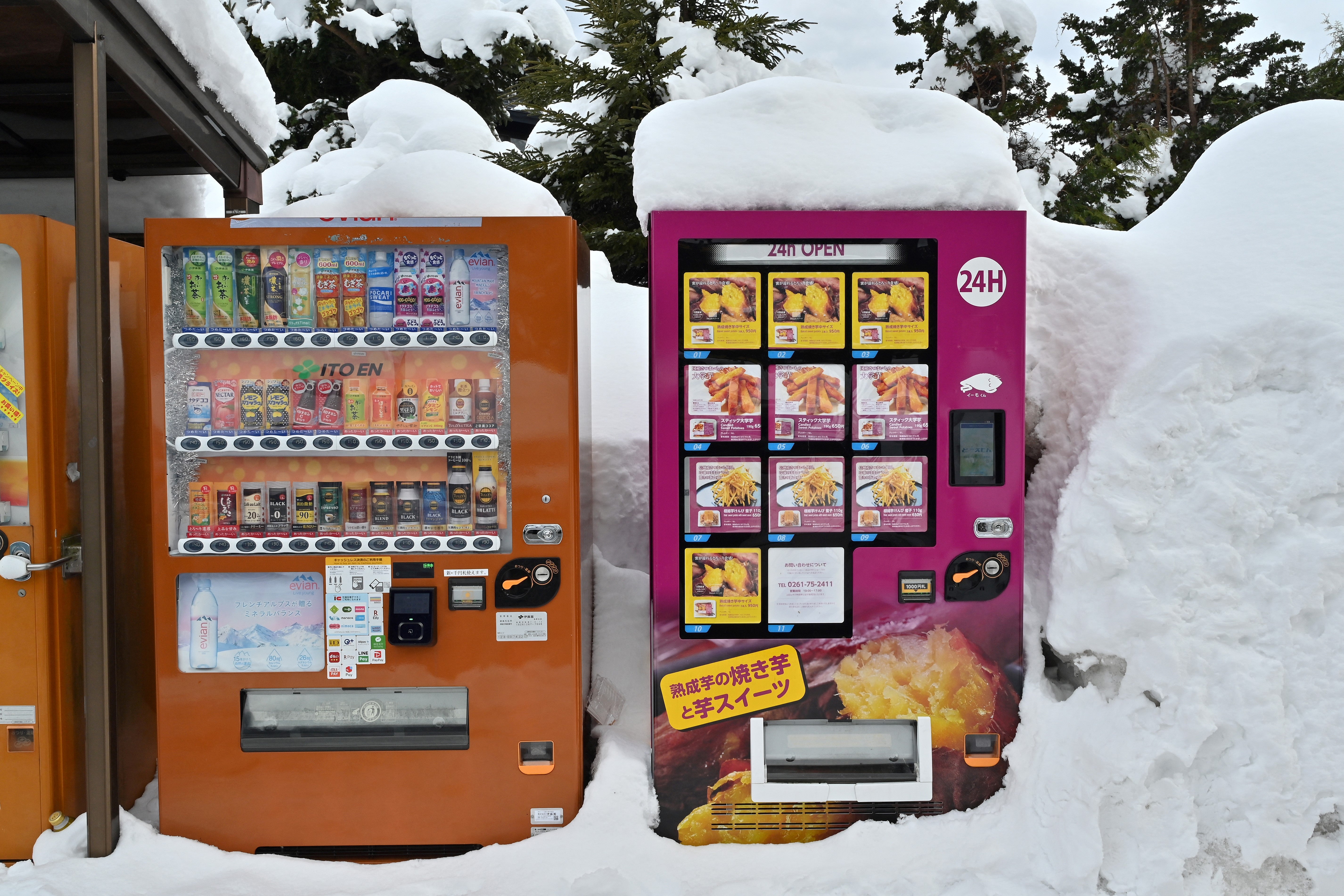 Vending machines, including one for warm sweet potatoes (at R), covered in snow along a rest stop outside the ski resort town of Hakuba, Nagano prefecture. Reside (AFP via Getty Images)
The popular winter destination has become a global hotspot for “powder hunters”, attracting skiers and snowboarders from around the world.
Nearly 2.71 million tourists visited Hakuba in 2024, a dramatic increase from 2023, when about 330,000 people arrived.
The spike is a particularly extreme example of a broader post-pandemic tourism boom, fuelled by a weak yen and rising international demand for Japan’s ski resorts.
Local residents have increasingly raised complaints about tourists’ bad behaviour, urging the authorities to take action.
“I’d like to help create a place where both residents and visitors can spend their time comfortably,” Hakuba mayor Toshiro Maruyama told reporters after a village assembly meeting.
The new regulations mean Hakuba joins around 20 municipalities in Japan that have imposed similar rules, including the cities of Kyoto, Kamakura and Fukuoka.
The measures come amid growing concern in Japan about overtourism, with resort towns and historic cities struggling to manage the behaviour of a rapidly increasing number of foreign visitors.
Japan recorded 36.9 million international visitors in 2024, a 47.1 per cent increase on the previous year, surpassing the pre-pandemic record of 31.9 million set in 2019.
Japanese media have highlighted a number of incidents that have sparked public outrage, including the arrest of a US tourist for scratching graffiti into a wooden gate at Tokyo’s historic Meiji Jingu shrine, and a Chilean influencer who filmed herself performing pull-ups on a sacred torii gate at a Shinto shrine. In another case, a foreign visitor was caught on video kicking a deer in the ancient capital of Nara.
AloJapan.com