
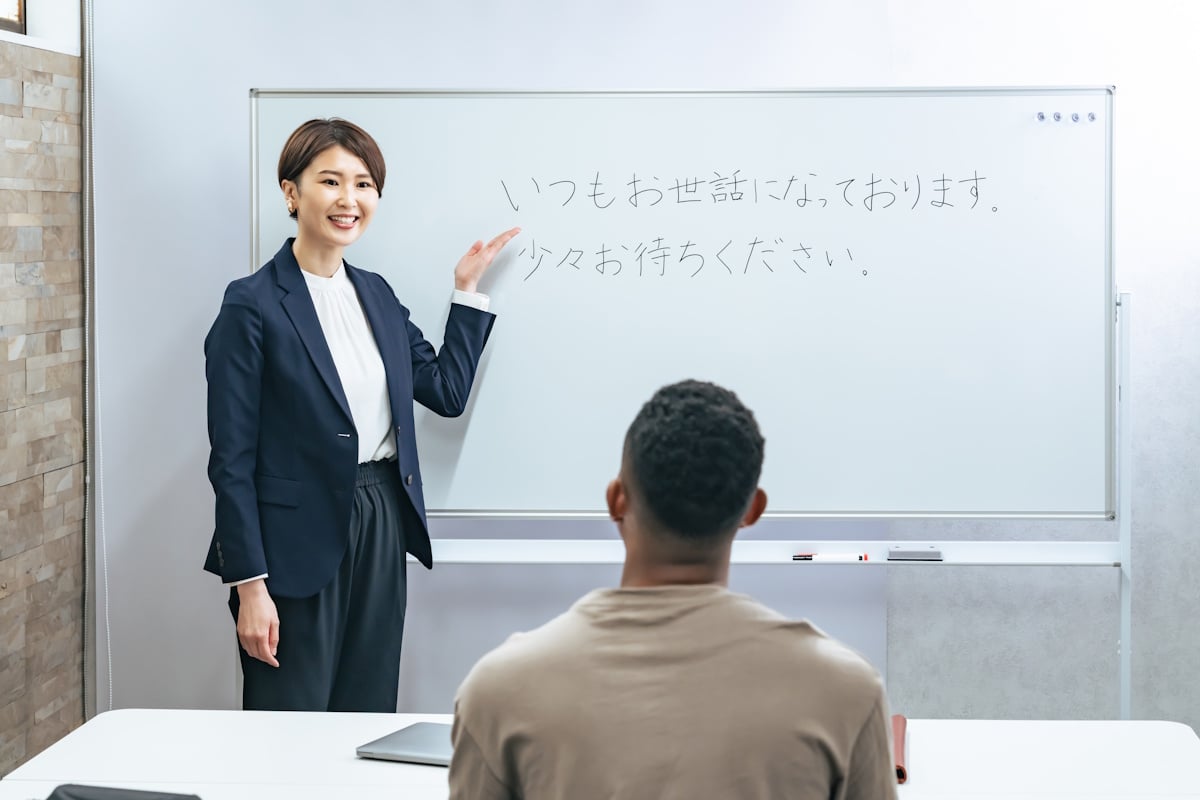
Japan’s government, led by Prime Minister Takaichi Sanae, has been clamping down on a perceived “foreigner problem” ever since she took office. Now, word is out that Japan may make another (admittedly commonsense) change to who can become a permanent resident by adding a language requirement. Candidates for permanent residency may also be required to complete courses on the finer points of Japanese culture and manners.
Language level test and a class on Japanese etiquette
According to Japan’s Immigration Services Agency, there are currently 3,956,619 foreign residents living in Japan. That’s a 5% year-over-year increase, the largest number ever recorded in the country. The majority are from other Asian countries, with China, Vietnam, South Korea, the Philippines, and Nepal leading the pack.
Of those, 932,090 people, or around 23% of the total foreign population, are permanent residents. These residents don’t need to renew their immigration status and aren’t subject to work restrictions.
Permanent residents only account for around 0.7% of Japan’s total population of 123 million people. However, a growing tide of nationalism pushed by right-wing politicians and social media activists has spurred the current government to crack down on foreigners who are “taking advantage” of the Japanese system while refusing to assimilate fully into Japanese culture.
Media reports of some areas in Japan exceeding 10% foreign residency have also sparked fears around preserving Japan “for the Japanese.” Right-wing social media accounts have also stoked fears around increasing foreign ownership of real estate in Japan.
In response, according to local media, Takaichi’s government is considering two additional conditions for permanent residency. The first would be a language testing requirement. Currently, there is no language requirement for permanent residency.
Government sources haven’t indicated which test or language-level benchmark would be used. The obvious candidate is the Japanese Language Proficiency Test (JLPT), the standard test most people who aim to work in Japan take. Permanent residency would likely require at least level N2, indicating comfort using Japanese in most everyday situations.
The other condition would be a special program for would-be permanent residents that teaches them about Japanese culture and customs. The proposal might require that permanent residency candidates accumulate a certain number of hours of coursework before their applications are approved.
The change is part of a set of sweeping changes that would also make it harder to naturalize as a Japanese citizen. Foreigners are currently required to have been in Japan for at least five years before applying for naturalization. That’s currently shorter than the default period required to apply for permanent residency, which is 10 years.
In 2024, 12,248 people applied for Japanese citizenship. The country approved 8,863 of those applications.
What this means for foreign residents
The new rule comes across as a commonsense change. If you live in a country, it’s better to speak the native language. That’s especially true in Japan, a nation where fluency in non-Japanese languages remains low. In a survey last year of 116 countries, for example, Japan ranked 96th in English fluency.
Planning a trip to Japan? Get an authentic, interpreted experience from Unseen Japan Tours and see a side of the country others miss!

“Noah [at Unseen Japan] put together an itinerary that didn’t lock us in and we could travel at our own pace. In Tokyo, he guided us personally on a walking tour. Overall, he made our Japan trip an experience not to forget.” – Kate and Simon S., Australia

See a side of Tokyo that other tourists can’t. Book a tour with Unseen Japan Tours – we’ll tailor your trip to your interests and guide you through experiences usually closed off to non-Japanese speakers.


Want more news and views from Japan? Donate $5/month ($60 one-time donation) to the Unseen Japan Journalism Fund to join Unseen Japan Insider. You’ll get our Insider newsletter with more news and deep dives, a chance to get your burning Japan questions answered, and a voice in our future editorial direction.
Japan would hardly be alone here. The United Kingdom, Germany, France, Spain, and other European countries all require proof of language ability for permanent residence, measured using the Common European Framework of Reference for Languages (CEFR).
How will this change impact permanent residents? It’s hard to say. On the one hand, among English-speaking residents, the “white guy who speaks zero Japanese and relies on his Japanese wife for everything” is a well-known meme.
On the other hand, the majority of Japan’s residents aren’t white guys. The majority are from China, the Philippines, Brazil, and South Korea. The majority of those are on work or study visas. While there’s no data on the language proficiency of permanent residents in Japan, it’s likely that the majority already speak at least daily conversational Japanese.
The group most affected by these changes would likely be people on spousal-dependent visas, who may not have the motivation or time to learn the local language. That would impact around 5.2% of all Japanese visa holders.
The ruling Liberal Democratic Party (LDP) is expected to present its recommendations for changes related to permanent residency and citizenship to PM Takaichi in January 2026. The changes could be approved by the end of that month.
Sources
外国人の日本国籍取得、来年中に要件厳格化 永住許可に日本語能力も. Asahi Shimbun
令和7年6月末現在における在留外国人数について. Immigration Services Agency
Japan ranks 92nd in English proficiency, lowest ever: survey. Mainichi Shimbun
Which countries in Europe impose language tests for residency permits? The Local
AloJapan.com