
Niigata: A Taste of Snow Country
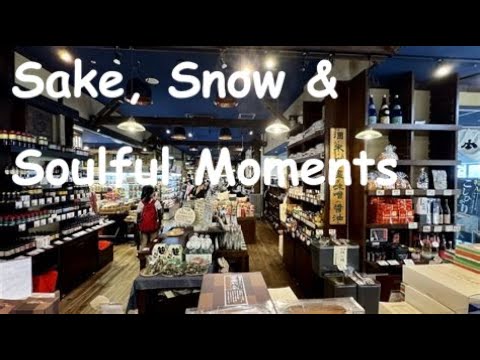
Leaving the familiar to find a new horizon. From the subtle notes of sake to the silent embrace of the snow country. Here amidst Niata’s quiet strength, I rediscovered my own. Hash hash. The north star. A 40-year-old Vancouverite finds quiet strength in Nigata. Stepping off the train at Nigata station. The air that greeted me wasn’t the moist green atmosphere of Vancouver, but a crisp cold winter chill for me. Turning 40, travel is a form of meditation, a temporary escape from the everyday to truly recharge myself. My first stop on this journey was the Ponchukon, located right inside the station. Walking in, it felt like entering a small museum dedicated to Japanese sake. Walls were lined with bottles from over 90 breweries within Nigata Prefecture, each labeled and seemingly watching me. I exchanged currency for five 500 yen coins and headed to the tasting corner. It was like a topisbar for sake. I carefully selected five varieties. The first poured into a clear glass was the famously dry tan kakuchi. Sipping it, the sensation was exquisite. It felt like the pure cold melted snow of Nigata. Cleansing my pallet before smoothly passing down my throat. Next was Ginoshu, where the sweetness of the rice was still alive. Its delicate, faint aroma was like the mist before dawn. As I absorbed the subtle differences in each sake, I realized that Nigata’s rice wasn’t merely a grain. It was an art infused with the region’s winter and the brewer’s dedication. After my morning tasting adventure, I decided on tarik katsiden, a local specialty for lunch. The moment I entered the restaurant, the aroma of the sweet and savory soybased sauce wetted my appetite. Four large pieces of tonkatu pork cutlet were neatly placed over rice. The unique part was that instead of being served with sauce on the side, the freshly fried cutlet was quickly dipped into a special sweet soybased glaze before being served. The cutlet retained its satisfying crispness while remaining juicy and tender inside. And eating it with the sauce soaked rice was a simple yet warm comfort. It was an honest and straightforward flavor quite unlike the fusion cuisine I was used to in Vancouver. In the afternoon, I strolled through the city. Walking across the Grand Bandai Bridge, I gazed at the gentle flow of the Shenano River. The bridge wasn’t flashy, but the layered texture of its stone suggested the enduring resilience of Nigata. Leaving the downtown area, I arrived at the Tatamari Fish Market, which was buzzing with life. The strong voices of merchants haggling mingled with the slightly briney but fresh scent of leaping seafood. What particularly caught my eye were the freshly caught benny zuigani red snow, crabs, and the cold seawater infused oysters. Dinner is settled, I thought to myself. In the evening, I found a small izakaya bustling with locals. I ordered the chilled sake I had enjoyed earlier, pairing it with local seafood dishes. The delicate essence of the rice and the sake harmonized perfectly with the salty flavors of the ocean’s bounty. As a single woman in her 40s, this moment removed from the complexities of the world and focused solely on taste and sensation felt like a true holiday. The next morning, I took the junior train towards Ichigo Yuzawa, deep in Nigata’s mountainous region. As the train left the city and ascended into the mountains, the scenery outside the window changed instantly. The mountains and fields were completely covered in snow, and their depth and purity were overwhelming. This was truly the setting of Yasuneri Kawabatada’s novel, Snow Country. the line. The train came out of the long tunnel into the snow country unfolded right before my eyes. In that magnificent snowy landscape where the boundaries of the world seemed to dissolve due to the sheer amount of snow, I felt a sense of solitude before nature coupled with a liberating freedom. Arriving at the Ichigo Yuzawa Ski Resort, I geared up and hit the slopes. While I had experienced skiing at Vancouver’s Whistler Mountain, the powder snow here was entirely different. It was light and soft, almost cushioning my fall even when I stumbled. As I glided down the snow covered mountain, I heard nothing but the sound of the wind rushing past. Only the slope, the speed, and my body moving with the rhythm existed. I pushed aside the complex thoughts and responsibilities that came with 40 years of life. focusing only on the pure joy of movement and achievement. It was a form of mental detox. After expending energy cutting through the white snow all morning around 2 p, I descended the mountain for a late lunch. Heading towards the center of the Ichigo Yuzawa town, I wanted a special lunch that could only be tasted in this snow country. Rather than the usual resort fair, I sought out the local specialty, heggy sobba made with funori, a type of seaweed used as a binder. The soba was surprisingly chewy and elastic. Served neatly piled on wooden trays. Its flavor was simple yet refined. I felt as if the noodles resilience embodied the perseverance and wisdom of the people who endured the hard labor of this snowy region. The bowl of heggy soba replenished my tired body. Arriving at the Rioan traditional inn that I had booked, I checked in. After a brief rest, accompanied by warm tea and a view of the snow-covered garden. I immediately changed into a yucata for the onen experience. A strong sulfur scent pricked my nose and as I sank into the cloudy milky white thermal water, the heat penetrated every muscle. Cold winter air flowed above my head while the snow dusted rocks and bamboo enclosed me like a screen. Closing my eyes, I pondered the balance in my life. Cold and hot, solitude and liberation. In the moment, all these opposites coexisted harmoniously. I felt a deep peace, as if the complex knots in my heart were untying themselves. Later that evening, I made my way to the Rioan’s dining area. Dinner was the long- awaited quiz cuisine, arranged with artistic precision on small plates. The dishes embodied the essence of Nigata’s rice, sea, and mountains. The first course was sakazuk aeratif, a small mouthful of vinegared sea cucumber and taro serving as a refreshing signal to awaken my pallet. This was followed by the chilled sukuri sashimi. The seabbream and winter yellow tail caught near Nigata’s coast shown translucently. The thick yet chewy seabbream released a natural sweetness with every bite. While the winter yellow tail was exquisite, melding in my mouth with a rich oily flavor. To compliment this perfect moment, I poured a special limited edition of the local sake hack Asian recommended by the rioon. Tilting the glass, a delicate fragrance like pear blossoms rose. Taking a sip, it gently embraced the rich flavor of the sashimi, finishing with an appealing restrained dryness. This sake seemed to prove that such a delicate taste was possible even in this cold snow country. Next, the Aise Mano seasonal seafood hot pot began to simmer on the table. The clear broth was filled with seasonal clams, white fish, and resilient local mushrooms. As the steam enveloped my face, I was moved by the warm and deep comfort provided by these simple flavors. The final dish, kamameshi rice cooked in an iron pot, showcased the true value of nigata’s rice. The freshly cooked, lustrous rice was exceptional in its stickiness and sweetness. It needed no other side dish. Just a touch of salt made it perfect. Slowly savoring each dish, I realized that niato was not merely a winter travel destination, but a space for me to meditate and reset the axis of my life. On the final day, I decided to explore Sado Island, a world completely different from the mainland as the ferry carried me toward the island early in the morning. The sea was calm, yet the movement of the boat slicing through it was magnificent. Sodto Island held an isolated beauty that stemmed from its very detachment. From the main island, upon arrival, I first visited the old gold mine ruins. The old tunnels and shafts steeped in a history of past prosperity and decline conveyed a heavy sense of history quite unlike the modern landscape of Vancouver. Walking through the ruins, I imagined how dynamic and intense this place once was. After briefly observing a traditional performance in the OGI area, I drove along the coast. The contrast between the rugged cliffs and the emerald green sea was breathtaking. Lunch, of course, was the island’s seafood, particularly the fresh sodto crab and oysters, the sweetness of the steamed crab meat, and the freshness of the sea scented oysters were an experience of tasting the island’s very identity. It was not just a meal, but a blessing of nature’s abundance that the island had preserved for centuries. Late in the afternoon, on the ferry back to the mainland, I reflected on my 3-day journey. Amidst the delicate flavors of Nigata’s sake, the liberation in the snow country, and the isolated beauty of Sado Island, I found a quiet yet clear answer to how the 40-year-old me should approach life at what speed and with what attitude. Even after returning to Vancouver, I knew that Nigata’s quiet, strong beauty would remain with me like a north star in my heart.
Join Claire, a 40-year-old woman from Vancouver, on her 2-day winter journey through Niigata, Japan. Escaping the routine of daily life, she takes time to reflect amidst the “quiet, yet powerful strength” of Niigata.
This video vividly captures the ultimate culinary experiences (sake, Tarekatsudon, Kaiseki) and the magnificent nature (snowscapes, onsen, Sado Island) enjoyed in Japan’s famed Snow Country.
5 Experiences Niigata Will Offer You:
🍶 Over 50 types of sake tasting at Niigata Station’s Ponshukan
⛷️ Experiencing the famous powder snow at Echigo-Yuzawa, the setting of Kawabata Yasunari’s novel Snow Country
♨️ Healing and relaxation in a snow-view open-air onsen (hot spring bath)
🍣 The essence of refined cuisine: a full Kaiseki dinner at a traditional Ryokan
🌊 The magnificent winter sea of Sado Island, holding an isolated beauty
#Niigata #JapanTravel #SnowCountry #WinterInJapan #OnsenExperience #SakeTasting #Ponshukan #TareKatsudon #Hegisoba #SadoIsland #SkiJapan
AloJapan.com