
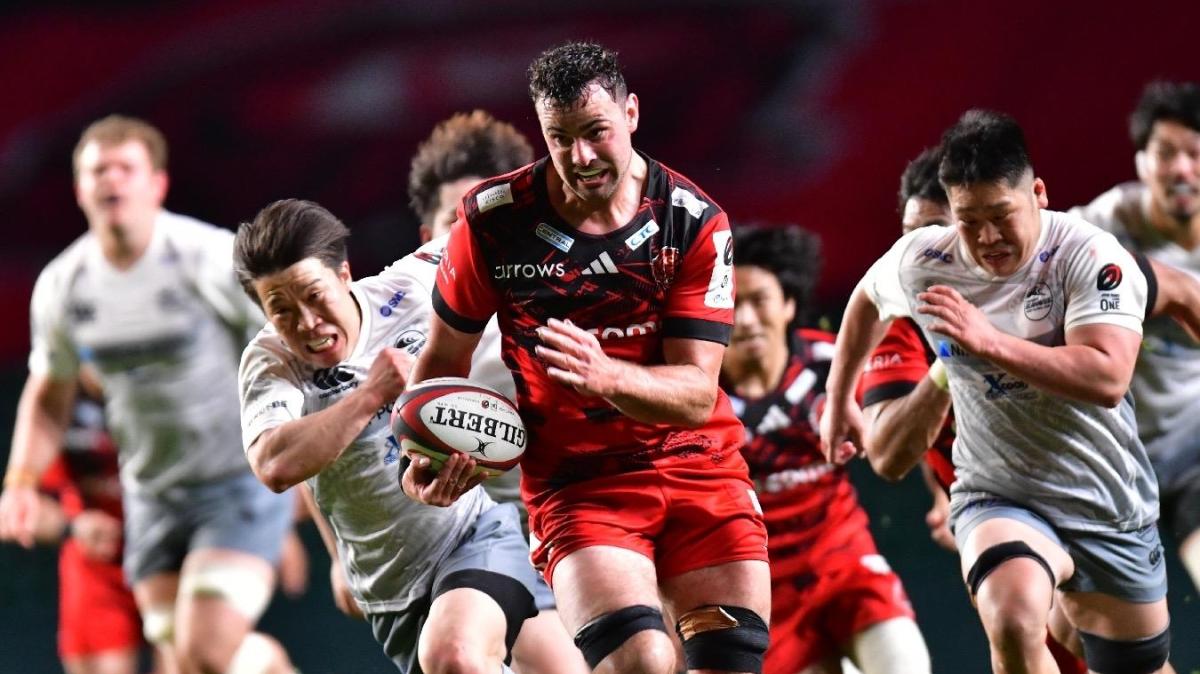
In the early hours this Sunday morning, at the 48,000-seater Nagai Stadium in the heart of Osaka, two 27-year-old Irishmen had an unlikely reunion.
Representing the Osaka Red Hurricanes in their first home game of the season was Jack O’Sullivan, formerly of Pres Cork, UCC and Munster. And on the opposing team — formally, Toyota Industries Corporation Shuttles Aichi but generally known as the Shokki Shuttles — was Jack Dunne, once of St Michael’s, Trinity, Leinster and Exeter.
The two Jacks have plenty in common. They represented Ireland together at U18, U19 and U20 levels. Both have university degrees — O’Sullivan in finance, Dunne in theoretical physics. And both have responded imaginatively to the sobering realisation that their respective rugby careers were not turning out as planned.
In the process, they have rediscovered their love for a sport that can test your dedication. This is especially true of O’Sullivan, who recently signed a two-year contract extension for the Red Hurricanes, who, like the Shuttles, play in Division Two of Japan’s thriving professional league.
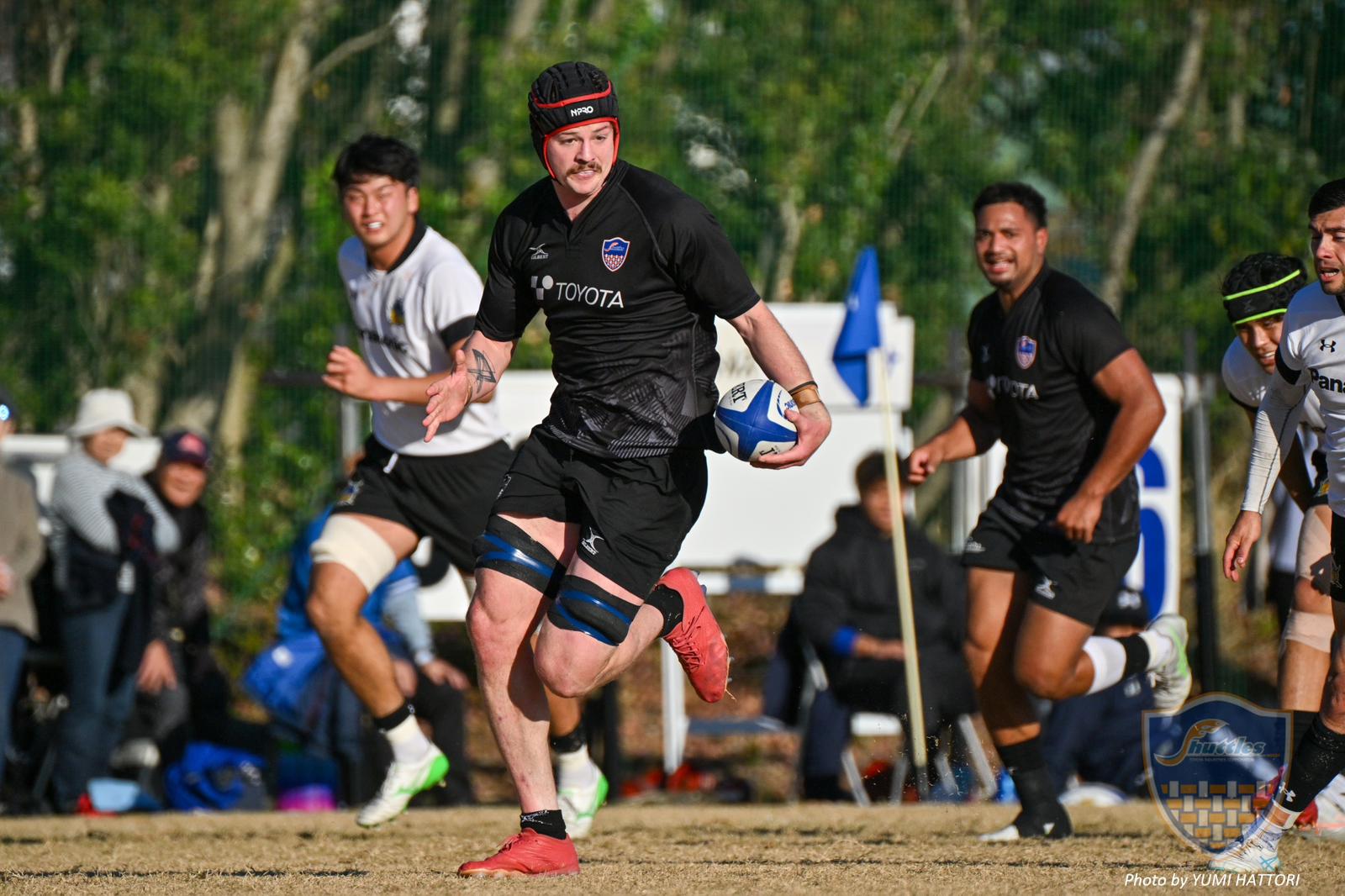
Dunne moved to Japan after injuries hampered his progress at Exeter Chiefs
At under-20 level, he was a proper contender, a No8 who scored tries apparently at will during the Six Nations. He went on to win 37 caps for Munster, but they were scattered over several injury-disrupted seasons.
“I had a knee injury at the start of the [2023-24] season and when I got back, I never really got a look-in,” he recalls. “The writing was on the wall for me. And I was fine with it, because I wasn’t enjoying it any more. You’re kind of dreading going in [to work].
“I had the option of doing a master’s degree in Milan and playing amateur club stuff but my agent suggested Japan and it went from there. It was the chance to stay in pro rugby while also gaining a completely different life experience.”
Leinster’s decision to cut Dunne seemed odd, even odder when he featured in 23 games during his first season at Exeter Chiefs. Irish rugby doesn’t produce too many 2.03m locks with big engines. Injuries stalled his progress, though. Like O’Sullivan, he soon experienced that sickening sense of being unwanted.
But also like O’Sullivan, he understood that it was too soon to step away from pro sport without examining his options. His curiosity had been pricked by an Exeter team-mate, Tom Hendrickson, who mentioned the opportunities available in Japan. Dunne asked his agent Niall Woods to get on the case.
The Dubliner is now four months into his new life, grappling with a completely alien language, struggling with a bureaucratic system stubbornly loyal to the hard copy, still getting strange looks when he hauls his enormous frame onto the train on the outskirts of Nagoya — Japan’s “motor city”.
“The final phase at Exeter was a very frustrating time in my career but I’m back enjoying my rugby again,” Dunne says. “It’s a very different brand of rugby from the Prem or the URC — very quick, very end-to-end. But different is good. I just have to adapt.
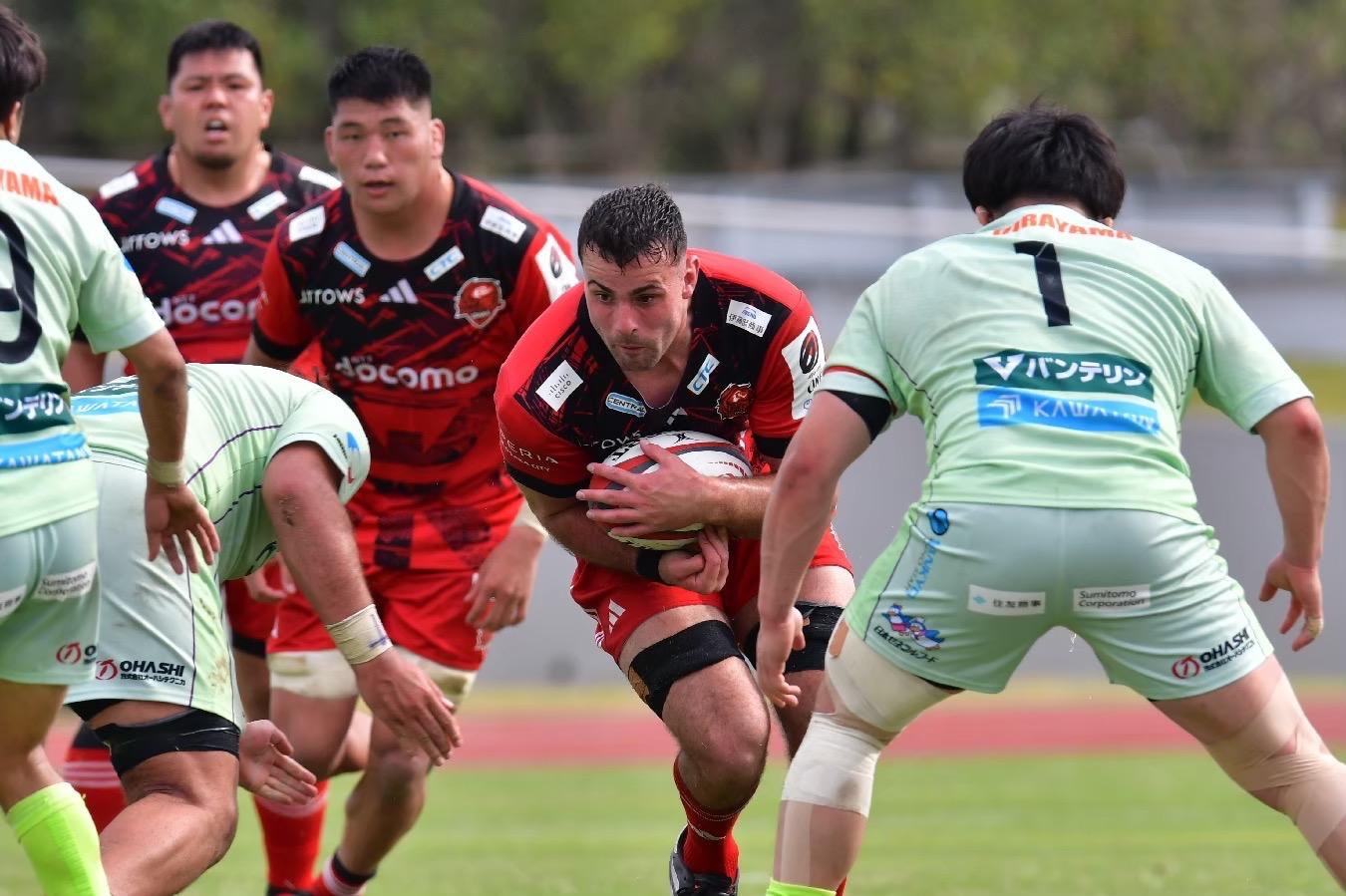
‘My agent suggested Japan and it went from there’ — O’Sullivan has no regrets about the move
“I love my scrumming and mauling. Like, you wouldn’t be caught dead without wearing your 21-millimetre studs back home whereas here, no one wears them. I’ve actually asked my girlfriend to bring over some size 13 mouldies when she comes over for Christmas. All the shoes are tiny here.”
Dunne played his first league game last weekend, losing 14-40 to Hanazono Kintestu Liners. He and O’Sullivan agree that the general standard in Division Two is somewhere below URC but above Division 1A of the All-Ireland League. That said, Kintetsu included a couple of Test stars in Manie Libbok and Akiro Ioane, the former All Black.
While rugby lies way behind baseball and soccer in popularity, it is still big business in the sense that the “clubs” are all effectively marketing exercises for the big corporations, who pump massive resources into playing, coaching and support staffs.
The Red Hurricanes belong to NTT Docomo, the telecommunications giant. According to O’Sullivan, the average home crowd last season was around 9,000, bolstered in part by the provision of free tickets for NTT employees, there to support some of their work-mates. Most of the Japanese players in the squad are on company sinecures, and appear in the office on non-training days.
Huge salaries are on offer for the three overseas Test stars permitted in each match-day squad, which explains why Beauden Barretts, Ardie Saveas and Malcolm Marxes are all so keen to spend time there.
Category B players like our two Jacks — uncapped by Ireland and therefore Japanese “project” players in theory — can also earn significantly better than they do at home, for a 14-game league season with a five-month pre-season, which allowed O’Sullivan to spend June to September at home.
“Yeah, I’d be making more here than I was in Munster,” says O’Sullivan, who lives in an apartment in Osaka, a foodie heaven and one of the top three tourists destinations in Japan. “You’re also paid as a contractor, which is more tax efficient.
“I was actually putting in a good word for some Munster lads I knew who’d been let go because I know Irish players would be liked out here. The locals respect hard work and consistency. But those lads were backs and it’s funny, the Japanese have no interest in northern hemisphere backs, just forwards.”
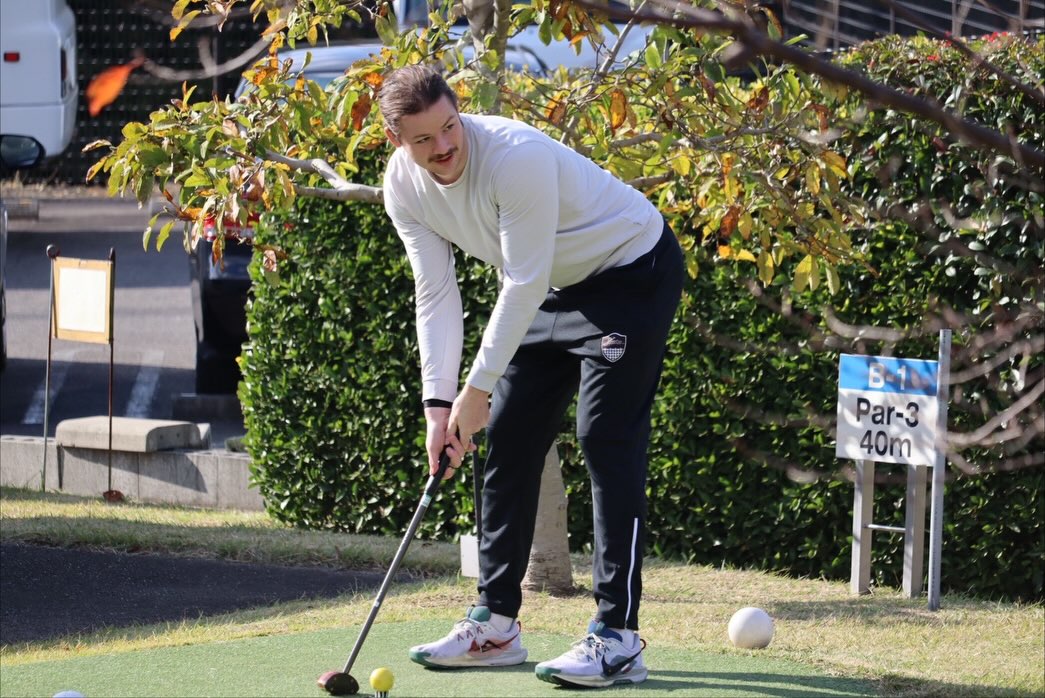
The off-field experience has been as enjoyable as the rugby
Sure enough, the only other Irishman playing in League One is Cormac Daly, a lock — and another member of that Ireland Under-20 side from 2018 — who is with Yokohama Canon Eagles in Division One. Paddy Butler, the former Munster No8, also spent a couple of seasons there recently.
The solitary Irish back to have featured was Chris Cosgrave (ex-Leinster) whose prospects were weakened by having played for Ireland sevens, which put him in the same category as the Saveas and Pablo Materas.
The two Jacks feel fortunate, not just for the opportunity to try a different culture but also for the welcome they have received. “It’s so safe, so clean, everyone is so polite,” O’Sullivan says. “The food is amazing. And after games, win, lose or draw, we go as a team to every corner of the stadium and bow, which is mad but really cool at the same time. And the fans bow back, and no one is hurling abuse at you!”
Dunne concurs. “Back home, if you lose a game, you read the comments afterwards [online] and it’s like, Jesus Christ, are we the worst team ever? In contrast, we had a bad result last week, and all the comments were like, ‘Thank you for your hard work.’ You’re thinking, this is not so bad, is it?”
There are some minor drawbacks. Christmas is barely recognised in Japan. Weirdly, the thing to do on Christmas Day is to visit KFC. Queues are out the door of every branch.
“We’ve actually got training on Christmas Day,” Dunne says. “At least our skipper, James Gaskell (formerly of Sale, Wasps and England), has asked the coaches to end the session early. All the foreign players are going to the Hilton in Nagoya with partners for Christmas dinner, which will be nice.”
O’Sullivan will experience something similar on the 25th , a gathering of the non-local players, all of whom live in the same apartment block. He will miss his family, who travelled out to Osaka this time last year, but he will also surely find time to consider his good fortune.
“That last year in Munster, I was sick of rugby,” he says. “I was ready to hang up the boots. There was a stage where I couldn’t even watch games or anything. But I got to experience something completely different and I’m loving it again. I’m very happy with how it has panned out.”
AloJapan.com