
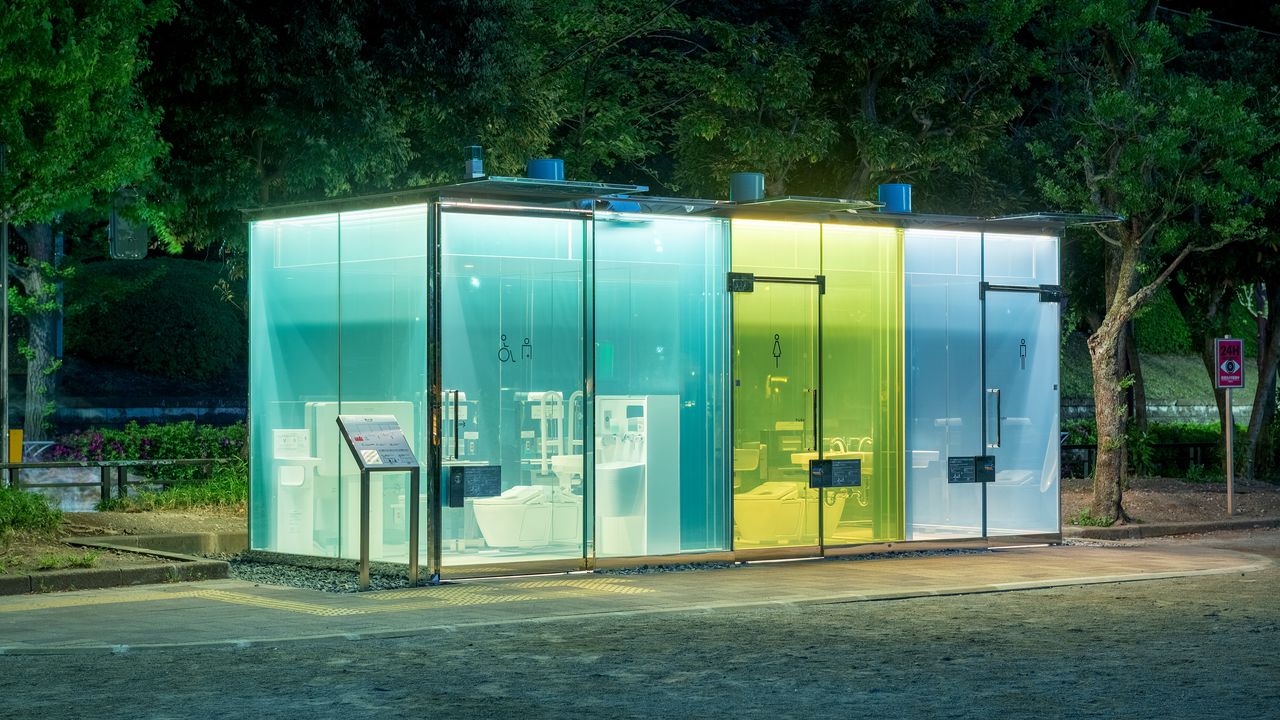
Among other toilets in the shape of snowballs, mushrooms or bamboo forests, Tadao Ando has imagined a construction in the image of his emblematic style. “I wanted this small architectural structure to go beyond the simple framework of a public toilet and become a real living space in the urban landscape, offering immense collective value,” he emphasises. “With this clear and simple reasoning in mind, I opted for a circular plan, a projecting roof and an engawa. It was essential for me to create a comfortable and secure space. Visitors can circulate inside a vertical louvered cylindrical wall to enjoy the cool breeze and surrounding light.” This sense of security is reinforced by the free, centripetal circulation that runs through the space. These toilets, nestled in the greenery of Jingu-Dori Park, will be called ‘Amayadori’.”
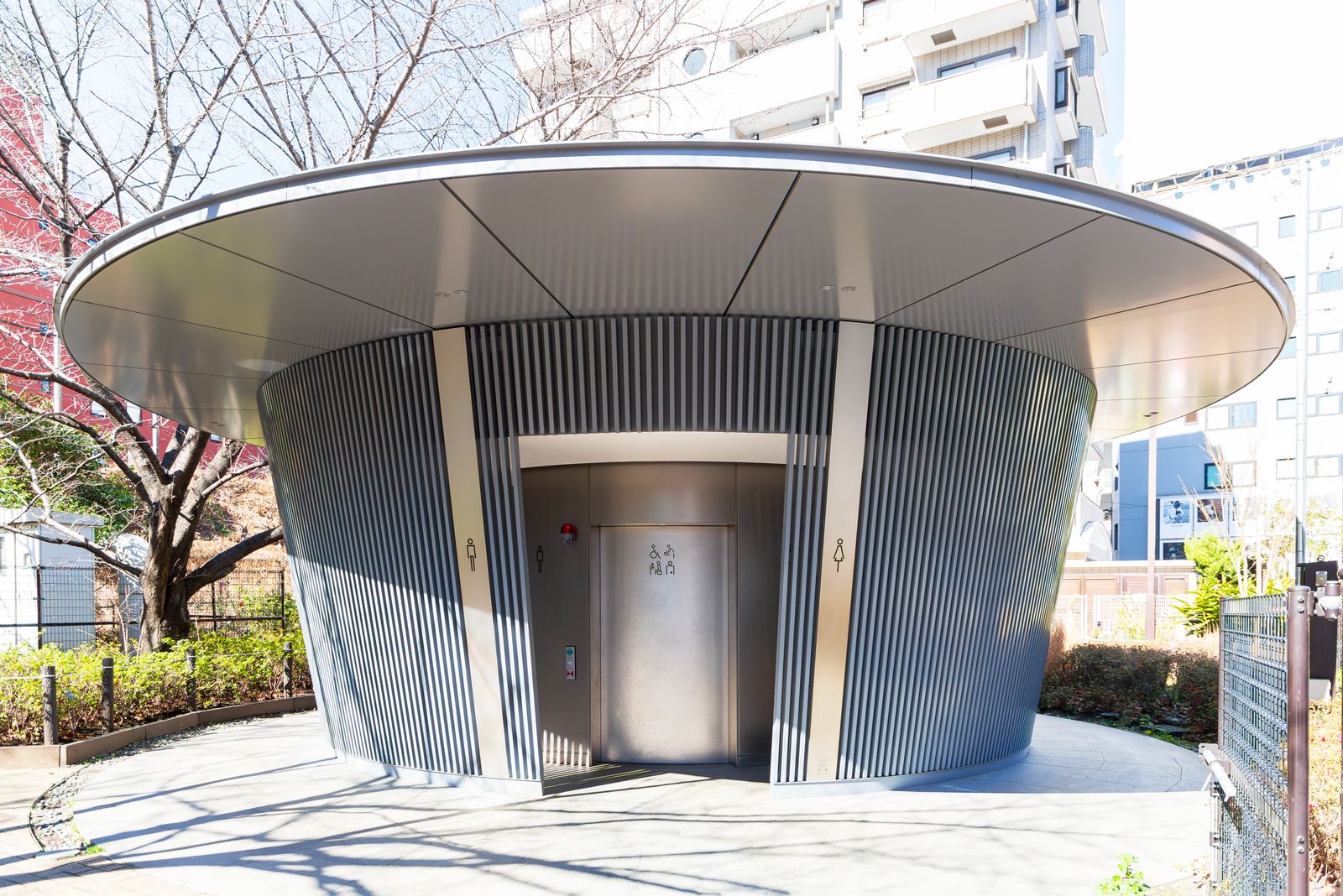
Tadao Ando’s public toilets in Tokyo.
mizoulaJapanese cleanliness, an institution
If Japan seems to attach so much importance to public toilets (and rightly so, when you visit those in Paris, for example…), it’s because cleanliness is an integral part of the local culture. Stemming in particular from Shintoism, the country’s ancestral religion, hygiene stems from the many purification rites practiced for several centuries, such as the traditional hot baths – the onsens – which are widespread throughout the country. “We consider that there are gods everywhere. If we don’t respect common places, where everyone is responsible, that would mean we’d be against the Gods,” Yoshiko, head of the Green Bird urban cleanliness collective, explained to France Info in 2020. Since the 1980s, the culture of cleanliness has also been exemplified, even internationally, by the famous Japanese toilets, with their unique high-tech qualities; these now occupy three quarters of Japanese homes.
AloJapan.com