

Japan continues to rank as the most favoured and active market for hotel investment and M&A in the Asia-Pacific region, with the buoyant market enjoying just shy of a record JPY1 trillion (USD6.4 billion) in transactions in 2024.
While not expected to surpass this turnover in 2025, transaction volumes are expected to remain steady in a robust market.
Market overview
 Christopher Marc Hodgens
Partner
Atsumi & Sakai
Market factors driving hotel investment in Japan are both manifold and compelling for domestic and overseas investors alike.
On the demand side is continuing growth in inbound tourism, with visitor numbers expected to exceed 40 million in 2025, following a record 36.9 million in 2024. The weak yen continues to make Japan an attractive destination for investors and travellers alike.
This is on top of strong domestic travel demand, which accounts for most accommodation stays. In tandem, hotel ADR and RevPAR continue to rise at unprecedented rates, improving both hotel trading performance across the board and potent investment returns.
On the supply side, elevated construction costs continue to constrain development of new hotels, particularly in key locations such as Tokyo, Osaka and Kyoto.
Transaction trends
Previous years saw significant portfolio transactions such as Blackstone’s acquisition of Kintetsu Group Holdings’ hotel portfolio in 2021, GIC’s acquisition of the Seibu Holdings portfolio of hospitality and leisure assets in 2022, and the acquisition of the Daiwa Resort hotels portfolio by a consortium led by SC Capital in 2023.
But transaction volumes in 2024 and 2025 have been driven principally by single-asset hotel transactions.
M&A transactions
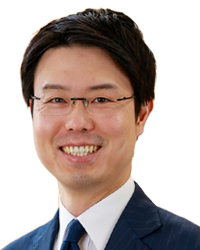 Hayato Kimura
Partner
Atsumi & Sakai
While widely, and rightly, regarded as a class of real estate, many hotel transactions involve or are executed through M&A. This is especially true of acquisitions of hotel operating companies – whether as part of, or independently of, the acquisition of the real estate assets they own and/or operate – and of companies that own hotel brands and manage or service hotels operating under their brands.
A leading example of an acquisition of a major hotel operating company independent of the underlying real estate is InterContinental Hotel Group’s acquisition of a majority interest in ANA Hotels Group Japan in 2006. This created a joint venture called IHG ANA Hotels Group Japan, which at the time became the largest international hotel operator in the country.
Another leading and very recent example of an acquisition of a hotel brand by a Japanese buyer is Seibu Prince Hotels Worldwide’s (SPW) acquisition of Ace Group International, the parent company of Ace Hotels, bringing SPW ownership of the Ace Hotels brand and its operations worldwide.
Single asset transactions
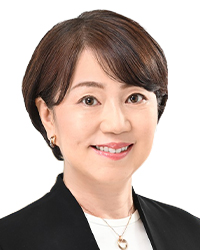 Akiko Hosokawa
Partner
Atsumi & Sakai
Single asset hotel transactions in Japan are often structured as separate but parallel transactions: one involving sale and purchase of the hotel real estate, and the other involving sale and purchase of shares in the hotel operating entity.
In other words, although classed as a single asset transaction, hotel acquisitions and disposals often involve a combination of real estate and M&A transactions.
The principal drivers of these single asset transactions are investment structures that are widely used to invest in and hold hotel real estate in Japan, namely the TMK (tokutei mokuteki kaisha, or “specified purpose company”) and GK-TK (tokumei kumiai, or “silent partnership”) operated by a godo kaisha (limited liability company).
These TMK and GK-TK structures are used in a range of real estate investments due to the tax benefits they offer, and also because they are suitable for non- or limited-recourse financing. They are often used in combination with trusts, which can provide additional benefits.
However, while beneficial for holding hotel real estate, they are legally precluded (in the case of a TMK) or constrained (in the case of a GK-TK structure) from operating hotel businesses.
Instead, the hotel investor must set up a separate entity to operate the hotel under a master lease with the entity or trust bank holding the hotel real estate.
Consequently, for the hotel to be sold on an ongoing basis, both the shares in the operating entity (asset transfers are generally not favoured) and the underlying real estate must be transferred to the buyer.
Christopher Marc Hodgens, Hayato Kimura and Akiko Hosokawa are partners at Atsumi & Sakai in Tokyo

Atsumi & Sakai
Fukoku Seimei Bldg.
2-2-2 Uchisaiwaicho
Chiyoda-ku, Tokyo 100-0011 Japan
www.aplawjapan.com
Contact details:
T: +81 03 5501 2111
E: christopher.hodgens@aplaw.jp
E: hayato.kimura@aplaw.jp
E: akiko.hosokawa@aplaw.jp
AloJapan.com