
Relocating for scientific training has become increasingly common in today’s global research environment. Whether motivated by the desire to learn new techniques, experience different scientific cultures, or build international networks, moving abroad can be a transformative step in an academic researcher’s career. At the same time, the thought of navigating unfamiliar territory—both professionally and personally—can feel intimidating for many trainees.
To help those considering this path prepare for global mobility in academia, the CiRA Research Promoting Office hosted the 11th and final chapter of the Career GPS Seminar Series for 2025 on November 20.
The event featured a panel of CiRA members with extensive international experience: Associate Professor Knut Woltjen, Associate Professor Shunsuke F. Shimobayashi, Junior Associate Professor Risa K. Kawaguchi, Assistant Professor Satoshi Konishi, and Researcher Sayaka Kayumi. Attendees included undergraduate and graduate students as well as postdoctoral researchers, all eager to learn from the panelists’ journeys and gain practical insights into relocating for scientific training.
The panel discussion revealed that curiosity and the pursuit of collaborative research projects were often central to the panelists’ decisions to move abroad. For many, the experience was not only about acquiring technical skills but also about broadening perspectives and breaking traditional “moulds.” Immersing themselves in different research environments allowed them to see how science is approached in other countries, sparking creativity and fostering resilience—qualities essential for success in today’s competitive academic landscape.
The advantages of undertaking scientific training abroad were clear: expanding professional networks, learning new ideas and techniques, and developing communication skills in multicultural settings. These experiences often lead to long-term collaborations and open doors to future opportunities. At the same time, the panelists acknowledged that the journey comes with challenges beyond the laboratory. Language barriers, cultural adaptation, and practical adjustments—such as learning to drive or navigating local systems—were common hurdles. Yet, these obstacles ultimately contributed to personal growth and adaptability.
Despite the difficulties, the panelists were overwhelmingly positive and encouraged attendees not to overthink the decision to move abroad. While preparation is crucial, waiting for the “perfect” moment can lead to missed opportunities. Their advice was simple and powerful: embrace the adventure, trust your ability to adapt, and take the leap.
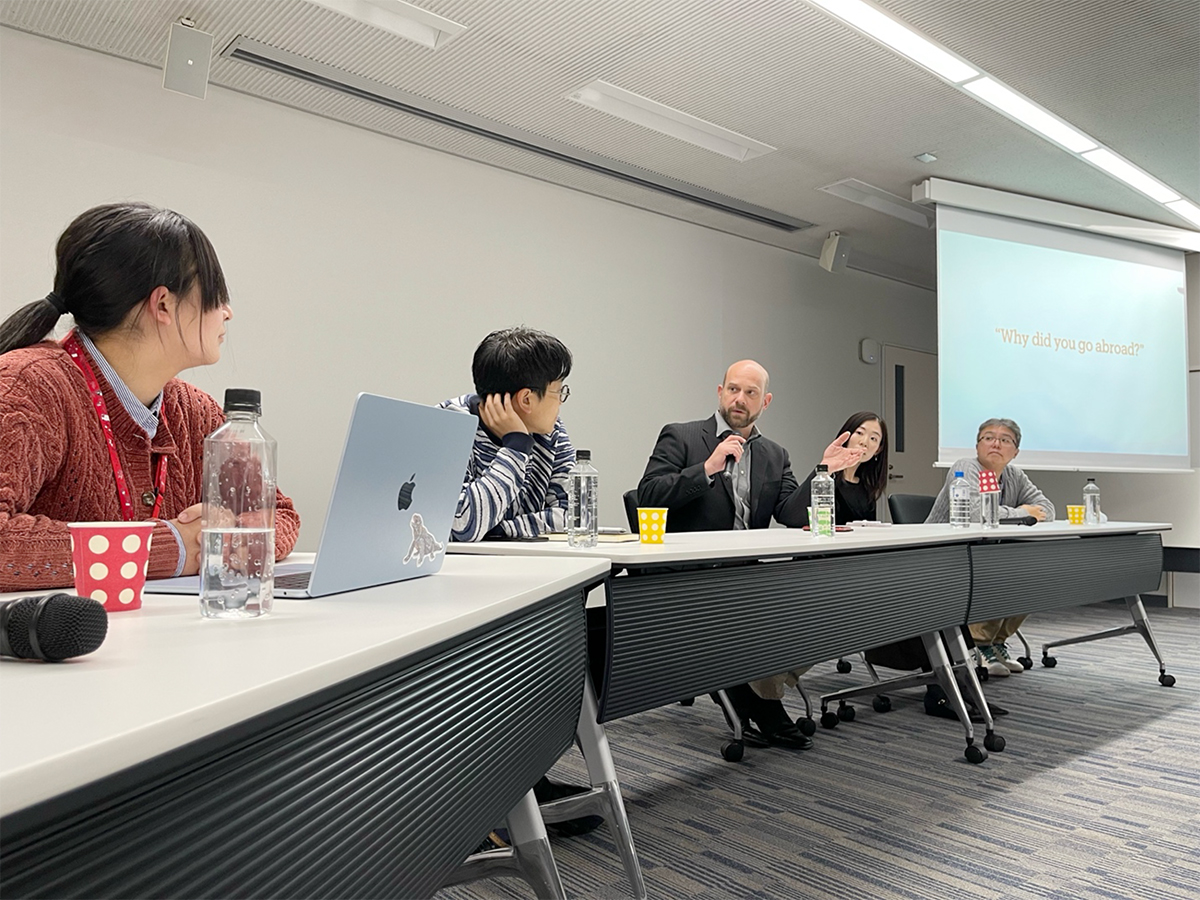
The panelists discuss why they moved abroad and reflect on how their experiences have shaped their academic careers during the seminar in the CiRA Auditorium.
AloJapan.com