
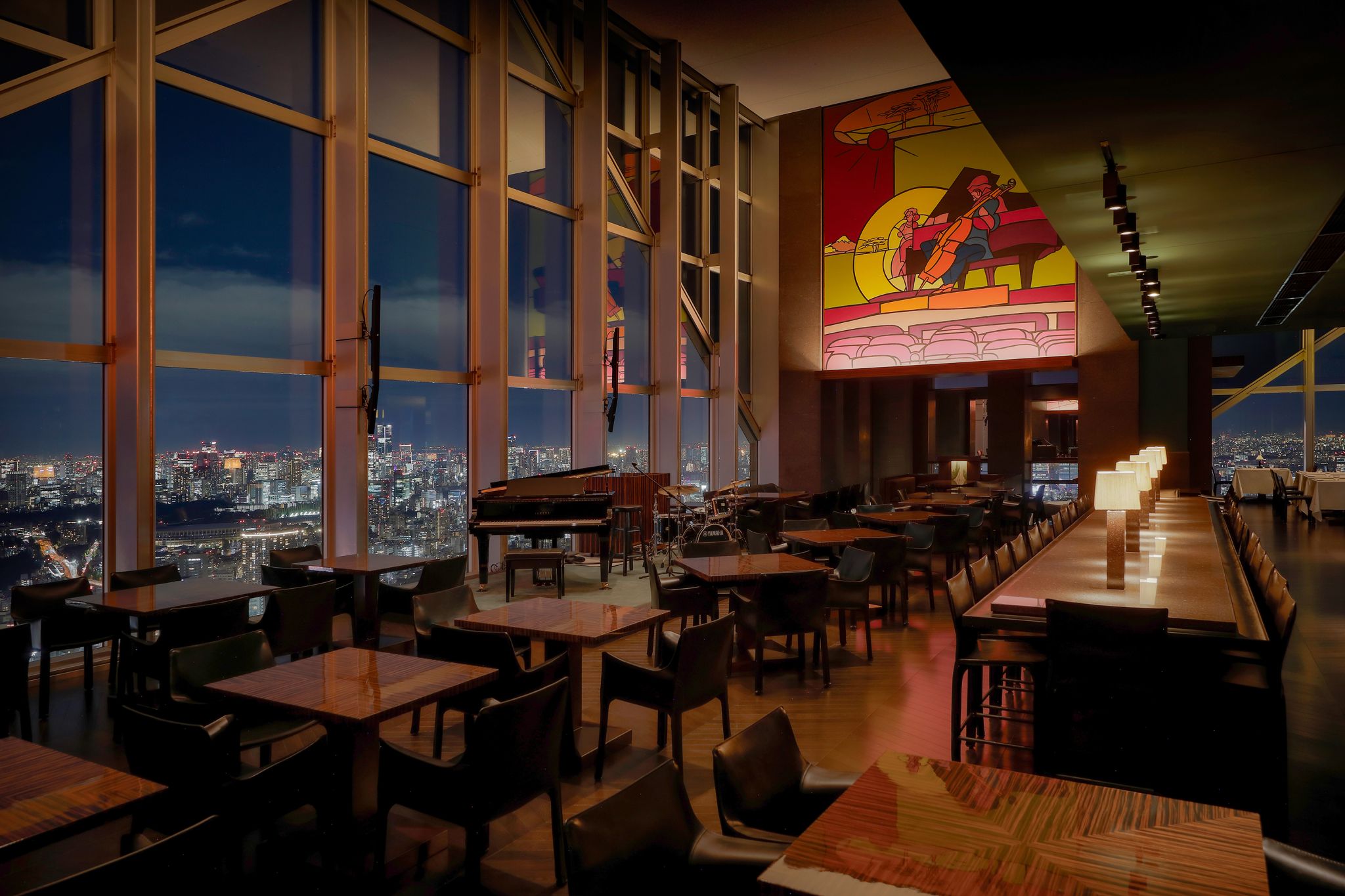
After four years of planning and nineteen months of construction, Park Hyatt Tokyo will be totally reborn in March 2026. The iconic hotel in the Japanese capital, immortalized throughout Sofia Coppola’s film Lost in Translation (2003), has redesigned its rooms and common areas and created a brand new dining experience by Alain Ducasse.
One of the most legendary skylines in 2000s cinema.
First opened in 1994, Park Hyatt Tokyo was in need of a little refresh. Since this December, guests and visitors are able to see the extent of the work carried out by Paris-based design studio Jouin Manku on the iconic five-star urban hotel, with no fewer than 175 rooms and suites completely renovated.
The building itself served as the backdrop for the unexpected and transformative encounter between Scarlett Johansson and Bill Murray during sleepless nights in Sofia Coppola’s film Lost in Translation.
A pioneer in international hospitality
When it opened in 1994 between the 39th and 52nd floors of Kenzo Tange’s Shinjuku Park Tower—235 meters high—Park Hyatt Tokyo introduced the highest standards of Western luxury hospitality to the Japanese archipelago.
From the outset, the establishment caused a sensation with its vertiginous glass atriums, its intimate residential interiors designed by John Morford, and its panoramic views of Tokyo and Mount Fuji, made possible in particular by the use of futon beds. A true revolution for the time, even the smallest room had a surface area of 55 m². The interior designer had not only paid attention to the welcome (with the contrast between the sobriety of the entrance and the gigantism of the lobby, or the feeling of being surrounded by books on the way to the reception) and the lighting, he also paid attention to the flow of the rooms, installing a dressing room right next to the door, a bathroom just behind it, and the bedroom in the innermost part of the room.
Eager to bring a sense of serenity to this complex of three pyramids, the Hong Kong-based designer and 2021 winner of the Pritzker Prize (the equivalent of the Nobel Prize in Architecture) opted to use Sardinian granite and red marble for the façade and wood for the interior, offering a striking contrast to the steel and glass of the building.
Honoring the past and embracing the future
“For a project like this, the design challenge is like a tightrope walk,” explains Patrick Jouin, co-founder and director of the Parisian design studio Jouin Manku. “If you do too much, you risk disrespecting the past; if you don’t do enough, you neglect the future,” he adds. Sanjit Manku, partner at Jouin Manku, adds: “In a city as dynamic as Tokyo, silence itself can be a form of luxury. The hotel has always embodied a quiet strength. Our goal was to revive its warmth, to let its spirit breathe again, so that guests could once more feel the serenity and humanity that characterize this place, while preserving its iconic character for the next 30 years.”
 © Park Hyatt Tokyo
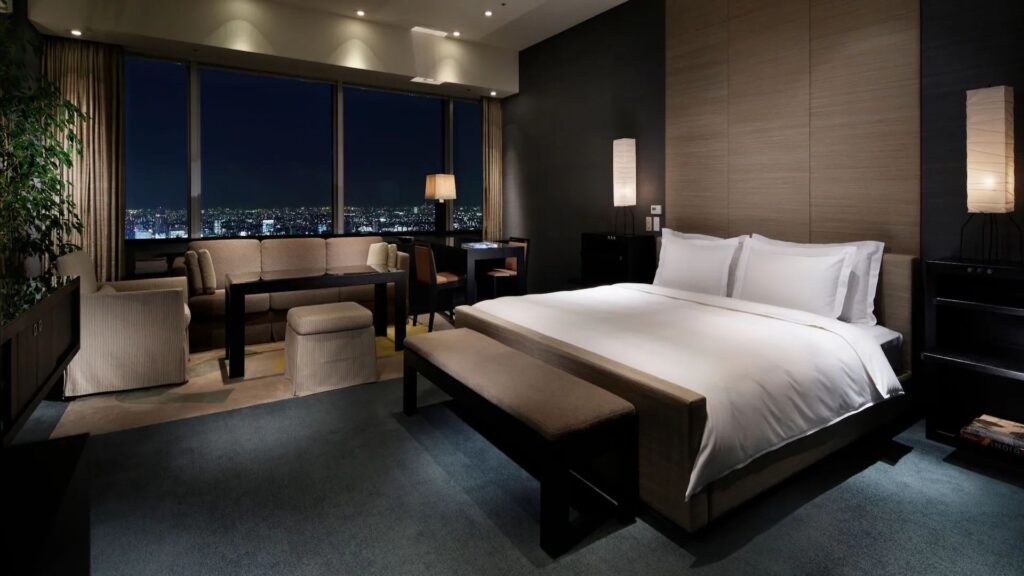
Where the former room design emphasized urban dynamism and memories of a timeless Japan, in 2026 the Park Hyatt Tokyo opted to celebrate a contemporary Japanese archipelago where art plays a prominent role. The suites feature the contemplative and dreamlike works of Yoshitaka Echizenya, while the standard rooms are decorated with new lithographs. However, those feeling nostalgic will be pleased to see that certain iconic elements of the hotel, such as the magnolia leaf decoration, Isamu Noguchi’s iconic washi lamps, and the custom-made furniture in anthracite black tones, have been preserved.
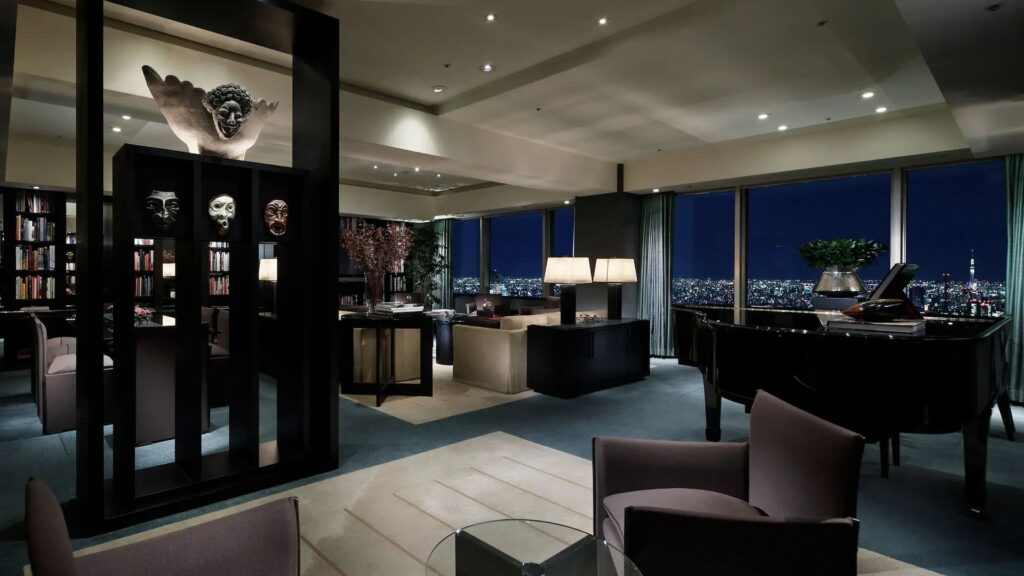
One of the new features is undoubtedly the addition of smaller spaces such as the Park Suite (85 m²), which has a spacious living and dining room and dressing rooms, offering breathtaking views of Harajuku, Shibuya, Meiji Shrine, and Yoyogi Park. The Deluxe Rooms (55 m²), located between the 42nd and 51st floors, are equipped with king-size or double beds, deep bathtubs, and sofa beds with views of the city or Mount Fuji. The Jouin Manku studio has reinterpreted the Diplomat (160 m²), Governor’s (140 m²) and Presidential (290 m²) suites, while the much-loved Tokyo Suite (220 m²), created in 2007, has been restored to its original design. Perched on the 50th floor and restored to its former glory, it features a steam sauna and a kitchen.
 © Park Hyatt Tokyo
Each suite has a Yamaha grand piano, separate living room, bedroom, and bathroom areas, a dressing room, a dining table that can seat between four and eight guests, and large bay windows that let in natural light and offer breathtaking views of the city. The largest, the Presidential Suite, on the 51st floor, includes three living rooms (library, dining room, and lounge), each featuring warm wood, richly veined marble, and custom furniture by Patrick Jouin.
Bistronomy at the top
Following its reopening, the Park Hyatt Tokyo invited the Ducasse Paris group, founded by Michelin-starred chef and entrepreneur Alain Ducasse and led by chef Kojiro Tsutsumi, to take over its European brasserie. Girandole by Alain Ducasse is a bistronomic restaurant combining French culinary tradition with Japanese precision. With its dark red fabric and velvet banquettes, mirror-covered walls, and burgundy accents, this dining space easily evokes a modern Parisian brasserie.
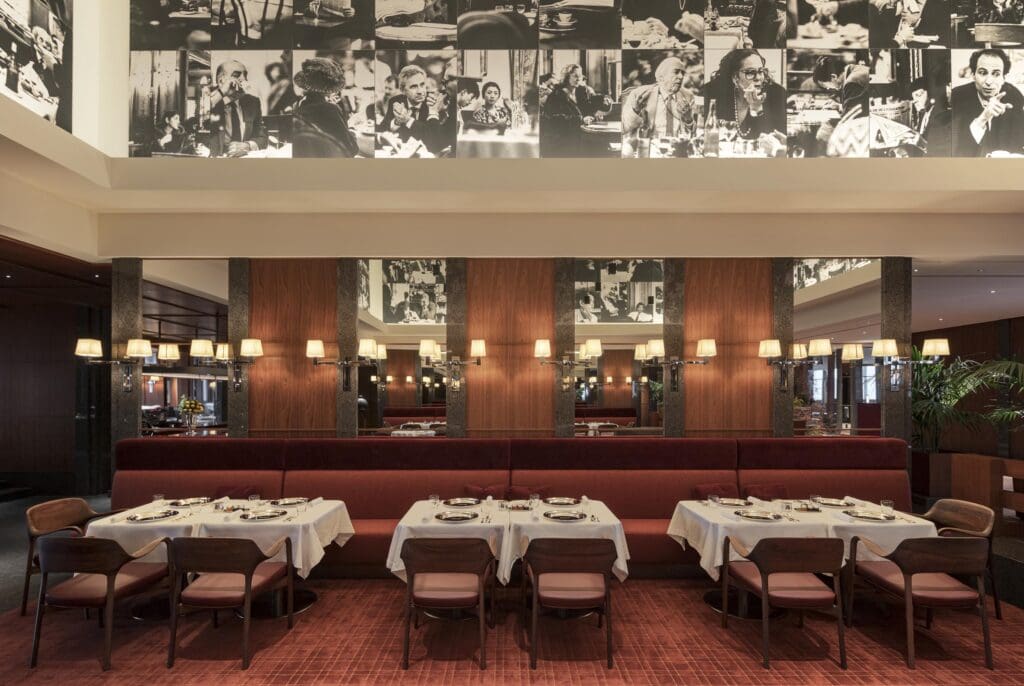 Girandole by Alain Ducasse © Park Hyatt Tokyo
More than just a feast for the eyes, the restaurant promises a top-notch experience for the taste buds, with dishes such as upside-down cheese soufflé, Wagyu beef fillet served with Anna potatoes and a reduced Bordelaise sauce, lobster casserole with truffle macaroni, and Tokyo Alain Ducasse chocolate soufflé served with coffee ice cream.
“Our ambition? To build bridges. A bridge between yesterday and today, a bridge between France and Japan,” explains renowned French chef Alain Ducasse. This involves selecting the best products from Japan to create a typically French cuisine.
Other experiences
In addition to Girandole by Alain Ducasse, the establishment has four other restaurants promising high-quality dining experiences.
At the top of one of the three towers, the Peak Lounge & Bar offers a menu accompanied by its signature cocktail, “Six Prefectures, One Horizon,” which blends local stories of heritage, craftsmanship, and terroir, from artisanal gin from Hokkaido to famous strawberries from Tochigi and sunny awamori from Okinawa.
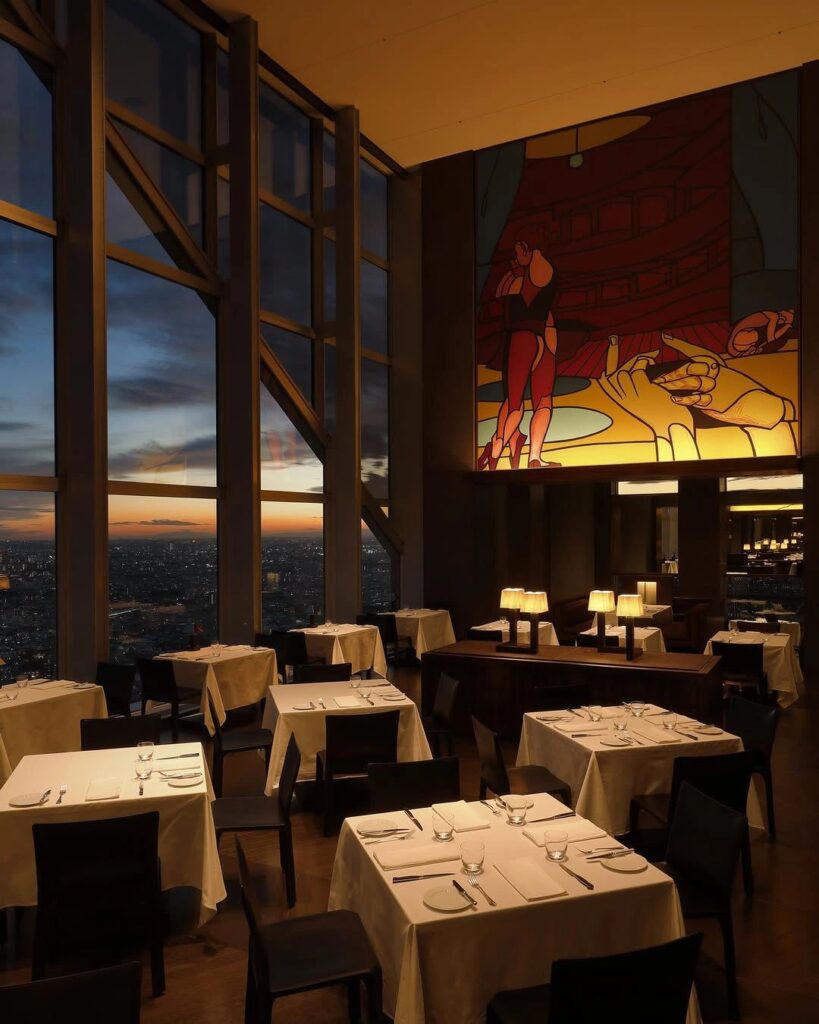 © Park Hyatt Tokyo
On the 52nd floor, the menu at the New York Grill & Bar is simple, with specialties including Kobe ribeye steak, Akagi Tomahawk steak, garlic mashed potatoes, and Caesar salad. The wine cellar has been expanded, as has the cocktail menu, with a few new additions including the L.I.T., a subtly sweet, pink-colored sake-based cocktail inspired by the movie Lost in Translation.
For its part, Kozue offers modern Japanese cuisine inspired by traditional kaiseki, under the leadership of chef Nobuhiro Yoshida, with specialties including finely sliced pufferfish sashimi and refined pink sea bass, lightly seasoned and accompanied by subtly sweet squash.
Add to this the possibility, from March 2026, of finding casual seasonal dishes to take away from the delicatessen on the first floor of Shinjuku Park Tower. It is also possible to find edible gifts in both the patisserie and the charcuterie, both of which are located in the Tokyo hotel.
The 45th and 47th floors are home to the Club On The Park. A true haven of well-being, the 2,090 m² space offers a 20-meter by 8-meter swimming pool located under a monumental glass atrium, fitness facilities including Technogym Artis equipment, and a daily program of fitness classes. The spa features marble whirlpools, saunas, cold water pools, and seven private treatment rooms, including a suite for couples.
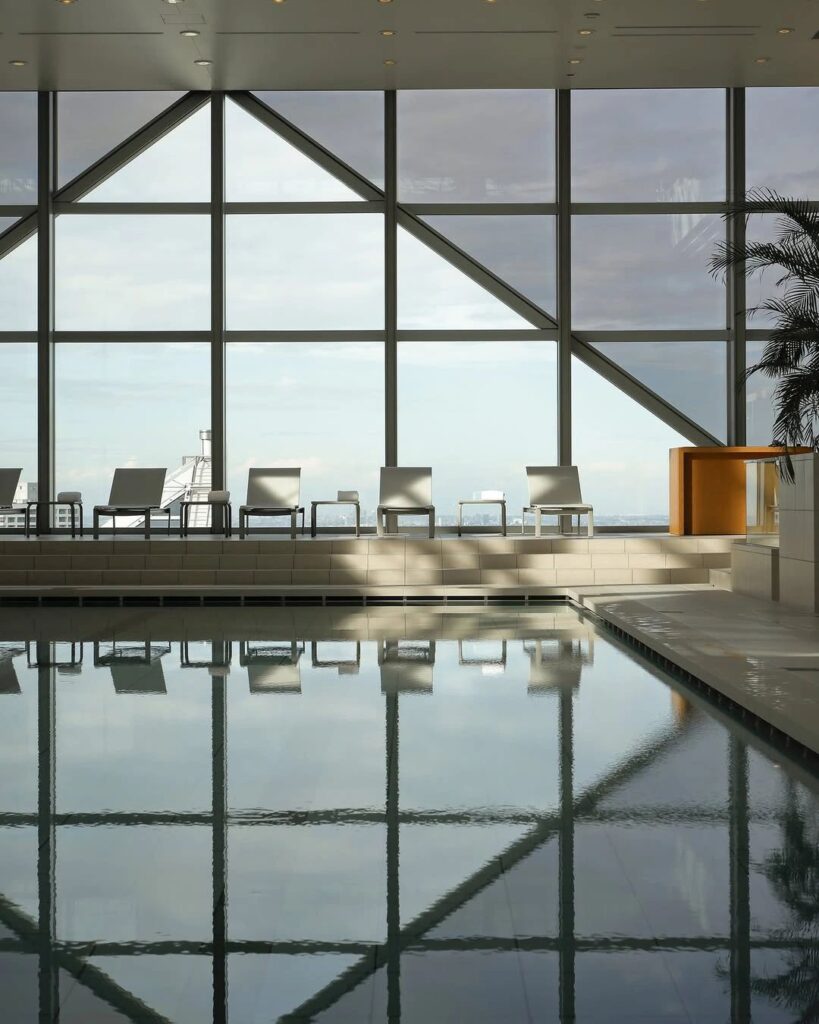 © Park Hyatt Tokyo
Read also > Hyatt strengthens its luxury strategy with the appointment of Tamara Lohan
Featured photo: © Park Hyatt Tokyo
AloJapan.com