
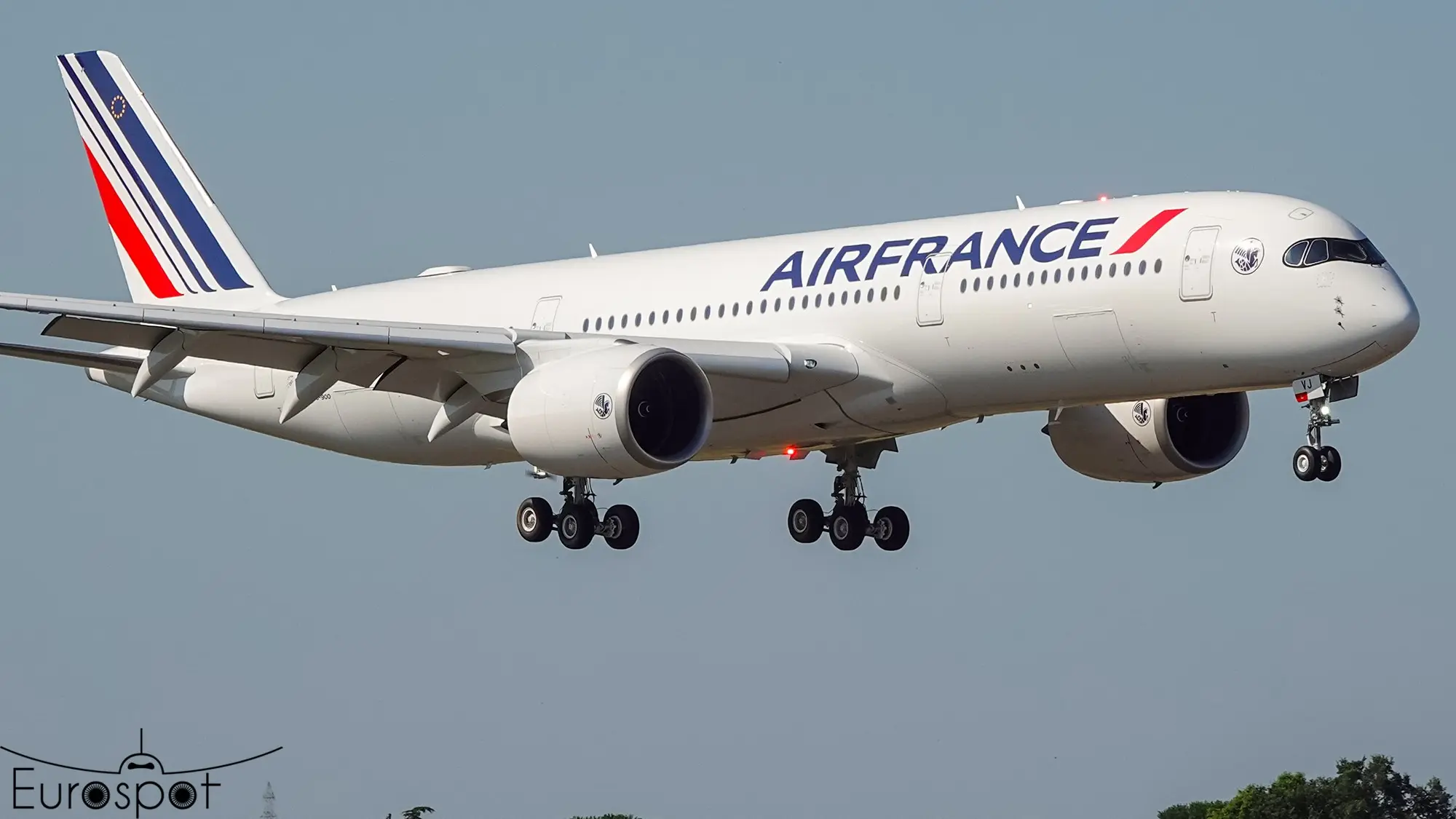
PARIS- Air France (AF) flight AF291, Airbus A350, departing Osaka Kansai Airport (KIX), experienced a radome collapse linked to undetected bird strike damage from the previous month.
The Airbus A350-900 encountered air data faults, repeated flight-control law changes, and aerodynamic instability before returning safely to Osaka.
Investigators determined that inner-surface radome damage from the earlier impact had not been fully examined during maintenance, even though weather radar antenna movement had already been obstructed days before departure.
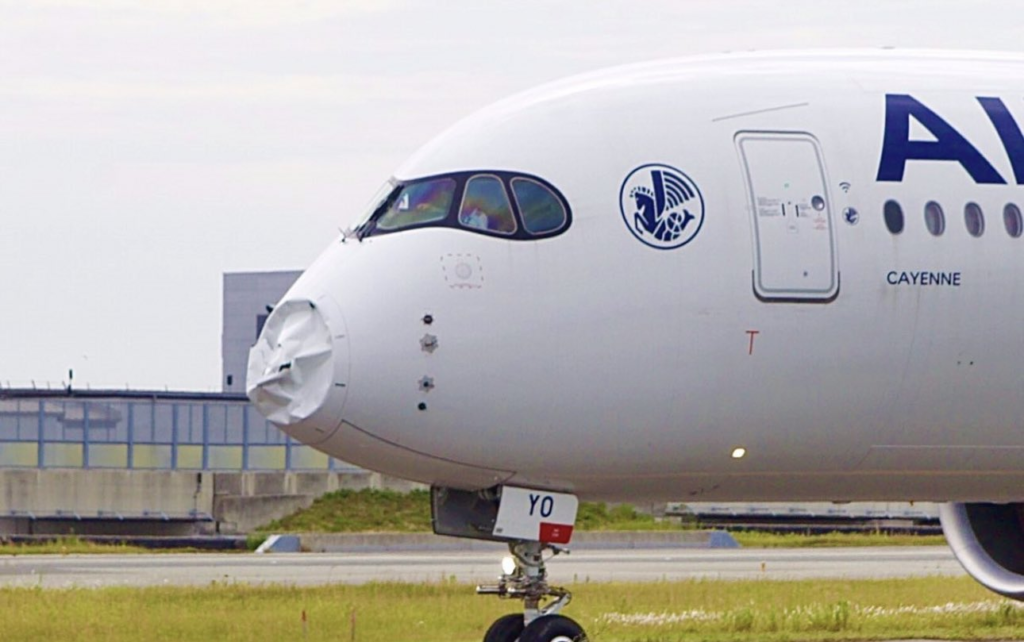 Photo: By Twitter User (28 May 2023)
Air France A350 Radome Collapse
French investigators concluded that a bird strike one month before the Osaka to Paris service likely caused debonding of the radome’s inner skin.
This defect was not properly identified during maintenance inspections, despite radar anomalies occurring three days before the flight.
According to Flight Global, the obstruction of the radar antenna should have prompted a more detailed inner-surface inspection.
As the A350 climbed out of Osaka on 28 May 2023, radar faults resurfaced and continued through 35,000 ft.
The crew elected to return to Kansai, but as the aircraft descended through 30,000 ft, the radome collapsed inward.
The collapse disturbed airflow around the nose and disrupted pressure measurements in the air-data probes, creating airspeed discrepancies and multiple system alerts.
These issues caused flight-control law transitions between normal and alternate modes in a sequence that included normal, alternate, normal, and then alternate again. The crew questioned whether the radome had failed or whether an air-data probe malfunction was responsible for the unstable readings.
 Photo: Clément Alloing
Crew Actions and System Behaviour
Airspeed fluctuations increased as the jet descended, prompting the crew to begin unreliable airspeed procedures.
They initially kept the autopilot, autothrust, and flight director engaged while reviewing fault messages.
At 15,000 ft, rising vibration and aerodynamic noise led the pilots to consider diverting to Tokyo, but they chose to continue toward Osaka.
During configuration changes, including slat and flap deployment, the crew observed sudden drops and marked differences between primary speed indications. They stated that they believed they had lost the radome and that the abnormal speed variations confirmed this.
The pilots responded by disengaging automated systems and transitioning to manual flight. One pilot used the head-up display while another monitored speed integrity with a pitch-thrust data table.
Investigators noted that this decision reflected limited understanding of the A350’s NAIADS system.
NAIADS provides optimal airspeed inputs to flight displays, supports backup speed and altitude sources independent of pitot or ADIRU data, and preserves autopilot and flight-envelope protection when air data values become unreliable.
The system remained functional throughout the event, meaning automated flight could have been safely maintained.
The investigation highlighted that fragmented and complex system information in the flight manual, along with gaps in crew training, contributed to the crew’s limited awareness of NAIADS capabilities.
BEA also stated that, in less favourable conditions, remaining on automated systems is generally preferred because it preserves crew workload.
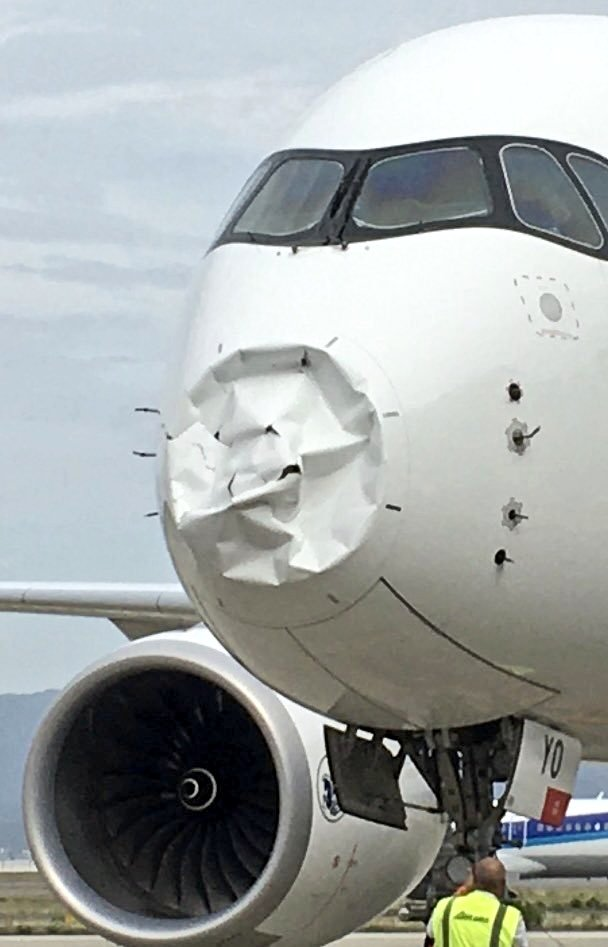 Photo: @White_An124
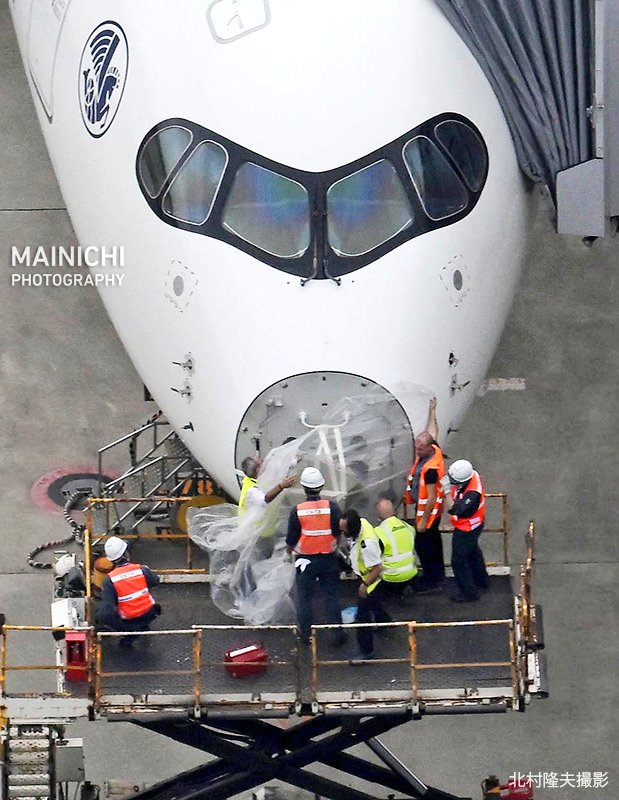 Photo: @mainichiphoto
Approach, Landing, and Aircraft Condition
Despite the airspeed inconsistencies, the crew stabilised the aircraft on a long downwind leg for runway 24R.
The aircraft was overweight for landing, so the extended track helped manage descent and configuration.
Airspeed fluctuations continued, causing another brief change from normal to alternate law before returning to normal.
The crew intercepted the ILS localiser and glideslope, landing safely in Osaka. None of the 309 passengers or 14 crew members was injured.
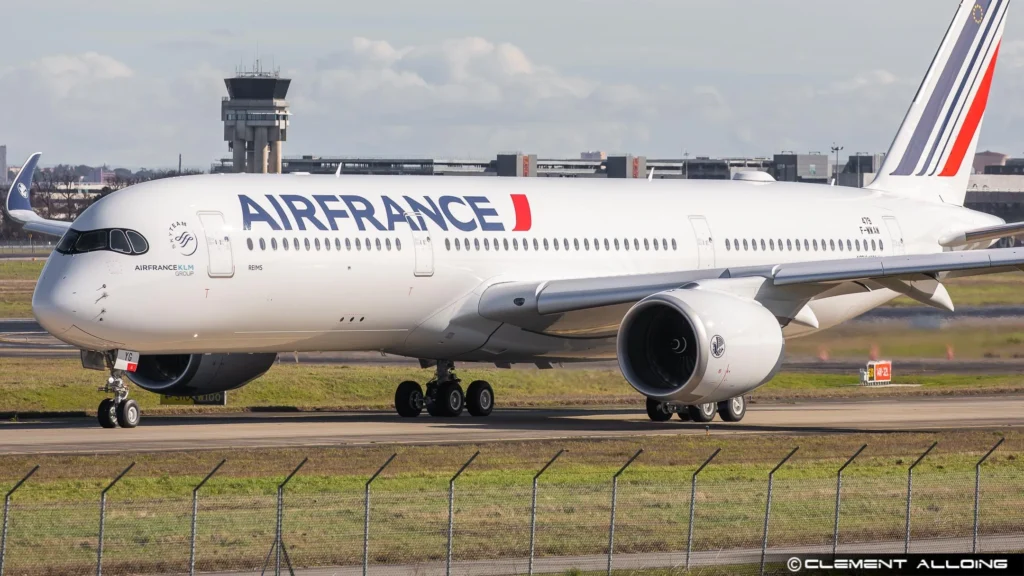 Photo: Clément Alloing
Operator and Manufacturer Actions After the Event
Airbus updated its radome maintenance procedures to emphasise full inspection of the inner surface.
The company also revised the A350 flight manual after identifying that speed fluctuations during configuration or pitch changes could lead crews to disengage automated systems unnecessarily.
The new manual includes a dedicated section covering radome collapse scenarios and related airspeed anomalies.
Air France enhanced inspection protocols following bird, hail, or lightning impacts and prioritised detailed follow-up of weather-radar fault reports to ensure comprehensive maintenance.
The airline also improved training related to NAIADS to strengthen pilots’ understanding of system capabilities during air-data irregularities.
Stay tuned with us. Further, follow us on social media for the latest updates.
Join us on Telegram Group for the Latest Aviation Updates. Subsequently, follow us on Google News
AloJapan.com