

Demand for Miso Paste in Japan Forecast and Outlook 2025 to 2035
The demand for miso paste in Japan is expected to increase from USD 19.8 million in 2025 to USD 25.7 million by 2035, reflecting a steady 2.6% CAGR over the forecast period. Starting from USD 17.4 million in 2021, the industry shows a gradual upward trend, driven by the consistent popularity of miso in traditional Japanese dishes.
As miso remains a fundamental ingredient in soups, sauces, and marinades, it enjoys stable demand from households, restaurants, and the foodservice industry. In the initial phase of the forecast, the industry growth is supported by the enduring cultural significance of miso as a key seasoning in Japanese cuisine, with no major erosion in its industry share.
Quick Stats of the Demand for Miso Paste in Japan
Demand for Miso Paste in Japan Value (2025): USD 19.8 million
Demand for Miso Paste in Japan Forecast Value (2035): USD 25.7 million
Demand for Miso Paste in Japan Forecast CAGR (2025-2035): 2.6%
Demand for Miso Paste in Japan Leading Product Type: Red miso
Demand for Miso Paste in Japan Key Growth Regions: Kyushu & Okinawa, Kanto, Kansai, Chubu, Tohoku, Rest of Japan
Demand for Miso Paste in Japan Top Players: Marukome, Hikari Miso Co., Ltd., Saikyo-Miso Co., Yamato Soysauce & Miso Co., Source Foods
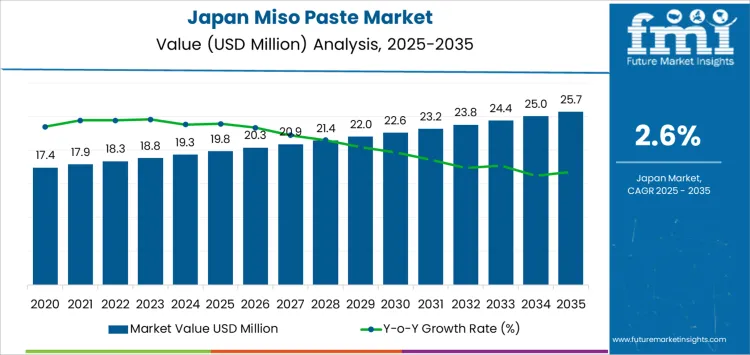
The forecast period progresses from 2025 to 2035, the growth remains steady, reaching USD 25.7 million by 2035. Although the industry sees only moderate growth, it benefits from growing awareness of the health benefits of fermented foods like miso. The sector faces minimal erosion due to the resilience of traditional consumption patterns. Competition from new seasoning alternatives and the growing presence of international cuisines may put some pressure on the demand for miso. As the industry matures, the introduction of new miso variants, innovative packaging, and targeted industry targeting could offer opportunities for smaller producers to capture industry share. Despite these factors, miso paste remains an essential element of Japanese cuisine, ensuring its position in the industry remains strong with steady, long-term growth potential.
Demand for Miso Paste in Japan Key Takeaways
Metric
Value
Demand for Miso Paste in Japan Value (2025)
USD 19.8 million
Demand for Miso Paste in Japan Forecast Value (2035)
USD 25.7 million
Demand for Miso Paste in Japan Forecast CAGR (2025-2035)
2.6%
Why is the Demand for Miso Paste in Japan Growing?
The demand for miso paste in Japan is growing as the country continues to embrace traditional culinary practices, with miso paste remaining a staple ingredient in Japanese cuisine. Miso, a fermented soybean paste, is a key component in various dishes such as soups, sauces, and marinades, making it essential in both everyday meals and festive occasions. The increasing popularity of Japanese food globally, along with a growing focus on plant-based and fermented foods, is contributing to the rising demand for miso paste. As consumers seek healthier and more natural ingredients, miso paste is gaining attention for its nutritional benefits, including being rich in protein, fiber, and probiotics, which support digestive health.
The growth is also driven by the rising interest in Japanese culture and food, both domestically and internationally. Miso paste is an integral part of the Japanese food experience, and as more consumers explore Japanese recipes, the demand for authentic ingredients like miso is increasing. Moreover, innovations in miso paste products, such as low-sodium and organic variations, are catering to health-conscious consumers. These products align with the growing trend towards healthier eating habits, further boosting the appeal of miso paste.
Japan’s commitment to preserving its culinary heritage and promoting local products has supported the demand for miso paste. As the food industry evolves, new uses for miso paste in a range of contemporary recipes and fusion dishes are emerging. These factors, combined with a deep-rooted cultural appreciation for miso, ensure that demand for this versatile ingredient will continue to grow steadily through 2035.
What is the Segment-Wise Analysis of Demand for Miso Paste in Japan?
Demand for miso paste in Japan is segmented by product type, end-user, raw material, distribution channel, and region. By product type, red miso leads the demand at 41%, followed by white miso and mixed miso. In terms of end-users, food services account for 55% of the demand, with consumer demand making up the remainder. Raw materials used in miso production include soyabean, rice, barley, and other ingredients. Distribution channels are divided between consumer sales and food services. Regionally, demand spans across Kyushu & Okinawa, Kanto, Kansai, Chubu, Tohoku, and the rest of Japan, with varying preferences in different areas.
How Does Red Miso Lead the Demand for Miso Paste in Japan?

Red miso accounts for 41% of the demand for miso paste in Japan, driven by its rich and bold flavor, which is a key element in Japanese cuisine. Red miso is commonly used in soups, sauces, and marinades, making it a staple ingredient in both households and food services. Its strong umami taste and fermentation process provide a deep, savory flavor, ideal for traditional dishes like miso soup and ramen. The demand for red miso is especially high in regions such as Kanto and Kansai, where its robust flavor is highly appreciated.
As food services continue to incorporate miso in various dishes, red miso remains a central product in restaurants and catering. The increasing interest in authentic Japanese flavors and versatile ingredients ensures that red miso maintains its dominant position in the miso paste industry, with its unique characteristics driving consistent demand in Japan.
Why Does Food Services Lead the Demand for Miso Paste in Japan?
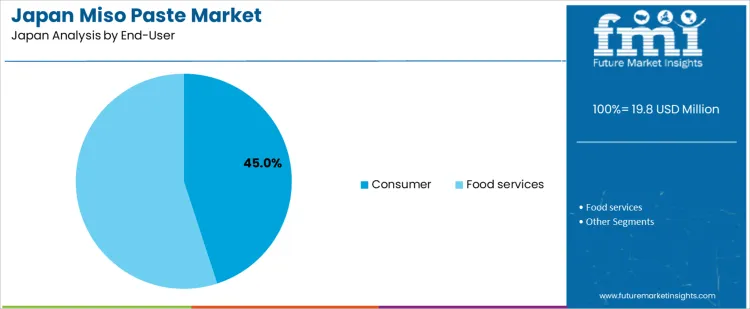
Food services account for 55% of the demand for miso paste in Japan, reflecting its essential role in restaurants, hotels, and catering services. Miso is a fundamental ingredient in many traditional and modern Japanese dishes, such as miso soup, sauces, and dressings, making it a constant requirement in the food service sector. The large volume of miso used in food services, especially in high-consumption dishes like miso shiru, drives its industry dominance.
With the food service industry expanding, particularly in regions like Kanto and Kansai, the demand for miso paste continues to rise. The growing trend toward authentic, traditional Japanese flavors further fuels this demand. As food service providers prioritize high-quality ingredients to meet consumer preferences, the food service sector remains the leading driver of miso paste consumption. This shift towards authentic Japanese cuisine, paired with high-volume usage, ensures food services remain the dominant end-user of miso paste in Japan.
What are the Key Trends, Drivers, and Restraints in Demand for Miso Paste in Japan?
Demand for miso paste in Japan remains strong as it continues to be a traditional staple in Japanese households, widely used in cooking (soups, sauces, seasoning, and marinades). The rising interest in fermented foods for their health benefits, particularly for gut health and digestion, is driving renewed interest in miso paste. Miso’s nutritional profile, including probiotics, makes it appealing to health-conscious consumers. There are restraints, such as the shift towards Western-style diets, busy lifestyles, and the increasing popularity of global cuisines, which may reduce miso consumption. Health concerns about salt content and the growing preference for reduced-sodium options could also impact demand for traditional miso paste.
Why is Demand for Miso Paste Growing (or Holding Steady) in Japan?
Miso’s enduring popularity in Japanese culinary culture ensures steady demand. It remains a core ingredient in many Japanese dishes, especially miso soup, which is a daily staple. The growing awareness of the health benefits of fermented foods, such as digestive health and immune support, is boosting demand among health-conscious consumers. The increasing trend of using miso in modern fusion recipes, dressings, marinades, and sauces also helps sustain its relevance. As consumers experiment with new flavors, miso’s versatility in cooking is contributing to its continued growth, especially in households and restaurants looking to offer innovative and healthy options.
How are Industry Innovations Influencing Miso Paste Demand in Japan?
Innovations in miso production and packaging are helping maintain its demand. Producers are developing new varieties of miso, such as lower-sodium, organic, or premium options, to cater to changing health preferences. These innovations allow miso to appeal to a broader range of consumers, particularly those who are more health-conscious. The expansion of distribution channels, including refrigerated sections, and online retail, has made miso more accessible to younger, busier consumers. Miso’s adaptability in both traditional and modern cooking also keeps it relevant in Japan’s evolving food culture, where global cuisine and fusion dishes are gaining popularity.
What are the Key Challenges and Risks That Could Limit Miso Paste Demand in Japan?
Miso paste faces several challenges that could limit its demand. Shifting dietary patterns, with more people opting for Western-style foods and convenience-based eating, may reduce the frequency of traditional miso consumption. Increasing concerns about sodium intake, combined with growing awareness of health risks associated with high salt levels, may prompt consumers to seek alternatives with lower sodium content. Younger generations may be less inclined to use miso paste regularly, preferring quicker, more convenient seasonings or international sauces. Furthermore, the growing competition from other flavoring agents, such as imported condiments, could impact miso’s dominance in everyday cooking.
What is the Regional Demand Outlook for Miso Paste in Japan?
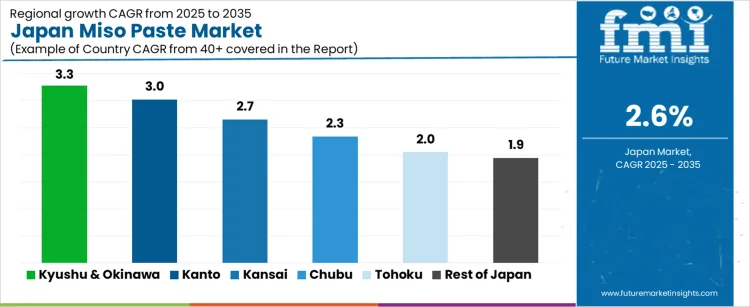
Demand for miso paste in Japan is steady across all regions, with Kyushu & Okinawa leading at a 3.3% CAGR, driven by the region’s culinary traditions and growing interest in authentic Japanese flavors. Kanto follows with a 3.0% CAGR, supported by the high urban population and a growing demand for ready-to-use traditional ingredients. Kansai shows a 2.7% CAGR, fueled by the region’s rich food culture and the continuous demand for miso in daily cooking.
Chubu experiences a 2.3% CAGR, driven by steady consumption in both residential and commercial settings. Tohoku and the Rest of Japan see more moderate growth at 2.0% and 1.9%, respectively, as the demand for miso paste remains essential in traditional dishes and regional cuisine. Despite the moderate growth, miso paste continues to be a key staple in Japanese households, supporting steady demand in all regions.
Region
CAGR (%)
Kyushu & Okinawa
3.3%
Kanto
3.0%
Kansai
2.7%
Chubu
2.3%
Tohoku
2.0%
Rest of Japan
1.9%
How is Demand for Miso Paste Growing in Kyushu & Okinawa?
Kyushu & Okinawa leads the demand for miso paste, growing at a 3.3% CAGR. Okinawa, known for its distinct culinary traditions, uses miso paste in a variety of soups, pickles, and other dishes, making it a staple ingredient in the region. The strong food culture in Kyushu & Okinawa, which emphasizes traditional Japanese flavors, continues to support steady demand for miso paste. As Okinawa’s tourism industry flourishes, tourists seeking authentic local experiences contribute to the growing use of miso paste in both household kitchens and commercial foodservice settings.
The increasing focus on health-conscious eating and natural ingredients has further propelled miso paste’s popularity, as it is recognized for its nutritional benefits, particularly its probiotic properties. With both local consumption and tourism-driven demand rising, miso paste remains an essential and growing part of Kyushu & Okinawa’s culinary landscape.
Why is Demand for Miso Paste Rising in Kanto?
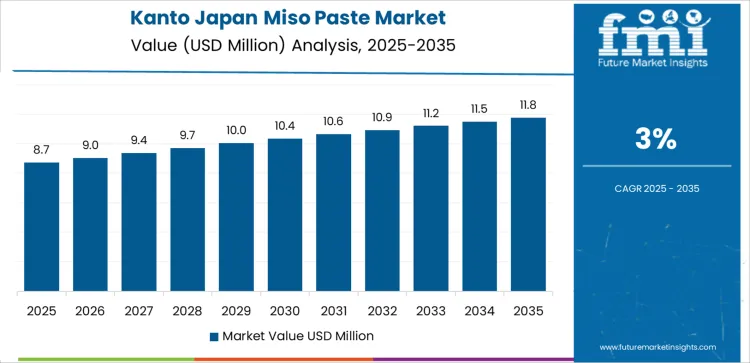
In Kanto, demand for miso paste is rising at a 3.0% CAGR. The region’s dense urban population, particularly in Tokyo, drives the demand for miso paste as a core ingredient in Japanese cooking. As busy urban lifestyles continue to dominate, more consumers are turning to ready-to-use traditional ingredients like miso paste to save time while preparing authentic meals at home. The rising trend towards health-conscious diets and fermented foods has also boosted miso paste’s popularity due to its health benefits, including its role as a probiotic.
Kanto’s diverse population, with a growing interest in regional and authentic Japanese foods, has further fueled demand. As the demand for convenience and premium ingredients rises, miso paste has become a key component in soups, sauces, and marinades across restaurants and homes alike. With increasing consumption of authentic, health-conscious meals, the demand for miso paste in Kanto is expected to remain strong.
How is Demand for Miso Paste Expanding in Kansai?

Kansai shows steady demand for miso paste, growing at a 2.7% CAGR. The region, with its rich food culture, particularly in Osaka and Kyoto, remains a key area for miso paste consumption. Kansai’s deep-rooted culinary traditions emphasize the use of miso in daily cooking, from soups to dressings, making it a staple ingredient in the region’s kitchens. As consumers become more health-conscious and aware of the benefits of fermented foods, miso paste has gained popularity due to its nutritional properties, including its probiotic content.
The trend toward healthier and more natural ingredients further support the steady demand for miso paste in Kansai. Kansai’s vibrant foodservice sector, miso paste continues to be a critical component in many traditional dishes served in restaurants, further fueling demand. As consumer preferences evolve towards traditional, wholesome ingredients, the demand for miso paste in Kansai will continue to grow steadily.
Why is Demand for Miso Paste Growing in Chubu?
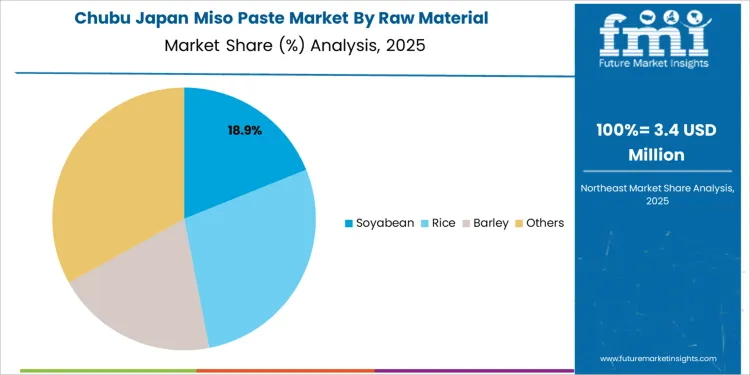
Chubu is experiencing steady demand for miso paste, growing at a 2.3% CAGR. The region, known for its diverse food culture, especially in Nagoya, where miso-based dishes like miso katsu are popular, continues to see high demand for miso paste. Chubu’s cuisine relies heavily on traditional ingredients like miso, ensuring that it remains a staple in local kitchens. The growing awareness of fermented foods and their health benefits has fueled the demand for miso paste.
As more consumers in Chubu turn to natural, probiotic-rich ingredients, miso paste is becoming increasingly popular for its versatility in cooking. The shift toward more convenient, ready-to-use food products, such as packaged miso paste, has also supported steady demand. With Chubu’s commitment to preserving its culinary traditions alongside modern dietary preferences, the demand for miso paste is expected to grow steadily as more consumers embrace traditional and health-conscious cooking methods.
How is Demand for Miso Paste Expanding in Tohoku?
Tohoku is seeing moderate growth in miso paste demand, with a 2.0% CAGR. While the region’s consumption of miso paste is smaller compared to other areas, it continues to play a significant role in local cuisine, particularly in soups and pickles. Tohoku’s agricultural traditions, which emphasize the use of local and natural ingredients, support the steady demand for miso paste. The growing awareness of the health benefits of fermented foods has also contributed to increased interest in miso paste.
As Tohoku’s food culture embraces more health-conscious and sustainable eating habits, miso paste’s role as a nutritious, probiotic-rich ingredient remains strong. As more convenient miso paste options become available, its adoption in Tohoku households and foodservice settings is expected to rise. As the region’s focus on traditional Japanese ingredients continues to grow, demand for miso paste is projected to increase steadily over time.
Why is Demand for Miso Paste Steady in the Rest of Japan?
The Rest of Japan is experiencing steady demand for miso paste, with a 1.9% CAGR. While demand is slower compared to major urban regions, miso paste remains an essential ingredient in smaller cities and rural areas, where traditional Japanese cooking is still widely practiced. The versatility of miso paste in soups, sauces, and seasonings ensures that it maintains its place as a core kitchen ingredient in these regions.
As awareness of the health benefits of fermented foods increases, miso paste’s popularity continues to grow, particularly for its probiotic content and nutritional value. The Rest of Japan’s growing focus on sustainability and natural ingredients aligns with the continued use of miso paste as part of a wholesome diet. Although growth is more modest compared to urban centers, the steady consumption of miso paste in these areas ensures that demand will remain consistent and reliable, even as consumer preferences evolve.
What is Driving the Demand for Miso Paste in Japan and Who Are the Leading Suppliers?
Miso paste is a staple in Japanese cuisine, essential in dishes such as miso soup, marinades, sauces, and dressings. Its rich umami flavor has been a key part of Japanese cooking for centuries, making it a fundamental ingredient in everyday meals. The growing interest in fermented foods, known for their potential health benefits, is driving a resurgence in demand for miso. As consumers become more health-conscious and seek plant-based, nutrient-dense ingredients, miso’s role as a fermented food packed with protein, vitamins, and probiotics is reinforcing its importance in modern diets. The demand is further supported by Japan’s cultural connection to miso, which is increasingly valued for both its taste and its contribution to a balanced diet.
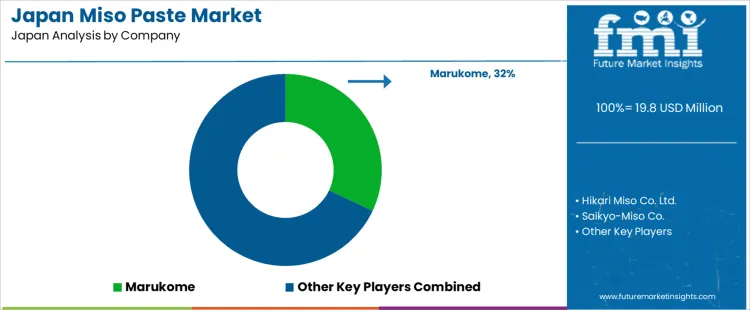
Key suppliers of miso paste in Japan include Marukome, Hikari Miso Co. Ltd., Saikyo-Miso Co., Yamato Soysauce & Miso Co., and Source Foods. Marukome holds a leading position in the industry, with a significant share of 32.0%. This company offers a broad selection of miso varieties, ranging from traditional to more modern options, catering to both long-time miso enthusiasts and new consumers looking for convenience and variety. These suppliers provide a range of miso types, such as red, white, and mixed miso, which differ in flavor intensity and are used in different culinary contexts.
The growing demand for miso is also driven by its versatility and adaptability. In addition to traditional Japanese meals, miso is increasingly being incorporated into fusion dishes and modern culinary trends. As plant-based eating gains momentum globally, miso is seen as a key ingredient in vegan and vegetarian diets. The continued demand for miso reflects its enduring importance in Japanese culture and cuisine, as well as its expanding role in global food trends.
Key Players in Japan Miso Paste Demand
Marukome
Hikari Miso Co. Ltd.
Saikyo-Miso Co.
Yamato Soysauce & Miso co.
Source Foods
Scope of Report
Items
Values
Quantitative Units (2025)
USD million
Product Type
Red miso, White miso, Mixed miso
Raw Material
Soyabean, Rice, Barley, Others
End-User
Food services, Consumer
Distribution Channel
Consumer, Food services
Region
Kyushu & Okinawa, Kanto, Kansai, Chubu, Tohoku, Rest of Japan
Countries Covered
Japan
Key Companies Profiled
Marukome, Hikari Miso Co. Ltd., Saikyo-Miso Co., Yamato Soysauce & Miso co., Source Foods
Additional Attributes
Dollar sales by product type and raw material; regional CAGR and adoption trends; growing demand for premium and organic miso; rising popularity in both consumer and food service sectors.
Japan Miso Paste Demand by Key Segments
Product Type
Red miso
White miso
Mixed miso
Raw Material
Soyabean
Rice
Barley
Others
End-User
Distribution channel
Region
Kyushu & Okinawa
Kanto
Kansai
Chubu
Tohoku
Rest of Japan
Frequently Asked Questions
How big is the demand for miso paste in Japan in 2025?
The demand for miso paste in Japan is estimated to be valued at USD 19.8 million in 2025.
What will be the size of miso paste in Japan in 2035?
The market size for the miso paste in Japan is projected to reach USD 25.7 million by 2035.
How much will be the demand for miso paste in Japan growth between 2025 and 2035?
The demand for miso paste in Japan is expected to grow at a 2.6% CAGR between 2025 and 2035.
What are the key product types in the miso paste in Japan?
The key product types in miso paste in Japan are red miso, white miso and mixed miso.
Which raw material segment is expected to contribute significant share in the miso paste in Japan in 2025?
In terms of raw material, soyabean segment is expected to command 19.0% share in the miso paste in Japan in 2025.
AloJapan.com