
UNSEEN JAPAN – Hidden Places No One Talks About
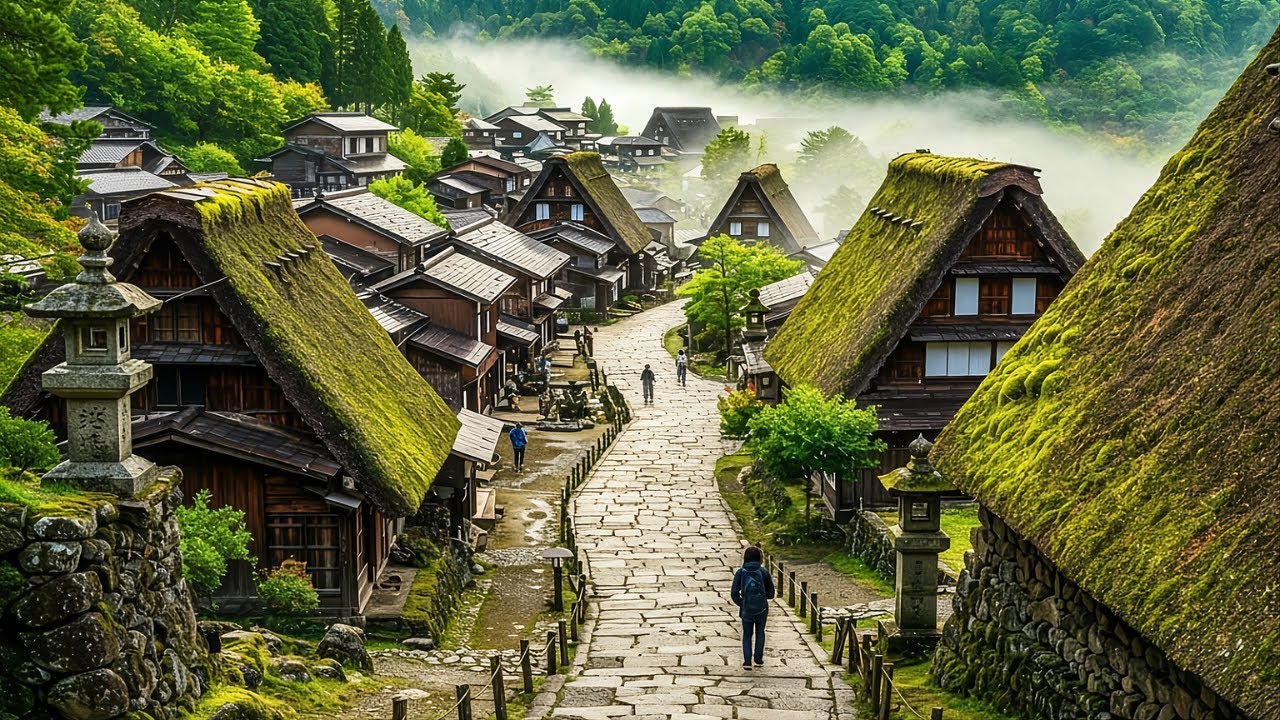
Most people think they know what Japan looks like. But beyond the neon cities lie places many have never even heard of. Mountain temples built into sheer cliffs. Remote highlands shaped by centuries of isolation and ancient pilgrimage routes walked long before the modern era. Some of these places still stand today. Shirakawago is home to gasho style houses built using a method found nowhere else. Their steep rooftops designed to withstand winters that once made the valley impossible for months. Nachi Falls rises beside a shrine tied to the Kumano network of sacred paths, a tradition recorded since early imperial times, and an Anakura keeps wooden homes arranged in patterns preserved across generations due to the valley’s remoteness. Stay with me as we uncover Japan’s most extraordinary wonders, where rare discoveries and forgotten mysteries might change the way you see this country forever. Inaura is known for its 18th century gashozoui houses with steep thatched roofs built to shed heavy snow. To support this structure, ropes and wooden joinery hold the frames together rather than nails, allowing damaged sections to be replaced quickly. Because of this system, roof renewal is usually completed in a single day with residents working together to reatch an entire house. Inside the design included several attic floors where families raised silk worms while the rooms below were used to make washi paper. In addition to the household industry, the village once produced potassium nitrate for gunpowder, supplying domains that relied on this material. Above the home stands a thatched roof temple intended to protect a guardian deity. And near it, stone markers were placed to estimate how fast the winter snow would melt. Mount Fuji consists of three separate volcanoes layered over time. Although often shown as a single point, the crater rim features eight peaks. The name Fuji is interpreted in several ways, including associations with immortality or a female guardian fire deity in early belief systems. Women were once prohibited from climbing out of fear that she would react with jealousy. That even the first recorded woman to reach the summit was disguised as a man. In more recent decades, weddings have occasionally been held at the site, carried out at high altitude despite harsh conditions. At its base, Oki Gajara grows on hardened lava, known for caves and tragic stories that contribute to its unsettling reputation. The lava rock beneath the forest interferes with compasses and mobile phones, creating navigation problems and contributing to tourists getting lost. Trees anchor with shallow roots over the hardened lava, giving them twisted and irregular forms. Throughout the woods, lava caves hold permanent ice or strong drafts of wind, and some are regarded as haunted or spiritually significant. Sound is heavily absorbed by the poorest ground, producing an unsettling quiet. Beliefs say the forest is haunted by uri spirits of those who passed there. There were also reports of Uber suit in the area, a rarely practiced act in which an elderly relative was abandoned during severe famine. Narosawa is a popular ice cave in the forest that stays frozen throughout the year and was once used for storing ice before refrigeration. It formed when lava flowed beneath hardened crust after a violent flank eruption at Mount Fuji, creating a 156 m tunnel. The temperature stays close to freezing year round, allowing ice pillars and stelactites to build continuously. The cave also once stored dip’s eggs to delay hatching and extend production cycles. Ceiling sections drop to around 3 ft, forcing visitors to crouch or crawl through narrow passages. Bird species often lurk around the area with some visiting all the way from the Psycho Wild Bird Forest Park. It hosts over 200 kinds of wild birds and is considered a rare hot spot for them near Mount Fuji. Along the forest edge, dense growth acts as a sound barrier, helping them communicate over longer distances. The floor combines volcanic rock with fertile soil, creating microhabitats that support insects essential for their feeding. Dedicated observation zones with telescopes allow tourists to get close-up views. Other winged creatures that visit the mountain often seek refuge in Ryugu Cave, a lava tube that provides shelter for bats and some birds. This formation features a wide overhead opening created when its ceiling collapsed from coastal erosion. Inside, the walls reveal hardened layers of dark yellow lava. Sunlight streams through the opening and meets the clear blue water below. Many say the cave is being watched over by a seadragon deity. The Asiatic black bear has a distinct white V or crescent shape on its chest, earning the nickname moon bear. It is an expert climber using long curved claws and strong limbs to reach high fruiting trees. Known for walking on the soles of its feet, it can stand upright and move its head side to side in warning or curiosity. The bear often rests on hollow tree branches or under warm sun patches, showing flexibility in resting spots. It uses a wide range of vocal sounds, including grunts, hisses, and screams for communication and defense. Asiatic black bears are mostly solitary and nocturnal, but may sometimes forage near human settlements. They are strong swimmers and can travel across water to reach isolated habitats or food sources. Shurikawa Go’s gasho zucuri houses have steep thatched roofs that shed heavy snow quickly. their form compared to hands pressed in prayer. To withstand severe weather, the houses are oriented north south, improving winter sunlight exposure while reducing wind impact. Built without nails, the structures rely on wooden joinery and ropes, and reatching is carried out through coordinated community labor. The thick thatch provides strong insulation, keeping interiors warm in winter and dry during snowfall. Additionally, these wide roofs create large attic spaces once used for drying mulberry leaves to turn long winters into productive seasons. Many buildings extend three to five floors, providing ample storage for farm tools and crop harvests. Strict regulations in the settlement today maintain the original building methods and layout. Tucker Chiho Gorge was carved by volcanic activity leaving vertical bassalt columns packed tightly into steep walls. These columns are predominantly hexagonal, showing that the lava cooled slowly and fractured evenly. Through the center, a clear river runs between the cliffs, feeding waterfalls that drop in thin ribbons over the rock. Because of this structure, the geology forms calm pools that function as breeding areas for aquatic life. As a result, rare bird species and cold water fish thrive here, supported by clean water and forest cover. The bassalt formations also create unusual sound reverberations, amplifying the rush of falling water. According to a well-known myth, the sun goddess hid in a nearby cave to escape conflict with her brother, causing darkness to fall until she emerged again. Matsuyama Castle used the slope and nearby sea as defensive advantages. Walls were constructed with concealed firing gaps that allowed troops to shoot while staying protected. It endured fires and conflict through multiple rebuilds while still keeping many Edeto period elements intact. The central keep follows a layered layout that once enabled wide surveillance of approaching forces. Paths across the grounds were intentionally arranged like a maze to delay and mislead attackers. One tower preserves original bells once used for warnings and daily signals. It is recognized as one of only 12 original fortifications still intact in Japan. The region features sacred pilgrimage routes crossing ancient cedar forests connecting shrines and spiritual sites. Higa Shimuru district is home to rare geological formations attracting researchers with unusual rock textures. Pilgrimage paths are maintained by local communities preserving centuries old traditions on foot travel. The coastline combines rocky cliffs and sandy beaches, creating a unique coastal ecosystem. Nachisan Mountain hosts ancient shrines featuring rituals tied to natural elements like wind and water. The mountains aerial views reveal a patchwork of forested hills and scattered farmsteads blending nature and human life. Nachi Falls near Nachisan Mountain holds spiritual importance and remains a pilgrimage site with ritual offerings. Nachi Falls is Japan’s tallest single drop waterfall, plunging dramatically over a steep cliff. The falls are sacred in the Kumanu faith, believed to house the deity Hiru Gongan. A white Tory gate stands near the base marking the spiritual boundary of the waterfall area. Mist from the falls is thought to bestow spiritual blessings on visitors standing nearby. Shinto priests perform ritual offerings at the falls. Continuing ancient sacred practices, the steep cliff creates a thunderous sound when water hits the rocks below, amplifying the waterfall’s power. Se Ganto Gi is one of Japan’s oldest temples built near Nachi Falls, a site previously used for nature worship. The temple blends Buddhist and Shinto elements once functioning as a single religious institution before separation policies. Its iconic feature is the vermilion three-story pagoda deliberately aligned to frame Nachi Falls for visual and spiritual impact. Historical evidence shows the temple was rebuilt repeatedly after fires, yet maintains its original architectural style, emphasizing harmony with nature. Inside the temple complex is a sutra mound found beneath the waterfall’s base containing ancient artifacts hidden for protection during turbulent times. The temple is a major pilgrimage site on the Saigoku Cannon pilgrimage route and houses important cultural properties. The temple’s founding legend tells of an Indian monk led to Nachi Falls by a white turtle symbolizing enlightenment and purity. Morino Hayokan is known for multiple mysterious deaths in one family, including tuberculosis, leukemia, suicide, and violent murder using the family’s samurai sword. Investigations report paranormal phenomena like chilling voices, eerie laughter, shadow figures, and unexplained movements inside the mansion. The mansion holds secret rooms not documented in architectural plans, some of which are inaccessible due to structural decay, fueling speculation about hidden past activities. Japanese fireflies glow only during summer evenings, using bioluminescence to attract mates in synchronized flashes. They have light organs that produce cold light with almost no heat. Highly efficient compared to man-made lights. Larvi live underwater before emerging as flying adults, an unusual life cycle among fireflies. Their glow warns predators of toxicity, a natural defense mechanism. Fireflies rely heavily on clean freshwater habitats, making them indicators of ecosystem health. Their flashing patterns vary across regions, creating local firefly languages. Fireflies are culturally linked to Mount Koa, symbolizing seasonal transitions and spiritual connections. Coyasan is the center of Shinggon Buddhism with sacred temples and ancient forest shrines entwined. The Danjo Garin complex is a key temple area representing Buddhist cosmology through its careful layout and architecture. Walking through Coyasan reveals forest paths lined with thousands of stone lanterns and grave markers. The red bridge in Cooasan is a symbolic crossing representing the passage into sacred space. Temple grounds host religious ceremonies blending Shinto and Buddhist practices. The forest itself is protected and considered spiritually alive, influencing local culture deeply. The nearby Tomagashima Fort Islands share historical links with Coyasan as ancient defenses and spiritual sites. Tomagashima consists of four uninhabited islands with extensive red brick military fortifications built for coastal defense. The ruins include five artillery batteries situated primarily on Okinosima facing the STO inland sea entry point for protection. Complex networks of underground tunnels and powder magazines connect various parts of the fort, showing advanced design for rapid movement and ammunition storage. The red brick forts are gradually collapsing due to coastal erosion and vegetation overtaking the structures. The site was bombed during the final stages of World War II and has since been left as a preserved ruin. Narrow arched entrances and staircases lead into the forts, creating claustrophobic passageways defensive by design. Soldiers once lived in quarters within the forts, isolated on the islands and using the structures for yearround military readiness. Nagoya is known for its hilltop fortress marked by golden shachihokco tiger-headed fish figures set along the roof. It was first established as a military base to control key transportation routes and secure power across central Japan. To protect the interior, builders constructed massive stone walls and applied fireresistant plaster over wooden structures. They used the Nsurumi technique, stacking rough stones for added strength and stability. As the complex expanded, the outer baileies became living quarters for samurai retainers, forming a self-contained town under armed oversight. Over time, it grew into a political center that reinforced authority across the region. For defense, the layout included concealed passages and escape routes intended for use during siege conditions. Nitsu Ghost Town is an abandoned mining village built around gold, iron, and zinc extraction in a remote mountain valley. Around 3,000 residents once lived in apartments arranged along the river and on steep slopes. Most workers homes had no bathrooms, so people used shared bathing facilities run by the mining company. Supervisors and engineers lived separately in tiled roof houses with better sunlight and private garden space. The village hospital still contains medicines, x-ray films, and patient records left behind when the mines closed. Oshino Hakai, once called Oshino Moto Hachiko, served as a place where pilgrims purified themselves before climbing Mount Fuji. The ponds operated as cleansing points for Fuji worship groups like the Daiger sect which connected Buddhist and Shinto practices through the water right known as Suikio. Pilgrims prepared spiritually for the ascent. However, government reforms that reduced Buddhist influence caused these practices to decline. Even so, interest returned in the 20th century as the ponds retained strong religious meaning. Hikon is a Hiyama Jurro fortress built on a low hill facing Lake Biwa with concentric moes for layered defense. The keep includes 75 embraasers combining triangular gunports and square arrow slits. Its inner block contained key defensive buildings and the lord’s residence, while the outer block held the homes of samurai retainers. Matsuokan, also known as Matsu Mine, was once the country’s largest sulfur producer and the biggest operation of its kind in East Asia. Its sulfur and iron ore deposits formed within a volcanic zone on the Hatchimanti plateau. As extraction expanded, the area developed into a self-contained community with more than 15,000 residents at its height. Reinforced concrete apartment blocks offered amenities such as central heating and flush toilets, unusual for the period. At maximum output, the operation supplied about 30% of the region’s sulfur and roughly 15% of its pyite. Decline followed when imported ore and lowerc cost production methods undercut profitability leading to closure. Wastewater treatment facilities continue to manage acidic drainage from the abandoned workings. Bodhaiji Temple stands inside the crater of a volcanic mountain surrounded by bare rock and rising steam. The grounds are seen as a borderland to the world of the dead where visitors pass through rocky hell to reach a pale lakeshore thought of as paradise. Parents build tiny towers of pebbles beside these figures and attach spinning wheels on top, hoping the motion will help guide lost children across the harsh spirit terrain. Nearby simpler halls hold hot spring baths that bubble with underground heat, and pilgrims soak there, believing the water eases both physical ailments and sorrow. Ural owls have no ear tufts, giving them a round ghostlike face distinct from many other owls. Their large black eyes and advanced hearing support precise hunting in low light. They rely on serrated flight feathers that reduce sound, enabling near silent movement. Hunting usually begins from a fixed perch, waiting motionless before a sudden quiet sweep to capture prey. Hiroshima began as a town built around a castle on a delta formed by the Otter River positioned for water and land transport. It later became a major military base during Japan’s imperial expansion, housing army headquarters and munitions production. Rivers and nearby hills divided the city into distinct sections, influencing later planning decisions during wartime air raids. These hills helped slow the spread of fires. Among its early infrastructure, the Green Bridge was built to connect key districts across the waterways. After the war, the city was redesigned with wide boulevards and open spaces to support reconstruction. Educational facilities, transit systems, and utilities were among the first restored to drive recovery. Hiroshima Peace Memorial is recognized as a symbol of reconciliation after devastation. It stands on the former city center that was destroyed by the atomic bombing. Across the grounds are monuments honoring victims from many countries. At the center, the senotap lists the names of all identified victims beneath a curved roof intended to suggest shelter. Sculptures throughout the area highlight themes of peace, prayer, and remembrance. The atomic bomb dome remains preserved at the far edge as a war relic and final point of reflection. It is the skeletal remains of the Hiroshima Prefectural Industrial Promotion Hall. The dome’s steel frame and fractured walls reveal the force of extreme heat and pressure. It was kept intact as a ruin during postwar rebuilding instead of being removed. Today it stands to confront the reality of nuclear destruction and support movements calling for disarmament. The location continues to function as a place for learning and international anti-uclear advocacy. Hokkaido has the coldest climate among Japan’s regions, which affects the plants and animals that can survive there. The area includes several national parks that protect rare ecosystems found only in this region. A new influence remains visible in language, art, and craft reflecting long-standing community identity. Extensive land development made the region central to Japan’s industrial and agricultural expansion. The capital city applies planning focused on low pollution and efficient public systems. Lake Shikotu is an ice-free caldera lake within the city and is the northernmost in Japan with this trait allowing yearround ecosystems. It formed after the collapse of a massive volcano, later altered by three strata volcanoes that influenced its shoreline. Nakajima, a lava dome, rises from the center and includes several small islands. The water is exceptionally clear and low in nutrients, limiting algae and maintaining strong visibility and color. Ice formation is uncommon due to geothermal heat affecting winter behavior in the water column. Seasonal fog develops in consistent patterns once used for navigation and weather cues. Cape Shakatan is a peninsula on the west coast of Hokkaido known for steep cliffs that drop into the clear waters called Shakatan Blue. It includes camoy cape meaning God’s cape in the AU language reflecting spiritual significance tied to the area. A narrow 770 m path called Chena’s trail leads to the tip. once closed to women because of superstitions connected to drowning incidents. At the end stands a working lighthouse equipped with the last remaining firstass immovable lens from the Maji era. The coastline was once a major hub for herring fishing, later declining due to over fishing before shifting toward tourism and conservation Offshore rocks called Ebisua and Daikoku Iwa represent deities of fishing and prosperity marked with small Tory gates placed for blessings. Fishing huts known as BA once combined lodging and processing spaces and a few are still in limited use today. Hokkaido snow geese migrate here each year using the Cape’s rocky fields and coastal bays for feeding and rest during the cold season. Flocks often number in the thousands during peak movement. Adults show white plumage while juveniles are modeled gray brown which helps reduce visibility to predators. They travel long distances between Arctic breeding grounds and Hokkaido’s milder winters. Their diet consists mainly of aquatic plants and grasses found in tidal flats and agricultural fields. Snow geese form lifelong pairs and both parents defend nests and gosslings aggressively. In flight, they shift formation to respond to wind and threats, showing coordinated group behavior. Japanese cranes are the tallest crane species known for their striking white plumage and red crown patch on their heads. The red head spot is bare skin that heats the bird’s blood vessels, aiding heat dissipation in cold climates. Their legs are long and black, designed for wading through marshes and snow covered fields in winter. Cranes perform elaborate courtship dances involving bowing, jumping, and wing flapping to reinforce pair bonds. Japanese cranes migrate short distances, but can fly at elevations over mountains to reach wintering sites. They are omnivores eating fish, amphibians, plants, and insects. Depending on the season, their populations have rebounded due to active conservation, particularly in Hokkaido’s wetland habitats. Otaru is a port city that grew as Hokkaido’s main trade hub during rapid industrial expansion. From the late 19th century, it developed through shipping, fisheries, and the gold trade. Its layout reflects both Japanese and European influence seen in brick warehouses and glass works. Steep hill roads and old street lamps create a quiet timeworn character across the town. Otaru is also known for artisan crafts including music boxes and glass blowing studios. The canal was originally built to transport goods from docked ships to warehouses along its banks. It supported efficient movement of coal, rice, and other supplies important to Hokkaido’s growth. Its stone walls were reinforced using imported engineering methods to withstand strong tides and winter ice. Today, the area is mainly pedestrian with restored brick warehouses used as restaurants and museums. Nagano is a mountainous prefecture in central Honshu, often called the roof of Japan because of its high elevation and the northern, central, and southern Japanese Alps. The climate varies sharply and heavy winter snow supports well-known ski resorts and alpine sports. Because of its terrain, control of mountain passes once held significant strategic value during regional power struggles. Passes such as Tory and Magi operated barrier stations where officials inspected documents and checked for weapons. In response, some villages created hidden paths to bypass these checkpoints used by fugitives and tax evaders. Meanwhile, major rivers including the Shinano and Tenriu were developed early for hydroelectric power supporting modernization. Zenkoji Temple later drew large groups of pilgrims along the highways that crossed the region. It houses what’s considered the first Buddhist statue brought from the Korean peninsula. Its main hall is built with Shimoku Zakuri construction using massive beams to support a steep roof. Pilgrims step into a pitch black underground passage where they search for a key said to grant enlightenment. At the entrance stands a benzuru statue that visitors rub while hoping for relief from specific ailments. The temple drew both commoners and warriors who travel there to pray. Inside the inner chamber, high priests conduct daily rituals before dawn. During quiet winter nights, tracks of the Japanese co often appear along nearby trails. These fascinating animals are mostly solitary but call to their offspring with sharp vocalizations, maintaining contact without close groups. They mark territory using scent glands near the eyes, pressing strong smelling signals onto trees to deter rivals. Kamikochi is an alpine valley in the Alps closed to private vehicles beyond its entry gates to protect the area from heavy traffic. At Konashi Dyra, cold dawns can form tall ice columns on Kushin Yamahaka plants, rising overnight when moisture freezes upward. Near the route once used by Edo travelers, Narayuku’s steep cedar roofs release snow and controlled slides, preventing dangerous buildup above walkways. Narayuku stretches for about 1 kilometer along a steep mountain route once used by travelers. Houses followed Dashihari Zukuri design with second floors projecting about 45 cm to protect the ground level from rain and theft. Windows used senbon koshi latises which let air and light through narrow wooden grids while preventing people outside from seeing in. Roofs carried yoy basashi eaves sharply angled to shed snow and deflect arrows during attacks. For defense, the streets were built in L-shaped turns that forced intruders to slow and exposed their flanks. Matsumoto began as Fukashi, taken in a swift siege that ended the ruling clan’s control. Afterward, defenders built hidden trap doors for dropping boiling oil during border assaults. It soon became a field base for campaigns against northern rivals. Soldiers linked to the stronghold later killed foreign troops in the capital, causing severe diplomatic strain. Leadership then crushed peasant tax uprisings by executing protest leaders in public. Forces were deployed to the harsh winter and summer, fighting at the Assaka siege, suffering heavy losses. Later, units from the domain were defeated by rival fighters at a mountain pass while assigned to coastal guard duty. Kyoto was once the imperial capital and is known for preserving wooden town houses alongside modern streets. Its grid uses long narrow lanes planned centuries ago to control wind flow. During Gon Matsuri, huge floats are pushed and pulled by hand through tight turns without machinery. Access to geisha districts depends on secret tea house memberships passed privately through families. At Daigoji Temple, curators preserve cherry trees grafted from party branches that would otherwise have been lost. It includes two primary zones, Kami Daigo near the summit and Shimo Daigo at the base linked by forest hiking trails. Members of the imperial family later elevated Daigoji to official imperial temple status after its founding. The Pagod’s internal murals depict Buddhist cosmology supported by thick wooden beams and flexible joints built to withstand earthquakes. Kami Daigo is designated as a sacred area with limited public access to maintain solitude for religious practice. Fushimi Inari Tisha is the head shrine dedicated to Inari, the Shinto deity of rice, agriculture, business and prosperity. Companies and individuals sponsor Tory Gates in appreciation for successful ventures with donor names written on the pillars. The Senbani pathway forms a tunnel of roughly 800 connected vermillion gates leading up the mountain approach. Fox statues stand at key points, often holding a key to the rice storehouse to show their role as Inari’s messengers. They also line the side paths towards smaller shrines, each in distinctive and sometimes playful poses. Visitors draw fortunes from omikuji boxes and tie the results to racks or trees across the grounds. Kiomi Zudera’s main hall is known for its massive wooden stage projecting 13 m over a hillside and structured without nails. Inside the 11-faced cannon statue is placed within outer, inner, and innermost sanctuaries divided by round columns. The roof is finished with hinoi cypress bark rather than tiles, a choice linked to imperial patronage. Below the hall, the Otawa waterfall splits into three streams believed to grant longevity, academic success or fulfillment in relationships. Visitors take turns drinking from ladles to avoid reaching across streams, which is considered improper. The temple also features Tina Muri, an underground passage experienced in total darkness to symbolize renewal. Moreover, waterways surrounding the site support Japanese giant salamanders, among the world’s largest amphibians still present in the region today. This species can grow up to 5 ft long, ranking as the third largest salamander in the world. Its body is flat and broad with knobbyby wrinkled skin allowing it to stay camouflaged in rocky river beds. Because its eyes are tiny and nearly blind, it relies on sensory nodes along its body to detect prey and threats. It often remains still and ambushes frogs underwater, using a wide mouth and rapid jaw closure to swallow prey whole. The slimy skin with irregular knobs further helps it stay hidden on stream floors and avoid predators. It grows slowly and can live for more than 70 years, which is an uncommon lifespan for amphibians. Biodone Temple in Kyoto is known for its Phoenix Hall positioned on an island within a broad pond. The hall’s layout recalls a bird with wings extended, linking the central pavilion with two-wing corridors. Inside stands a 9- ft gilded wooden Amida Buddha designed to catch and reflect light, giving a floating effect above golden lotus elements. Its construction applies design methods from Ming period China alongside forms from the Han era. The complex began as a countryside residence, then was converted into a temple as Pureland Buddhism gained influence. Completed in 1053, the Phoenix Hall remains one of the few structures still intact from that period. Links to the temple’s activity, the Kiyotaki tunnel functioned as a route used by monks and travelers moving between pilgrimage destinations. It is a 444 m long single lane tunnel outside Kyoto. Widely known for severe accidents and reports of hauntings. The number four sounds like the word for death in Japanese, which heightens its ominous reputation. Drivers often report seeing a woman walking through the tunnel late at night, disappearing when approached. Witnesses describe screams and shifting shadows near the entrances and in the forest after dark. The tunnel is now sealed with concrete barriers due to repeated incidents and continued paranormal reports. Miaima Island, officially Itsukushima, is a mountainous island in the Stoland Sea. It features three main peaks, including Mount M, where forests and waterfalls extend across steep terrain. Along the coast, shallow sandy cove sustain halophilus plants adapted to tidal salt exposure. Infrastructure is kept limited, maintaining controlled access and reduced impact on the environment. The red Tory gate of Itsukushima shrine creates the effect of floating during high tide because its peers stand in shallow water. It is a Shinto shrine constructed entirely over tidal waters on an island using Shinden Zukuri architecture adapted from aristocratic residences. The main hall is paired with subsidiary halls and connected by long covered corridors built above the water. Floorboards contain narrow openings called meshy oceani, letting waves during high tide move through and reduce impact in storms. The sanctuary for Ichukishima Himeino Mikoto features wider base spacing, shifting the central axis slightly to the west for structural balance. Roofs use cypress bark shingles rather than tiles and the main hall ridge omitsi and katsuogi. Floating pillars rest on bedrock and adjust with tidal levels, allowing the structure to remain steady without se-facing walls. The complex treats the sea as a broad ceremonial pond where Kangan music is performed from boats joined by the pecking of Japanese pygmy woodpeckers in nearby woods. They are small woodpeckers measuring about 13 to 15 cm with a gray brown crown and a white stripe extending from above the eye to the neck and chest. Their backs and wings show white and brown barring which helps them blend with tree bark. Males have a small red mark on the nape while females lack this and usually have slightly longer beaks, wings, and tails. They use rapid light pecking bursts to reach insects in dead branches rather than drilling deeply into wood. To withstand repeated impacts, their skulls include shock absorbing structures and spongy bone tissue that reduce vibration. For nesting, they excavate cavities only in dead or decayed wood, choosing softer material that avoids harm to living trees. This Osaka is a major urban center known for commerce, food, and its past role as an imperial capital and merchant hub. Much of the city was rebuilt after wartime damage, creating a mix of older districts and modern redevelopment. It is recognized for theatrical arts, especially bonraku puppet performances and kabuki dramas. The Bay Area features advanced architecture and large entertainment complexes, including aquariums and shopping zones. Osaka’s Tenjin Festival ranks among the largest events in Japan and includes elaborate boat processions. The city also features the famous Osaka Castle, noted for its golden shachihoko, tiger-headed fish ornaments placed high on its upper structures. It is a large fortress known for its role in unifying Japan during the violent Sangoku period. The main tower or tenshu appears five stories from the outside yet it holds eight internal levels arranged for defense and administration. Its walls were built with massive stones, including the noted octopus stone, recognized for exceptional size and engineering difficulty. Entry points such as the Ottoman gate feature advanced joinery methods without nails using rare joints like aritsugi and soitsugi to strengthen structure along the perimeter. Yagura watchtowers operated as lookout positions and secure storage. each constructed according to specific tactical demands. Overall planning emphasized visual authority using height and ornamentation intended to deter opponents and assert power. Lake Ashi formed when a volcanic eruption blocked the higher river, trapping runoff behind hardened lava and rock. Today, the reservoir spans about 700 hectares with depths exceeding 40 m in some sections. In the midentth century, sightseeing vessels styled as pirate ships began cruising the lake, and later upgrades introduced detailed themed interiors and props. Geothermal heat in the area also feeds on facilities that draw steady visitors throughout the year. Continuous monitoring tracks, low-level tremors connected to the dormant Hakonei volcano to support early safety alerts. The Hakonei Mountains in Kanagawa Prefecture once formed a key checkpoint on the Tokaido road, regulating movement between eastern and western regions during the feudal era. At its center, Hakonei Seekisho inspected travelers and cargo to prevent potential threats near the capital. The demanding climb across the range led to the nickname Path of Tears, reflecting the hardship faced by those who crossed it. Over time, pilgrimage routes developed, guiding travelers seeking purification at the nearby sacred areas. Meanwhile, steam vents and sulfur fields in the mountains supplied sulfur for gunpowder production. Each August, the Daimonji Yaki Festival lights large characters on the slopes as a farewell to ancestral spirits during Oon. The construction of the Hakonei ropeway improved access and offers broad views of volcanic terrain and Lake Ashi. It is a 4 km fitel gondola lift that travels between Sunzan and Togendai carrying passengers over the volcanic Aakuani Valley. Each cabin holds 18 people and departs roughly once per minute using two parallel track cables and two holage ropes for added stability. Because strong winds are common in the area, the system was upgraded to a funel configuration, which reduces sway and maintains steadier movement. At a Wakodani station, an observation platform overlooks active geothermal vents and boiling pools where visitors obtain Curata Margo black eggs cooked in the hot springs. For safety, operations stop whenever sensors detect rising volcanic gas levels along the route. The gondilas operate throughout the year, ending near Hakona shrine with cedarry gateways leading to lakeside paths. Located on the shores of Lake Ashi, the area is recognized for its Hwa Notori. Visitors first encounter the gate’s lacquered vermillion surface, regarded as protection against misfortune. From there, a long stone stairway lined with statues and lanterns leads upward to the Hondan, guiding visitors through a gradual ascent meant to encourage reflection. Beneath the main hall roof is a Kirin sculpture. A creature said to live a thousand years with a dragon’s face, a bull-like tail, and horselike hooves known for turning only at perfect right angles. Further within the ground stands Kuzuryu shrine dedicated to the nine-headed dragon linked with Lake Ashi. Nearby, the Ryujin Swisha provides spring water that visitors collect for blessings and purification. Behind the complex, a grove of himara trees blooms in summer, a feature also present at Duzan Sioji Temple. It is a major Stozen Buddhist temple set on Mount Daou and encircled by a cedar forest with about 170,000 trees. The grounds span an area roughly 27 times the size of Tokyo Dome and include more than 30 structures such as halls, pagodas, and bell towers across the mountain slope. A notable feature is the display of massive iron gator weighing up to 3.8 8 tons tied to a legend about protective Tangu spirits. The temple is connected to a story in which its founder was believed to have become a tangu after death and continues to guard the complex. Visitors climb nearly 400 stone steps to reach the Okunoin shrine marked by bronze Tangu figures at the approach. ponds around the complex are home to Japanese pond turtles, adding interest for those who complete the ascent. They have olive brown shells with a central ridge and a slightly serrated rear edge, helping them stay stable on slippery rocks at pond bottoms. Males have longer, thicker tails than females due to reproductive anatomy. And during winter they rely mostly on cloakal respiration while resting underwater for long periods. They use slow deliberate head bobbing during courtship. Often performed while resting on partially submerged logs. Skin patterns include yellow head and neck stripes with orange on the limbs, which can flash during quick movement and disrupt a predator’s focus in murky water. Saporro is the capital city of Hokkaido, planned with modern urban design and anchored by Odori Park, a long green corridor stretching about 1.5 km through the center. Its Odori Park was first set up as a fire break and later expanded into the site for major public events, including the snow festival, known for large ice and snow sculptures. It includes 92 species of trees such as lilacs, elms, and maples arranged across 13 blocks with distinct gardens, fountains, sculptures, and open areas. At the eastern end stands the Saporro TV tower, which offers observation decks overlooking the park and the city grid. There is also a broad underground pedestrian and shopping network connecting key transport hubs and commercial zones. Apart from the city’s urban growth, some areas deteriorated, including the town of Yubari, once a thriving coal mining community north of Saporro. now slowly turning into a ghost town. Methane gas explosions in several mines killed dozens of workers, pushing major operations to shut down. Rows of abandoned apartment blocks with broken windows and overgrown weeds show how quickly residents left. In an effort to recover, the city cultivated Yubari king melons in green houses built on former mining land, selling them as luxury produce. Financial collapse followed when resort projects failed to attract visitors, leaving debt equal to about $500 million per remaining resident. The population fell sharply, dropping to under 10,000 as younger workers moved to larger cities for employment. Its decline continues as aging residents pass away with few newcomers to replace them. Maji is a coastal city on the STO inland sea functioning as a regional hub for transport and industry. Its layout combines modern commercial districts with preserved quarters that reflect its past as a fortified town. The plains and nearby waters provide seafood and produce that supply markets and support the economy. It is renowned for a hilltop fortress complex recognized as the largest and best preserved samurai stronghold with 83 interconnected structures. Its walls use fireresistant white plaster made from slaked lime, a crucial defense against arson attacks of the period. More than 1,000 loopholes were engineered for archers and gunners to target enemies from protected positions. The roofs combine two gable styles forming a distinct tiered silhouette similar to a pagod. The main keep rises six floors above ground with one basement level reinforced by two massive tree trunk pillars running through several stories for earthquake stability. Its nickname, the white egret, comes from the gleaming exterior and the upward sweep of its layered roofs. The Japanese grass lizard is common on the outskirts with a slender body and a tail often more than twice its length. It has rough, shiny scales and a clear white stripe that runs from below the eye along the side, helping it blend into tall grasses. Its tail can break off when seized by a predator, and the detached piece thrashes to divert attention while the lizard escapes. It hunts insects and spiders in daylight, active in open, sunny spots. It climbs well on grass stems, tree trunks, and even walls using sharp claws and a flexible frame. Yokohama is the second largest city in the country and its busiest international port. Recognized for a modern skyline alongside preserved foreign settlement districts. It opened the first foreign trading port after national seclusion ended and developed one of the earliest Chinatowns. Foreign residents introduced the first English newspaper, beer brewery and gas lamps, reshaping daily life and commerce. Early demonstrations of magnetic levitation rail technology were held here along with expose featuring what was then the world’s tallest ferris wheel. Today, the Minato Mai district features the sky garden a top landmark Tower, the Cosmo Clock Ferris wheel, and an interactive cup noodles museum for hands-on noodle creation. It is a large urban development in Yokohama designed as a futuristic business hub along the waterfront. The district features high-rise towers with glass facads to increase daylight access and provide open ocean views. Utility tunnels built beneath major roads support essential systems and improve resilience against disasters while keeping street level areas uncluttered. Blackcrowned night herand nest within planned green spaces, demonstrating an uncommon coexistence between wildlife and dense development. This winged animal is a stocky bird with a short neck and legs and a body length averaging about 23 to 28 in. It has a distinctive black cap and back with gray wings and a white underside and bright red eyes with round black pupils. The bird’s bill is thick, stout, and black, designed for pecking at prey swiftly, mostly fish and aquatic animals. During the breeding season, its legs turn from yellow green to pink, and it grows long white plumes on its head for display. The heron’s call is a sharp barking quark sound used for communication especially during flight or alarm. N served as the first permanent capital of the nation planned on a grid influenced by early Chinese city designs. Its wooden buildings feature tiled roofs with end caps formed as fluttering birds intended to ward off harmful forces. Lanterns along the streets were once used in rights meant to guide spirits during seasonal events. Festivals reenact ceremonies with dance, music, and offerings to deities carrying forward long-established practices. Within Nar Park are burial mounds for nobility with some areas open for public access. Toadai Gi is a massive Buddhist complex in Nara known for housing the largest bronze Buddha statue in the country. The Great Buddha Hall or Da Sudan once ranked among the largest wooden buildings ever constructed. Inside stands a 49 ft tall bronze Buddha weighing nearly 500 tons. Its casting was carried out in phases over several years, consuming most bronze production of the time and placing severe strain on national resources. The hall is supported by 344 large wooden pillars with some containing smaller sacred figures sealed within. The grounds also hold one of the oldest bronze octagonal lantern towers displayed near the main hall. An annual event features young monks climbing ropes from the hall ceiling to clean the statue with brightly colored dusters. See deer have a reddish brown coat with white spots that remain visible into adulthood, helping them blend into dappled forest light. Males grow antlers each year, usually with four points, but sometimes up to eight. Then shed them after the breeding period. Females do not develop antlers, instead showing two small black bumps on the forehead that help distinguish the sexes. They can reach speeds of about 30 mph using short, strong legs for quick turns through dense trees. During mating season, they rely on loud, high-pitched calls to signal rivals and potential partners. In N. They roam freely among people and are known to bow when given food, a behavior developed through daily contact. Many residents regard them as sacred animals and believe they act as messengers of the gods reflected in long-standing Shinto practices. The Ishigaki Islands form a subtropical volcanic chain known for dense coral reefs and extensive marine life. Coastlines feature star pattern sand created from fragmented coral mixed with fine grains. Volcanic soil combined with coral sand supports cultivation of mangoes and sugarcane. Air battles occurred nearby during World War II, leaving underwater wrecks now examined by divers. Forests provide habitat for the crested serpent eagle, which pres on reptiles and keeps populations controlled. This fascinating bird is known for its fan patterned black and white crest, giving its neck a thick, powerful profile. Its legs are bare and muscular with sharp talons well suited for gripping snakes and reptiles which form most of its diet. Broad rounded wings held in a shallow V allow steady flight and quick turns through forest canopies. Its call is a sharp, high-pitched bark, often used to signal alarm or assert territory. When subduing prey, it can strike rapidly to crush the skulls of snakes, a notable hunting method among raptors. Its vision is extremely precise, enabling it to detect well- camouflaged prey from high above the ground. Tokyo is a sprawling capital where temples and shrines sit beside ultramodern towers and neon-filled districts. Its architecture ranges from wooden temple structures to metabolist experiments and postmodern highrises. Residents often rely on compact micro apartments and capsule hotels designed to fit dense urban living. Vending machines operate around the clock, dispensing items from hot meals and fresh eggs to umbrellas and clothing. During rush hour, station staff called Oia push passengers into packed train cars to keep departures on schedule. Blue lights installed at station platforms aim to lower stress and reduce public self harm attempts during heavy commute periods. Late night karaoke bars offer a space for workers to unwind after long hours in the office. Shabuya Crossing is known as the world’s busiest pedestrian scramble where people walk from every direction when all signals stop vehicles. During peak periods, more than 2,500 pedestrians move through the intersection roughly every 2 minutes. The concept follows early scramble intersections first used in North America, but the volume here remains unmatched. It sits in front of Shabuya station’s Hachiko exit, recognized for the statue honoring the loyal dog Hiko. Despite the heavy flow of people, the intersection records exceptionally low accident numbers due to careful signal planning and crowd control. Rainbow Bridge is a suspension bridge linking central Tokyo to the artificial island of Adber across Tokyo Bay. It carries two decks. The upper level has six lanes for expressway traffic, while the lower level includes regular roads, pedestrian walkways, and the Uricamomi transit line. The clearance is about 52 m, allowing large vessels to pass underneath. The bridge is frequently used in film and television productions, reflecting its role in the modern harbor area. After sunset, multicolored illumination begins about 30 minutes later and continues until midnight. enhanced by upgraded lighting systems that reduce energy use. From the bridge, the Sunshine 60 skyscraper, once the tallest in the country, can be seen in the distance. It is a 60story mixeduse tower in Ebakuro, Tokyo, rising over 200 m with five underground levels. The structure was built on the grounds of the former Sugamo prison, known for holding and executing war criminals after World War II. Its 40 highspeed elevators reached the 60th floor observation deck from the basement in about 35 seconds. Once considered the fastest in the world, the lower floors include banks, cafes, retail spaces, and showrooms, while upper levels host offices and restaurants. Planners promoted the tower as a self-contained environment where people could work, shop, and spend leisure time without leaving the building. Today, some are hesitant to stay there due to long-running reports of paranormal activity, including claims of electronic voice phenomena thought to be pleased from former prisoners. Kazukapara execution grounds is another fascinating yet eerie site in the city. It was one of three main execution grounds in Edeto where those condemned faced crucifixion, burning at the stake or beheading. Before reaching the area, prisoners crossed Namidabashi known as tear bridge while families cried from the far side as final farewells. Heads of the beheaded were raised on poles for 3 days to warn anyone passing through. Bodies were often left exposed, especially in summer when heat drew dogs and weasels that fed on the remains. Near the ground stands the beheading Buddha at Eniji Temple, carved to offer relief the souls from neck cutting pain. Apart from the darker sides of Tokyo, Weno Park offers a brief sense of calm with dense blooms of lotus flowers. It is the oldest public park in the country. once temple grounds that were repurposed after destruction during civil conflict. In spring, more than 800 cherry trees draw heavy crowds who gather for dayong picnics beneath the blossoms. Within the park stands Weno Toshogu Shrine, approached through a path lined with over 200 stone lanterns donated by powerful lords. It also features a 23t tall monster lantern regarded as one of the three great stone lanterns of the nation. Brownared bullbulls, known for imitating human sounds, often nest in the trees and create an unusual backdrop for visitors. They measure about 28 cm long with a grayish brown body, distinct brown ear patches, a long tail, and a slight crest on the head. Its strong curved beak allows it to take fruits, nuts, insects, nectar, leaves, and small amphibians and reptiles from both trees and the ground. The species is known for mimicking human speech, dog barks, and various environmental sounds to confuse predators and communicate within flocks. Flight is performed in an undulating pattern with three or four rapid wing beats followed by short glides that help it move efficiently across urban areas and forests. Brownared bulbless gather in large noisy flocks and often dominate feeders, aggressively driving off smaller birds during winter. Males display courtship through bowing, drooping wings, tail fanning, and head bobbing to emphasize the brown ear patches to potential mates. The bulbs dart often to the trees around Sens Soji Temple. It is Tokyo’s oldest Buddhist temple dedicated to cannon. Two fishermen discovered a golden statue in the Sumida River, and repeated attempts to return it failed, prompting the temple’s founding. The Kaminarimon Gate carries a massive red lantern painted with thunderclouds and lightning with the gods of wind and thunder positioned inside. Nakami’s story leads toward the main complex where vendors offer snacks and souvenirs that help fund upkeep through commission. Hosman guards treasured sutras and artifacts with giant straw sandals hung as charms against fire. Beyond it, the main hall conceals the statue in a hidden chamber while worship takes place at the front. Kyushu is the southernmost of the four main islands. Because of its position facing nearby Asian regions, it became the first point of contact with foreign peoples. In this setting, the Karatu area developed durable stoneware pottery predating porcelain, noted for earthtone colors and firing methods. Throughout the year, Matsuri expressed gratitude for harvest success, the end of epidemics or victory, bringing communities together. Alongside these customs, music features instruments such as the Gautan, unique to Kyushu, and shaped by influences from Okinawa and the mainland. Mount Aro in central Kyushu contains one of the largest active volcanic caleras on the planet. The calera formed after four massive pyrolastic eruptions emptied underground magma chambers causing the surface to collapse into a broad basin holding five central cones. Nakodaki, the most active of them, releases constant steam and volcanic gases from an acidic crater lake that shifts color as minerals rise from below. Intense geothermal activity fuels Jigoku hot springs where vents boil water and emit strong sulfur fumes while Uchaki offers mineralheavy waters used for bathing. During heightened activity, sulfur dioxide output can reach several thousand tons per day, spreading hazy plumes that leave a yellow mineral dust across nearby areas. Mount Aso’s grasslands support the ringnecked pheasant, which prospers on insects and seeds found in volcanic soils. Males show iridescent copper gold feathers, a white neck ring, red wattles, and rear spurs used in fights during breeding season. Females carry modeled brown patterns with black bars and short pointed tails that allow strong ground camouflage while nesting. They scratch backward with both feet to dig for seeds, insects, roots, and earthworms, and shift to small reptiles or nuts. When food is scarce, when alarmed, they burst straight upward using powerful chest muscles, reaching about 40 mph before gliding into cover. In severe colds, they reduce metabolism and can remain inactive for days, enduring long stretches without food. Kobe is a major port city in western Asia positioned between the sea and Mount Roco. The Kitano district retains westernstyle mansions called Iinkan built by foreign merchants and known for verandas, bay windows and red brick chimneys. Kobe Port Tower is recognized for its red steel latis form, resembling a magnetic compass needle. During World War II, the city hosted intelligence operations tied to its port, and underground bunkers from that period are still being uncovered. The varied tit in the Roco Mountains has a black head with white cheeks, blue gray wings, and a chestnut belly. It uses a strong beak to tap bark and pull out insects hidden under the surface. The bird store seeds in cracks of tree bark and under leaf layers, returning to collect them when food is limited. It can hang upside down to reach difficult feeding spots, showing notable agility. Its call is a sharp repeating tsutsu used for communication in flocks throughout the year. Strong feet and curved claws allow it to cling to vertical trunks while searching for prey. Ashima Ohashi bridge stretches 1.7 km and connects Matsuer with Sakai Nato across Lake Nakami. The central span reaches 250 m and stands among the longest continuous pre-stressed concrete girder spans. Its gradient rises to 6.1% on one side and 5.1% on the other, allowing vessels to pass beneath without halting movement. From specific viewing points, the structure appears sharply vertical, creating a roller coaster-like optical illusion. This unusual visual effect draws visitors to lookout areas positioned near the upper section. Despite its steep approach, vehicles travel smoothly thanks to strict speed limits and controlled traffic flow. Fukushima Prefecture spans coastal plains and mountain regions with farmland known for peaches and other fruit crops. Western districts receive heavy snowfall while the east has milder marine seasons. The Fukushima exclusion zone has seen abandoned fields overtaken by willow and chestnut growth, drawing increasing numbers of wild animals. Thermal spring areas and alpine zone sit within short travel distances due to sharp elevation changes. This range of climates supports both extensive rice fields and subtropical fruit orchards, an uncommon pairing within one prefecture. Uchiuku is a preserved post town in Prefecture on the old Isizu Nishi Kaido route connecting Isizu and Niko. It developed as a stop where travelers could rest, eat, and find lodging along the long journey. More than 30 wooden buildings with thick thatched roofs line a 500 meter road that still follows its early layout. Today, the street mainly contains restaurants and souvenir shops, reflecting its long role supporting foot travelers, including samurai and merchants. Fukushima nuclear power plant is a well-known site in the prefecture with six boiling water reactors built on a lowered coastal bluff for stable foundation and easier seawater pumping. The reactors used Mark 1 containment made of reinforced concrete and steel designed to confine radioactive steam during emergencies. Emergency diesel generators were placed in basement turbine buildings which left them exposed to flooding despite engineer warnings. After the earthquake, reactors 1, 2, and three shut down automatically. When control rods stopped the fishing process, backup batteries kept cooling systems running for about 8 hours. Then power was lost. Without water injection, the fuel cores overheated from remaining decay heat and damage began to escalate. In Fukushima, Japanese macaks shelter in abandoned houses during harsh winters, using the structures for warmth. Their thick brownish gray fur grows denser in cold climates, helping them withstand severe freezing conditions. They have a pinkish red face and rump that function as social signals within groups. Opposable thumbs and large cheek pouches enable them to carry food and occasionally walk upright when transporting items. They are skilled swimmers and can cross rivers to reach food or new territory. They are also known for soaking in hot springs to maintain body heat during winter. Magameuku is a post town on the Nakasendo Trail between Ido and Kyoto. The steep slope that runs through the settlement channels rain water downhill efficiently which prevents flooding during intense storms. Inns were designed with wide eaves and inner courtyards so travelers and horses could be handled without blocking the narrow road. Merchant houses featured angled deosi latattis windows allowing owners to observe passers by while keeping their rooms unseen. At the center stands the waterhe known as masugata. First built to grind rice flour and later adapted for hydroelectric power. It sits beside a defensive road layout of square bends intended to slow advancing forces. Legends say the constant sound of the waterhe once covered sensitive conversations during secret negotiations. Takyama is a city in the mountainous Haida region known for preserving centuries old architecture and ways of living despite its official city status. It developed as a merchant center because it stood at the junction of four major trade routes linking mountain settlements with larger markets. San Machi Suji still maintains Edo period wooden houses, merchant shops, and saki breweries kept in working condition. Merchant residences such as Yoshiima include concealed guest rooms with sliding panels that open into expansive halls for high status gatherings. Homes rely on modular timber frames that can be taken apart for repairs by community carpenters. Inside, soot dark beams were polished smooth across generations by women using only cloth and their hands. Although the town appears compact, its government oversees a wide territory that includes many far-flung villages and highland zones. This is Japan, a land of hidden wonders and remarkable architectural marvels. Now, if you don’t want to miss the most unreal wonders of Pacific Northwest region, check out this video.
Explore Unseen Japan and discover the hidden places no one talks about! From mystical forests and remote mountain temples to breathtaking natural wonders and untouched villages, this video reveals a side of Japan far from the tourist trail. Perfect for travelers and adventurers searching for unique places to visit and authentic cultural experiences. Experience the mystery, beauty, and wonder of Japan like never before!
Our channel is available in:
-Spanish: https://www.youtube.com/@DescubreLaNaturalezaHoy/videos
-Portuguese: https://www.youtube.com/@ENTPortugues/videos
#JapanTravel #HiddenWonders #PlacesToVisit
Hi, I’m Gabe from “Explore Nature Today.” Join us as we dive into our documentaries exploring Earth’s beautiful, untouched places. Each documentary reveals the amazing diversity and strength of nature, plus the efforts to protect it. We aim to inspire and teach you about the incredible natural areas around us, from wildlife close-ups to remote landscapes and travel destinations.
Subscribe and explore with us to help keep our planet’s wonders alive.
—————–
This content is original or licensed.
Timestamps:
0:00 Introduction to Hidden Japan
0:35 Shirakawa-go and Traditional Gasho Houses
2:58 Mount Fuji’s Three Volcanoes
4:17 Aokigahara Forest – The Sea of Trees
8:36 Japanese Wildlife – Asiatic Black Bears
10:17 Traditional Architecture and Building Methods
12:04 Takachiho Gorge’s Basalt Formations
13:36 Ancient Shrines and Pilgrimage Routes
17:14 Nachi Falls and Sacred Waterfalls
18:51 Seiganto-ji Temple Complex
21:04 Mysterious Locations and Paranormal Sites
22:22 Japanese Fireflies and Natural Phenomena
23:12 Koyasan – Sacred Buddhist Mountain
27:49 Abandoned Mining Towns and Ghost Villages
29:42 Mount Fuji Pilgrimage Sites
30:54 Historic Castles and Fortifications
32:08 Volcanic Landscapes and Hot Springs
33:52 Wildlife in Natural Habitats
35:13 Hiroshima – History and Peace Memorial
37:45 Hokkaido – Northern Wilderness
42:13 Cape Shakotan and Coastal Wildlife
44:04 Japanese Cranes and Migration
46:01 Historic Port Cities and Trade Routes
48:31 Mountain Regions and Alpine Areas
54:54 Kyoto – Ancient Capital and Temples
1:04:21 Island Shrines and Floating Torii Gates
1:09:04 Osaka Castle and Urban Centers
1:12:19 Lake Ashi and Mountain Resorts
1:21:02 Sapporo and Northern Cities
1:25:03 Historic Castles and Coastal Cities
1:28:32 Tokyo – Modern Metropolis
1:50:22 Southern Islands – Kyushu Region
2:07:00 Conclusion
1 Comment
Thank You For Vidio… Sukses Yaa… Sudah Kasih "Hype " Yaa.. 💝💘