
Image: hapelinium / shutterstock.com
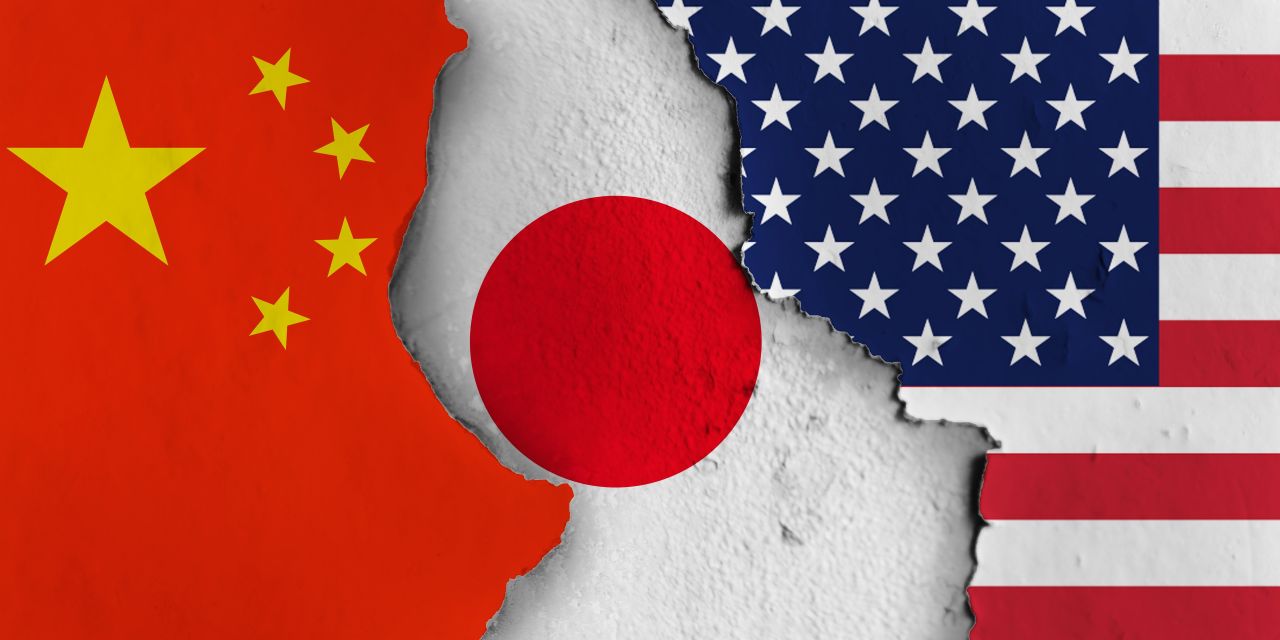
It was seemingly an unprepared remark and quite unnecessary. Prime Minister Sanae Takaichi said that Japan will defend Taiwan if Beijing tries to reunify China by force. China reacted with predictable wrath and demanded a retraction. The American reaction was surprising. President Donald Trump told Takaichi to stop provoking China. She would have expected American cheer and approval, yet America left Japan dangling.
What Takaichi said was no surprise though hitherto unarticulated. Japan will partake in an American-led defence of Taiwan. To be precise, she did not mention the ‘American-led’ part in her comment, but it is obvious that Japan is not prepared to take on China without American lead. She did say that a Taiwan contingency would threaten the survival of Japan.
The term ‘survival threatening’ is key, for that is the condition for the Japanese use of force abroad as set in the 2015 national security law. The law states that if an ally comes under attack and that attack is threatening the survival of Japan, then Japan can dispatch troops to fight. This momentous law marks the clear end of postwar pacifism.
The law chucked Japan’s strictly self-defense posture. It emptied the war renunciation clause of the nation’s constitution that proclaims: “Aspiring sincerely to an international peace based on justice and order, the Japanese people forever renounce war as a sovereign right of the nation and the threat or use of force as means of settling international disputes. … The right of belligerency of the state will not be recognized.” The national security law forged a Japan that can go to war in the name of collective defence.
Takaichi is a conservative nationalist. Conservative nationalists believe that a sovereign state possesses a usable military, so constitutional pacifist Japan is a moratorium state and wanting. They want to rewrite the constitution and reclaim sovereignty. With the dawn of the 21st century, the ruling Liberal-Democratic Party began to push hard for constitutional revision. But Prime Minister Shinzo Abe, in an extraordinary move in 2015, simply passed the national security law without bothering to revise the constitution, which was proving to be difficult and time-consuming. The foreign ministry curiously explained that the national security law is a reinterpretation of the constitution, therefore not unconstitutional.
The purpose of the law is to defend allies. Who are the allies? This was the question posed to Prime Minister Takaichi in parliament on November 7, 2025. She said Taiwan. Her predecessors had skirted wisely from naming any specific country.
Taiwan is not Japan’s ally in any formal sense. Japan does not even recognize Taiwan as an independent state. Japan has an official one-China policy.
Japan has an alliance treaty with only one country, the United States. It was America that pushed Japan hard to adopt the national security law. Japan’s participation in collective defence means Japan will likely have boots on the ground in the next American war anywhere if America so commands.
How much leeway will Japan have in assessing its survival threat in the next American war? An American warning of downgrading its security guarantee to a defiant or hesitant Japan will surely be seen as survival threatening. The law essentially allows and pushes the Japanese to fight alongside the Americans.
The alliance with America is of singular importance to Japan. Japan has made itself capable of going to war in order to maintain that alliance. There is no more constitutional restraint that prohibited Japan from fighting when America called upon Japan to ‘show the flag’ in the 1990-1991 Gulf War and demanded ‘boots on the ground’ in the 2003 invasion of Iraq.
Japan is in the midst of a rapid military build-up. The security establishment talks of enhancing deterrence capabilities vis-a-vis China. But China is not threatening to invade Japan. Then Japan is coordinating with and supporting American strategy. America’s China policy is about more than deterrence. For nearly two decades, it has been about rolling-back China and preserving American global dominance, to stop the ascendance of China deemed to be a peer competitor — strategically, technologically, politically and economically.
In response, Japan began to lighten its economic ties with China, prodding Japanese firms to invest elsewhere, forging alternate supply chains and generally diversifying, away from China. Japan even created a government cabinet post for economic security. Still China remains Japan’s greatest trading partner. Caught in the intensifying rivalry between China and the United States, and firmly committed to the American side, Japan has had limited room to consider the wisdom of participating in this vain American containment and roll-back strategy.
Then Trump saw the light. His tariff war with China was not working. He now wants to negotiate and cooperate with China, and is set to visit Beijing. So he told Takaichi to shut up.
Related articles:
The New Takaichi Administration: Confronting Harsh Realities on the International Stage (10-minute read)
Taiwan from the Japanese Perspective (10-minute read)
Masaru Tamamoto, writes on Japanese national identity and international relations. He was a senior fellow of the World Policy Institute and The Japan Institute of International Affairs, and an editorial board member of The New York Times. He held fellowships at the universities of Cambridge, Harvard, Princeton and Tokyo. He is a graduate of Brown University and holds a Ph.D. with distinction in international relations from Johns Hopkins University. .
AloJapan.com