
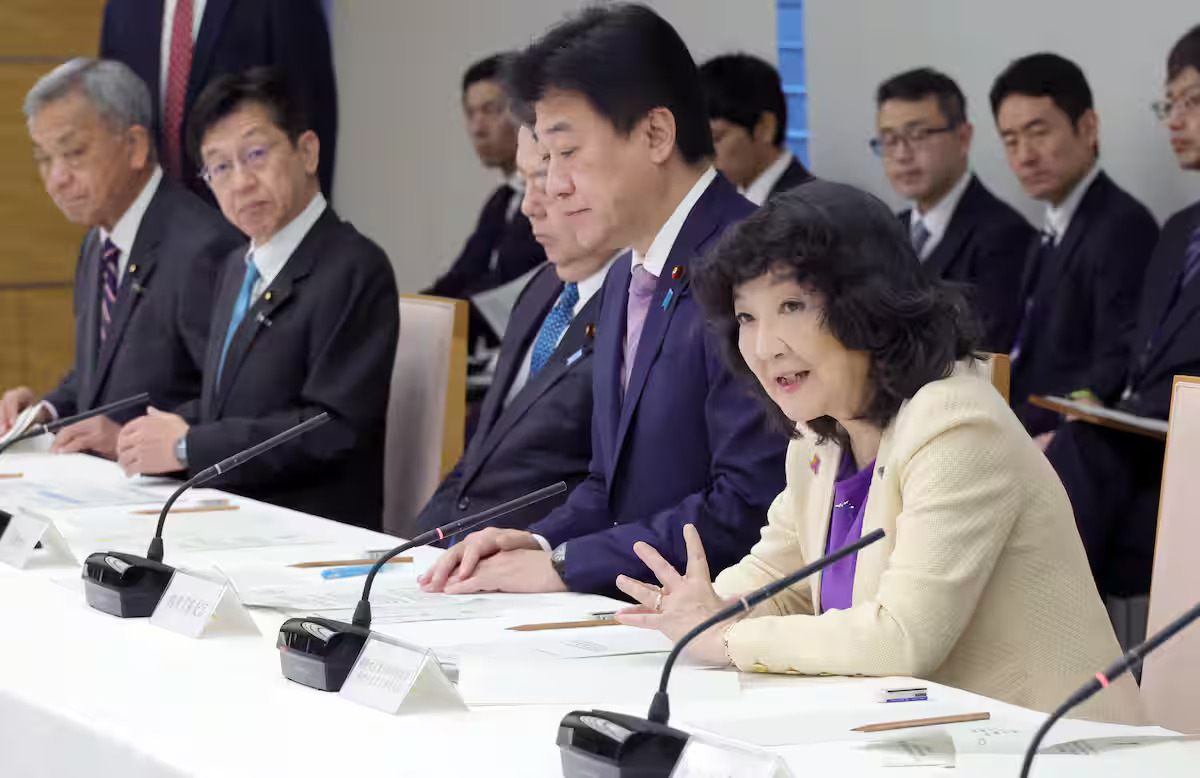
The Japanese government held the inaugural meeting of its ministerial council on reviewing special tax measures and subsidies on December 2.
Upon evaluating tax systems and unnecessary government spending, policies deemed ineffective will be revised or abolished. This initiative marks the start of Japan’s own Department of Government Efficiency (DOGE), modeled on a similar reform effort promoted by Elon Musk under the Trump administration.
“Any items in the FY2026 budget draft and ongoing tax reform proposals that could be reviewed immediately would be incorporated,” Finance Minister Satsuki Katayama, who heads the department, said at the meeting.
Full implementation is scheduled to begin with the preparation of the FY2027 budget, with plans to open a public consultation process within this year.
Budget Scrutiny Begins
Also in attendance were Chief Cabinet Secretary Minoru Kihara and deputy ministers from various ministries and agencies. They urged their respective bureaus to cooperate in submitting budget requests and tax reform proposals.
Each ministry and agency will first conduct self-assessments to identify wasteful spending by spring 2026, when they begin formulating their FY2027 budgets.
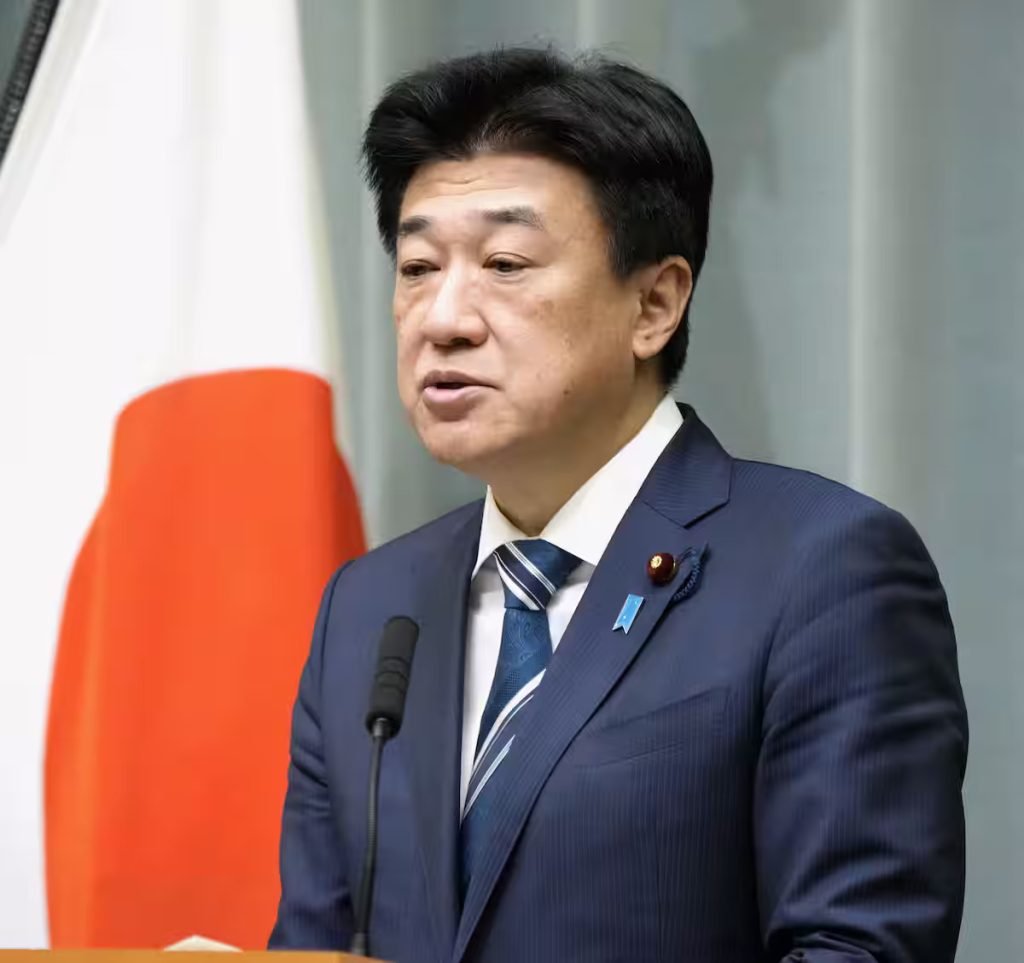 Chief Cabinet Secretary Minoru Kihara speaking at a press conference. November 19, Prime Minister’s Office.
Once the Basic Policies for Economic and Fiscal Management and Reform — the annual economic and fiscal policy guidelines issued around June — are formulated, these findings will be included in the preliminary budget requests.
The requests are then submitted by the end of August.
The series of measures will be implemented under the coalition agreement between the ruling Liberal Democratic Party and the Ishin no Kai.
Katayama Sharpens the Axe
With existing oversight mechanisms such as the Board of Audit and administrative program reviews proving insufficient, the government has also created an Office for Reviewing Special Tax Measures and Subsidies.
Katayama, who holds appraisal authority, will lead the team to ensure effective oversight. “I believe an open debate with other ministers would be appropriate,” the finance minister said, expressing her resolve.
Having previously served as the chief budgetary official for defense, where she pushed for reductions in the Ground Self-Defense Force’s personnel, Katayama is known as a hardline negotiator.
 Finance Minister Satsuki Katayama (left) shakes hands with US Treasury Secretary Scott Bessent before their meeting. October 27, at the Finance Ministry in Tokyo (pool photo).
Her social media has already drawn numerous comments from users. Many stem from concerns that taxpayers’ money is being used to favor specific industries, with insufficient transparency regarding its allocation.
For example, corporate tax exemptions amounted to ¥2.9 trillion JPY (about $20.7 billion USD) in FY2023. The research and development tax credit and the wage-increase promotion tax system, in particular, involve large amounts of money.
As such, concerns have been raised that they may disproportionately benefit certain industries or company sizes and not be effective overall.
 Balancing Reform and Resistance
At the same time, the latest move is certain to draw opposition from a wide range of industries.
Keidanren Chairman Yoshinobu Tsutsui said that for the special tax measures, “creating a well-balanced system and ensuring a regime that can compete internationally will be crucial.”
On the wage-increase promotion tax system, he added, “It’s vital for small and medium-sized enterprises and loss-making companies to secure stable funding for wage increases.”
Some in the financial markets have also voiced reservations over the new government’s expansionary fiscal policies.
Katayama, however, reiterated her determination. “This is a crucial element for gaining the trust of the public and the markets in implementing a responsible, proactive fiscal policy,” she said at a press conference following Tuesday’s Cabinet meeting.
RELATED:
Author: Aya Yonezawa, The Sankei Shimbun
(Read this in Japanese)
Continue Reading
AloJapan.com