
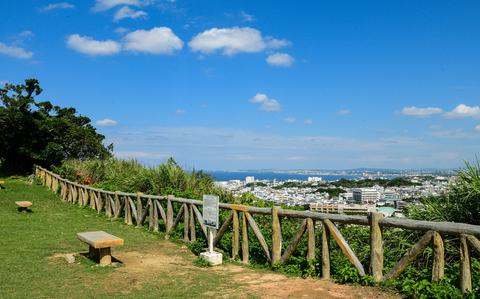
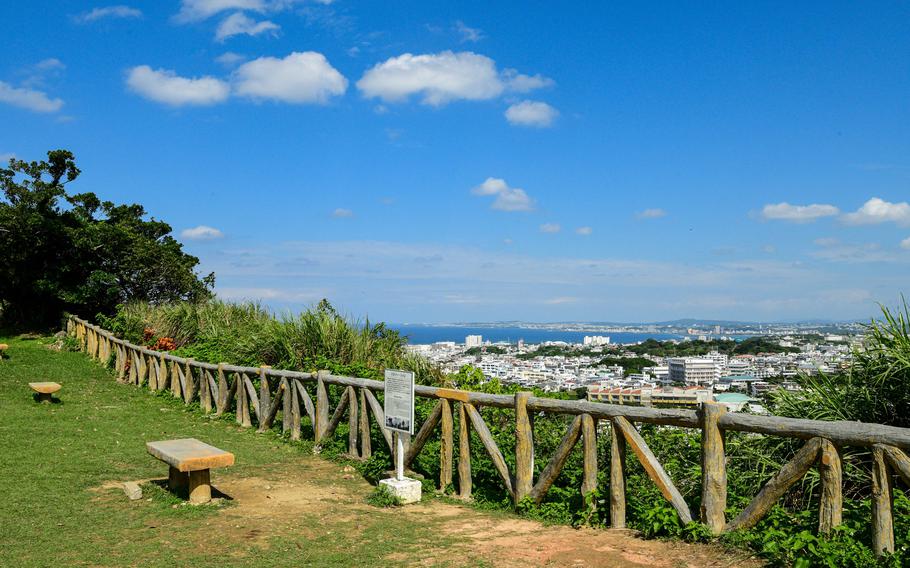
Hacksaw Ridge overlooks parts of Urasoe and Ginowan on Okinawa, Japan (Ryan M. Breeden/Stars and Stripes)
Some of the most grueling, blood-stained combat in the Pacific during World War II took place at Hacksaw Ridge on Okinawa, what is today a quiet, unimposing and scenic escarpment lined with homes along its embankment.
The site is one scene in the larger Battle of Okinawa that took place between April 1 and June 22, 1945, and one of the largest and bloodiest battles in the Pacific Theater. More than 200,000 Allied forces opposed a Japanese force of approximately 100,000.
Hacksaw Ridge, also known as Maeda Escarpment, is about 30 minutes northeast of Naha International Airport and offers visitors a unique blend of serene beauty and battlefield history.
Army Cpl. Desmond Doss, a Seventh Day Adventist and conscientious objector who refused to carry a rifle but served as a combat medic, earned a Medal of Honor for his deeds at Hacksaw Ridge. His story was popularized in the 2016 movie “Hacksaw Ridge.”
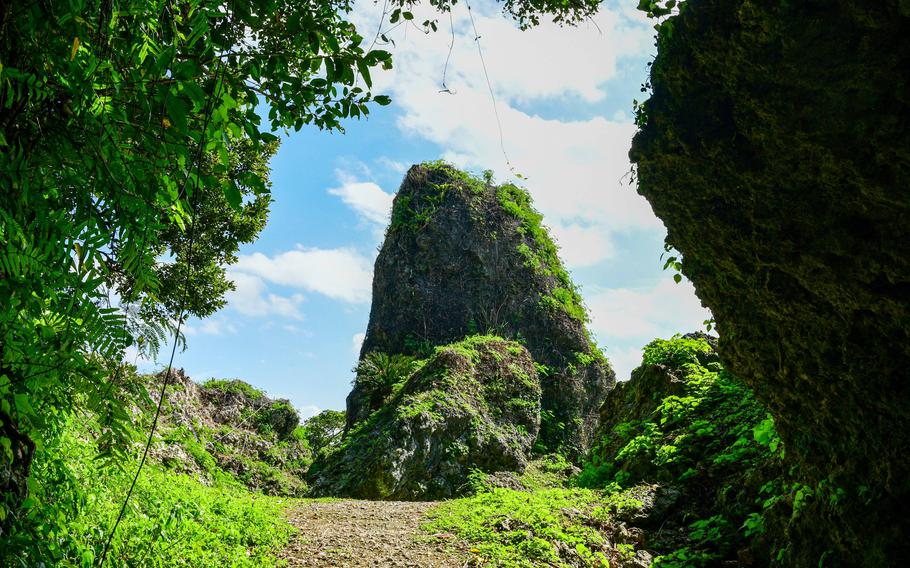
Needle Rock is a 42.7-foot monolith at the eastern end of Hacksaw Ridge and served as a key position during World War II combat at the site. (Ryan M. Breeden/Stars and Stripes)
The movie depicts the relentless efforts made by Doss, to rescue wounded soldiers by dragging them to safety under gunfire, then lowering them down the escarpment by rope. Altogether, he saved 75 men.
The site today is a short, comfortable walk from Urasoe Castle and also encompasses the Urasoe Yodore Mausoleum, Desmond Doss Point and the Maeda Heights Peace Monument.
More than a dozen Marines assigned to 3rd Battalion, 12th Marines were exploring the grounds of Hacksaw Ridge during my recent visit.
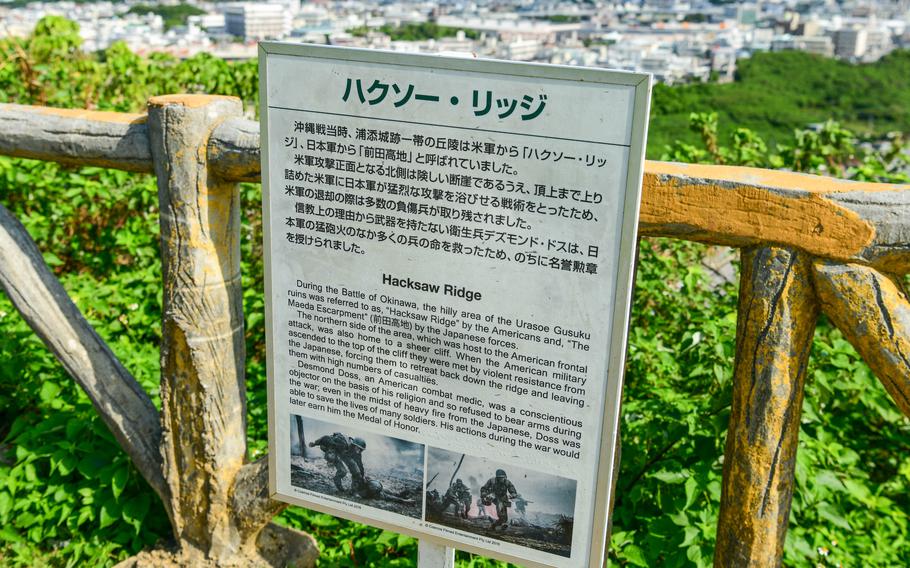
A plaque describing Army Cpl. Desmond Doss’ actions at Hacksaw Ridge stands at the edge of the escarpment. (Ryan M. Breeden/Stars and Stripes)
“It has been an enlightening experience. Being here gives a much better scale and idea of the type of terrain our guys saw during World War II,” said Sgt. Xavier Groth. “It’s terrifying to imagine the situations they faced and seeing the cave system underground.”
A visit provided a tangible link to a heroic chapter and an opportunity to visualize the obstacles within the chaos for those who fought there. Imagining it myself gave me a sense of somber serenity within the quietly encroaching vegetation.
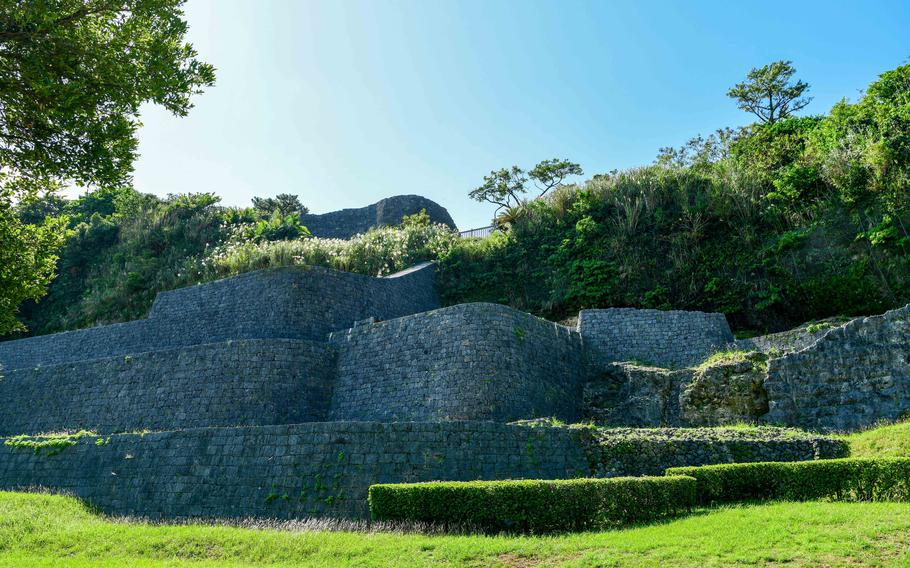
Remnants of Urasoe Castle on Okinawa, Japan, still stand despite the destruction and violence of the battle of Hacksaw Ridge in 1945. (Ryan M. Breeden/Stars and Stripes)
“If you got an interest in the history of the Pacific theater, coming to Hacksaw Ridge is worth it,” said Groth. “It’s a really informative experience and I recommend it to anyone who has an opportunity.”
Hacksaw Ridge is more than just about sightseeing; it’s an immersion into history, compassion and heroism. Walking on the same ground as those who fought there offers a profound appreciation for their sacrifices during that pivotal battle. The landscape may have changed, but its history endures and is a compelling reason to visit.
On the QT
Directions: 2 Chome-53 Nakama, Urasoe, Okinawa 901-2103. From Naha International Airport head north on Highway 58 for approximately six miles; turn right on Gakuen Dori to merge with Route 153 south for approximately two miles. Turn left following signs for Urasoe Castle Site.
Times: Open 9 a.m.to 6 p.m. daily
Costs: Entry to Hacksaw Ridge and Urasoe Castle is free; free parking with approximately 20 spaces
Food: The closest available dining is a 10-minute drive away.
Information: Tours of Hacksaw Ridge and other battle sites available through MCCS Tours +. Phone: DSN: 646-3502/098-971-3502, email: tours@okinawa.usmc-mccs.org. Online: www.mccsokinawa.com/tours
AloJapan.com