
The Izu Peninsula is celebrated for its wasabi, which enhances dishes like vanilla ice cream and soba noodles.
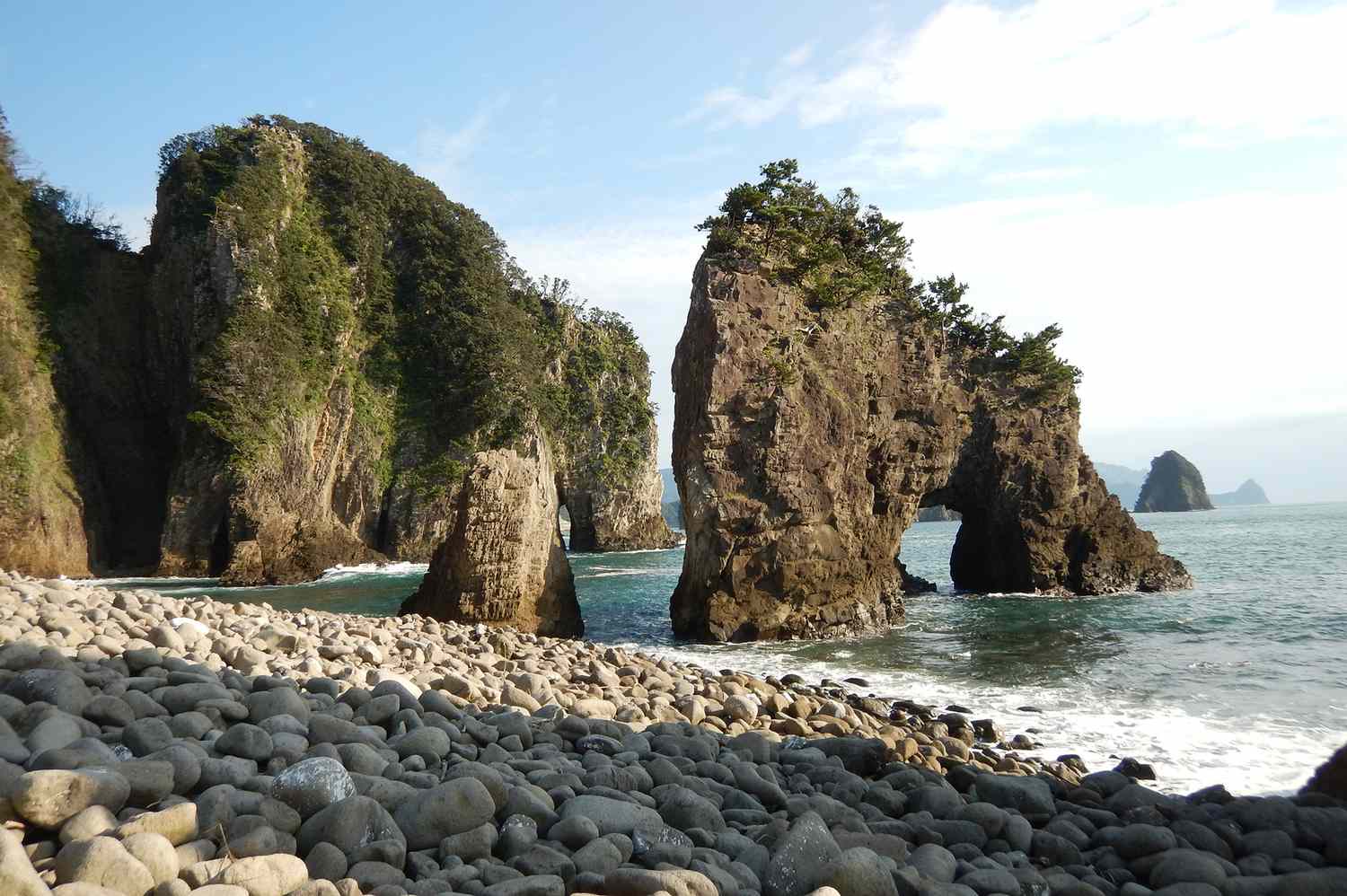
Visitors can enjoy stunning coastal cliffs, lush terraces, and the captivating Kawazu Seven Waterfalls hike.
The area offers traditional Japanese inns with hot springs providing a relaxing view of the Pacific Ocean.
The scent of wasabi wafted faintly in the air as I walked by terraces filled with the distinctive plants of Japan’s Izu Peninsula. The cool, shady mountain slopes were ideal for hiking, and the area’s abundant natural springs provide just the right environment for growing the famed wasabi. During the trip, my trekking companions and I didn’t just admire wasabi growing—we ate it just about every way possible, from a freshly grated dollop atop vanilla soft-serve ice cream to sprinkled over bowls of steaming soba buckwheat noodles with mountain yam and local vegetables.
Wasabi plants and an ice-cream cone topped with wasabi.
Kristen Pope/Travel + Leisure
I was on a weeklong hiking trip with Walk Japan to explore the Izu Peninsula, which is known not just for its wasabi and other delicious local cuisine, but also for its waterfalls, hiking, scenic coastal views, and incredible natural hot springs called onsen. “It really is a hidden gem inside Japan,” says John Sweeney, a Walk Japan tour leader who lives in Izu. “It’s well known to Japanese people, but to foreign tourists, the peninsula is still relatively unknown.”
To reach the Izu Peninsula, my group met our guide at Tokyo Station and hopped a train to Izu-Kogen, where we explored a small geological museum before heading out on our first hike. We walked and saw clifftop pine trees shaped by the wind—reminiscent of Japanese artwork—and listened to waves crashing on the rocks and reverberating through sea caves. That night, we soaked in an open-air onsen with views of the Pacific.
The Kawazu Seven Waterfalls.
Kristen Pope/Travel + Leisure
Each day, we walked with constantly changing scenery, from terraces of growing wasabi plants to gorgeous coastal cliffs and into a gorge with a seemingly endless parade of falling water known as the Kawazu Seven Waterfalls.
On the fifth day of our trip, we summited a mountain to a viewpoint where we saw a tiny glimpse of Mt. Fuji’s flanks poking out from behind a shroud of clouds. The rest of the sacred mountain—Japan’s tallest peak—was hidden, but our guide encouraged us to be patient. Find a spot to rest and relax, he said. Just wait.
A view of Mt. Fuji seen from the west coast of Izu.
Walk Japan
“In your busy life, you don’t have much time to wait for clouds to pass,” he said. So, we sat and breathed in the forest’s earthy scent, appreciated the vibrant colors, and listened to the gentle breeze.
Eventually, our patience was rewarded. The clouds parted, and Fuji-san emerged to show off its snowcapped peak before the clouds once again obscured it from view, leaving us instead to admire Suruga Bay below.
The coast was intertwined with every aspect of our time on Izu Peninsula, from watching waves crash on seaside rocks and inhaling the salty sea scent and seeing shrines nestled by the water, like at Shirahama Shrine’s torii gate.
The Shirahama Shrine’s torii gate.
Walk Japan
The proximity to the ocean also shaped what we ate each day, including the meals we enjoyed at ryokan, traditional Japanese inns with tatami-mat floors and communal baths. Sweeney said many of the meals during the trip are in “kaiseki-style, which focuses on seasonality and what’s around the peninsula.”
These delicious multicourse feasts focused on local seafood like sea bream, lobster, squid, and crab, with wasabi prominently featured on some menus, of course. We had a wasabi hot pot dinner with Amagi gamecock soup and local vegetables, as well as delicacies like fresh grilled bamboo shoot, sashimi with Amagi wasabi, steamed scallop dumplings, stewed cherry blossom radish, and an array of desserts such as black rice jelly and strawberries and fresh cream.
Before setting out for our hike one day, we stopped at one of the last remaining factories making traditional katsuobushi (aka skipjack tuna or bonito flakes). There, fifth-generation proprietor Yasuhisa Serizawa carries on the tradition with his family’s Kanesa Dried Bonito Store, founded in 1882. Serizawa uses traditional methods to produce katsuobushi, and he hosts workshops to teach visitors like us about the history and production methods. He showed us his factory, and told us about his method of salt preservation before pulling out a tool resembling a planer and shaving off paper-thin slices of the flavorful salty dried fish for us to enjoy. While katsuobushi used to be made all over Japan, only a few producers remain today, so it was a special treat to see his family’s work.
Our days on Walk Japan’s Izu Geo Trail tour were full of learning, hiking, and eating delicious local foods, and I always looked forward to soaking in the onsen that were often available at the ryokan where we stayed. These ranged from shared, open-air hot springs to a private in-room bath, where I soaked by the large open window while watching a storm roiling the sea outside.
Watching ocean waves, listening to the crashing sounds of the ocean, soaking in hot onsen, inhaling fragrant growing wasabi, and tasting the incredible seafood all helped me slow down and engage my senses in the Izu Peninsula. It’s also a great place to watch and wait on the clouds—they might just part and provide a perfect peek at Mt. Fuji.
AloJapan.com