
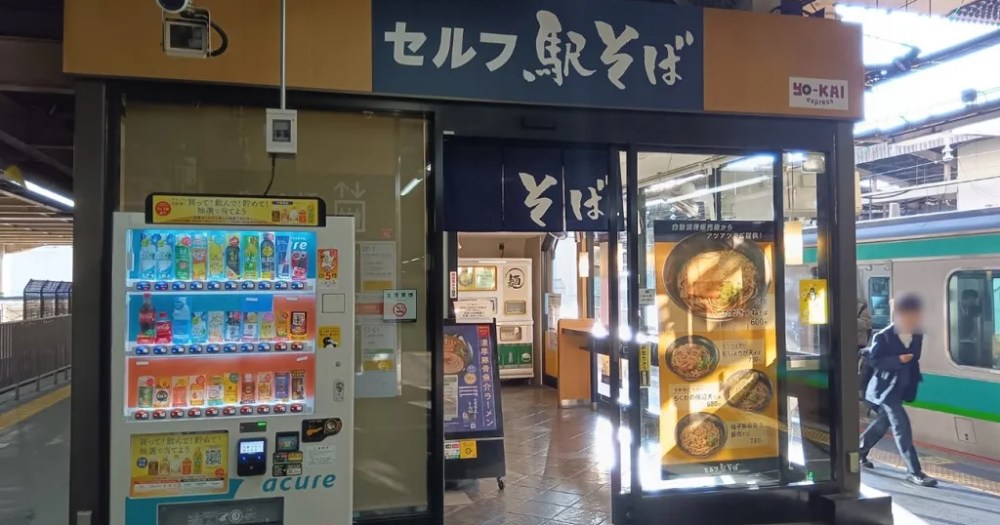
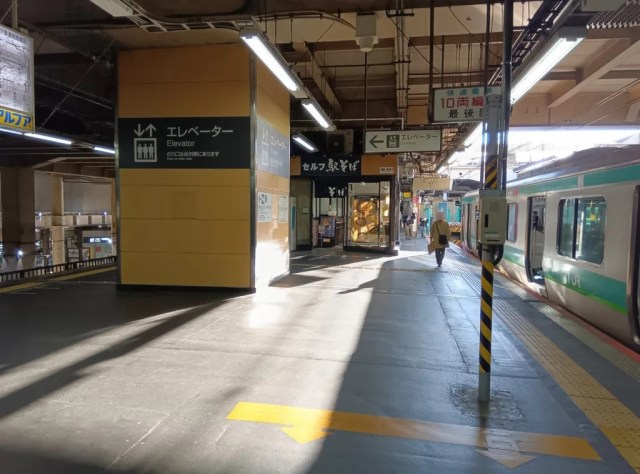
A reason to make sure to walk all the way to the end of the platform.
Having somewhere you need to go and being hungry aren’t mutually exclusive conditions, and so many of Japan’s train stations have places to grab a bite to eat inside the ticket gates. Among the most common station restaurant types are soba noodle stands, sometimes located right on the platform and run by a short-order cook who can whip up a bowl for you to quickly scarf down before hopping on your train. For example, if you’re at Ueno Station in Tokyo, you’ll find the soba stand Sotei in the middle of the Joban Line platform, between tracks 11 and 12.
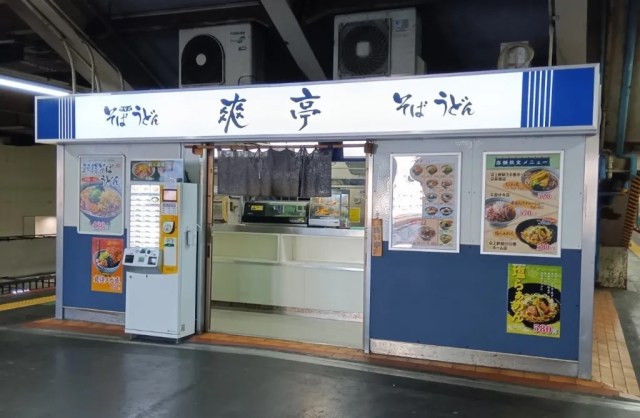
But since Ueno is one of Tokyo’s busiest stations, with roughly half a million users on any given day, Sotei isn’t its only restaurant, nor is it the station’s only soba shop. As a matter of fact, it’s not even the only soba joint on the Joban Line platform, because if you keep walking all the way to the end of the platform, there’s another.
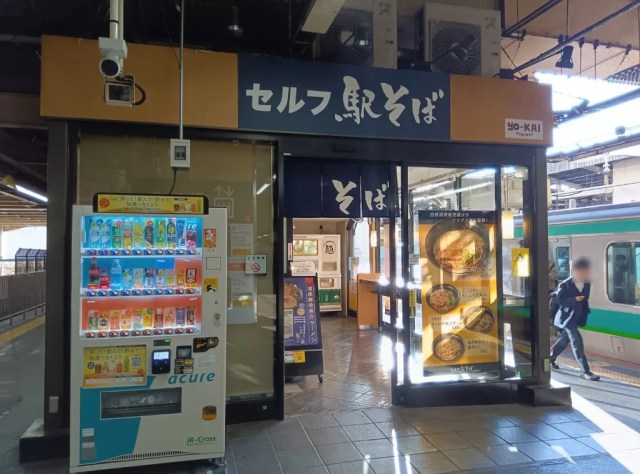
It’s kind of unusual for two different restaurants that specialize in the same kind of food to share a platform like this, but that’s not the only unique aspect to this arrangement, as indicated by the second soba restaurant’s name, Self Eki Soba, meaning “Self Station Soba.”
▼ “Self Eki Soba”
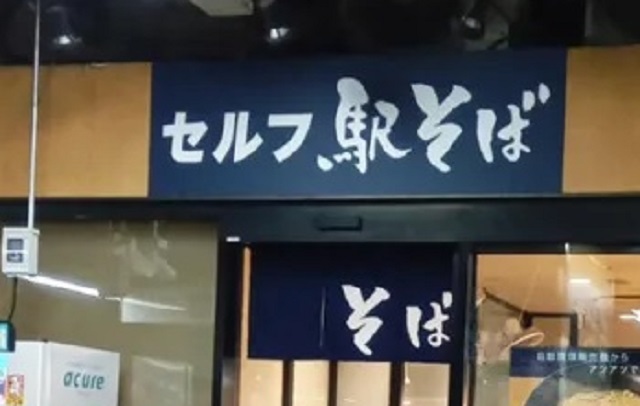
“Self” often gets used in Japanese in the sense of “do it yourself” or “self serve,” and sure enough, when we stepped inside we saw that there’s no cooking or service staff here, just a bunch of counters and a terminal with a screen in the corner.
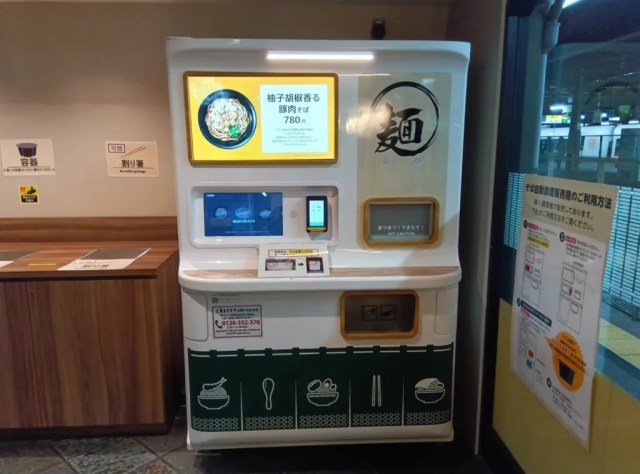
But while there’s no one at Self Eki Soba to cook your noodles for you, you don’t have to cook them yourself either, because that terminal is actually a soba cooking /vending machine.
Self Eki Soba is open from 6 a.m. to 11 p.m. on weekdays, 6 a.m. to 10:30 p.m. on Saturdays, and 6:30 a.m. to 10 p.m. on Sundays and holidays. Those closing times are actually kind of flexible, though, since it closes early if is sells out of noodles, which it already had on the weeknight we discovered it at about 9 p.m. We took this as a sign that the noodles must taste pretty good, if Self Eki Soba has enough customers to sell out two hours before closing, and so we came back on a later day in the afternoon.
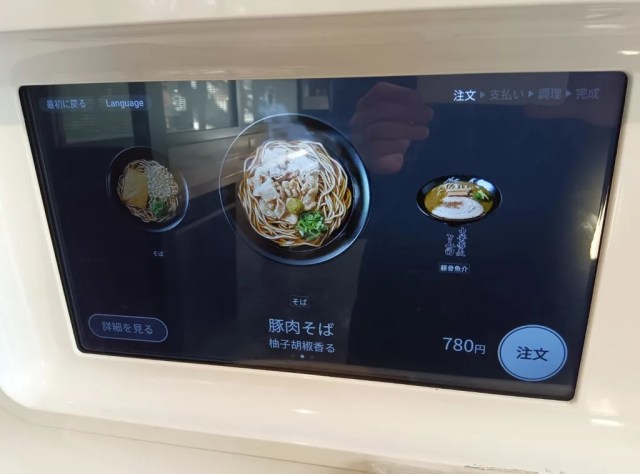
Three kinds of noodles are on offer, a basic tanuki soba (buckwheat noodles with tempura flakes) for 600 yen (US$4), soba with pork for 780 yen, and a tonkotsu gyokai blended pork/fish-stock ramen for 980 yen.
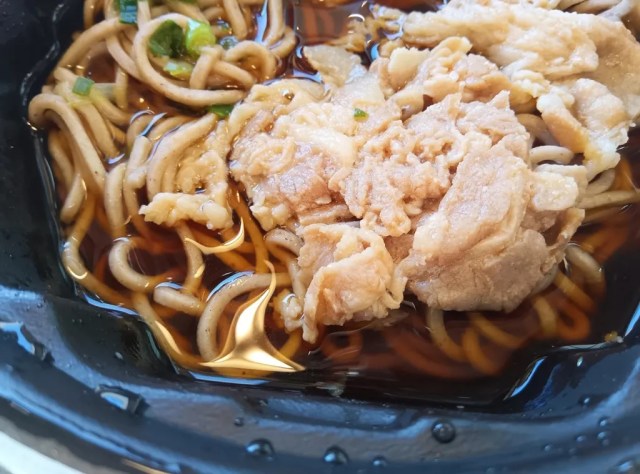
▼ The pork soba
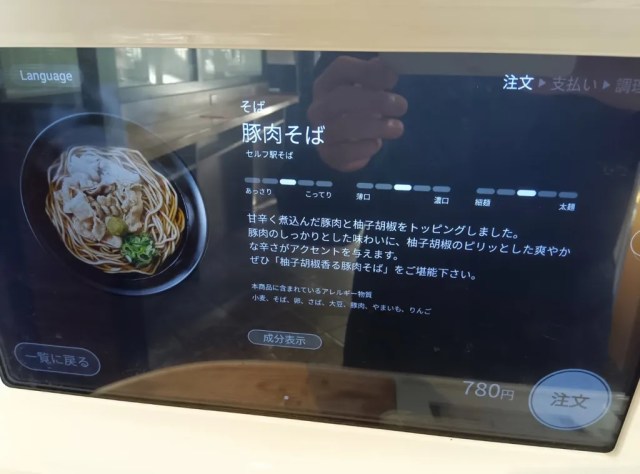
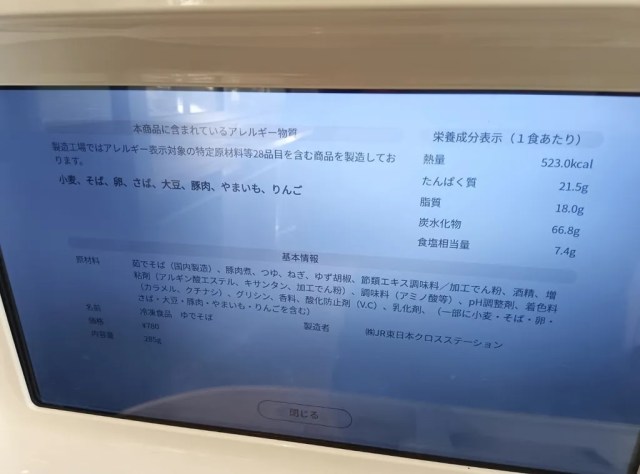
You place your order via the terminal’s touchscreen, which has an optional English-language setting that you can switch to, and you can even tap for more information about nutritional content and allergens for each dish.
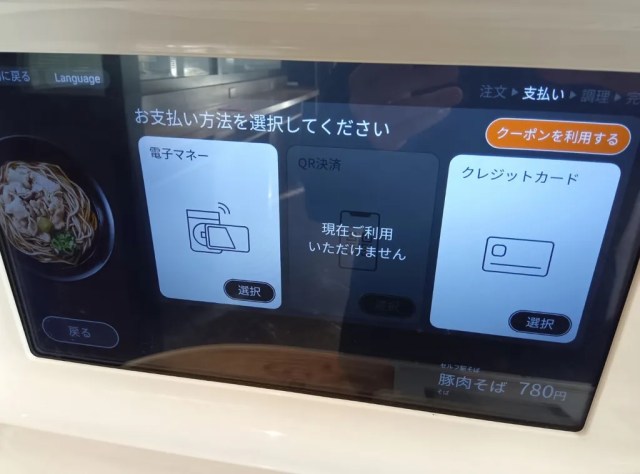
Payment is by cashless means only, either a prepaid e-money card like the Suica rail pass or credit card.
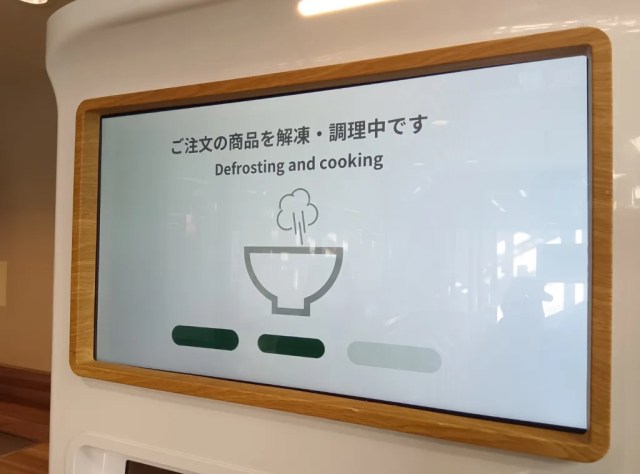
We decided to order the soba with pork, and the screen kept us updated on its cooking progress.
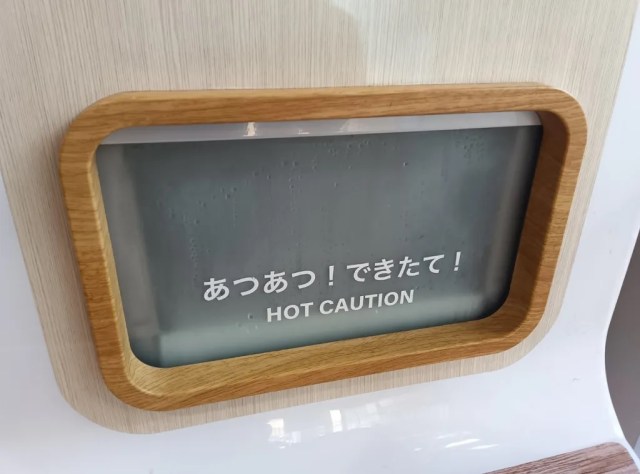
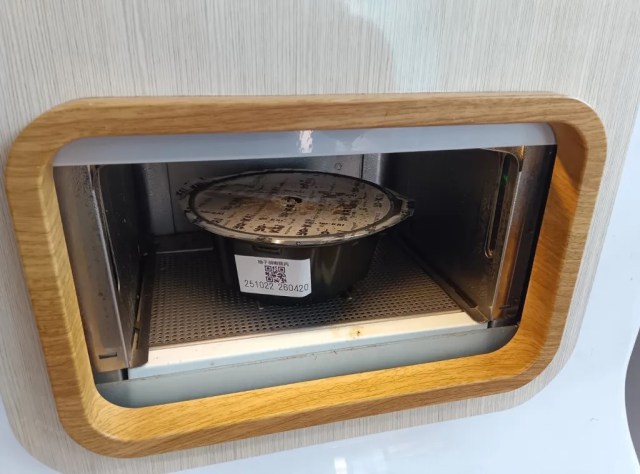
After a short wait, our noodles were ready to be retrieved from the opening on the right side of the machine.
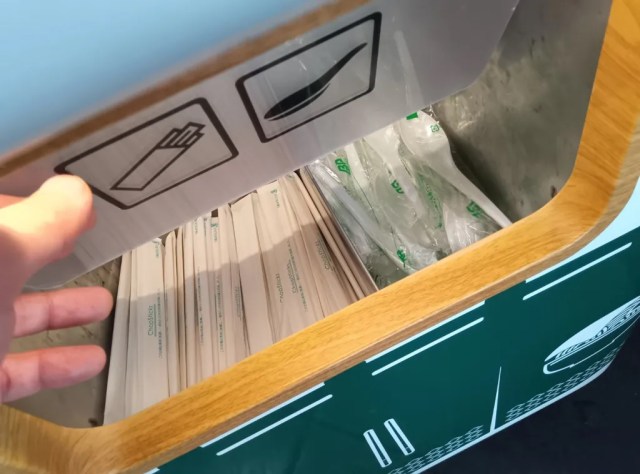
Below the slot where you get your food is another compartment from which you can grab chopsticks and, if you want, a spoon.
Removing the cover from our bowl, we saw our noodles, strips of pork, and diced green onion floating in the soba broth.
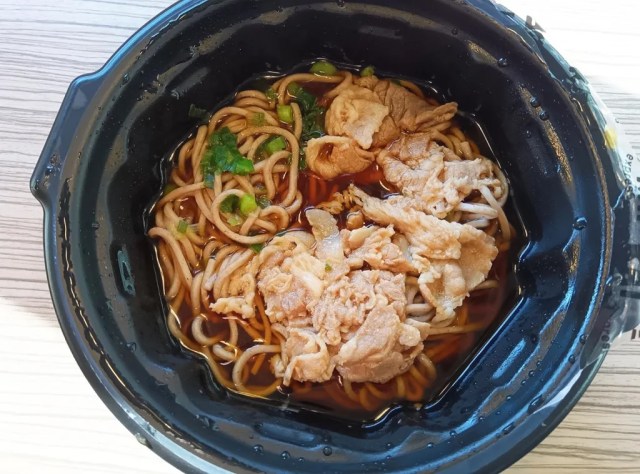
On the one hand, for something machine-made, this doesn’t look half-bad, but it’s not aesthetically on par with something you’d get served by an actual dedicated ramen chef. Still, the most important thing is how it tastes, and it actually tastes really good.
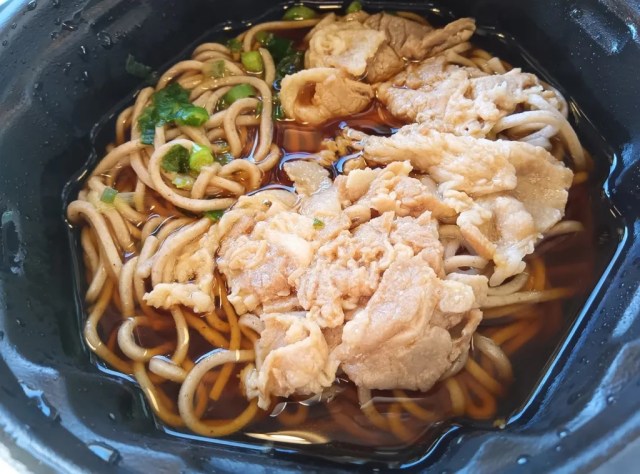
The broth was rich with a gentle sweetness to it, and the noodles and pork had soaked up plenty of its delicious flavor. The noodles had a proper buckwheat flavor to them too, something that’s not always present in cheaper versions of soba.
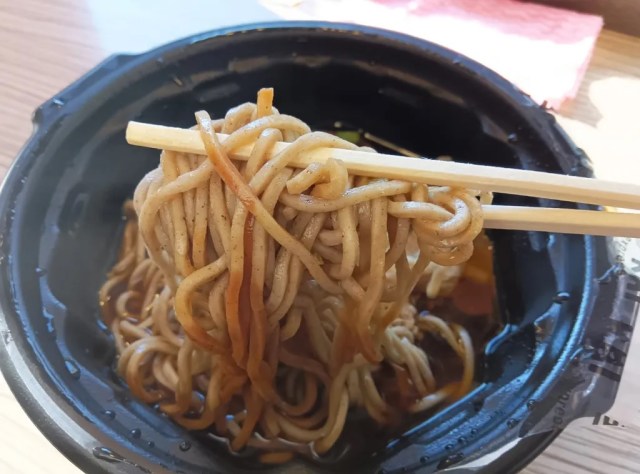
Adding an elegant touch to the flavor profile was the presence of yuzu kosho, a spicy paste made with yuzu citrus fruit and chili, which had been mixed into the broth. This also isn’t something you’d expect to find at a humble station platform soba joint, but it added an enticing accent to every sip of the broth.
Oh, and the restaurant’s interior was nice and clean too, through a combination of either cleaning staff coming in periodically and/or customers being polite enough to not make a mess of the place.
Because of its location at the end of the platform, it’s easy to miss Self Eki Soba, especially since Ueno Station has so many lines running through it that you often don’t have a clear line of sight from other parts of the building either because of trains blocking your view. Now that we know it’s there, though, we might find ourselves on the Joban platform more often, even if we’re headed somewhere on another line.
Photos ©SoraNews24
● Want to hear about SoraNews24’s latest articles as soon as they’re published? Follow us on Facebook and Twitter!
[ Read in Japanese ]
Like this:
Like Loading…
AloJapan.com