
Opinion
 Kate AllmanWriter and broadcaster
December 2, 2025 — 4:00am
December 2, 2025 — 4:00am
Save
You have reached your maximum number of saved items.
Remove items from your saved list to add more.
Save this article for later
Add articles to your saved list and come back to them anytime.
Got it
With bargain flights, a generous exchange rate, and legendary snow, it’s no surprise thousands of Australians are spending their summers in Japanese ski resorts.
Japan National Tourism Organisation figures show almost 1 million Australians visited Japan last year. That’s double the previous year. And when it comes to skiing and snowboarding tourists, Australians top the list.
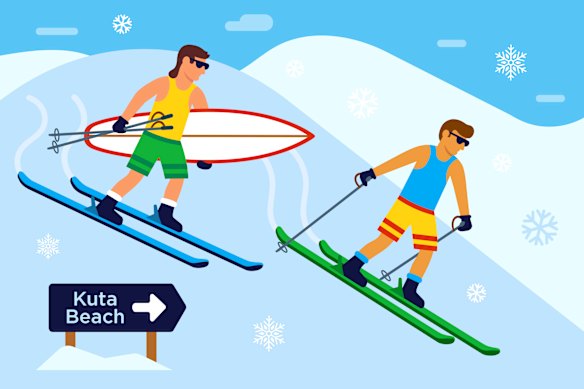 Want to avoid the crowds of Australians? Then head to the Rocky Mountains.Illustration: Greg Straight
Those who go, know: a Japanese “yuki” (powder snow) experience can be phenomenal, accessible and affordable. I first skied Niseko in 2006 and was blown away by the other-worldly haze of endless snowstorms, onsens and hot pots. I’ve been back to more than 10 different resorts from Myoko Kogen to Rusutsu.
But you won’t find me booking a ski trip to the big Japanese resorts right now – here’s why.
Hype around skiing in Japan is approaching gross levels. Insufferable tattooed bros slug vending-machine beers and bellow through village streets, while TikTok videos reveal the insane, hours-long lines people endure to get on ski lifts. Once-edgy choices like Hakuba and Niseko are being dubbed “Bali on the snow”. The cultural cringe peaked in a viral video posted earlier this year of a Japanese man confronting two Australian tourists for smoking in a prohibited area, unaware of the restriction.
Meanwhile, the soaring US dollar, Trump politics and inflation are turning many Australians away from their former North American snow favourites and sending them to Japan. Colorado Tourism Office is reporting that Australian traffic to the US’ snowiest state is one third of what it was pre-pandemic. In fact, Australians no longer feature among the top 10 list of overseas arrivals to Colorado – at its peak, around 2014/15, Australians topped the list of international skiers there.
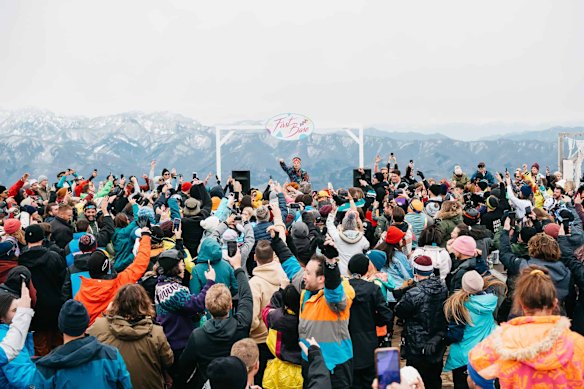 Crowds at Snow Machine Hakuba Valley music festival… Hakuba is gaining a reputation as a “Bali on the snow”.Pat Stevenson
Anecdotally, this checks out. On a Colorado ski trip in February 2025, I did not meet a single Australian – a feat previously unheard of. We’ve left such a hole that many resorts are trying to lure us back with bargain-basement deals exclusive to Australians, like skiing at Aspen for the equivalent of $60 a day (a day pass bought at the resort can cost up to $US279/$430).
Canada has dropped off to a lesser extent, with numbers of Australians visiting in 2025 down 20 per cent compared with 2019. A mountain town formerly known as “Whistralia” might just be called Whistler for now.
Yes, there are remote Japanese ski areas not yet spoiled by Australians – after all, the nation has over 500 ski resorts, but many of them are challenging to access, especially if you don’t speak the language or are nervous about driving in snow. Yes, your spending on the ground will be higher in the US. But with more space and shorter lines you could score twice as many runs.
The Rocky Mountains are vast and have longer seasons that disperse crowds well. Snow stays fresh in places that double Japan’s height – for example the peak of Breckenridge Ski Resort reaches 3914-metre elevation, while Hakuba gets to 1831 metres. Niseko stretches 886 hectares of skiable terrain, while Vail engulfs it with 2151 hectares.
Related Article
Speaking of crowd numbers, ski resorts rarely publicise theirs – but average daily skier numbers at a large resort like Niseko can be upwards of 20,000 a day. Locals at Powderhorn, a small independent mountain with which I’m smitten in western Colorado, will hate me telling you this – but the number there reaches about 1500.
At Big Sky in Montana, one of the largest ski areas in North America spread across 2367 hectares of terrain, just 1 per cent of skiing visitors are from international destinations.
“I would say it’s still rare to meet someone from Australia in Big Sky during the ski season,” says Megan Munley at Big Sky Resort.
Plus, it might not cost as much as you think. At the time of writing, a return flight in the January school holidays from Sydney to Denver, Colorado starts from $2200. Meanwhile, airlines are selling return flights from Australia to Tokyo over the same dates for at least $2500 – many closer to $3000. The dire state of the Aussie dollar looks to be improving, too, with experts predicting an early 2026 spike against the US dollar to over 70 cents (levels last seen in 2022).
Finance gurus say it’s best to buy stock in a downturn. My advice for ski travel is similar: head for the slopes everyone else is avoiding.
Because the true value of a ski destination is measured in the fresh tracks you claim before anyone else arrives.
Sign up for the Traveller newsletter
The latest travel news, tips and inspiration delivered to your inbox. Sign up now.
Save
You have reached your maximum number of saved items.
Remove items from your saved list to add more.
 Kate Allman is a Sydney-based travel writer, sports journalist and broadcaster. Her globe-trotting adventures regularly coincide with American football games or other major sports events. Outside the commentary booth, she’s most at home when powder skiing in the Colorado Rockies. Follow Kate on Instagram and X @kateallman_From our partners
AloJapan.com