
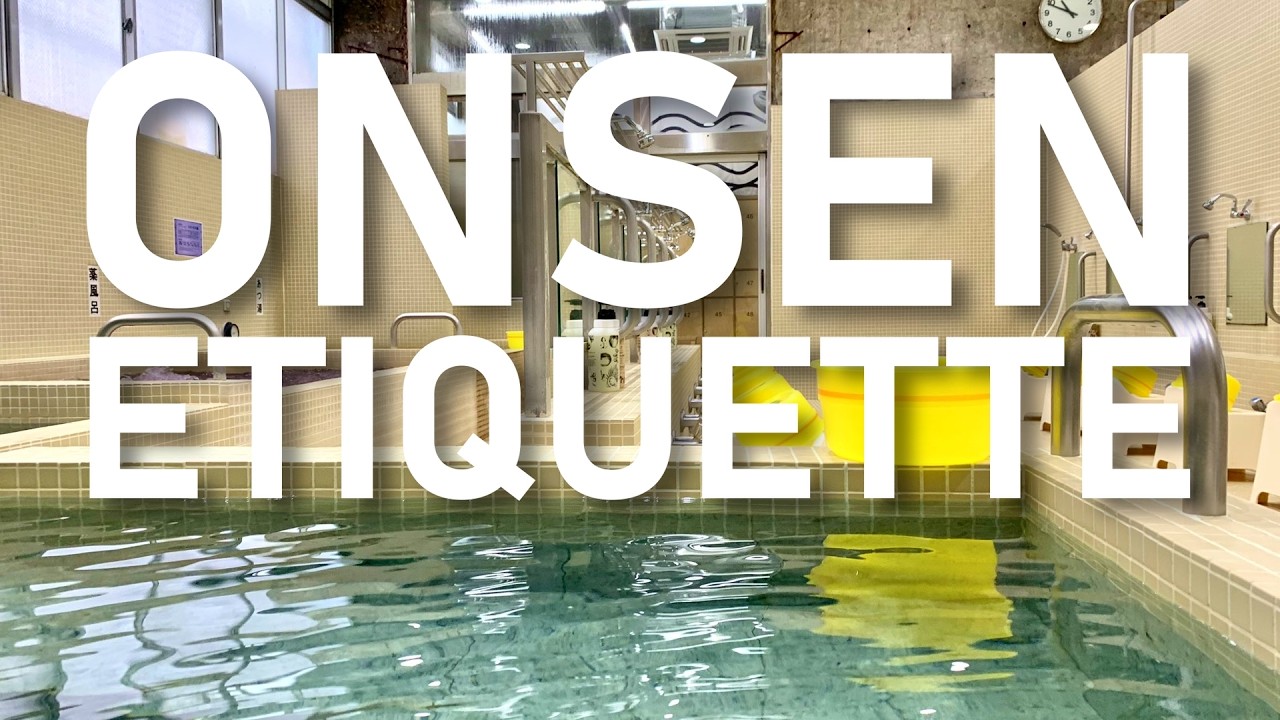
Japanese Onsen Guide – What to Expect and the Rules You Need to Know
Bathhouses are a brilliant way to spend time in
Japan, but they can be a little intimidating. This video is a step by step guide to the rules
and etiquette of using sento and onsen in Japan. Hey this is Kampai Cam and one of my absolute
favourite things to do in Japan is to soak away my stresses at a local bathhouse. For
me, they’re the ultimate way to relax, reflect and rejuvenate. If you’ve never
been to an onsen or a sento before, however, you may find the idea a bit intimidating,
as not only is there the language barrier, but also the rules and customs that
come along with bathhouse culture. This video will take you through what you
need to know about using Japanese bathhouses, whether you’re popping quickly into
a tiny neighbourhood sento or you’re spending the day touring an entire onsen town. But first, what’s the difference between
a sento and an onsen? The kanji used in the word sento combine to mean “paid bath”
and the word itself simply means bathhouse, as opposed to onsen, which
means hot spring. A sento, then, heats up regular water, whereas an onsen
draws some or all of its water from a natural, geothermally heated hot spring source – of
which there are something like 27,000 in Japan! You’ll come across both travelling around the
country, and every type of bathhouse has its own appeal. A traditional sento, for instance,
is where you would see a giant Mt Fuji mural on the back wall. These establishments
are generally small and utilitarian, with the men’s and women’s areas divided by a
low wall in the centre of the room. In terms of layout, they typically have a few stalls for
washing and only one or two baths to soak in, and sometimes a small sauna. A super sento, on the
other hand, is much larger, with a wide array of baths and facilities like saunas, relaxation
rooms and restaurants. A sento is somewhere you go to get clean and have a quick soak. A
super sento is somewhere you can spend the day. Onsen vary just as drastically in size, from tiny,
single bath establishments to large complexes. Thankfully, the basic rules of etiquette
are all the same. Before we get to those, however, let’s run through the process
of actually entering a bathhouse. The first thing you do after walking in
the door is to take off your shoes. These typically go in a shoe locker (often using
100 yen coins, which you’ll get back later), but sometimes the bathhouse might provide
a bag to put them in. Most bathhouses will have a vending machine to buy an entry
ticket – and Google Translate is your friend here if there’s no English – but
if not you can go up to the counter and say “hitori onegaishimasu” (“one person please”)
or “futari onegaishimasu” (“two people please”). Entry to a bathhouse can be anywhere from
400 or 500 yen for a basic sento through to 3000 yen or more for the full Spirited
Away treatment. The vast majority of bathhouses have you pay on entry, and for
those it’s best to have some cash on you, because many of the ticket machines still
don’t accept cards. Some larger places, such as the Manyo Clubs in Tokyo, Yokohama and
Kobe, will give you a wristband you can use to pay for drinks, meals and the like, and
then you settle the balance as you leave. Use of the sauna will often be an additional
charge for the more budget-friendly bathhouses, and different establishments handle
giving you access in different ways. A few that I’ve experienced include
swapping my shoe locker key for a special wristband or a string neckband at the
front desk, being given an actual key – well, a hook for opening the sauna door, at least
– and being given a special towel that you wear in the sauna and leave on a shelf outside
otherwise. There may be many different systems, but it’s generally pretty obvious what you’re
supposed to do once you’ve visited reception. The major wildcard when going to a bathhouse
is whether they provide towels or not. The standard loadout is to have a small towel
that you carry while bathing and a larger towel for drying yourself when you’re done. More
expensive options almost always provide these, but more basic establishments usually
don’t. I typically carry towels with me, but if you don’t do that and the bathhouse
doesn’t provide them then you’ll need to either rent towels or sometimes even buy towels.
Typically it’s a pretty small additional fee. Most places usually also provide soap and shampoo, but sometimes – particularly for smaller sento
– you might need to bring your own or buy some. Once you’ve paid you’ll go through
the relevant curtain – often but not always blue for men and pink or red for
women, each with the appropriate kanji, but if you’re in any doubt just ask – and into
the changing area. Some fancier places may also have the option to pick up a yukata before going
through, which will then give you something to wear outside the bathing area when you’re
finished. Onsen hotels, also, simplify the process a heap as you can just leave your room
wearing a yukata and carrying towels if needed. Once you’re in the male or female changing area,
pick a locker or go and find your locker if you were assigned one by the front counter. Strip
naked and put all your clothes and stuff into your locker, aside from your hand towel if
you’ve been given one already. The locker key will likely be on a stretchy wristband so put
that on your wrist or slide it up your arm. If there are no lockers, incidentally, there’ll
be baskets for you to leave your clothes in. And now you’re ready for the bathing area,
so grab your hand towel and go on through! Before you can soak you need to get clean.
The bare minimum is to either rinse off at a shower or to scoop buckets of water over
yourself, either from the kake-yu station at the entrance (this literally means “throw hot
water” by the way) or if that’s not an option, using water from the baths themselves.
It’s best, however – particularly as a foreigner – to clean yourself properly, so the
rows of individual stations as you enter will be your first port of call. Some bathhouses
have shelves in this area where you can leave your large towel and toiletries, but I
usually just leave that stuff in my locker. Sit yourself down at a station on one
of the little stools. In front of you will most likely be a plastic
bowl or wooden bucket, a tap, a detachable shower head and a range of plastic
bottles with body wash, shampoo, conditioner and possibly face wash and shaving cream. Clean
yourself thoroughly and rinse away all the suds. You can also use the face washer to give yourself
a good scrub, but be sure to rinse it and wring it out thoroughly when you’re done. Once you’re
clean and sud free, splash clean water on the chair you’ve been sitting on as a courtesy, put
everything back where it was, then head over to the baths. Oh, and if you have long hair tie it
up – getting your hair in the water is a no no. Now comes the main attraction – testing
out all the facilities. Every bathhouse I’ve been to has a different mix. Some baths
are about the material of the bath itself, some are about the mineral
composition of the water, some play specifically with temperature,
and others are all about ambience. Let’s quickly run through some of the main types
of baths and other attractions you’ll encounter: Rotenburo simply means “open-air bath” and
is typically one of the main attractions if a bathhouse has one. Depending on where you
are, a rotenburo may have a spectacular view, be ensconced in a gorgeous garden, or
simply be sitting in a small courtyard that’s open to the sky. Bigger complexes
will often have several outdoor baths, from large circular affairs to sprawling,
rustic rock baths with mini-waterfalls. Tsubo-yu are ceramic one-person pots and
are among my favourite ways to bathe. Whether you’re sitting with your legs
pressed against the inside of the tub, or you’re dangling various limbs above the rim,
I find these incredibly comfortable to relax in. These baths are made from hinoki, a cypress
native to Japan and have a strong, soothing smell. Many bathhouses will have individual bays
with underwater jets to pummel your back and legs. Sometimes you’re reclining or sitting,
other times you’re standing in deep water. These waterfall baths have water cascading down
in one or two streams that you can position your shoulders or neck under for a massage.
Sometimes you’ll be sitting in water, sometimes you’ll sit in a shower-style cubicle. Ever soaked in water infused with coffee?
Hibiscus? Green tea? How about cherry blossoms? Many onsen and super sento have a bath which
they use for different infusions and aromas. While you can certainly come to a
bathhouse for a schvitz, carbonated baths are more about enjoying a spritz.
The fine bubbles throughout produce a light tingling sensation on the
skin. These are super relaxing. Silk baths are similar, but with such
incredibly fine bubbles that the water turns milky white. As the name suggests
these baths leave your skin feeling silky. Radium baths use spring water that’s slightly radioactive but is purported to
have numerous health benefits. Nekorobi are stone or tile beds
covered by an inch or so of warm water, letting you lie down and enjoy the
contrast between the water and the air. If you see a bath with narrow white
rectangular strips mounted under the water, you may be in for a shock, literally. Known as
“electric baths” these have a low level electric current running through them which is supposedly
good for things like rheumatism. Personally, I hate the sensation and this is the only bath
in the world of onsen that I always avoid. Foot baths are typically found in communal areas
within a super sento or out on the street in onsen towns, and as the name suggests,
are a spot to sit and soak your feet! Most bathhouses have some kind of sauna, and
bigger complexes sometimes have two or three. The standard is a Finnish-style dry sauna
with the temperature set somewhere between 80 and 100 degrees celsius. These range from tiny
rooms with only a single bench through to large, tiered seating that can accommodate 10-20 people.
My favourites are made from hinoki cypress giving them a warm aesthetic as well as a subtle,
pleasant aroma. Many saunas, for better or worse, have TVs broadcasting whatever happens to be on –
if you’re lucky that’ll be some baseball or sumo, but if not, it’s easy enough to tune
it out. Thankfully, some saunas just pipe in chill music or birdsong. As you’d
expect, in addition to a temperature gauge, saunas will also have a special clock
so you know how long you’ve been inside. Steam saunas are also popular, and
have lower temperatures but really high humidity and sometimes herbal infusions.
You’ll also come across salt saunas, which are tiled and humid like a
steam sauna, only with a big bucket of salt – and sometimes moisturiser – that
you can rub into your skin to exfoliate it. Mizuburo is the cold water tub
and while it may sound strange, to me it’s the most integral part of any
bathhouse. Why? Because there’s only so long you can enjoy a super scorching sauna or a
steaming hot bath before you need to cool off. Plunging into the mizuburo is like hitting
the reset button on your onsen experience only better. If you drop your body temperature
low enough, you can hop back into the hottest of hot baths and it’ll take quite a while for your
body to properly register the heat again. One tip – it’s a good idea to acclimatise a little
by splashing some of this water over yourself before hopping in, because the best mizuburo
are quite cold – 13 to 15 degrees celsius. And if submersing yourself in cold water
is a bit much, keep an eye out for plastic chairs or recliners around the bathhouse
because relaxing in one of these serves a similar purpose… as well as just being
another good place to shut your eyes and zone out. Be sure to splash some water
on your chair when you’re done with it! So those are a few of the most popular
baths you’ll come across, but the world of Japanese bathhouses is incredibly
broad, so there’s plenty more out there, from mud baths and highly alkaline baths to
water heavy in iron, sulphur or sulphate. In fact, the variety is a key part of the
appeal, which is why I very much recommend doing the full bathhouse experience as opposed
to renting a private “family room“. For me, onsen are all about moving between different
attractions – different baths, areas and saunas, with frequent cold plunges in between. It’s
easy to spend hours in a good super sento, whereas a single bath in a
private room gets old fast. But how to ensure you have the most
harmonious experience possible? Well, in terms of etiquette, here are
a few things to keep in mind: If your onsen has a sauna there’ll generally be
mats – rubber or cloth – to grab as you go in, so do so and sit on the mat. There may also
be sauna hats, but these are optional. When you leave there’ll either be a basket
or some kind of rack to put them on. I always give my mat a rinse before leaving
it, taking care not to get any of the water in the bath. Sometimes there’ll be a bottle
of disinfectant you can spray on your mat too. And on the subject of saunas, always rinse
yourself to wash away the sweat after coming out – either by scooping water out of a nearby bath
or by ducking under a shower. If you’re like me you’ll give yourself a rinse with cold water then
hop into the mizuburo to properly cool yourself. Don’t dunk your head under the water at any point
– even if you see Japanese people doing it – and don’t put the hand washer in the water either;
it’s considered unhygienic. You’ll notice the locals balance it on their heads or tie it around
their heads while soaking. I usually just leave it by the side of the bath I’m using. You can use
it to wipe sweat from your brow if you need to, or to cover yourself while walking
around if you’re feeling modest. The most important use for the small towel,
however, is to dry yourself off a bit before you go back into the changing room. It’s poor
form to walk into that area dripping wet, so use the hand towel to get excess moisture
off before you go and grab your larger towel. And in general, be respectful, keep
conversations to a minimum and if in doubt, follow the lead of the locals. Observing what other people do is a good way to pick
up on other aspects of onsen culture. Once back in the changing room and dry, you can
avail yourself of any of the other facilities, like hair dryers, combs, cotton swabs, scales
and so on. Almost all bathhouses sell plain and flavoured milk too, which is a long-established
tradition that dates back to the post-war era and a time when households didn’t have
a bath or a refrigerator, so Japanese people would visit the local sento to wash and then
treat themselves to a coffee milk afterwards. Some bathhouses also have recliners or
massage chairs outside the bathing areas, and larger complexes often have bedrock
baths (which usually cost more), foot baths, restaurants and more. Don’t just
stick to the bathing area – find a floor plan and make the most
of what they have to offer! One last important note. If you have tattoos,
plan ahead. While things are changing in Japan, they’re changing extremely slowly, and most
bathhouses still have a no tattoo policy. It’s no good assuming they’ll look the other
way because you’re a Westerner and couldn’t possibly be a member of the yakuza, as
a rule is a rule in Japan, so you will, in all likelihood, get kicked out. Incredibly,
most onsen hotels also have no tattoo policies, which means – even though your
room costs the same as everyone else’s – you can’t even safely use the
public baths in your own accommodation. Quite a few onsen now have the policy that if
your tattoos are minor enough to be covered by a small patch or two – that you can usually buy
from the front desk – you’ll be allowed in. This obviously doesn’t help heavily tattooed people,
so one way or another, if you have some ink, it’s best to scout out potential candidates
ahead of time to avoid disappointment. With that in mind, be sure to check out
my guides to the best tattoo-friendly bathhouses in Tokyo and Osaka. Each
video spotlights several bathhouses that I think are worth visiting and that have
a tattoo-friendly policy! Another option if you want to make a destination out of
it would be visiting Kinosaki Onsen, as all seven of this onsen town’s
traditional bathhouses are tattoo-friendly! I hope this onsen overview has been
helpful and you go on to discover just how incredible Japanese bathhouses can be.
Please give the video a like and subscribe to the channel for more recommendations on
making the most out of your time in Japan. I’ll leave you with a view out over Beppu, one
of Japan’s most famous hot spring destinations.
Bathhouses are one of my favourite ways to spend time in Japan, but they can be a little intimidating if you’ve never visited one before.
This video takes you inside the world of Japanese sento and onsen and covers everything you need to know from the moment you walk in the door, from the different baths you’ll encounter through to the many rules it’s helpful to know.
[NOTE: This is an expanded version of a video I published a while back. I’ve reworked it to be even more thorough and to showcase more awesome onsen facilities.]
VIDEO CHAPTERS
00:00 Intro
00:33 The Difference Between a Sento and Onsen
01:47 The Process of Entering a Bathhouse
04:41 A Guide to the Washing Stations
05:45 The Many Types of Baths & Saunas You’ll Encounter
11:18 The Rules and Etiquette of Sento and Onsen
13:38 Onsen and Tattoos
14:55 Outro
===============================
Be sure to also watch my guides to the best tattoo-friendly onsen in Osaka and Tokyo.
Tattoo-friendly Bathhouses in Tokyo: https://youtu.be/opSTOQOXAiw?si=cls2GiFylFdi2_F6
Tattoo-friendly Bathhouses in Osaka: https://youtu.be/kRmLN-OpeJ4
===============================
Some of the Bathhouses Visited or Referenced:
Bunka Yokusen (Meguro, Tokyo): https://en.imai88.jp/works/bunkayokusen.html
Chiyo no Yu (Meguro, Tokyo): https://en.imai88.jp/works/chiyonoyu.html
Daiichi Kinjo-Yu (Itabashi, Tokyo): https://en.imai88.jp/works/daiichikinjyoyu.html
Daikokuyu: https://www.daikokuyu.com/index.html
Dogo Onsen (Matsuyama, Ehime): https://dogo.jp/
Eastland (Edogawa, Tokyo): https://en.imai88.jp/works/eastland.html
Edo-Yu Ryogoku (Sumida City, Tokyo): https://www.edoyu.com/ryougoku/
Fuku no Yu (Bunkyo, Tokyo): https://en.imai88.jp/works/fukunoyu.html
Futo Onsen (Ito, Shizuoka): http://futo-onsen.com/
Hasunuma Onsen (Oota, Tokyo): https://en.imai88.jp/works/hasunuma.html
Healthy Spa Tateba: https://www.tateba.com/
Hinode Yu (Nishinari, Osaka): https://hinodeyu-osaka.com/
Hisamatsuyu: https://www.hisamatsuyu.jp/
Irifune Onsen (Nishinari, Osaka): https://irihune.co.jp/
Kairyou Yu (Shibuya, Tokyo): https://en.imai88.jp/works/kairyo-yu.html
Karaku (Gota, Kanagawa): https://www.gora-karaku.jp/en/
Kisuke no Yu (Imabari, Ehime): https://www.kisuke.com/yu-imabari/
Koganeyu: https://koganeyu.com/english
Kohmei-sen (Meguro, Tokyo): https://en.imai88.jp/works/koumeisen.html
Kosugiyu: https://kosugiyu.co.jp/
Kotobukiyu: https://kotobukiyu.jp/
Makoto no Yu (Shimogyo, Kyoto): https://www.yunoyadosyouei.jp/
Manyo Club (Yokohama, Kanagawa): https://www.manyo.co.jp/mm21/
Manyo Club (Kobe, Hyogo): https://www.manyo.co.jp/kobe/eng/
Manyo Club (Toyosu, Tokyo): https://tokyo-toyosu.manyo.co.jp/languages/en/
Matsumotoyu: https://www.matsumoto-yu.com/
Mikoku Yu (Sumida, Tokyo): https://en.imai88.jp/works/mikokuyu.html
Nagayu Onsen Gozenyu (Taketa, Oita): http://www.gozenyu.com/
Okura Yu (Machida, Tokyo): https://en.imai88.jp/works/okura.html
Oniishi no Yu (Beppu, Oita): https://oniishi.com/oniishi-no-yu/
Renka no Yu Onyado Nono Kyoto Shichijo (Kyoto City, Kyoto): https://www.hotespa.net/hotels/nono_kyoto/
Ryochiku Bettei (Beppu, Oita): https://www.ryoutiku.com/en/
Saitoyu: https://www.saito-yu.com/
Solaniwa Onsen (Osaka): https://solaniwa.com/en-us/
Spa Resort Ogoto Agaryanse (Otsu, Shiga): https://www.agaryanse.co.jp/
Taihei no Yu Namba (Naniwa, Osaka): http://www.taiheinoyu.jp/mysite13/indexn.html
Tenzan Onsen: https://tenzan.jp/
Thoron Onsen Inari (Nakagyo, Kyoto): http://www.thoron-onsen.com/
Togoshi Ginza (Shinagawa, Tokyo): https://en.imai88.jp/works/togoshiginza.html
Yama no Yu (Misasa, Tottori): https://izanro.co.jp/en/hot_springs/
Yudokoro Abenobashi: https://yudokoro-abenobashi.com/
Yukko Morioka (Morioka, Iwate): https://en.imai88.jp/works/yukko.html
===============================
Music by my good pal Kbit: https://kbit.bandcamp.com/music
Much love to LQ for designing the Kampai Cam in Japan logo.
A big thanks to Vecteezy.com for the royalty-free assets: https://www.vecteezy.com/
===============================
FOLLOW ME FOR MORE JAPAN TRAVEL CONTENT
Subscribe! https://www.youtube.com/@Kampai_Cam
Instagram: https://www.instagram.com/kampai_cam/
#Japan #JapanTravel #JapanTrip #Onsen #Japanvlog #sento #bathhouse #hotspring #hotsprings #Beppu #Tokyo #Osaka #Kyoto #KinosakiOnsen
===============================
4 Comments
This is a great help. Thankyou.
Stellar job as always! I need to go back!
Really informative!
This is super helpful! Thank you Ooki Katsura