
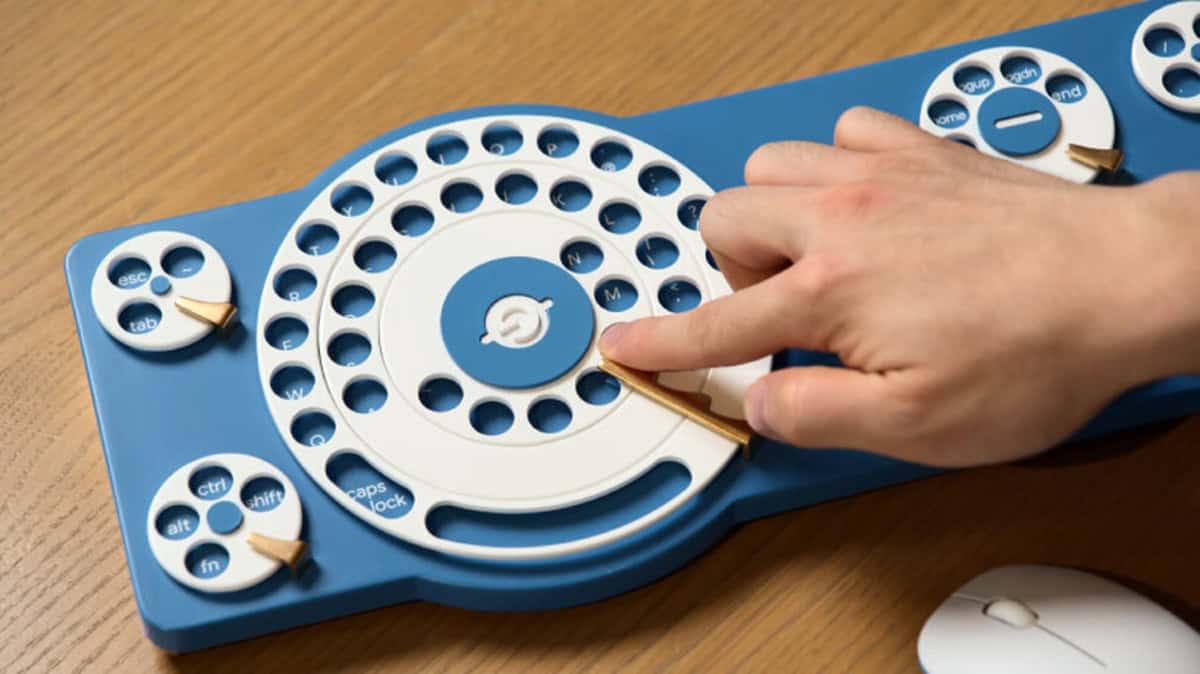
 The Gboard Dial Version. Credit: Google Japan.
Typing has never looked — or sounded — like this. At the same time, it feels strangely familiar (if you’re an old fart like me).
This week, Google Japan unveiled the Gboard Dial Edition, a bizarrely beautiful keyboard that abandons the familiar flat rows of keys in favor of rotating dials. It’s inspired by the rotary phones of the mid-20th century — the kind you’d dial with a satisfying click and whirr. Instead of pressing keys, users spin a circular dial to select each letter.
A Rotary Remix of QWERTY
The Gboard Dial Edition is the latest in a series of whimsical experiments by the Google Japan Gboard team, known mostly for designing the virtual keyboard used on Android devices. Once a year, the team releases a physical prototype that reimagines what typing could feel like if we broke every rule. Past creations include a Möbius strip keyboard, a magic-hand input device, and even a Morse-code keyboard with a single key.
 The enter key and number keys are designed as dedicated dials that can be turned separately. Credit: Google Japan.
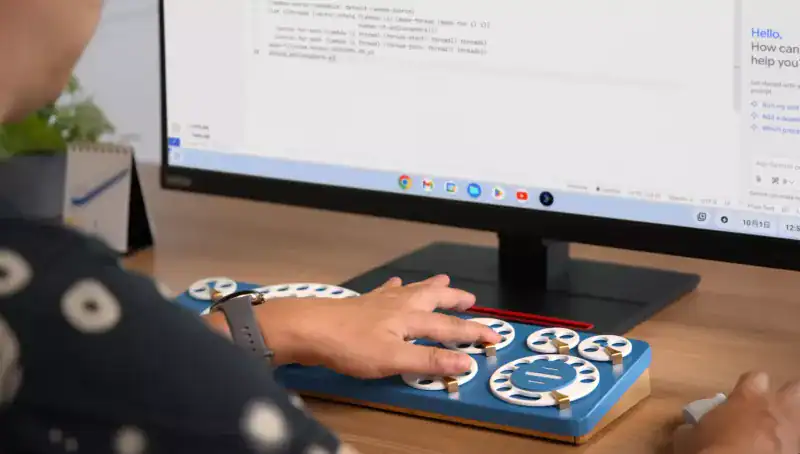 Credit: Google Japan.
This time, the designers thought outside the box with a hint from the past. They channeled the analog simplicity of the rotary phone and rebuilt it for the digital age. The new keyboard features a main circular dial divided into three stacked layers, each corresponding to a row of the traditional QWERTY layout. Smaller dials on the sides handle numbers, punctuation, and navigation keys, while the enter key is its own rotating disc. Ultimately, the design compresses a full 101-key layout into a compact, circular form.
Every motion is accompanied by a buzzing mechanical sound, a direct homage to the tactile feedback of vintage phones.
 Credit: Google Japan.
To be clear, this isn’t a product you’ll find in stores anytime soon. The Gboard Dial Edition is entirely open source, released under the Apache License 2.0. Google Japan posted the full set of 3D printer files, PCB schematics, and assembly guides on GitHub, inviting tinkerers to build their own. The design even includes a Raspberry Pi Pico microcontroller for handling input signals.
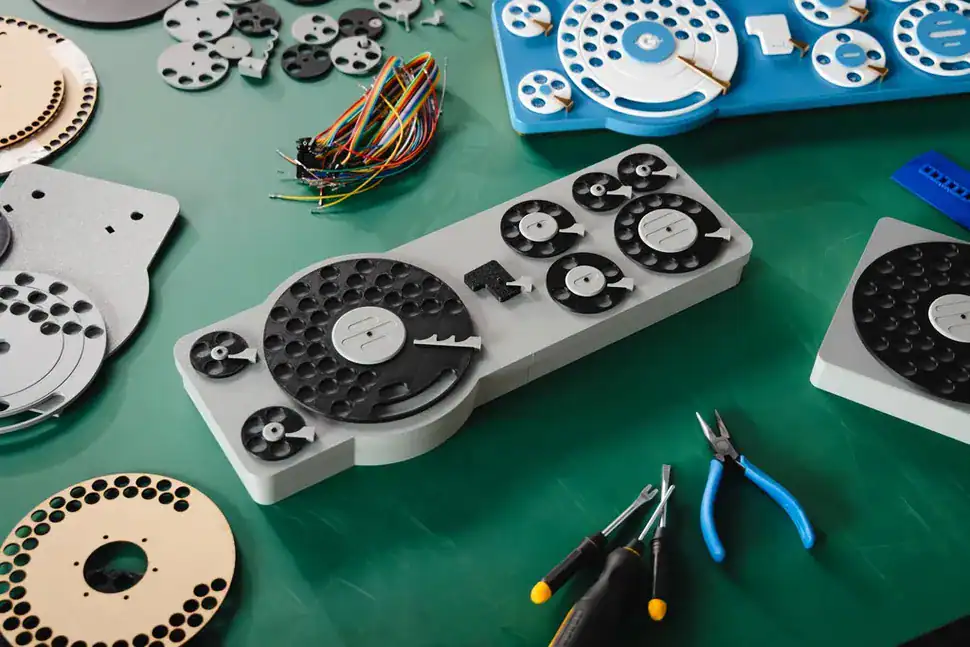 What the Gboard Dial Edition looks like under the hood. Credit: Google Japan.
In a blog post, the Gboard team presented the project as part experiment, part joke, and part design philosophy. They wanted to create a “rounded typing experience” — literally. By dialing instead of pressing, users move more slowly and deliberately, reducing the chance of typos and repetitive strain injuries, they claim. The Gboard Dial Edition, they argue, “cuts user response times and input times via the use of concentric rings,” and allows “parallel inputs” when multiple dials are used at once.
This ‘keyboard’ certainly won’t make typing faster, but that’s obviously not the point. This is less about industrial design and more about free thinking, no apologies art. In a world obsessed with speed, the Gboard Dial Edition asks us (or forces us) to slow down. Typing becomes a sensory event again — the soft resistance of the dial, the gentle buzz, the click as it resets.
Google’s design team in Japan seems to be on a roll. They have more dial-based devices in mind, including keyboards for DJs, pets, and even Daikagura performers, Japan’s traditional juggling entertainers. Each project expands the same core idea: that input can be play.
AloJapan.com