
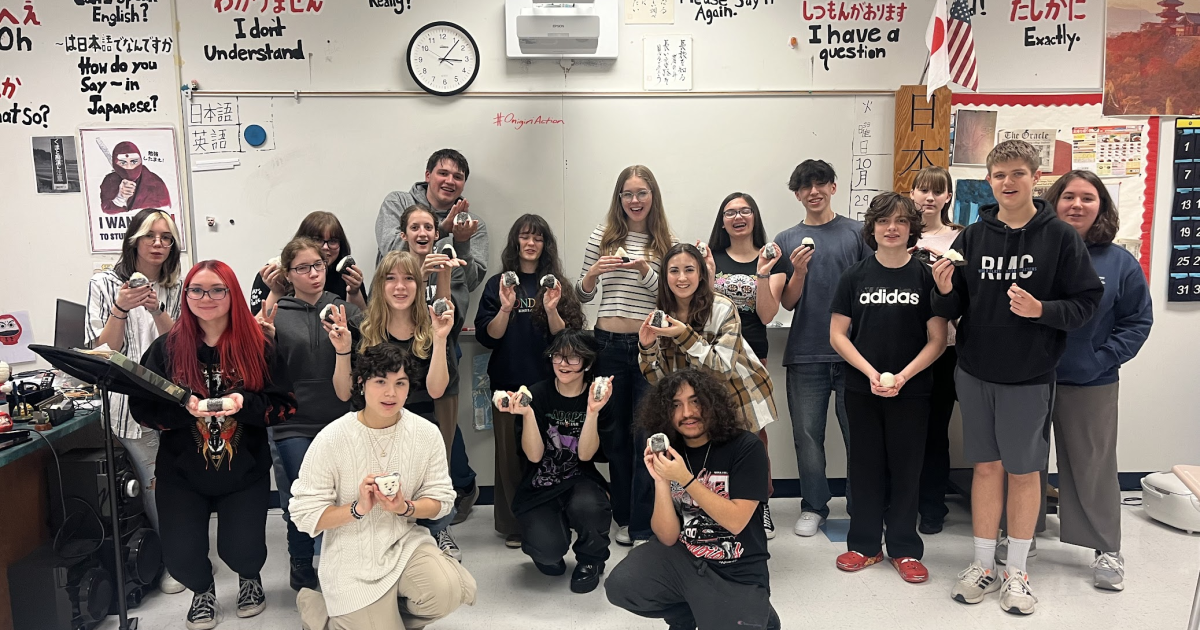
Shaler Area High School welcomed 10 student guests from Japan this week as part of an American immersion program meant to expand Japanese students’ STEAM knowledge.
Students from a school situated on the western coast of Japan, Niigata High School, were brought to Pittsburgh by Duquesne University’s Center for Global Engagement last Thursday to begin their cultural immersion. Though their experience in the U.S. was heavily influenced by cultural exchange with American students and host families, the educational STEAM component was a key aspect of the exchange.
Shaler Area High School’s Japanese language program and its previous involvement in Japanese immersion programs made the high school an ideal partner for the program. Each summer, Shaler and other nearby schools assist students from Pittsburgh’s Japanese sister city Saitama by providing Japanese language students to act as tour guides and interact with students.
Steven Balsomico has been the Japanese language teacher at Shaler for the last 15 years, and prior to his tenure at the school taught English in Japan for several years. He said Kakehashi — a Japanese word — is what’s at the core of this immersion experience.
“Kakehashi literally means a bridge between cultures and, for me as a language and culture teacher, that is the most important thing about this,” Balsomico said. “We’re using STEM to create that bridge, but that bridge is what’s most important of having American students and Japanese students interact.”
Balsomico said guest students were able to sit in on STEM classes that were “engaging, informative, or just different to see.”
One Japanese student said observing animal fur under a microscope during anatomy class was the highlight of her visit thus far. Another loved chemistry class.
An eleventh grade Shaler student, Alex Ai, was initially surprised that most of the visiting students were freshman-age, but said he’s really enjoyed getting to interact with them.
“It’s actually really interesting because I’m going to Japan over the summer [to] study abroad, so it’s really nice to talk to them, kind of learn about their culture, learn how their high school works, learn how their school differs and stuff like that,” Ai said.
Balsomico said it’s been a rewarding experience for his students and for him as a teacher. He said interactions have created rich, teachable moments, pointing to cultural differences the students have gotten to observe, such as encountering American food waste norms.
“The first day, it was just kind of like silently staring at each other, occasionally muttering words in English or Japanese. But, right now, they’re having full-blown conversations in both English and Japanese,” Balsomico said. “I just saw them come to light as they’re saying well, ‘this is something that’s really cool we do’ and ‘this is something I don’t understand at all in your school.’ ‘Why is this a thing?’ So, it’s really fascinating.”
AloJapan.com