
HOKKAIDO, Jun 09, 2026 –
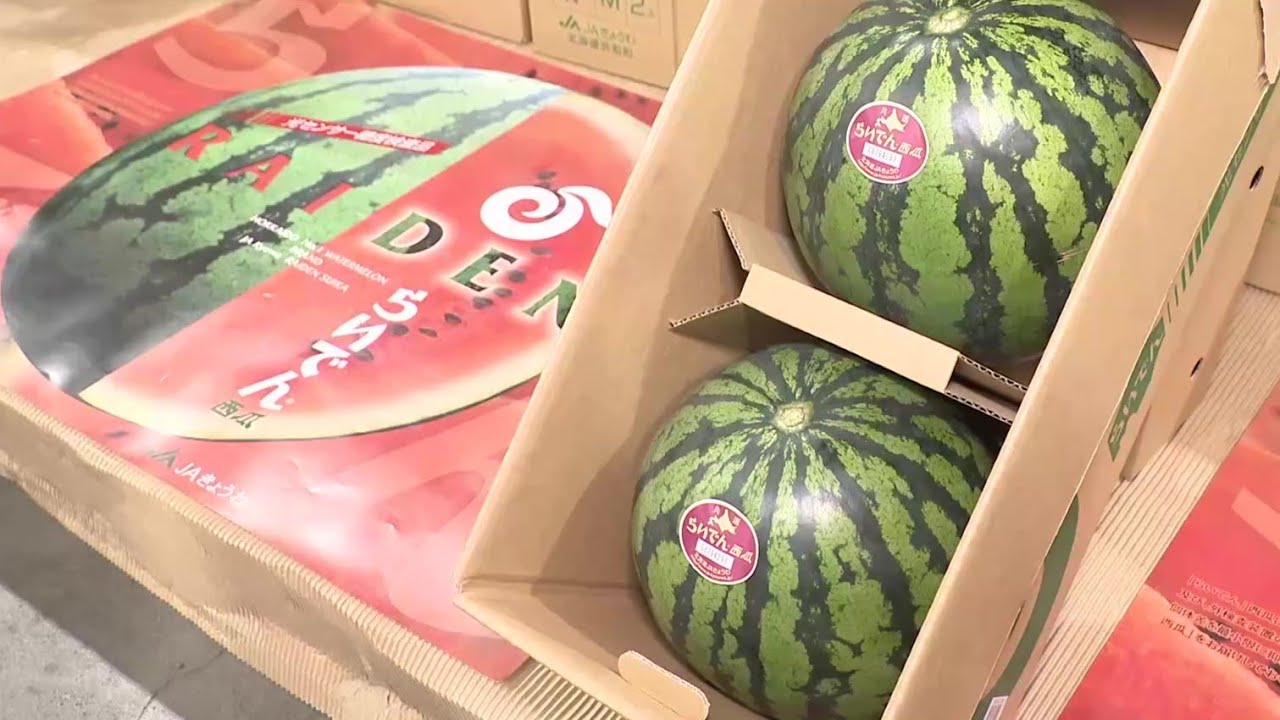
The first auction of Raiden Watermelon, a specialty product of Kyowa in Hokkaido’s Shiribeshi region, was held in Sapporo on June 9th, with a pair of melons fetching a record-high 400,000 yen.
Known for its crisp texture, vibrant red flesh, and high sugar content, Raiden Watermelon drew strong attention at the Sapporo Central Wholesale Market, where buyers gathered for the season’s opening auction.
The top bid reached 400,000 yen for two melons, marking the highest price ever recorded for the brand.
The winning bidder was a welfare services operator based in Iwanai, which secured the top lot for the second consecutive year. The company said it plans to donate the watermelons to a children’s welfare facility in the town in 2026.
People attending the event sampled the fruit, with one taster describing it simply as “sweet.”
Japan’s record-breaking first-auction fruit sales are a long-standing tradition that dates back decades and are less about the fruit itself than about publicity, prestige, and regional branding.
The practice became particularly prominent during Japan’s economic boom years in the 1980s, when luxury gift culture flourished and agricultural cooperatives began using first auctions as marketing events. The first produce of the season is known as “hatsumono” (the season’s first harvest), and many Japanese consumers have traditionally placed special value on being among the first to enjoy seasonal foods.
As a result, the opening auction for premium fruits often attracts companies willing to pay extraordinary prices far above market value. The winning bid generates nationwide media coverage, giving valuable publicity to both the fruit-growing region and the buyer.
Some of the most famous examples include Yubari King melons from Hokkaido, which have repeatedly set national records. In 2019, a pair of melons sold for 5 million yen. Ruby Roman grapes from Ishikawa Prefecture have also commanded enormous prices, with a single bunch selling for more than 1 million yen. Premium mangoes, cherries, and apples have likewise attracted headline-grabbing bids.
The buyers are often supermarkets, department stores, wholesalers, restaurants, or local companies seeking publicity. The media attention generated by a record bid can be worth far more than the purchase price. A company that spends several hundred thousand yen—or even several million yen—on a first-auction fruit may receive television, newspaper, and online coverage across Japan.
For agricultural regions, the auctions serve as a powerful branding tool. A record price creates the impression of exceptional quality and helps raise awareness of the product throughout the season. Even though ordinary consumers may later buy the same fruit at normal prices, the publicity can boost demand and support farmers’ incomes.
In recent years, some winning bidders have also used the auctions for charitable purposes. As in the case of the 400,000-yen Raiden Watermelon, companies occasionally donate the fruit to children’s homes, hospitals, or community organizations, turning the publicity event into a goodwill gesture.
While a pair of watermelons selling for 400,000 yen may seem extravagant, the transaction is best understood as a marketing investment and a celebration of seasonal agriculture rather than a reflection of the fruit’s everyday market value. For the growers of Kyowa’s Raiden Watermelon, the record price signals a successful start to the season and brings national attention to one of Hokkaido’s best-known summer products.
Source: 北海道ニュースUHB
AloJapan.com