
As the closure of the Strait of Hormuz continues, the Japanese government is spending up to ¥500 billion per month to keep gasoline and other fuel prices artificially low. According to estimates as of April, the subsidy could run out by June and Prime Minister Sanae Takaichi is now considering an extra outlay, in part to cushion consumers from rising energy prices.
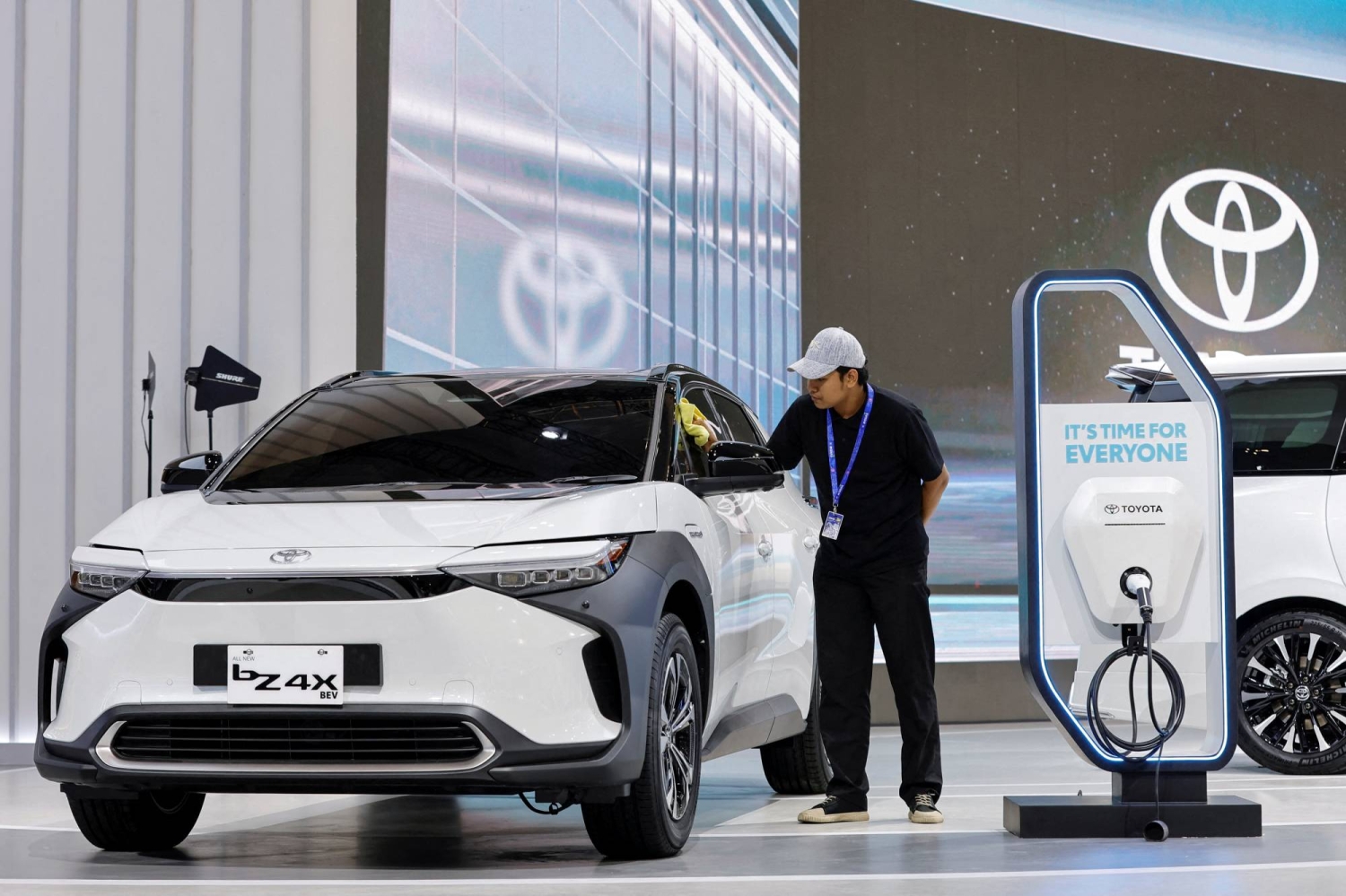
This would be a convenient time for there to be more electric cars in Japan, which account for barely 1% of the total number of passenger cars on the road — leaving consumers vulnerable to potential pain at the pump as the war drags on.
“We’re already seeing a change in buying habits due to war in the Middle East,” says Hans Greimel, Asia editor at Automotive News. “There’s been some increased consideration for electric vehicles and smaller vehicles as people look for more fuel-efficient cars in the Japanese market.”
At 10% of Japan’s economy, the automotive industry is a pillar of the nation. But this core industry generates a tremendous amount of greenhouse gases: some 16% of Japan’s total carbon dioxide emissions, and a volume of greenhouse gases that exceeds the entire sum of carbon emitted by countries like Nigeria, Ukraine, and Colombia, fueling economic, social, and cultural risks in a rapidly warming Japanese archipelago.
While major automakers have committed to reducing emissions, the industry’s slow shift to electric vehicles means that the industry faces a tall hurdle ahead if it wants to achieve carbon neutrality by 2050.
EVs in Japan
In 2024, electrified and alternate fuel vehicles accounted for a record 60.4% of new passenger car registrations in Japan. But the vast majority of this figure comes from hybrid vehicles: battery-powered electric vehicles (BEVs) made up under 2% of total cars registered.
“Although battery production is energy-intensive, this impact is offset by the higher energy efficiency of electric powertrain operation,” explains Anna Dzienis, a professor at SGH Warsaw School of Economics who researches green transitions in Asia.
Some studies show that BEVs can have 77% fewer greenhouse gas emissions compared to traditional vehicles, even taking into consideration emissions from the manufacturing stage. According to the nonprofit The Climate Group, the biggest barrier to EV proliferation in Japan is the high upfront cost. In 2025, nearly 80% of combustion engine vehicles in Japan sold for under ¥4 million, whereas only a handful of EV models were available for under ¥4.1 million.
After cost, the biggest barriers for consumers are concerns about charging time, driving range and charging infrastructure.
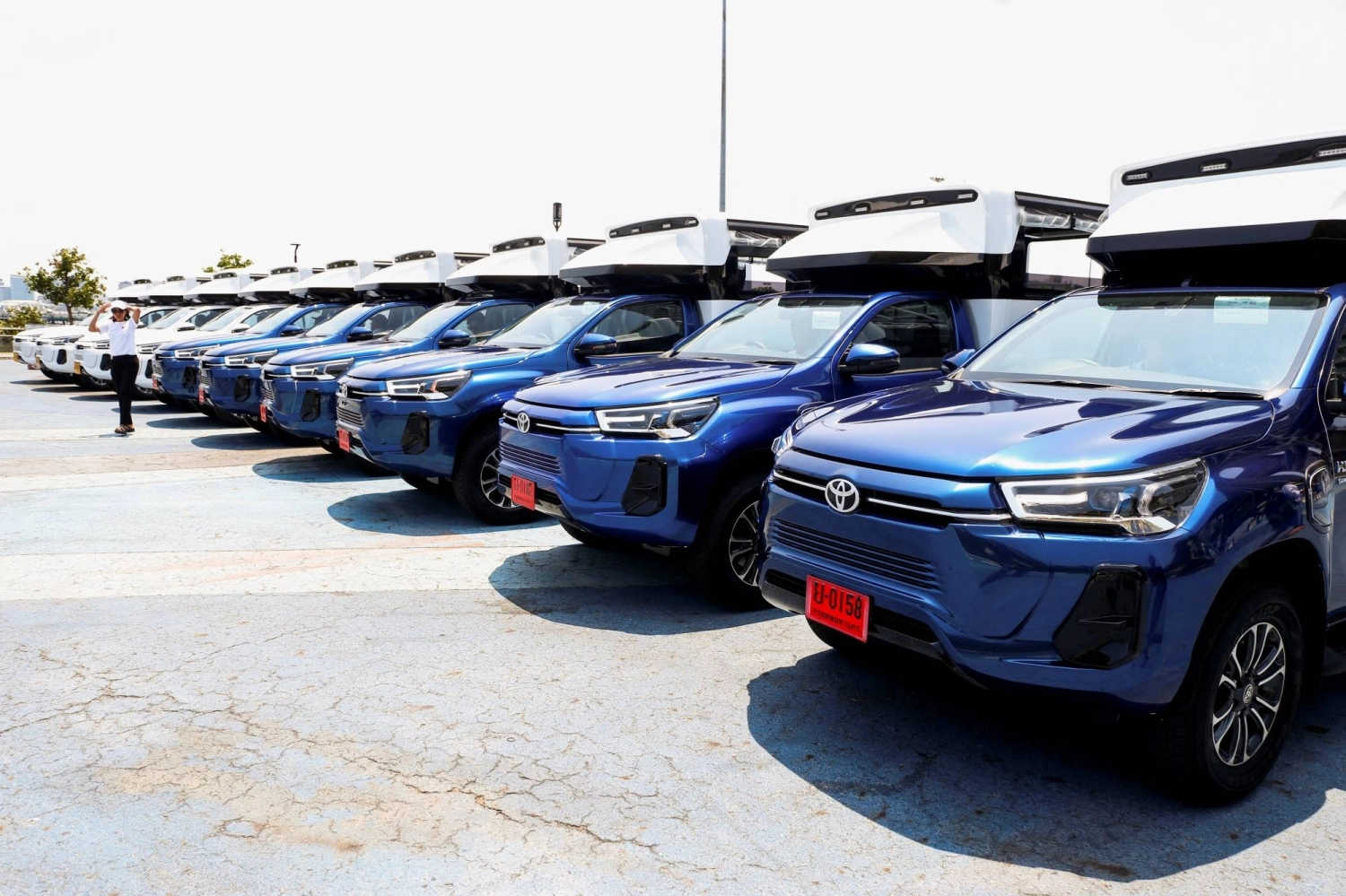
Fully electric Toyota Hilux Revo pickup trucks in Pattaya, Thailand, in April 2024
| REUTERS
That last issue leads to a classic chicken and egg scenario.
“Automakers are reluctant to introduce BEVs in markets where demand remains limited and charging operators are unwilling to install chargers where such vehicles are not yet widely used,” says Yoichiro Takeda, policy and engagement manager at The Climate Group.
Many Japanese automakers have gravitated toward an approach similar to what Toyota calls a “multipathway strategy.” Rather than going all in on BEVs, this approach focuses on a long-term transition away from fossil fuels without indexing heavily on a “one-size fits-all” solution, relying on a variety of powertrains for vehicles tailored to the circumstances of various markets. In fiscal 2025, Toyota’s global BEV sales increased by 30% to 188,000, while electrified vehicle sales, which includes hybrids, as a whole reached around 4.7 million.
“Although Japan’s makers are leaders in electrification, they are not leaders in BEVs,” Greimel evaluates. “But the more balanced approach they are taking seems to be prudent and practical, given the drastic changes in regulatory and political support,” particularly for their U.S. operations under the administration of U.S. President Donald Trump.
Although combustion-engine and hybrid vehicles continue to dominate Japan’s auto market, BEVs are still a developmental focus. Subaru has four BEV models in development and Mazda is working to produce their own internally developed BEVs. On the other hand, Honda announced in March that it was canceling certain EV models and shifting back toward a focus on hybrid, after the company sustained a ¥424 billion ($2.7 billion) new loss in 2025 caused primarily by the EV sector.
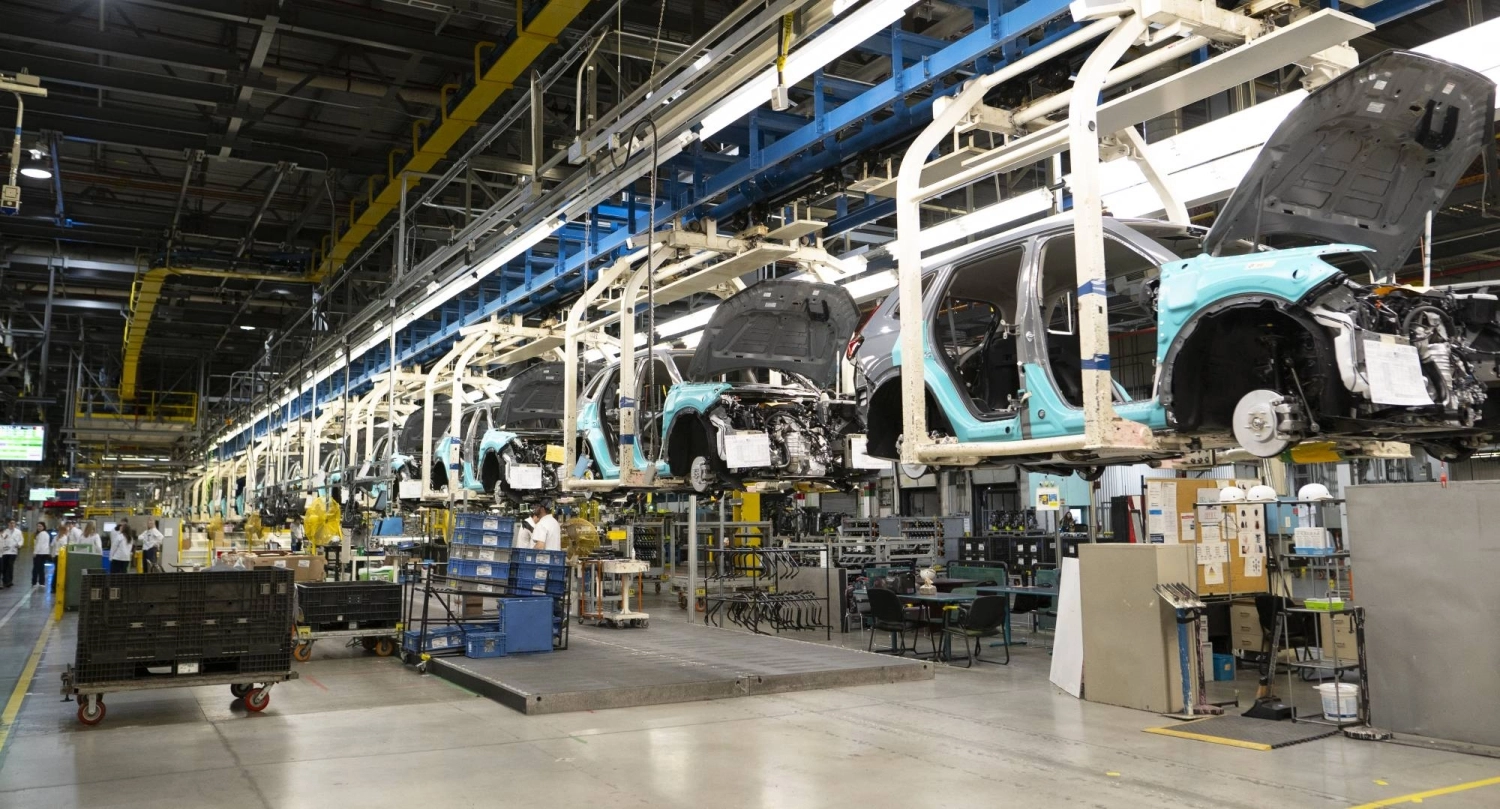
A Honda vehicle assembly line in Canada. Japan faces a high hurdle if it wants to achieve carbon neutrality by 2050, given the automotive industry’s slow shift to electric vehicles.
| AFP / Getty images / via bloomberg
Dzienis postulates that new tech could help to spread BEVs in Japan, as software-based vehicles — or cars that run core components on software and operating systems, including autonomous vehicles — tend to be electric as they require fewer mechanical parts.
Software-based vehicles “have the potential to address pressing social challenges facing Japan, thereby providing an additional, socially justified rationale for the expansion of BEVs,” she says.
The Japanese government set a goal in 2021 for electrified vehicles to consist of 100% of new vehicle sales by 2035. Since this goal was established, traditional combustion engine vehicles dropped from 59.3% in 2021 of new vehicle sales to 44.7% last year.
The dirty elephant in the room
Some experts are skeptical that electrification efforts alone adequately address the climate crisis. A team of researchers at Kyushu University calculated that even banning new gas vehicles won’t get Japan close to achieving its decarbonization goals.
“If car manufacturers increase their production of EVs without decarbonizing the supply chain, then emissions reduction will stagnate,” explains Shigemi Kagawa, an economics professor at Kyushu University, in a blog post on the university’s website.
In 2024, Japan’s energy mix consisted of 83.5% fossil fuels, with over a quarter of its energy coming from coal, one of the most carbon-intensive sources of electricity. Per Kagawa, even if Japan meets its 2030 energy mix goal of 50% fossil fuels and 28% renewable energy, halting the production of new gas vehicles would only contribute a 10% net reduction in CO2 emissions.
“This reduction level falls far short of achieving a carbon-neutral vehicle society,” Kagawa comments.
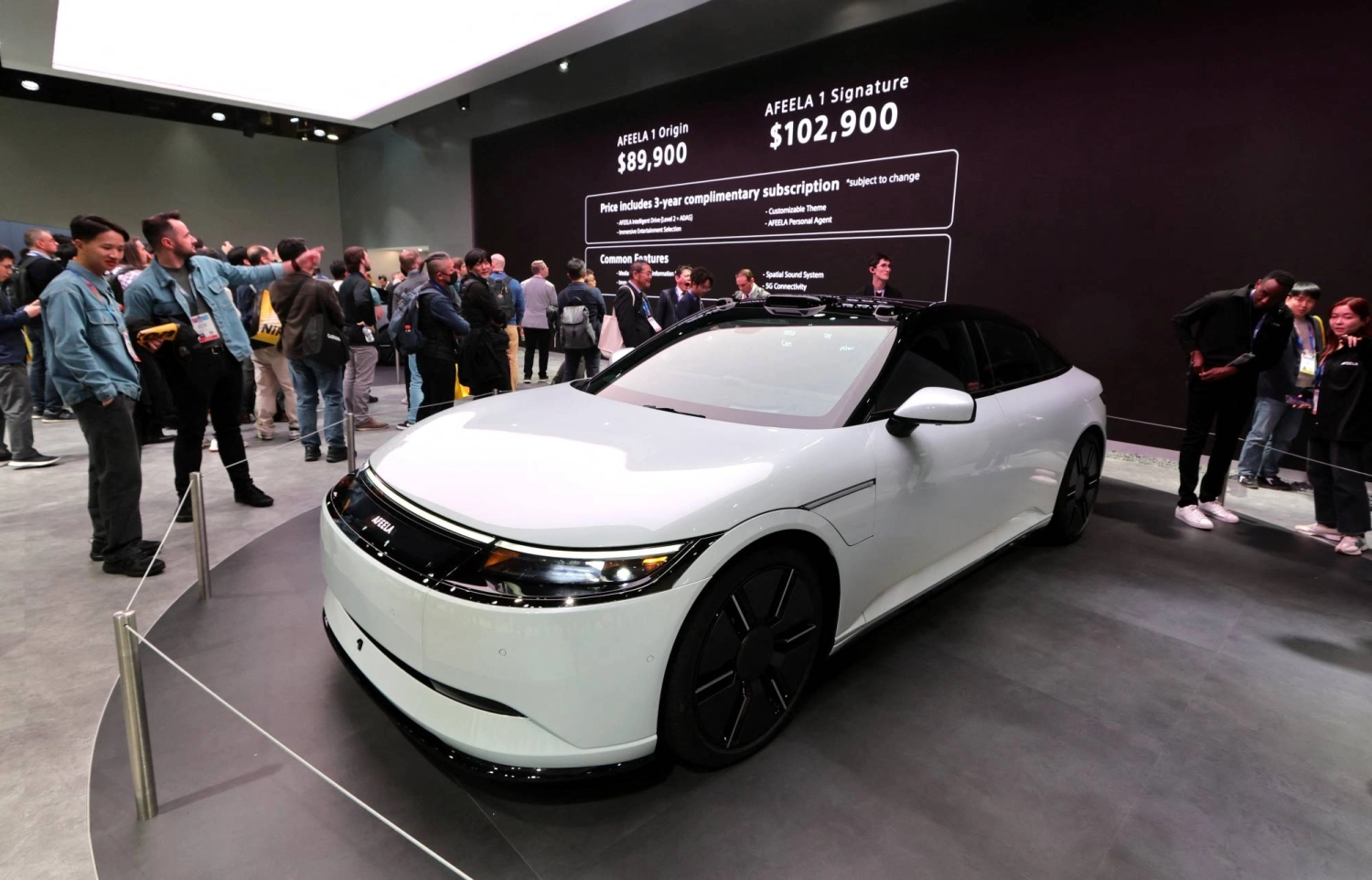
A Sony-Honda Afeela 1 Signature electric vehicle is displayed during CES 2025 in Las Vegas in January 2025. The company recently canceled plans to release the model in the U.S. market.
| REUTERS
As of 2024, Japan’s major automotive companies had a roughly similar energy mix to the nation as a whole. Toyota consumed 18% renewable energy, Nissan 9%, and Subaru 10%. (Renewable energy figures were not available in Honda’s ESG report). Mazda currently generates around 80% of its electricity using a coal-fired plant, which the company plans to completely phase out by 2030 in favor of natural gas, another fossil fuel.
Shinji Utamura, from Mazda’s corporate communications division, says this will put the company on track to reach the government target of 46% emissions reduction by 2030.
“Over the medium to long term, renewable energy is expected to become more widespread,” says Jean-Yves Jault from Toyota’s public affairs division. “However, it is critical to acknowledge the global situation and implement practical changes while ensuring energy availability,” he adds, referring to diverse energy conditions and customer needs.
Most companies have made electricity transitions components of their climate strategies: Toyota set a target to match 100% of electricity consumption with renewables by 2031, and Toyota and a number of other makers, including Subaru and Nissan, have recently built CO2-neutral or renewable-dominant manufacturing plants. A Subaru spokesperson says that the firm purchases exclusively carbon-neutral electricity at six of its major domestic sites.
The rocky road to carbon neutrality
When former Prime Minister Yoshihide Suga announced Japan’s goal to reduce emissions by 46% compared to 2013 levels by 2030, and go carbon neutral by 2050, major automotive companies declared they would follow suit.
“Japanese automakers are very serious about carbon neutrality, reducing emissions, and focusing on fuel efficient cars,” says Greimel. “That’s their strength, going all the way back to the 1970s.” Beyond electrification, carmakers are looking to other sources of fuel: hydrogen, biofuels, and carbon-neutral fuels.
“It’s crucial to promote decarbonization by leveraging Japan’s strength in internal combustion engine technologies,” Utamura says. “It may be possible to advance decarbonization without drastically altering social or industrial infrastructure using carbon-neutral fuels.”
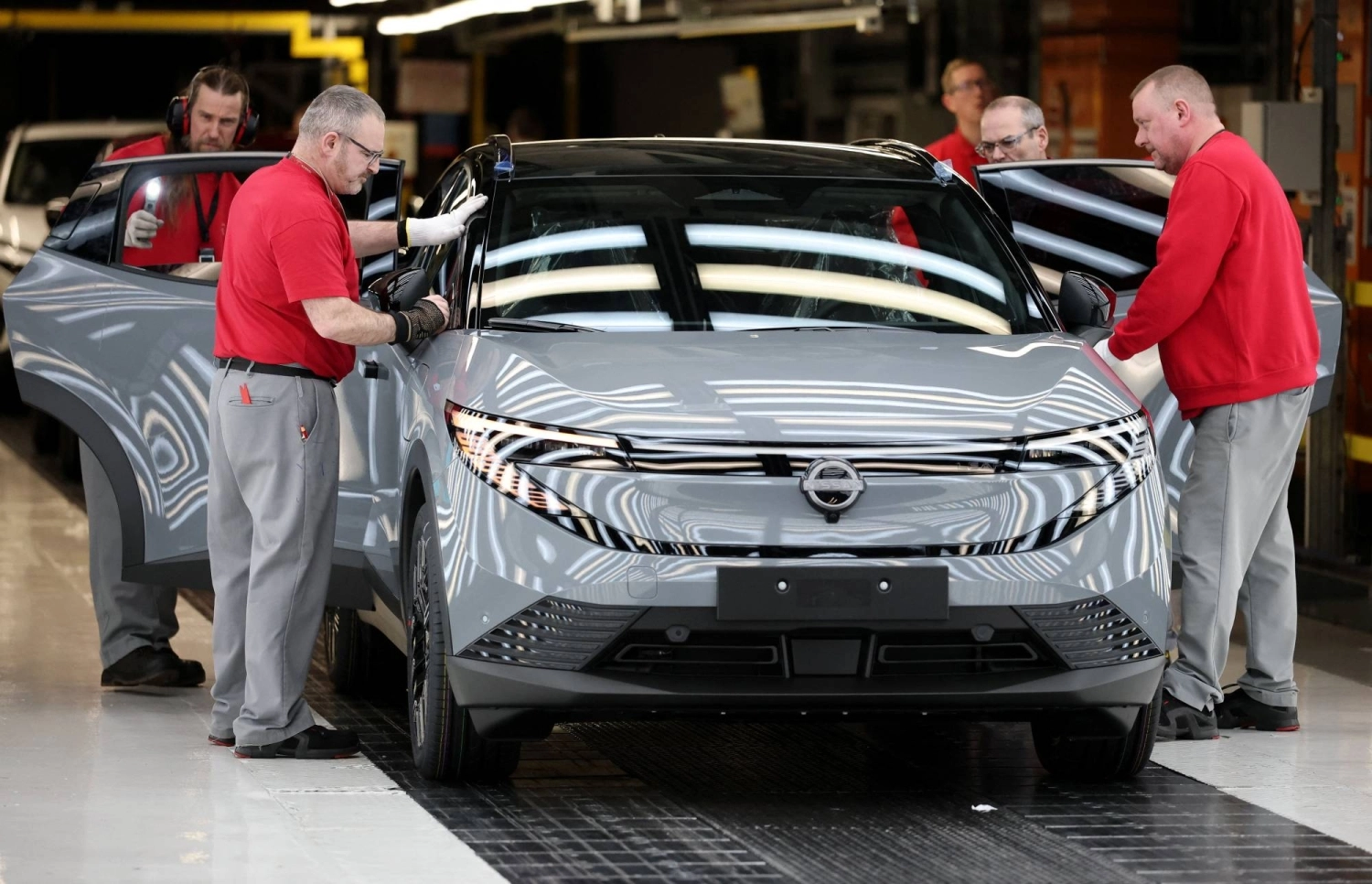
Workers inspect a Nissan Leaf electric car as it comes off the production line at a factory in Sunderland, England, in December.
| REUTERS
Mazda has a history of researching micro-algae derived fuel that produces 90% less emissions than fossil fuels; while Toyota and Honda have been the main industry leaders in hydrogen fuel-cell vehicles, a segment that has been slow to take off, even in the domestic market.
But from the perspective of climate advocates, a seeming hesitancy to embrace BEVs holds back progress. The think tank InfluenceMap has taken note of the Japan Automobile Manufacturers Association’s (JAMA) repeated actions lobbying against climate policies: calling for the repeal of the environmental tax, lobbying to weaken European CO2 regulations and promoting biofuels over electrification in Brazil.
“Many drivers of battery-electric cars report higher satisfaction levels than drivers of petrol, diesel or hybrid cars,” Takeda says. “If the benefits of EVs were communicated more clearly to Japanese consumers, their current concerns might stop being such a barrier.”
In an emailed response, the JAMA stressed that it is taking a multipath approach toward carbon neutrality that focuses on vehicle fuel efficiency and promoting next-generation vehicles.
Kagawa adds that cars in Japan have a relatively short average lifespan of 13 years, which drives carbon emissions through production and consumption. “I think we need a value shift,” he says, “from the old ideal of ‘one car per family’ to a new ideal of ‘one car per lifetime.’ … Producers need to design and manufacture products with repair and longevity in mind.”
Whether Japan’s automakers manage to achieve their stated goals of carbon neutrality remains to be seen. As of now, major firms have seen, at best, only modest reductions in emissions.
Takeda and Greimel both point to EV leadership not only from China, but also Vietnam, Turkey and Thailand — all of which are far ahead of Japan in the EV game.
“Japan’s reluctance to embrace the EV future,” warns Takeda, “risks both the country’s climate targets and the global competitiveness of its automotive sector.”
AloJapan.com