
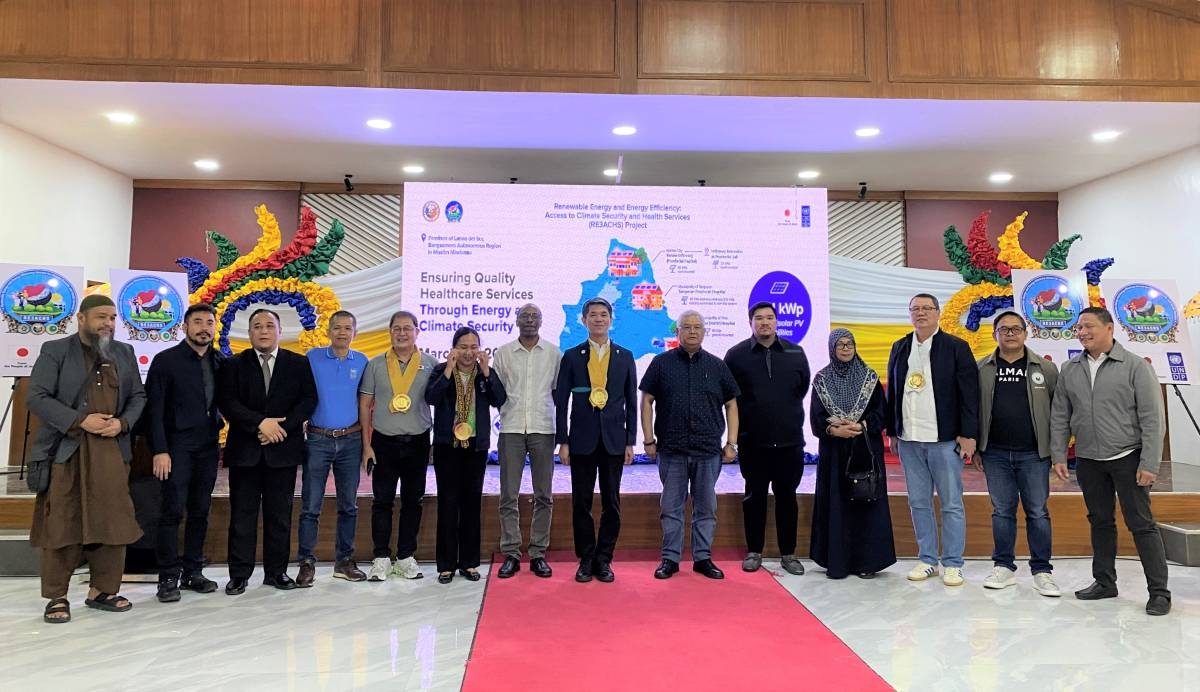
JAPANESE Ambassador Kazuya Endo visited Lanao del Sur and Marawi City from March 25 to 26, reaffirming Japan’s long-standing support for peacebuilding and development initiatives in the Bangsamoro Autonomous Region in Muslim Mindanao (BARMM).

Japanese Ambassador Kazuya Endo’s visit reaffirms Japan’s long-standing support for peacebuilding and development initiatives in the Bangsamoro Autonomous Region in Muslim Mindanao.
PHOTOS FROM JAPAN EMBASSY

Endo expresses hope that the project will serve as a model for expanding renewable energy use across BARMM.
The visit highlighted key projects under the Japan-Bangsamoro Initiatives for Reconstruction and Development (J-BIRD), through which the Japanese government has supported the Mindanao peace process for more than two decades.
During the trip, Endo led the launch of solar power generation systems installed under the “Renewable Energy and Energy Efficiency: Access to Climate Security and Health Services (RE3ACHS) Project.” Ceremonies were held at a provincial infirmary in Marawi City and at the Tamparan Provincial Hospital in Lanao del Sur.
Local and national officials attended the events, including Lanao del Sur Gov. Mamintal Adiong Jr., Bangsamoro Ministry of Health Minister Kadil Sinolinding, United Nations Development Programme (UNDP) Philippines Deputy Resident Representative Edwin Carrié, and representatives from the Department of Energy.
Get the latest news
delivered to your inbox
Sign up for The Manila Times newsletters
By signing up with an email address, I acknowledge that I have read and agree to the Terms of Service and Privacy Policy.
In BARMM, where communities continue to grapple with the effects of conflict, power shortages remain a persistent challenge. Health facilities in Lanao del Sur — home to about a third of the region’s population — have long relied on diesel-powered generators, exposing them to unstable electricity supply.
The RE3ACHS project seeks to address these gaps by introducing clean and reliable solar energy systems in healthcare facilities. Japan has contributed 200 million yen (about $1.5 million) to the UNDP for the initiative, which also aims to strengthen local governments’ capacity to plan and invest in renewable energy and energy efficiency.
Endo expressed hope that the project would serve as a model for expanding renewable energy use across BARMM, improving both energy security and access to healthcare services.
“The continued investment in renewable energy, including solar power generation, will contribute to a more climate-resilient future and support stable power supply in the region,” he said.
On March 26, Endo also visited the 103rd Base of the Moro Islamic Liberation Front (MILF) in Lanao del Sur, where he inspected livelihood and food security projects supported by Japan.
He later traveled to a Joint Peace and Security Teams (JPST) outpost in Maguindanao, where Japan, through the International Organization for Migration, supported capacity-building efforts from 2024 to 2025. Equipment such as communication devices and motorcycles provided under the program are now in active use.
The visit, led by a joint team composed of the Armed Forces of the Philippines, the Philippine National Police, and MILF members, underscored ongoing cooperation among stakeholders in maintaining peace and security in the region.
Endo’s trip reaffirmed the effectiveness of Japan’s assistance programs and its commitment to working with local partners to advance lasting peace and inclusive development in BARMM.
AloJapan.com