
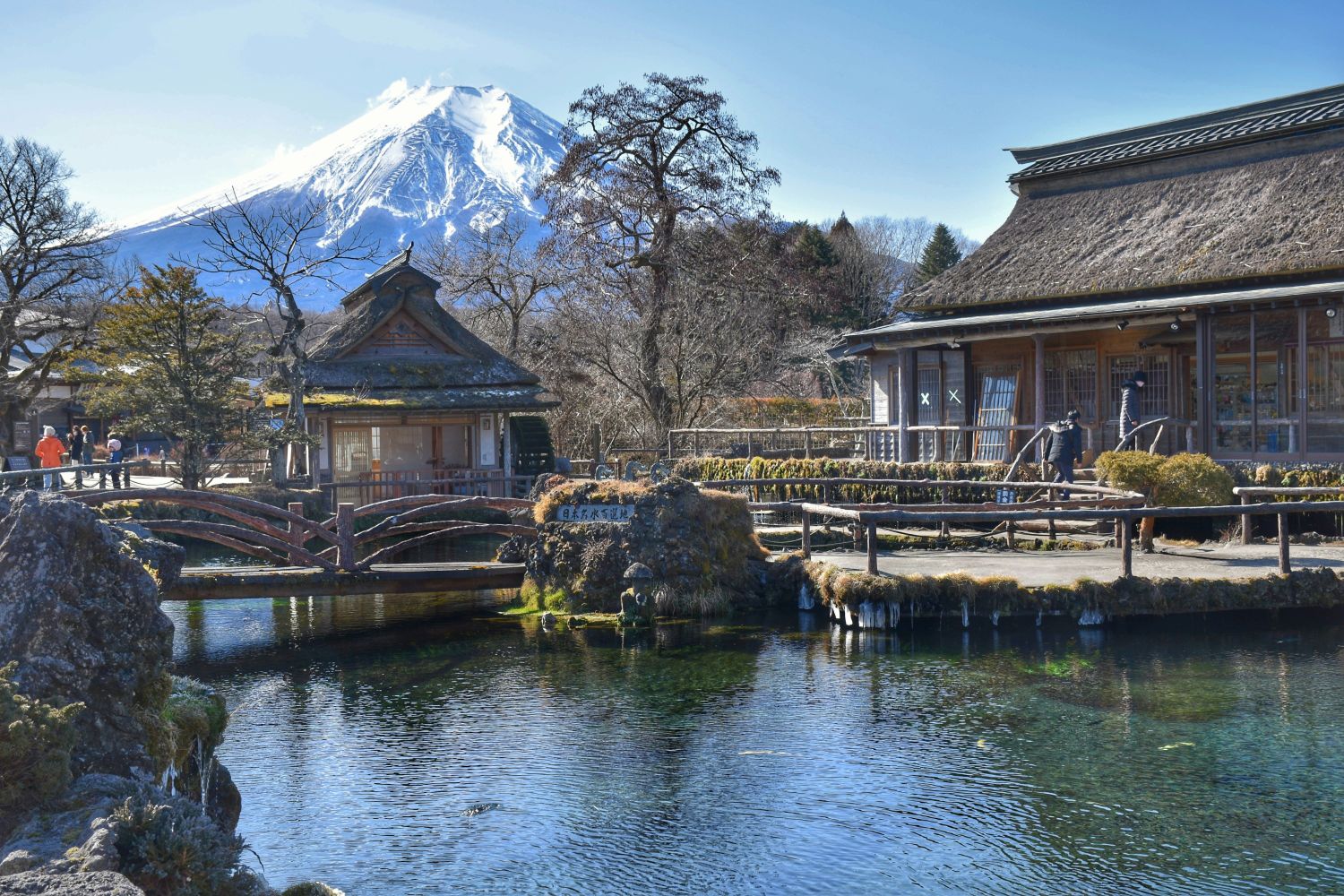
Visitors to a series of snow water ponds near Mount Fuji in Japan have been asked to stop throwing coins into their sacred waters due to concerns over the environmental impact.
The eight pools in the village of Oshino Hakkai at the foot of the country’s highest peak offer scenic views and reflections featuring the volcano’s iconic form. They are fed by an underground reservoir of Mount Fuji’s meltwater and historically followers of the Fuji-ko faith, who worship the peak, bathed there in a purification ritual before climbing it. The waters were also once said by locals to bring insight into moral dilemmas.
Now, though, they are dominated by tourists who have imported coin-tossing customs that they believe bring good luck. The pond beds are said to be littered with coins, even though official workers have removed around 50,000 of them to date in a battle that has seen signs erected pleading in multiple languages for visitors to cease the practice.
“It’s an endless cycle — as soon as we pick them up, more are thrown in,” an official spokesperson said. The village has even set up offering boxes to receive the coins instead of the pools.
The way coins erode is one of the main worries due to potential pollution of the ponds’ pristine waters, though, to date, water quality tests have found no environmental residues.
Coin-tossing or offering for luck at tourist sites occurs in many places around the world. Concerns were raised in 2025 at the Giant’s Causeway, a renowned Northern Irish UNESCO World Heritage site estimated to be up to 60 million years old, that is being damaged by tourists determined to leave their mark on the place by wedging coins that then rust between the rocks, resulting in a plea from the UK’s National Trust for visitors to “leave no trace.”
One of the most famous examples of coin-based tourist rituals happens at Rome’s Trevi Fountain, where coin throwing was immortalised by the hit 20th-century movie theme Three Coins in a Fountain. Municipal authorities in the Italian capital regularly collect the coins and distribute them to charitable causes. But Japan has no such native tradition.
The problem has reportedly worsened since 2013, when the ponds were recognised as a UNESCO World Heritage site, attracting more visitors to the area. As part of efforts to clean up Mount Fuji and deal with overtourism, its trails now come with an access fee. But the issue continues. An annual cherry blossom festival had to be cancelled this year amid mounting pressure on locals.
The negative effect of the UNESCO designation has been in the news elsewhere recently, after villagers in the Slovakian hamlet of Vlkolínec complained about being outnumbered more than 7000-to-one by the 100,000 annual visitors that descend upon the area since the UN body included it on its list. “UNESCO has turned us into a tourist ‘zoo.’ This supposed honour has become not just a burden – but a living nightmare,” one villager told press.
AloJapan.com