
Editorial credit: Alcobendas City Council

–
Editor
·
April 10, 2026
The Western way of understanding nature and tranquility is not exactly the Japanese concept. Proof of this is the Japanese garden in Parque de la Vega, in Alcobendas, a space where ponds, wooden bridges, and meticulously trimmed trees conceal two treasures unique in Spain: the Luis Vallejo Bonsai Museum and an impressive Peace Bell, a replica of the one hanging at the UN headquarters in New York.
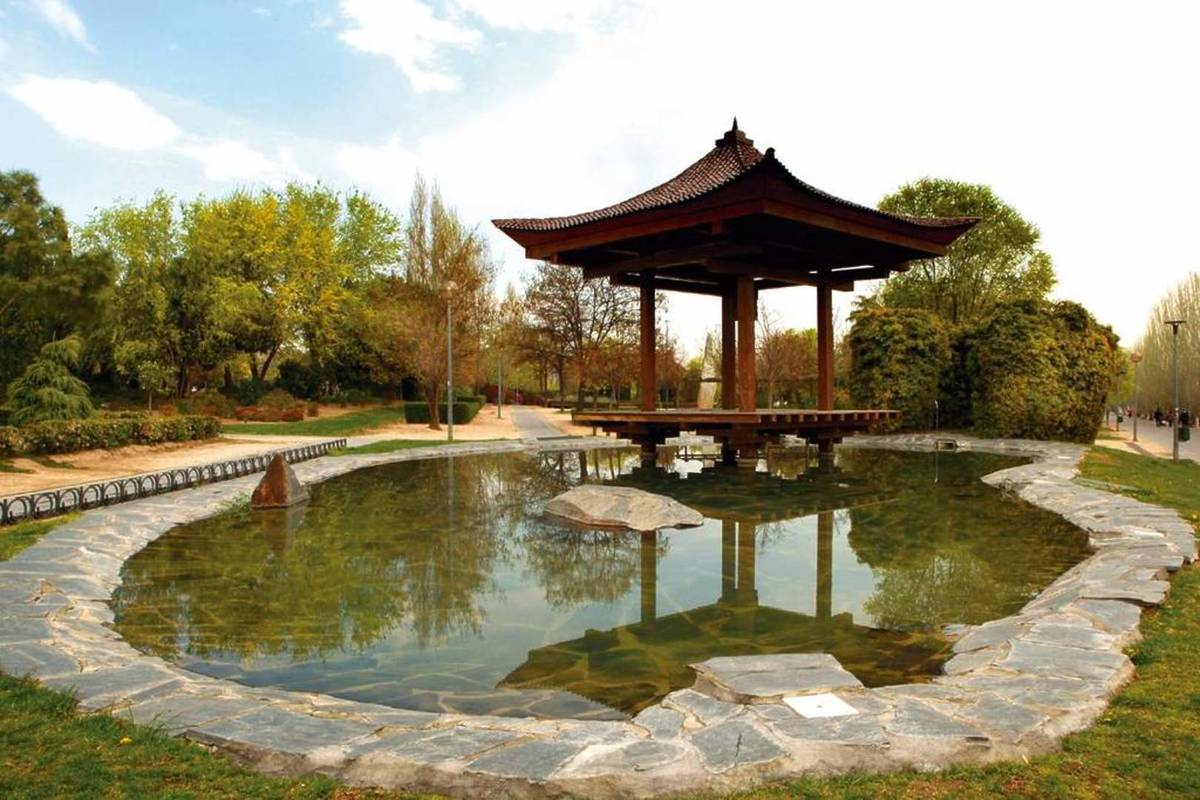
The garden was created in 2011 as a cooperation project between Japan and the Alcobendas City Council, with the aim of creating a place for contemplation that would bring Japanese aesthetics closer to the people of Madrid. Amid gravel paths, rocks, and maple and pine trees pruned in the oriental style, visitors wander past ponds, bridges, and small Japanese-inspired structures that invite them to slow down and view the landscape as one would view a painting: from different angles, with every detail carefully placed.
At one end of the park stands the Peace Bell, designed by architect Fernando Parrilla. It is a replica of the UN’s Japanese bell tower, built with stone from the Madrid mountains and Segovian pine wood, suspended over a pond that reflects its image in the water. The bell was donated in 2003 by a Japanese organization as a tribute to the victims of World War II and a symbol of sisterhood; its design incorporates the five elements of feng shui: water, fire, earth, metal, and wood.
The Bonsai Museum
 Editorial credit: Luis Vallejo Bonsai Garden
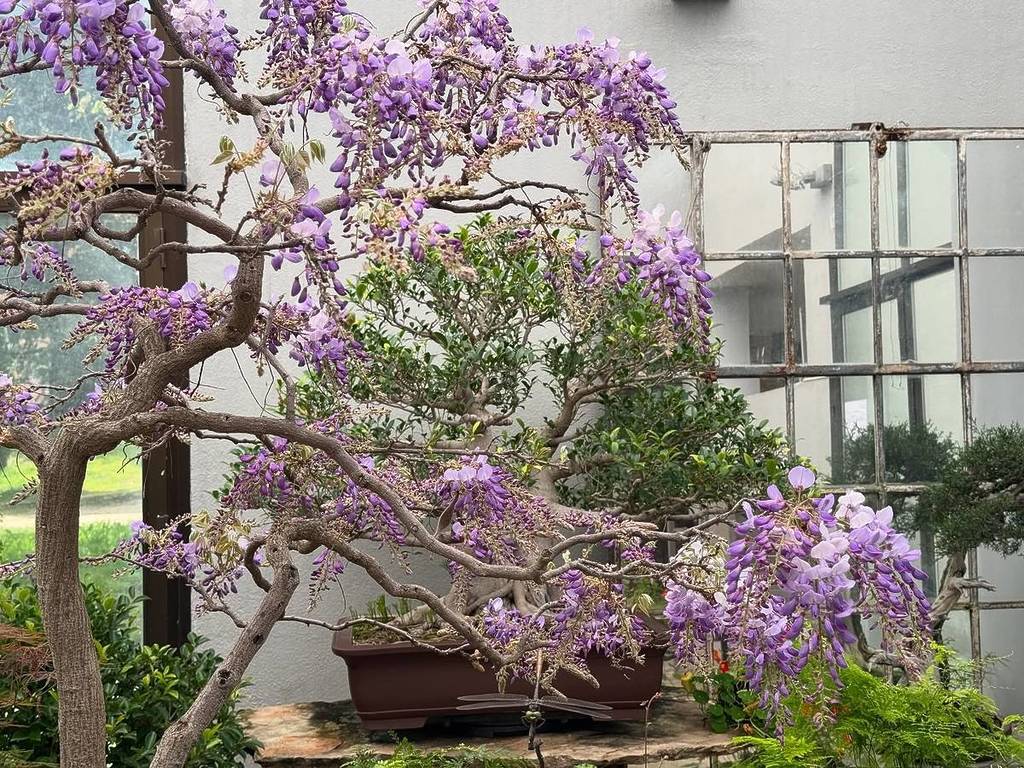
Just a few steps away, the focus shifts but remains in Japan: the Luis Vallejo Bonsai Museum, considered one of the most important in Europe in its field. Opened in 1995, it houses more than 200 bonsai —some sources now cite over 300—including specimens over two centuries old, ranging from native species shaped by Vallejo himself to trees brought from Japan and sculpted by masters such as Masahiko Kimura, Saburo Kato, and Hiroshi Takeyama. Each tree is a living sculpture: roots, trunks, and crowns tell distinct stories of pruning, wiring, and patience, and the museum organizes guided tours, courses, and exhibitions to explain the art and philosophy behind this extreme miniaturization.
The complex functions as a small Japanese landscape without leaving the Community of Madrid. Many visitors come simply drawn by the idea of “a hidden Japanese park” and discover, upon crossing the bridge and seeing the bell reflected in the water, that there is also a message of remembrance and peace; others come for the bonsai and find a landscape designed to practice exactly what these small works of art demand: attention, a slow pace, and respect for what grows slowly.
AloJapan.com