
Breaking News
GLOBAL
John Aubrey Douglass
In an age of creeping neo-nationalism and transnational paranoia we face a monumental international challenge if we want to rebuild a global science ecosystem that depends on the shared values of open science, mutual trust, long-term relationships, capacity building and formal agreements.

CANADA
Nathan M Greenfield
NORTH AFRICA
Wagdy Sawahel
NORWAY
Jan Petter Myklebust
IRAN
Wagdy Sawahel and Karen MacGregor
Top Stories
IRAN
Branch campuses activate conflict contingency plans
Brendan O’Malley
Iran is threatening military strikes on US universities in the Gulf states and Middle East in retaliation for attacks on Iranian universities carried out in the past few days. It gave the United States a Monday noon deadline to condemn the bombing of Iranian universities.


MIDDLE EAST
Wagdy Sawahel and Brendan O’Malley
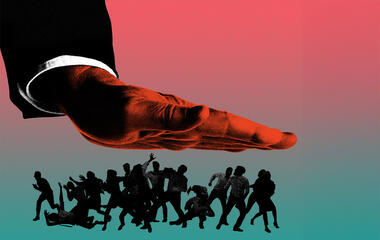
ZIMBABWE
Clemence Manyukwe

INDIA-AUSTRALIA
Shuriah Niazi

News
NIGERIA
Hussain Wahab
A baseline survey on sexual harassment in Nigerian public tertiary institutions has found that 70% of female and 30% of male students have experienced at least one form of gender-based violence, highlighting what stakeholders describe as a systemic and under-reported crisis in higher education.

UNITED STATES
Nathan M Greenfield
UNITED STATES
Nathan M Greenfield
UNITED KINGDOM-AFRICA
Maina Waruru
African student populations are among the most significantly affected by the fall in international postgraduate enrolments in the United Kingdom in the 2024-25 academic year, with Nigeria recording the steepest decline of any major student population globally. The country registered a 39% drop.
NEPAL
Binod Ghimire
In a push to reform higher education, Nepal’s new government led by Balendra Shah is to introduce a raft of measures and has started by ordering the dismantling of party-affiliated student unions at universities and the establishment of student councils within two months.
NORWAY
Jan Petter Myklebust
The Norwegian Defence University College has received accreditation for a new masters degree in warfare and military operations from NOKUT, the Norwegian Agency for Quality Assurance in Education, that targets early-career military students and lays the foundation for a future doctoral-level programme.

Edtech, AI and Higher Education
GLOBAL
Natalia Tsybuliak and Yana Suchikova
AI is not merely a technological shift, but a subtle reconfiguration of the political economy of academic labour – one in which efficiency gains risk being institutionally absorbed rather than individually experienced. In that case, generative AI will simply accelerate an already overwhelming system.


Webinar
GLOBAL
UWN Reporter
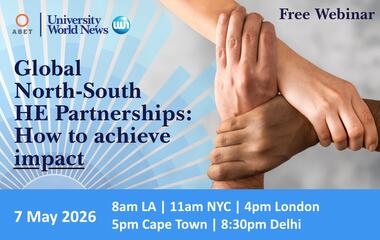
How can we create and sustain equitable partnerships between universities in advanced economies and communities and institutions in the least developed parts of the world with co-created agendas, respect for local knowledge and experience, strong community engagement and outcomes that achieve real change?
World Blog
UNITED KINGDOM
N Nikan
The United Kingdom’s recent visa change is crushing the hopes of Afghanistan’s brightest women. The world needs to move beyond symbolic expressions of solidarity for women in that country and take concrete actions. For Afghan women, access to education is urgent, not abstract.


SDGs
GLOBAL-PAKISTAN
Zahid Hussain Khand and Arshad Ahmad
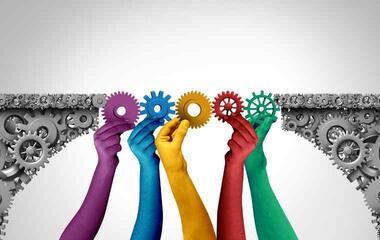
A collaborative project in Pakistan is bringing employers and public-sector voices into a conversation around employability to help ensure that work-integrated learning is embedded in courses, linked to authentic projects, strengthened by professors of practice, and supported by faculty with industry exposure.
KENYA
Wilson Odhiambo
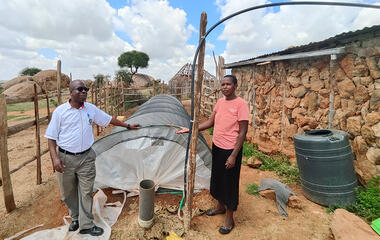
A partnership led by the Jomo Kenyatta University of Agriculture and Technology is helping to turn one of Laikipia County’s most destructive and invasive plants, the prickly pear cactus (Opuntia stricta), into a source of food security and clean energy. It also alleviates conflict.
KENYA
Eve Ruwoko

Universities in Africa are emerging as central actors in the continent’s energy transition, not only as the generators of knowledge but also as the conveners of policy dialogues. These roles were showcased at a recent Climate Compatible Growth workshop in Kenya.

Top Stories from Last Week
IRAN-ISRAEL
Wagdy Sawahel
Amid escalating conflict in the Middle East, the Israel Defense Forces have confirmed targeting two Iranian universities, namely, Malek Ashtar University and Imam Hossein University, alleging their military use by Iran’s Islamic Revolutionary Guard Corps, as well as a space research centre.

GLOBAL
Nathan M Greenfield
FRANCE
Barbara Casassus
MIDDLE EAST
Annalisa Pavan
GLOBAL
Waseem Hassan

With universities facing huge and rapid transformation, it is vital that new PhDs, who have more practical experience of those changes on the ground, are able to feed this into the governance process. It’s not about representation but about strengthening research and education.
DENMARK
Jan Petter Myklebust
In advance of the general election on 24 March, the board chairs of Denmark’s eight universities called on the government to recognise the “significant contribution” that international students make to the Danish economy and allow more of them to come to Denmark to study.
AFRICA
Faadiel Essop
Although human rights, equality and dignity are now enshrined globally – and even celebrated in South Africa on Human Rights Day on 21 March – an important question arises: why does racism persist so often in our society? Scientific racism developed over several centuries.
INDIA
Shuriah Niazi
The State of Working India 2026 report, released by Azim Premji University on 17 March, reveals that fewer than 7% of graduates in India secure permanent salaried jobs within one year of graduation, and, of these, only 3.7% manage to land ‘white-collar’ positions.
AloJapan.com