
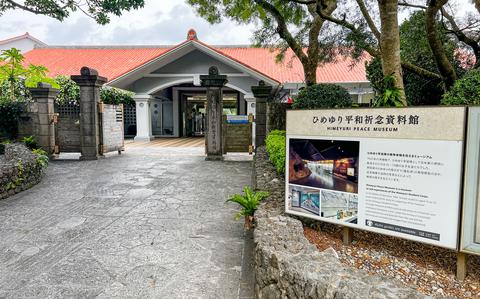
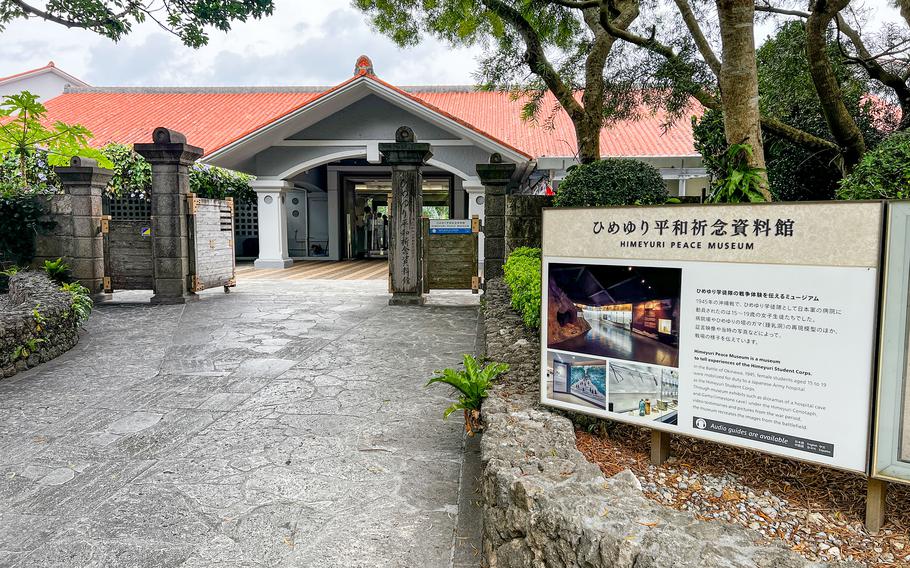
Himeyuri Peace Museum has had more than 24 million visitors since opening on June 23, 1989. (Ryan M. Breeden/Stars and Stripes)
Tucked behind busy National Route 331 on Okinawa is an emotionally challenging museum that encapsulates one of the most tragic episodes from the Battle of Okinawa and inspires reflection on the costs of war.
On March 23, 1945, 222 Okinawan female students and 18 teachers were mobilized to serve as nurses in the Japanese Imperial Army field hospitals. Of the 240 called upon, 227 perished.
The Himeyuri Peace Museum commemorates the Himeyuri Student Corps – a nickname given to two schools for women: the Okinawa Female Normal School and the Okinawa First Girls’ High School, according to the museum’s guidebook. The book costs 750 yen or $4.75.
“Hime” means princess and “yuri” means lily in Japanese. The students were all between 13 and 19 years old.
Before entering the museum property, you’ll find a vendor selling small flower arrangements for 300 yen or $1.90. These may be placed in front of the Himeyuri Cenotaph, a short walk from the flower vendor where prayers or small donations are welcomed.
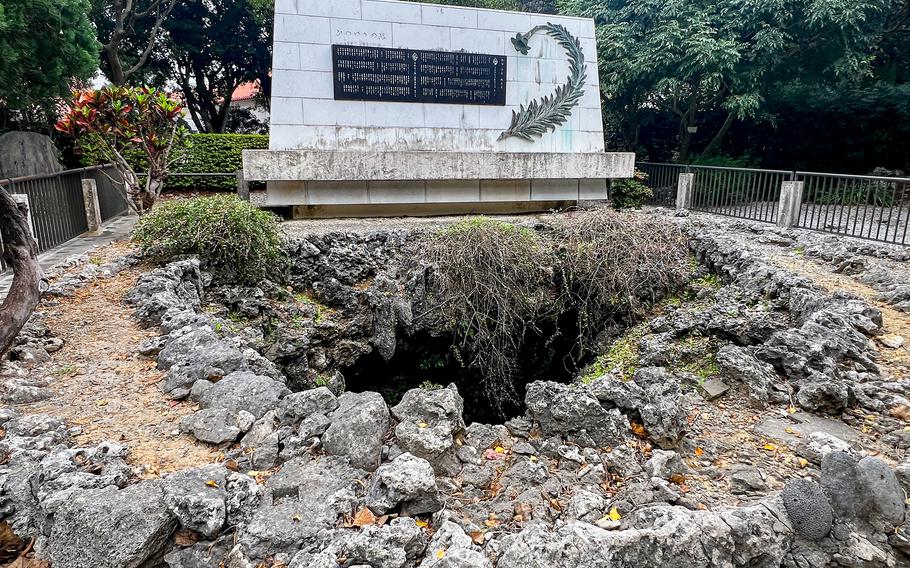
The Himeyuri Cenotaph is a large white stone commemorating the students and teachers from the Okinawa Female Normal School and Okinawa First Girls’ High School who died in the Battle of Okinawa. (Ryan M. Breeden/Stars and Stripes)
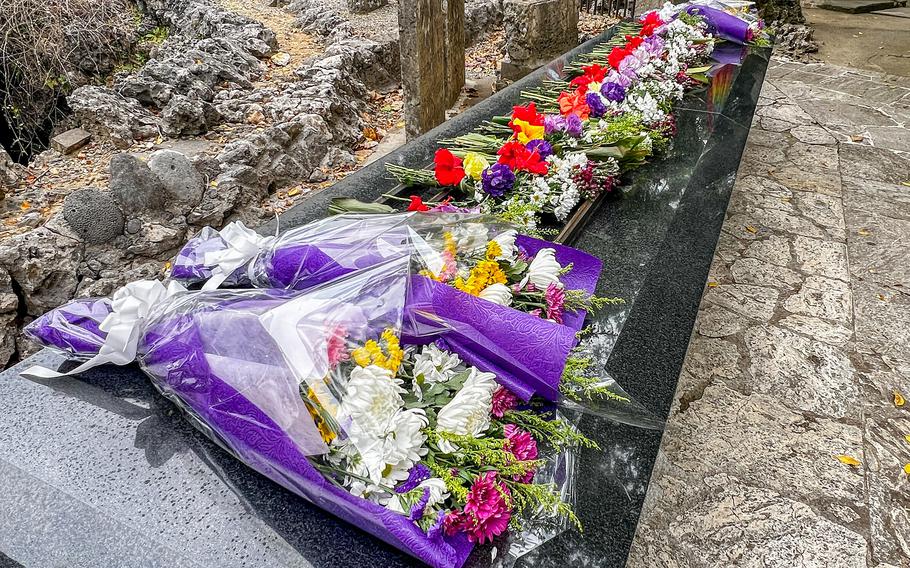
Flowers are placed in front of the Himeyuri Cenotaph at the Himeyuri Peace Museum as seen on March 5, 2026, Itoman City, Okinawa. (Ryan M. Breeden/Stars and Stripes)
The cenotaph is a large white stone with each name inscribed and is positioned at the entrance of a cave system that was once used by the students for treating soldiers wounded in the field of battle.
Just beyond the cenotaph is the museum entrance, where six exhibits explain the lives and sacrifices of the students and teachers. Admission is 450 yen or $2.85.
Exhibits include school life at Himeyuri before the war, the mobilization, testimonial videos and a rotating exhibit room titled the Passage of Peace, which serves as a multipurpose room creating opportunities for younger generations to think and talk about peace.
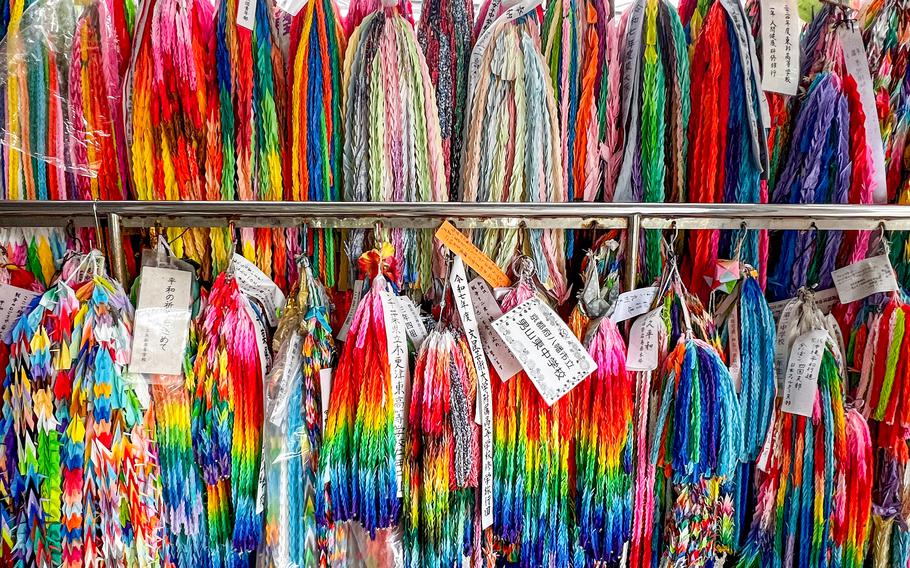
Paper cranes, symbolizing peace, are displayed at the Himeyuri Peace Museum in Itoman city, Okinawa, Japan. (Ryan M. Breeden/Stars and Stripes)
Out of the six exhibits, the Requiem room hit me the hardest emotionally. Casting a heavily somber atmosphere, the room displayed portraits and names of the students and teachers with their descriptive testimonies.
Some of the testimonies are hard to stomach. One student describes the sounds of insects within open wounds.
“At night, when it was quiet, I could actually hear the maggots wriggling out of the bodies,” according to a testimony from Tsuneko Shiroma, 15 at the time, in the Himeyuri Peace Museum Guidebook and displayed within the Requiem room. “The bodies sometimes emitted a strange sound, the kind of sound you hear when something is simmering in a pot.”
The Himeyuri Peace Museum offers a rare combination of documentary rigor and emotional immediacy that confronts difficult history with honesty and empathy. It is not an easy stop, but it is an essential one for wanting to understand the human side of history, leaving you with a renewed sense of appreciation for peace.
Most displays and signage with the facilities are in English and Japanese and photography is prohibited within the exhibits.
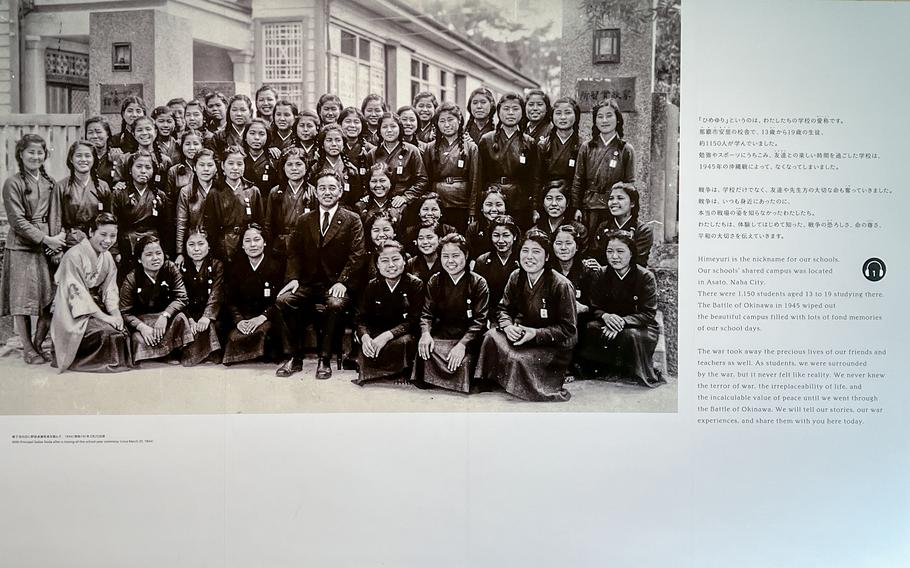
A picture of Mr. Sadao Noda, principal of the Female Normal School, with his students in 1944, is displayed in the lobby of the Himeyuri Peace Museum in Itoman city, Okinawa. (Ryan M. Breeden/Stars and Stripes)
Breeden.Ryan@Stripes.com @Breeden_Stripes
On the QT
Address: 671-1 Ihara, Itoman, Okinawa 901-0344
Directions: From Naha International Airport, head south for nine miles on national route 331 for 30 minutes and the destination will be on your left side.
Times: Monday-Sunday, 9 a.m.-5:25 p.m.
Costs: Admission is 450 yen for adults, 250 yen for high school students, 150 yen for elementary and junior high school students. Audio translation device guides are offered at 300 yen.
Parking: Free parking located behind the museum.
Information: Online: himeyuri.or.jp; Phone: 098-997-2100
AloJapan.com