
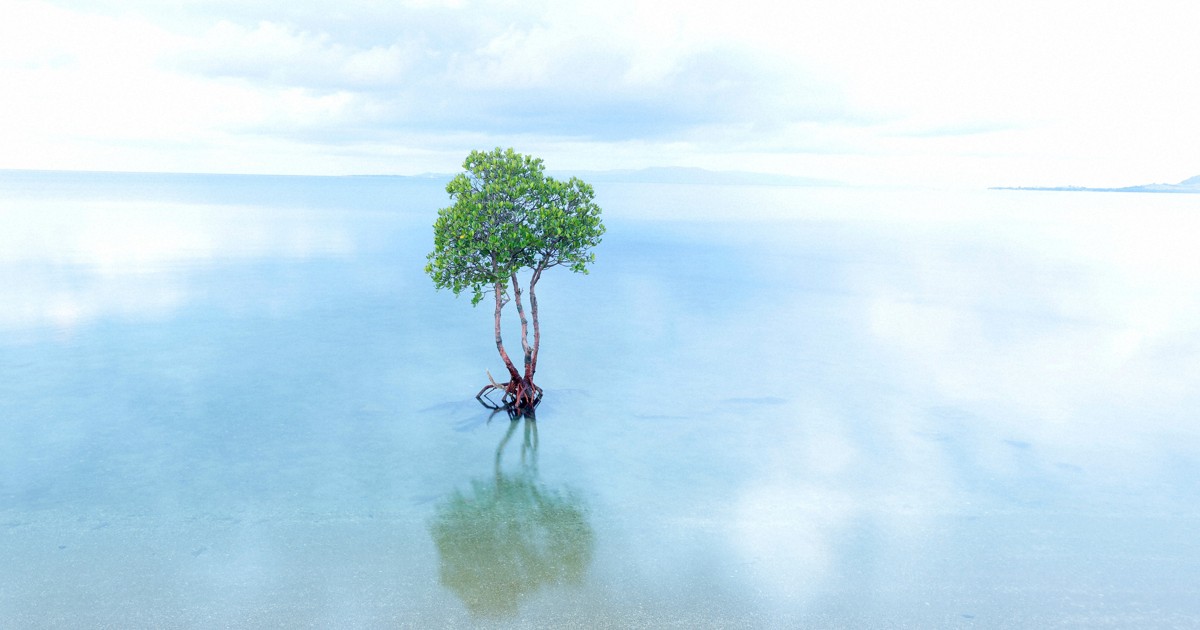
ISHIGAKI, Okinawa — A Mainichi Shimbun reporter visited Ishigaki Island, located about 400 kilometers southwest of Okinawa’s main island, in late March to see the “Ippon Mangrove,” a lone mangrove tree standing in Nagura Bay on the western side of the island.
Okinawa, a prefecture made up of islands, has its own unique culture, language and natural environment on each island. Improvements in transportation and the spread of the internet have made the islands feel closer than ever, both physically and mentally, but visiting a different island still brings excitement.
Mangroves refer to groups of trees such as “hirugi” that grow in clusters in tropical and subtropical brackish waters. As the words “single” and “mangrove” don’t usually go together, the contrast gives the phrase a strangely captivating appeal.
After arriving on Ishigaki Island, my first visit to the solitary mangrove was in the early afternoon, close to low tide. The water had receded, exposing the tree’s stilt roots. However, as the tide began to rise, the scene completely changed.
The surface of the water becomes like a mirror, reflecting the hirugi tree and the sky. Gorgeous sights created by the sea and sky can be seen in many places across Okinawa Prefecture, surrounded by water. But the single mangrove tree serves as a perfect accent, enhancing this natural beauty even further.
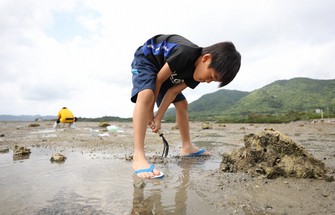
A boy who visited with his older brother and grandmother digs for clams in the city of Ishigaki, Okinawa Prefecture, on March 20, 2026. (Mainichi/Shinnosuke Kyan)=Click/tap photo for more images.
The environment surrounding the lonely mangrove changes endlessly depending on the tides, weather and time of day. The sunset glowing in the evening and the summer night sky with the Milky Way are especially well known for their spectacular views, making the spot popular with tourists and photographers.
The allure extends beyond sunset. In the hush before dawn, as the sky gradually lightens, the view becomes almost ethereal. It is a beauty that can only be encountered in person. With countless elements intertwining, each visit feels like a once in a lifetime encounter.
From March to April, the prefecture enters a season known as “urizun,” considered the most comfortable time of the year. At low tide, local children were enjoying digging for clams near the Ippon Mangrove. Crabs and gobies move about on the tidal flats, and in nearby rice fields, the crested serpent eagle, designated as a special natural monument by the Japanese government, can sometimes be seen. Lush mangroves spread out at the river mouth flowing into the bay, creating a haven for many kinds of birds.
The lone mangrove tree is, of course, beautiful. But the island landscape surrounding the bay is just as captivating.
(Japanese original and video by Shinnosuke Kyan, Kyushu Photo and Video Department)
AloJapan.com