
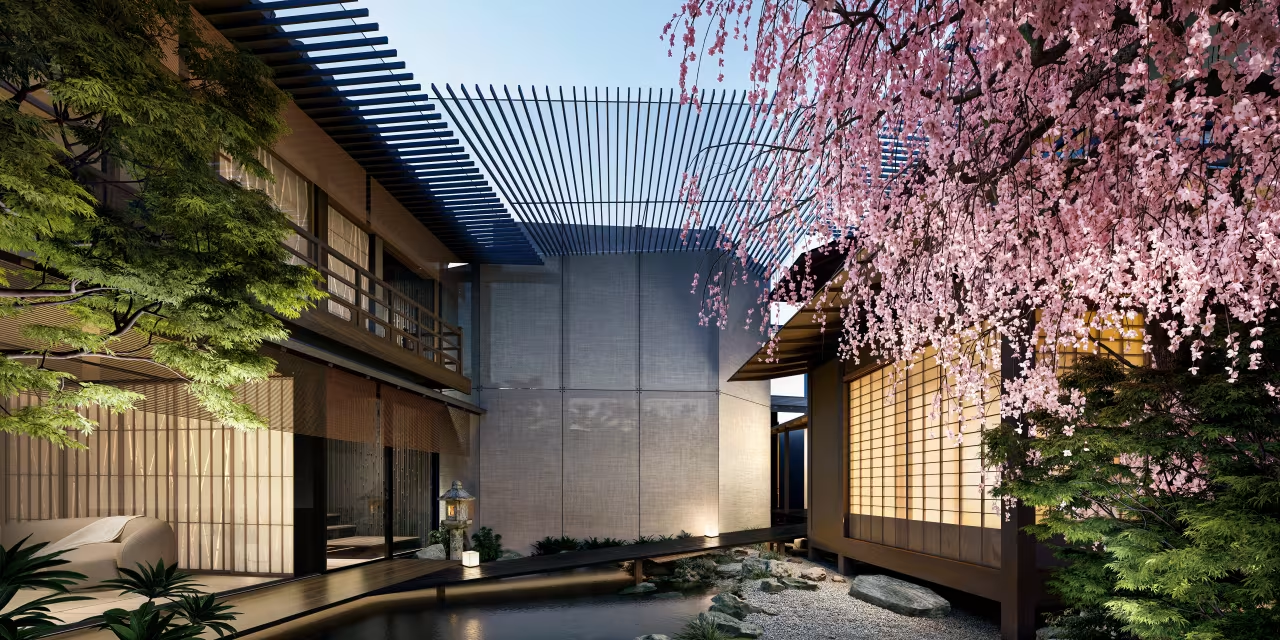
A 200-year-old teahouse in one of Kyoto, Japan’s oldest and most traditional neighborhoods is being reimagined as a private sanctuary—rising amid the sacred shrines, active geisha houses and aristocratic heritage of the Kamigyō ward.
The planned residence will be integrated with part of the original structure, an Edo-era teahouse that was built on the site in 1828. It is being offered for ¥6 billion (US$37.71 million), according to the listing with Forbes Global Properties. Work is scheduled to begin this fall.
MORE: L.A.’s Fischer Residence Sells for Way Over Its Asking Price
The design of the 3,000-square-foot home borrows from its Sukiya-zukuri heritage, an architectural style that came from teahouse design and emphasizes simplicity, natural materials and integration into nature. The low-lying house features Japanese screens, sliding doors, wooden beams and bamboo shades.
It comes with two bedrooms; a tea room; a sauna and spa inside a historic kura, a traditional Japanese storehouse; a detached guesthouse and a tatami room—a space lined with customary woven mat flooring. The layout is oriented around an interior water garden, with a waterfall, pond and cherry blossom trees.
The Kamigyō ward is home to several landmarks, including the Kyoto Imperial Palace and the Kitano Tenmangu Shrine, which is more than 1,000 years old.The residence shares a wall with the shrine, and is meant to embody the sense of serenity that surrounds it, according to the listing.
Both the shrine and the house are within Kamishichiken, Japan’s oldest and most prestigious geisha district where there are still active Geiko and Maiko.
The developer of the project is Kenji Nakamura of development firm Fido Inc., who could not immediately be reached for comment.
MORE: ‘Luxury Does Not Need to Be Loud’: Hassen Balut Approaches Interior Design Like a Filmmaker
The team behind the house includes architecture firm Kengo Kuma, construction firm Kongo Gui—reportedly the oldest company in the world, dating all the way back to the year 578 —and landscape designer Oniwa Ueji, according to the listing. The furniture was supplied by Armani/Casa.
Listing agents Abhinav Sharma and Yusei Komatsu were not available for comment.
AloJapan.com